Activism
In Defense of the Universal Values of Science
Until recently, it seemed inconceivable to imagine that any physical or biological scientists could become so misguided as to argue against the empirical basis of their own fields.
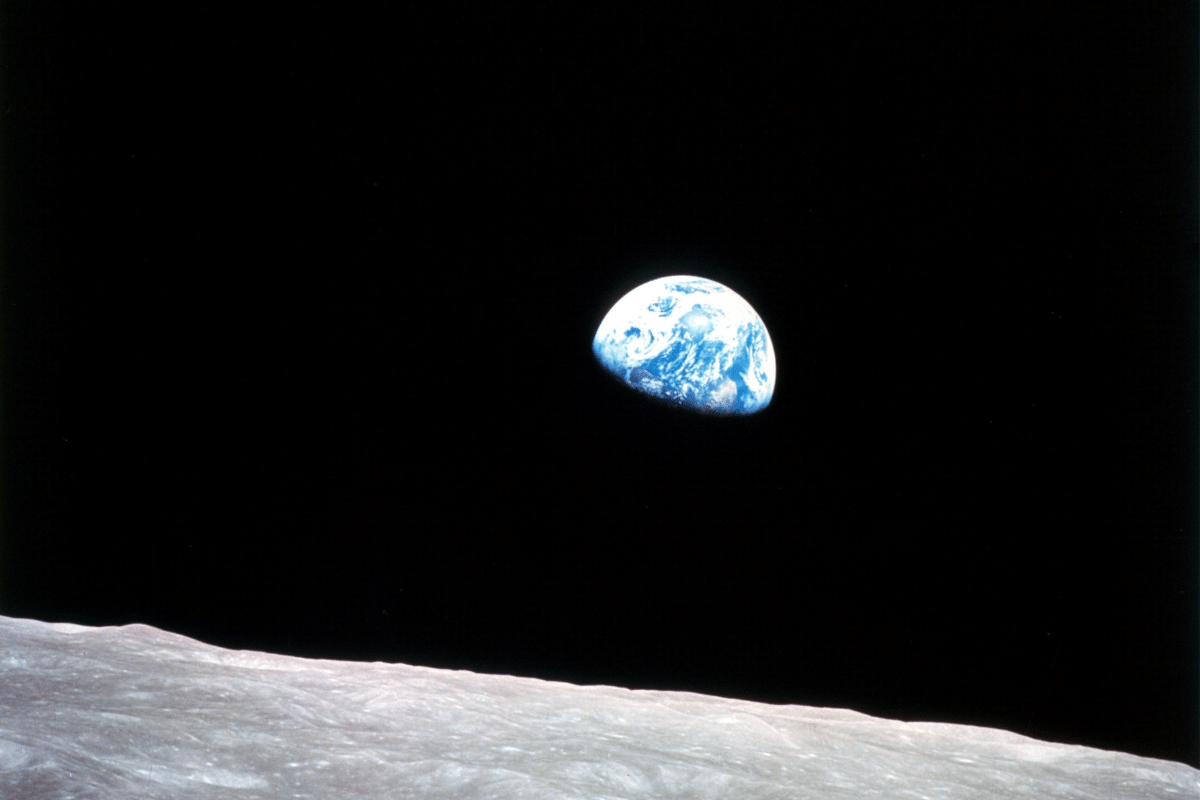

The progress of modern science has been a truly global phenomenon, a fact worth celebrating, just as the technological fruits of science have, to varying degrees, impacted the lives of everyone on the globe.
Scientific breakthroughs have paid no heed to geographic boundaries. Modern algebra owes its origins to 10th century Arabic mathematicians. Around the same time Chinese astronomers recorded an early supernova that formed the Crab Nebula, even when no record of this remarkable object was made in Europe. In spite of the attempts by British astrophysicist Sir Arthur Stanley Eddington to quash the impact of an otherwise unheralded young Indian physicist, Subrahmanyan Chandrasekhar, the latter’s groundbreaking work on stellar evolution altered our picture of stars so significantly that he was later awarded the Nobel Prize for his work.
Nevertheless, the postmodern notion that empirical scientific knowledge is somehow culturally derived, with little or no objective underpinning, has continued to persist in various social science and literary corners of academia far removed from the rush of scientific progress.
Until recently, it seemed inconceivable to imagine that any physical or biological scientists could become so misguided as to argue against the empirical basis of their own fields. But we are living in strange times. This week, the Divisional Dean of Social Sciences at the University of Oregon sent an email to faculty “to encourage you all to attend this exciting presentation!”, by a visiting physicist, which was described as follows:
Title: Scientists vs. Science: Race, Gender, and Anti-Intellectualism in Science
Abstract: Black thought can help us free science from the white supremacist traditions of scientists. Scientists vs. Science will use Black feminist and anti-colonialist analyses to show that white supremacy is a total epistemic system that affects even our most “objective” areas of knowledge production. The talk hinges on the development of the concept of white empiricism, which I introduced to give a name to the way that anti-intellectual white supremacy plays a role in physicists’ analysis of when empirical data is important and what counts as empirical data. This white empiricism shapes both Black women’s (and other) experiences in physics and the actual knowledge produced about physics. Until this is understood and addressed directly, systems of domination will continue to play a major role in the practice of physics.
 Lawrence M. Krauss
On its own, this racist nonsense would not deserve remarking on here, even if it does lead one to wonder how its author, who apparently doesn’t understand the empirical basis of her own discipline, could gain an appointment at a physics department. But the response it produced by the administrator at Oregon is more worrisome.
The Dean at U. of O. should know better, being a professor of Anthropology, although his specialization in Folklore and Public Culture suggests he might be particularly sympathetic to arguments that knowledge is culturally or racially derived.
The Dean’s email apparently received wide circulation beyond U. of O. in the academic community. A tweet from Bruce Gilley, who is a professor of Political Science and Public Policy and on the board of the National Association of Scholars saw what the U. of O. Dean had missed, namely that the underlying pretext of the talk was itself racist. As he remarked “Neo-racism is now spreading like wildfire in the academy with the normalization of racist and anti-scientific ‘research’ that freely denigrates people based on their race. This talk below will use ‘black feminist and anti-colonial analysis’ to debunk ‘white empiricisim [sic].'”
Galileo would have discovered four moons of Jupiter with his telescope regardless of his sex or pigment, and DNA is a double helix regardless of whether it was Rosalind Franklin’s crystallography that demonstrated it, or Watson and Crick’s analysis of that empirical data. Empirical evidence is not white, or black, and the term “black theory” makes no intellectual sense.
Keep reading
France’s Imaginary Austerity

A Clockwork Filmmaker

The Insight Trap

Cornell and Consent