History
Understanding Modern African Horrors by Way of the Indian Ocean Slave Trade
The modernizing elites of these groups then fought with the British during WWI and WWII, and demanded independence after the war, which they got.

On January 15, and well into the morning of the next day, terrorists affiliated with the Somali Jihadi group Al Shabab forced their way into an upscale Nairobi hotel and business centre, killing 21 innocent civilians. Kenyan authorities, with some help from Western allies, killed some of the terrorists and captured the rest. Al Shabab justified the attack by denouncing the Kenyan government’s participation with African Union forces in Somalia, which has been in a state of civil warfare since the early 1990s.
I had driven by the targeted complex a couple of days before the attack, and once lived in this neighbourhood back when Kenya was my permanent home. On this visit to the country, I’ve noticed that—notwithstanding January’s terrible tragedy—tourism is booming, agriculture is bountiful and the Kenyan elite are benefiting from the massive Chinese investments that have transformed the landscape. The overall degree of improvement depends on which expert you believe. But the plethora of expensive cars that now jam the streets of Nairobi, and the building boom on display in many parts of the city, do suggest a surging economy.
Anyone who knows the history and tribal dynamics of East Africa and the Horn will understand that even if the Kenyan government pulled all its troops out of Somalia, Al Shabab likely would still try its best to destabilize this country. I outlined the reasons for this decades ago, when I first briefed visiting Canadian and U.S. military personnel here in Nairobi. Many of the things I told them remain as true now as they were then. That’s because the most important factors at play are rooted in history, not in recent geopolitical developments.
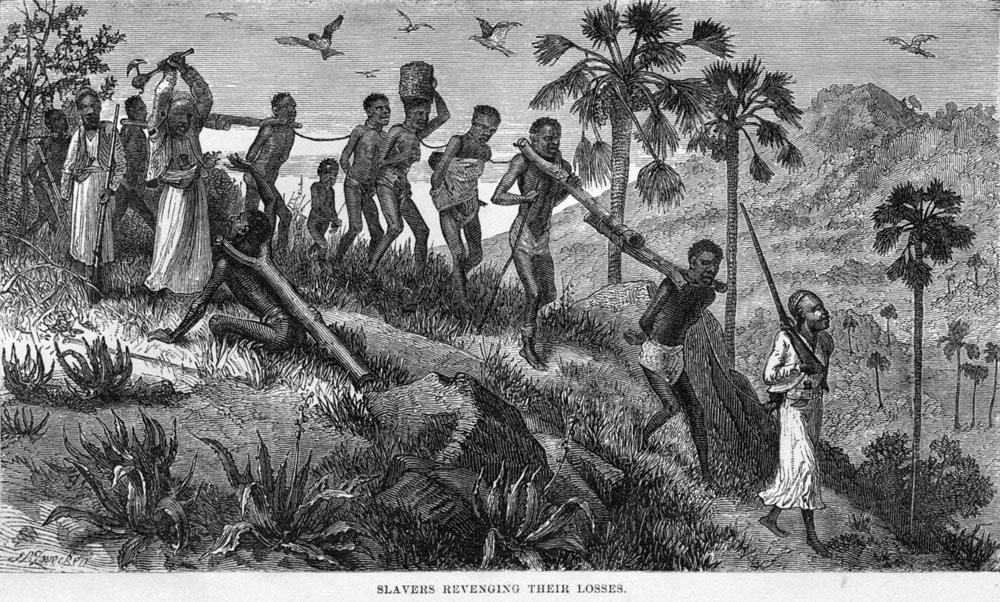
Specifically: Many modern problems in the area are rooted in the Indian Ocean slave trade—a scourge that was distinct from the better known slave trade that preyed on West Africa. In the eastern part of the continent, there was little to no European involvement. The practice was indigenous and ancient, and lasted more than a thousand years.
 Tim Cook
The rise of Islamic societies propelled young Arab and Persian men to the Indian Ocean coast, from Somalia down to Mozambique. There, they married local women, converted locals to Islam and established sophisticated coastal trading cities that featured advanced stone architecture, relatively high rates of literacy and even, in some cases, indoor plumbing. This is where they developed the lateen sail (though its origins remain disputed by historians), which allowed them to take advantage of alternating monsoon winds, so as to sail their trading dhows to India and back to East Africa every six months. These were the seas plied by the fictional Sinbad the Sailor. East Africa’s coastal elites brought gold, ivory, spices and slaves from the interior of Africa and sold them to customers in the Middle East and India.
During the 19th century, the Omani sultans relocated their sultanate to Zanzibar, in what is now coastal Tanzania. They used slaves to work their clove plantations, and presided over a large-scale traffic in human beings from the coast to the Congo. As the interior tribes were not Muslim, the Arabs, Swahili and Somali felt free to raid their “infidel” communities. The East African/Central African slave trade was a brutal overland version of the oceanic horrors known to historians of the Western version. Untold hundreds of thousands died before they reached the coast.
This was the Africa that was discovered and first described by missionary explorers such as David Livingstone, who documented the horrors of the East African slave trade on behalf of Victorian England. At that time, the empire recently had banned slavery, and was swept up in an evangelical abolitionist movement. This culminated in Britain occupying the East African coast of the Indian Ocean, taking out the power of the Zanzibaris and establishing their own newly created colonial authority as far as Uganda. From the African point of view, this was a case of European colonialists displacing Muslim slavers.
Together with the French and Italians, the British divided up Somaliland (after a lengthy campaign against a Jihadi leader named Mohamed Abdullah Hassan), whose Somali inhabitants had been willing partners in the East African slave trade (with the Swahili). In this way, the colonial boundaries of what later became the independent countries of Somalia, Kenya, Uganda and Tanzania were established. But of course, that did not stop tribes from moving this way and that across borders that looked real on the map but felt imaginary on the ground.
Although the Somali-speaking peoples of the Horn of Africa all generally follow the belief that they descend from a single man named Soomal, and practise Islam and Islamic saint worship, they continue to be divided into two major tribal confederations. The northerners, called the Isaak, recently have managed, alongside other clans, to establish a near-functioning democracy in the northern Somaliland (which was once a protectorate of the British Crown). To the south is the land of the Darod clans, where the civil war has been raging since the 1990s.
These Darod clans, which are still largely nomadic, gradually have been expanding southwestwards in search of new grazing lands to occupy with their herds of camels, cattle, sheep and goats. Until the late 1890s, they were barely present in what came to be called Kenya’s northern frontier, a vast arid savannah, woodland and desert that stretched west to the Sudan and north to Ethiopia.
However, by the time the British established their authority over all of the Kenya colony, and especially by the end of WWII, the Darod clans increased their numbers in the northeast of Kenya—in what is now called Wajir, Mandera and Garissa districts. These areas now have a growing and sometimes dominant Somali presence. In 1964, the Somali of northern Kenya fought a 10-year on-and-off guerrilla war against the newly established Kenyan government, in hopes of linking their territory with the newly independent state of Somalia. This strategy did not work.
From the late 19th century onwards, the British bypassed the Swahili, sending in missionaries from the coast to convert the Bantu and Nilotic speaking tribes of the Kenyan interior, these being former victims of the coastal slave trade. The modernizing elites of these groups then fought with the British during WWI and WWII, and demanded independence after the war, which they got. From an ethnographic point of view, what this means is that the descendants of the non-Muslim tribes that formerly provided the coastal Muslims with slaves were now in charge of the government and economy of Kenya, making Muslims to the northeast and on the coast a political minority within the region.
Keep reading

What the Navigators Knew
Gemma Tognini on Australia’s Political Revolt
Rubio in Athens

How France Lost Control of Its Streets