Glenn Loury
Anatomist of Racial Inequality: An Interview with Glenn Loury
Loury has taught at Brown University for over a decade, an institution where pleas for American patriotism are likely to be summarily dismissed. So why does he insist on making them?
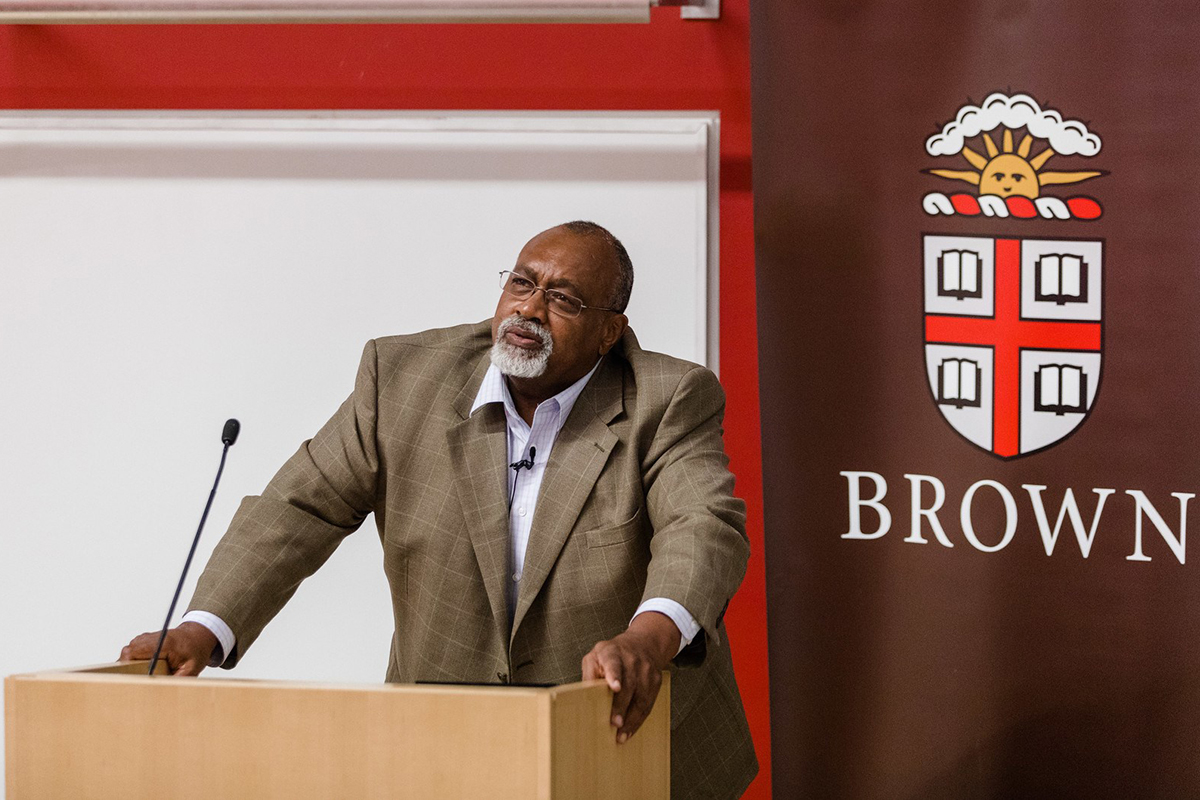

Glenn Loury has the ability, occasionally displayed by great writers, of articulating his opponents’ arguments fairly while simultaneously exaggerating their claims ever so slightly in order to hint at their fundamental unsoundness. In our interview, he provides an example. Asked whether he believes African Americans should be encouraged to take pride in being citizens of the United States, he offers this characterization of the view espoused by many on the anti-racist Left:
America’s overrated. America is a bandit, a gangster nation. America is run by war criminals. American capitalism is rapacious. America is nothing but hypocrites. They dropped the bomb on Hiroshima; they exterminated the Native Americans and they enslaved the Africans. White supremacy rules here. Why should I want to fight and die for such a country? I don’t want to fight and die for it; I don’t even want to stand while the anthem is being played for it!
Such a view, dominant though it may be in America’s discourse on racial inequality, is for Loury nothing more than a “posture,” or at best a “pout.” It is neither productive nor reflective of the reality of African American life in 2019, Loury argues, and it functions more as a rhetorical trick than as a coherent plan of action for improving blacks’ prospects. Against any sort of reflexive anti-Americanism, Loury is unafraid to urge “a kind of patriotism aimed at African Americans.” He knows, though, that such urgings are probably futile, especially given his social environment: Loury has taught at Brown University for over a decade, an institution where pleas for American patriotism are likely to be summarily dismissed. So why does he insist on making them?
Part of it, he says, is a matter of personal integrity; he believes that adopting a pro-American attitude is the right thing to do. And what does having integrity mean if not saying what one believes to be correct? But another reason why Loury extols the virtue of a benign kind of nationalism can be discerned in a question he frequently asks himself: What are his duties as an African American intellectual? He reflects on this question often in his podcast, The Glenn Show, as well as in his writing (he has written four books on race), and he seems to have reached the following conclusions. As an intellectual, his duties, at least in theory, are spelled out in the very definition of that term: Following careful study, he must publicly express himself with clarity, purpose, and authority. But as a black intellectual, his duty is to discuss unpalatable truths about the black experience—and perhaps chief among these unpalatable truths is that white supremacy, however grotesque it may have been in past eras, is no longer the primary obstacle to black advancement.
The claim that racism is not the main cause of black underachievement is not usually received well by educated Americans. For the most part they regard this argument as an ideological tool used to legitimate racial inequality—as a way to “blame the victim” by condemning black failure rather than white oppression. To deny the devastating and long-lasting consequences of racism, the progressive argument goes, is at best to betray a lack of empathy, and is at worst prima facie evidence of racism. This may be true of some people who take contrarian stances on race; but it is not true of Glenn Loury, whose utterances on the topic are invariably informed by deep compassion and analytical rigor. It ought to be immediately apparent to anyone who hears him discuss the condition of black Americans that it pains him to reckon with these issues—with the crime in his native Chicago, with the paucity of blacks at the engineering departments of elite colleges, with the educated elite’s unwillingness to confront these matters honestly.
At least once in each public appearance, Loury will unleash an extemporaneous barrage of perfectly constructed sentences that reveal the frustration, passion, and empathy that motivate his work on race. It would be unfair to call these outbursts “rants”; they are neither rambling nor incoherent. They tend to leave the listener silent, and Loury fuming. A couple of representative examples can be seen in the podcast Loury recorded with neuroscientist Sam Harris in August of 2016.
In his conversation with Harris, Loury turned his attention to Ta-Nehisi Coates—the most celebrated anti-racist intellectual on the Left and a writer to whom many white progressives defer on all matters race-related. Specifically, Loury took aim at Coates’s Between the World and Me, a short memoir framed as an open letter to Coates’s son, which Loury characterized as follows:
[Coates] advises his son that America is so thoroughly contemptuous of your value as a human being, that you must not ever—ever—relax. You must not trust these people, or turn your back on them. They will rip you to shreds. There’s nothing more American than taking a guy like you, hanging you from a post, and tearing your limbs off one by one. Don’t believe in the American dream. We are up against an implacable force. That force erases your humanity. It’s always been so, and it will always be so.
Before offering his rejoinder to this line of thinking, Loury related an anecdote about Coates. In 2015, Coates and Mitch Landrieu, former Democratic mayor of New Orleans, appeared on a panel at the Aspen Ideas Festival to discuss what might be done to end racial inequality. Landrieu attempted to point out that many of the problems faced by blacks in New Orleans were caused not by whites but by criminals in the black community. Coates was indifferent to Landrieu’s appeal, countering that whatever problems exist in the black community originate, in the final analysis, in white supremacy.
 Coleman Hughes
Coates’ argument infuriated Loury, who argued that Landrieu might have responded by saying:
What an absurdity! You’re telling me that people have to run up and down the street, firing guns out of windows and killing their brethren because we didn’t get reparations for slavery handed over to you yet? Because somebody who was mayor of this city ten years ago happened to be a racist? Because the police department has somebody who’s affiliated with the Ku Klux Klan in it? And you’re telling me that that explains or somehow excuses or cancels out the moral judgment that I would otherwise bring to bear against any other community in which I saw this happening? You’re telling me that the history of slavery and Jim Crow, now a century in the past, is pertinent to our reaction to this lived experience on the daily basis of African-Americans in my American city?
That’s not what Landrieu said to Coates. But, Loury concluded, “it’s what I would have said.”
Loury often speaks about Coates’s thought, albeit usually self-consciously, always insisting that “it’s not about Coates”—in other words, that it’s not personal. It does appear, however, to be at least somewhat personal: Loury is evidently irritated by the elite praise Coates enjoys. But it certainly isn’t mainly personal. What really seems to irk him is what Coates represents more broadly: namely, a refusal, in Loury’s view, on the part of educated America to grapple with race in a serious manner.
* * *
Glenn Loury’s calls for personal responsibility in the black community, his defense of patriotism—even his disposition—indicate that he is a conservative. Yet he remains hesitant to adopt the “conservative” label, and especially the “black conservative” label. When I ask him about this reluctance, he replies with characteristic sense of humor. Social pressure, he answers, makes it difficult for professors to come out as conservatives. “When they get finished with you on Twitter for being a black conservative,” he laments, “there’s not very much left of your reputation.”
Notwithstanding such stigmas, one can hear echoes of William F. Buckley in Loury’s political thought, as he embraces the three pillars of American conservatism: anti-communism, capitalist economics, and cultural traditionalism. Socialist faith in the efficiency of command economies, he argues, is “refuted by history; the twentieth century proved it wrong. Command economies, centralized control, undermining private property, killing incentives, allowing every political fad to get its hands on the means of production through the monopoly that the state has on the legitimate use of force—these are not good things.” Capitalism—by which he means the (relatively) free exchange of goods and services—is by contrast “the foundation of our prosperity in the modern world.”
Loury also tends to lean right on issues of public policy. During our exchange, he expresses great admiration for conservative economist Thomas Sowell, describing him as a “towering figure.” But Loury is not a libertarian, like Sowell. When I ask him, for instance, whether he agrees with Sowell’s view that ending racial inequality is beyond the power of government policy, he demurs, arguing that government can play a useful role in improving the quality of education and healthcare. Doing so, he says, will “have the effect of reducing the disadvantage of people at the bottom of the social hierarchy. [And] disproportionately those will be people of color.” (But he is careful to emphasize that “the reasons for doing these things in my mind ought not primarily be construed in terms of trying to redress a racial claim…these are all issues that need not—ought not—be framed primarily in racial terms.”)
Somewhat surprisingly, considering his background in the social sciences rather than in philosophy or literature, it is arguably in his traditionalism where Loury speaks most passionately and most compellingly. Loury tells me he has been reading Roger Scruton, the conservative British philosopher, and the influence shows. Loury prefers, as all good traditionalists do, gradual to revolutionary change. The latest political enthusiasm, he says, is unlikely to prove itself superior to the “congealed wisdom” we “inherit from previous generations.” Society cannot be perfected overnight. Thousands of years of history cannot be rapidly undone without considerable danger; humans aren’t as clever as we would like to think. “There are mysteries,” Loury insists, his voice conveying a sense of wonder. “There are unfathomables.”
Barbara Kay
And yet, Loury has not always been a man of the Right. In the 1980s, he was a Reaganite conservative, but by the mid-1990s he had begun to reconsider some of his right-leaning positions. A few episodes from that decade help explain Loury’s leftward drift. First, in 1994 came the publication of Richard Herrnstein and Charles Murray’s The Bell Curve, a book about IQ and social policy that contained an extremely controversial chapter on the implications of IQ disparities between racial groups. Loury was highly critical of the book, publishing an essay in National Review that closed with the following reflection on The Bell Curve’s arguments: “I shudder at the prospect that [Herrnstein’s and Murray’s] could be the animating vision of a governing conservative coalition in this country. But I take comfort in the certainty that, should conservatives be unwise enough to embrace it, the American people will be decent enough to reject it.”
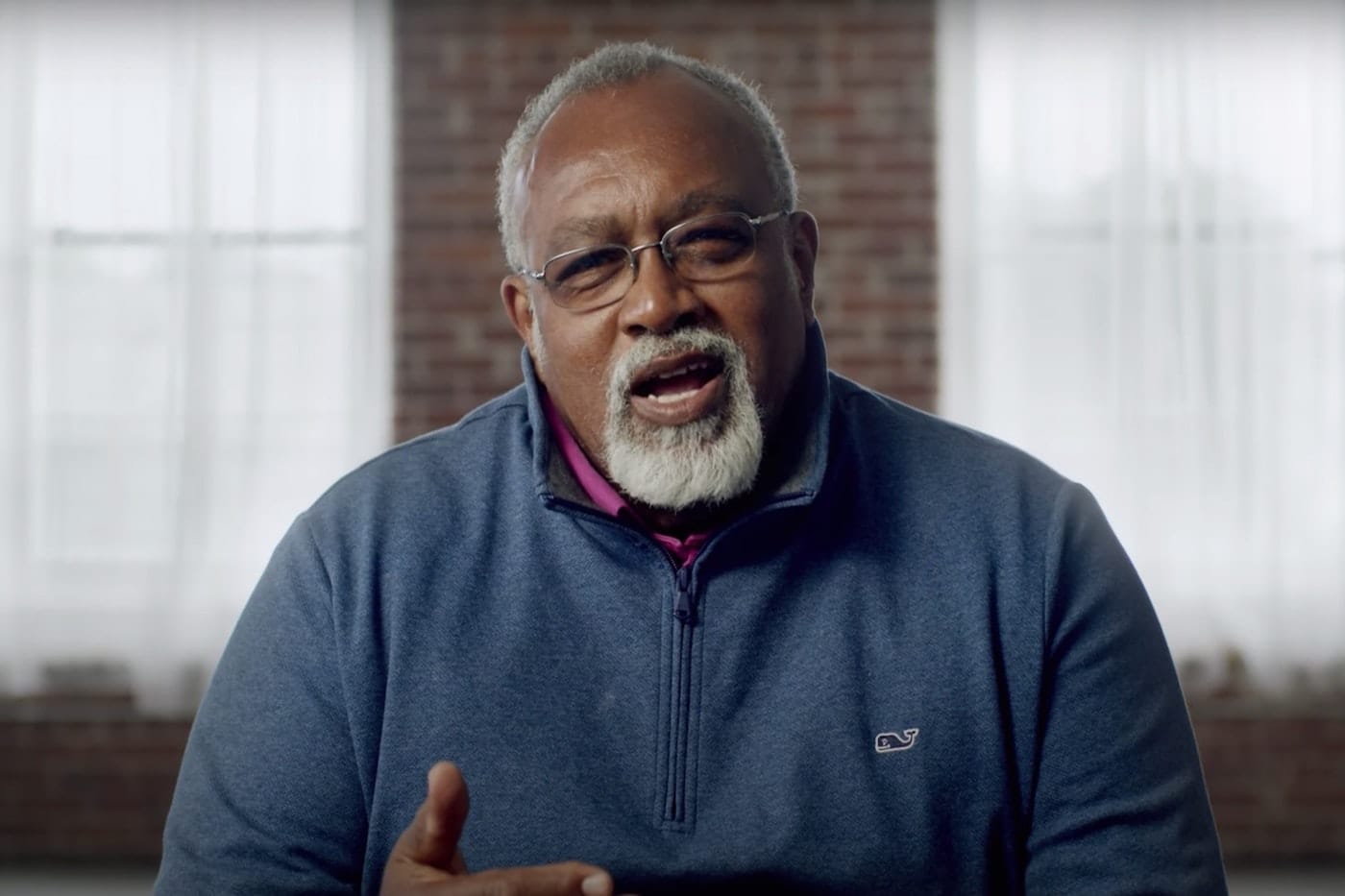
Then, in 1995 conservative provocateur Dinesh D’Souza published an inflammatory polemic titled The End of Racism, a book Loury describes as “execrable.” D’Souza, Loury argues, “was playing fast and loose with some stuff that I thought was really very serious and needed to be treated more seriously.” (It’s hard to disagree, not least when one encounters sentences in The End of Racism like “the criminal and irresponsible black underclass represents a revival of barbarism in the midst of Western civilization.”) Incensed by The End of Racism, Loury resigned his position on the academic advisory board of the American Enterprise Institute (AEI), a flagship conservative think tank, after the AEI’s president stood behind D’Souza’s work.
Increasingly at odds with American conservatism’s positions on racial issues, Loury slowly began to revise his own. And in 2002, he published The Anatomy of Racial Inequality, a short book that confirmed his evolution from Right to Left on race. In its pages, he set out to make three arguments: one about racial stereotypes, one about racial stigma, and one about racial justice.
First, he argued that people formed stereotypes about others’ behavioral patterns based on race, age, gender, and other visible features on human bodies. Stereotype formation is inevitable, he claimed, given the type of social creatures that we humans are—and it is in itself neither good nor bad. In some circumstances, however, stereotypes could “work to the detriment of a disadvantaged population like African Americans and could feed into a kind of reputational dead end where, in a self-fulfilling way, people had negative beliefs that would come to be fulfilled because the incentives that those set of beliefs created.” For instance, if a banker refuses to extend a mortgage loan to a black family on the basis of a racial stereotype, that family would thereby lose out on a good housing opportunity, which might affect the quality of the education their children receive. By such mechanisms the negative stereotypes associated with blacks could potentially create and/or reinforce social disadvantages. Loury stands by this argument today.
Second, Loury argued that the existence of slavery in a country that affirmed the principles of equality and freedom necessarily carried the implication that people of African descent “were not fully human—that there was something deficient about them that legitimated and justified their being held in bondage.” The creation of this stigma, moreover, had consequences that reverberated down the centuries and helped largely to account for persistent disparities in social outcomes between whites and blacks. This is a view that Loury has since moderated. The Loury of 2019 would, he tells me, “put much less emphasis on the determinative consequences of this legacy of racial stigma” in accounting for black disadvantage. And he would add that people’s perceptions of blacks today are not determined solely by slavery, but also by “the ongoing achievements and failures and deficiencies and conduct of African Americans in contemporary life…I say that with trepidation, but it’s what I actually think.”
Keep reading
Jerry Kaplan on AI Doomers

Payback Time for Steven Galloway

War Stories

Life in The Grim Old Days