Education
Narrow Roads of Bozo Land — How We Came to Be Governed by Online Mobs
Visionaries may be moody, obsessive loners but without them to provide a good idea in the first place, implementers end up working diligently to implement a faulty vision, like clockwork toys set off in the wrong direction.


We all know the routine: an academic publishes some data that are incompatible with left-wing ideology, or maybe even just makes a non-PC joke, as in the case of the Nobel laureate Tim Hunt. They are then targeted by an online mob, the university administrators side with the mob and the thought-criminal is duly defenestrated. The firing of James Damore shows that a similar routine operates in tech giants such as Google.
It’s not the first time intellectuals have enforced extreme left-wing views — just think of the U.S.S.R. during Stalin’s reign. But one can at least understand such behavior because failure to implement political correctness on campus in 1930s Russia would lead to a 4 a.m. date in the Kurapaty forest with a leather-aproned N.K.V.D. executioner.
But the situation is different in today’s universities, tech giants and government departments – the administrators aren’t going to be executed if they ignore a cis-heteronormative microaggression by one of their employees and the demands for PC enforcement aren’t coming from a paranoid tyrant and his pistol-wielding henchmen. Instead, our new overlords are a bunch of pudgy, blue-haired manimals who can barely wash themselves, let alone dig a mass grave in the Siberian permafrost. As Toby Young pointed out following his purging from public office, this crowdsourced form of orthodoxy enforcement is a new thing and, considering it has no legal standing, a puzzling thing.
 Quillette
It’s true that academics tend to lean left, especially in the social sciences and humanities. And judging from the recently leaked video showing Google staff lamenting Trump’s election victory in 2016, a similar bias exists there too. But that’s no explanation because leaning left is not the same thing as trying to destroy the careers of those who don’t share your beliefs, just because “some people from the internet” say you should.
Governance-by-online-mob raises all sorts of questions, such as how many members does such a mob need to contain before it must be obeyed? What qualifications are required to wield such awesome power? How does the mob decide which opinions are correct? But the big mystery is how have organizations that were once the bastions of bold, visionary thinking been converted into dens of timid, conformist souls who are ruled by the fickle wind of social media opinion? In academia the proximal cause is obviously commercialization.
Yes, the markestisation of HE has led to the this totalitarian safe space culture. Makes students think it's a commodity and encourages universities to pander to students' wishes. Whole thing needs rethinking.
— R.A. (@boyfromcatford) September 10, 2018
But this doesn’t tell us what has caused commercialization in the first place. One possibility is what’s known in Silicon Valley parlance as a “bozo explosion.” This occurs when a relatively small, visionary business enters a phase of rapid expansion. The larger it becomes, the more promotion depends upon corporate box-ticking rather than good ideas. Since visionaries are less suited to this than implementers (the so-called bozos), they tend to be outcompeted in the struggle for corporate power as the business grows. And because implementers don’t have the vision to tell a good product from a bad one, the business usually goes belly up once they are in control.
But there is a twist in this tale because implementers are in many ways the heroes and heroines of our world. They are the doctors and nurses who calmly and conscientiously perform the medical procedures that keep us alive. They are the lawyers whose attention to legal detail saves us from wrongful conviction. They are the engineers whose meticulous, error-free calculations hold up the bridges we drive over and the planes we fly in. They are the farmers who reliably grow our food, the truckers who deliver it and the supermarket workers who sell it to us so efficiently. In short, the implementer personality is key to making the world go around. But it’s not the whole story because there is one skill which implementers tend not to have — seeing the big picture. Visionaries may be moody, obsessive loners but without them to provide a good idea in the first place, implementers end up working diligently to implement a faulty vision, like clockwork toys set off in the wrong direction.
Our modern, developed world of air travel, antibiotics and smartphones is therefore the product of a delicately balanced tango between visionaries and implementers. But the visionary/implementer tango is not a partnership of equals: for a successful outcome, implementers must be subordinate to visionaries. The importance of that hierarchy is illustrated by the footage of John Lennon fending off a barrage of bad ideas from his entourage during the recording of ‘Imagine.’ Luckily for us listeners Lennon not only had the vision to compose the song, he also had the corporate status to overrule bad ideas, allowing his minimalist utopian masterpiece to make it safely onto record without being thrown off course.
When a visionary loses the power to make the key decisions that delicate balance is lost, with disastrous consequences for the quality of the product and, ultimately, the organisation. This famously happened at Apple between 1985 and 1997 when Steve Jobs was temporarily ousted. But perhaps the most extreme example of an implementer-takeover lies not in Silicon Valley, nor in a national government, but in U.K. universities. These institutions are bankrolled by the tax payer but are not subject to elections and hence are immune to the self-correcting tendency for implementer-dominated entities to go bust or, in the case of governments, get voted out. As a result, we are still feeling the effects of a bozo explosion initiated by the huge expansion of U.K. universities in the 1960s.
The atmosphere of this period was captured by the evolutionary biologist Bill Hamilton in the first volume of his autobiography Narrow Roads of Gene Land when he described getting his first academic job in 1964:
I had applied for a lectureship advertised in genetics at Imperial College, University of London, and, by standards of academic jobs today, obtained the post with ridiculous ease. All my appointment had needed was an application letter and an interview by Professor O. W. Richards, the then head of the Department of Zoology and Applied Entomology. Richards introduced me to two or three of his colleagues, who I suppose were asked their opinions about me, but there was no committee and nothing remotely resembling a job seminar. I had no PhD and no thesis; I did have two published papers and Richards had read the long one. Universities were expanding and jobs for academics almost fell from the trees. I learned much later that for my job there had been only one other applicant, that he was offered it and he declined.
Stephen Warren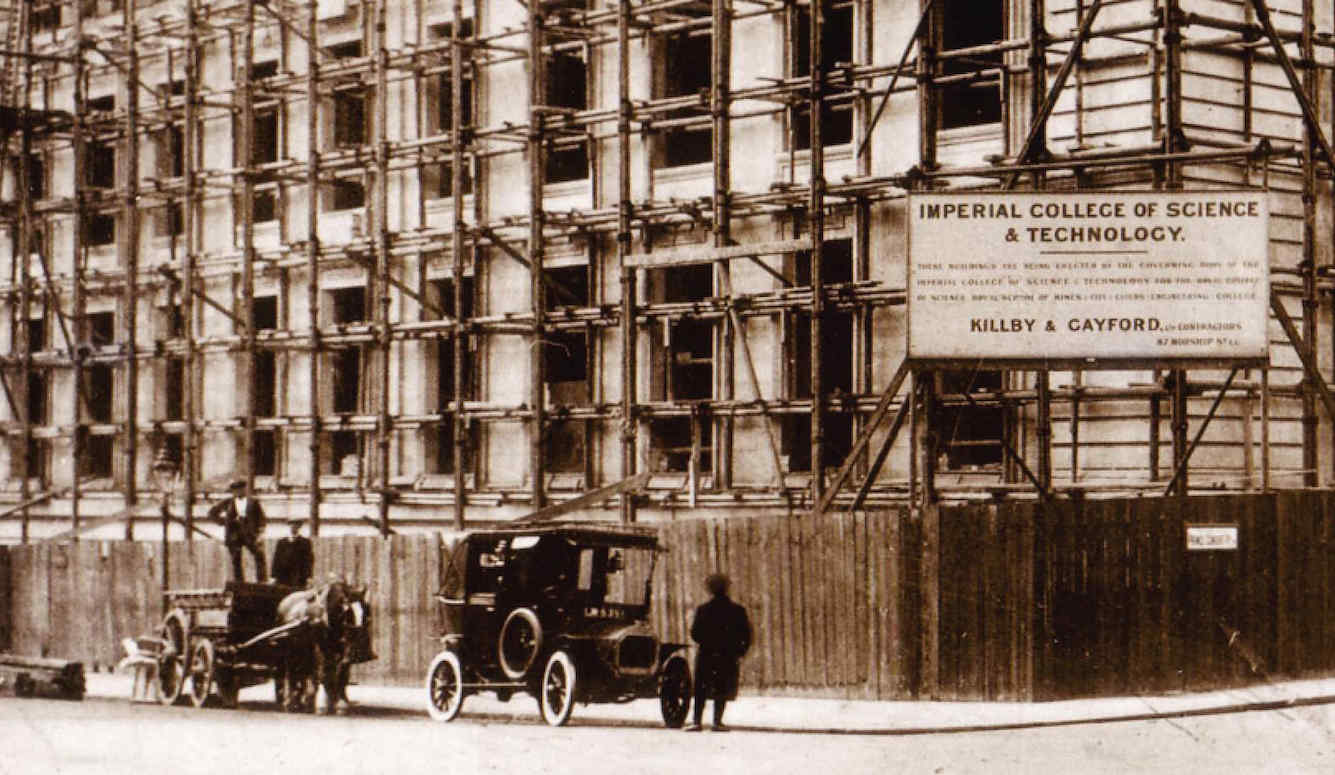
This was a departure from the norm in British universities, which had until then been relatively small, elite organizations that tended to promote on the basis of intellectual excellence rather than corporate box-ticking — a bit like Apple in the early days. For example, Isaac Newton’s moody, abrasive personality made him unpopular with undergraduates, to the extent that they boycotted his lectures (he usually spoke to “Ye bare walls” as a colleague described it). Nevertheless, Newton’s genius outweighed his interpersonal problems and the University of Cambridge appointed him Lucasian Professor of Mathematics at 26.
But by the 1970s British universities had become a hostile place for a socially awkward genius, as Bill Hamilton found out. His personality was different to Newton’s — he was a shy, mild-mannered soul – but it was still a barrier to acceptance by undergraduates as his gentle, dreamy style of delivery was unsuited to capturing the attention of bored teenagers in large lecture theaters. Moreover, Hamilton’s integrity prevented him dumbing down his lecture content to in the hope of boosting his popularity. In earlier, less corporate eras, Hamilton’s scientific genius would have trumped his lackluster teaching performance, as it did with Newton. But not at 1970s Imperial College and as a result Hamilton was passed over for promotion each year, remaining stuck on the same low-paid, entry-level rank to which he was appointed in 1964.
In 1976 things came to a head when Hamilton returned from a research trip to Brazil to find that he was once again being passed over for promotion. This decision was particularly upsetting because 1976 saw the publication of Richard Dawkins’s international bestseller The Selfish Gene, which showcased Hamilton’s work and cemented his public status as a genius. Hamilton was a modest man, but this book made it obvious even to him that he was a scientific superstar who should be recognized as such by Imperial College. Moreover, Hamilton’s desire for a professorship was not just ego-driven because he had a growing family to provide for and needed the pay rise that a chair would bring.
Imperial College refused to budge — in their opinion his scientific genius was insufficient to compensate for his low scores on their teaching performance metrics and that was that. Hamilton immediately sent out feelers for jobs in the USA and was snapped up by the University of Michigan which in 1977 appointed him professor at the Museum of Zoology. As his fellow biologist (and sometime rival) John Maynard Smith lamented, Hamilton was “the only bloody genius we’ve got and we didn’t look after him.”
Keep reading
Jerry Kaplan on AI Doomers

Payback Time for Steven Galloway

War Stories

Life in The Grim Old Days