Terrorism
Paris Aftermath: Conflating Daesh with Refugees Won't Stop Terror
As political positions have crystallised in the week following the attacks, there is increasing conflation of these three elements within the debate.
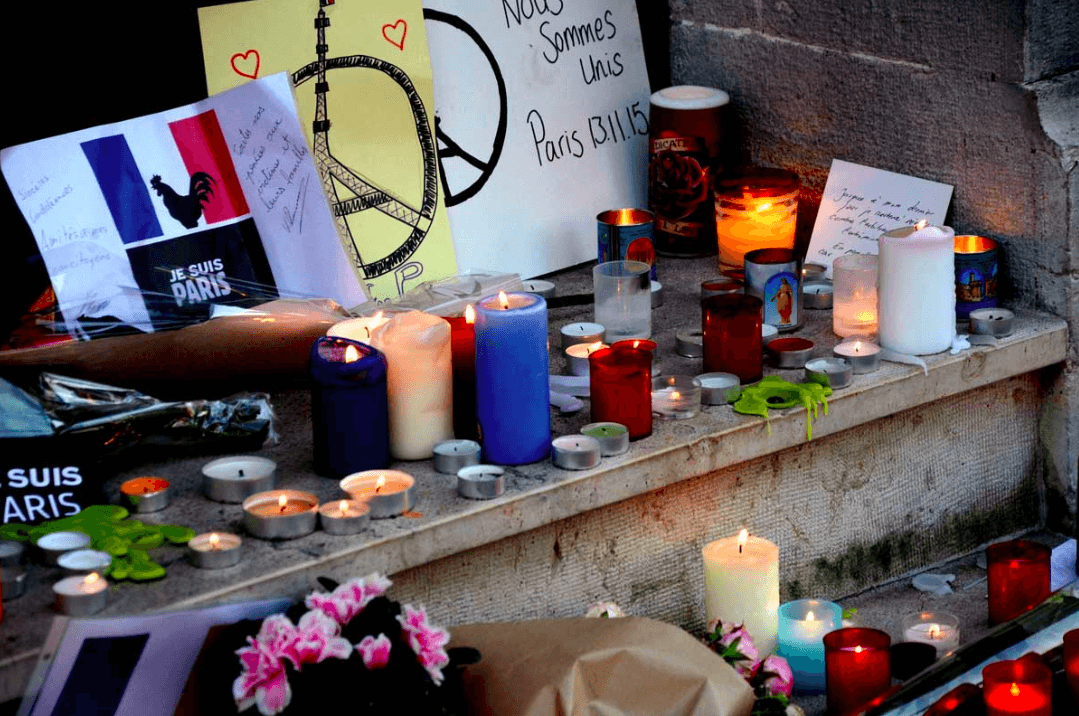

In the aftermath of Paris, much of the discussion in the West has focused on the interaction between how to handle Daesh, uphold national security, and cope with the Syrian refugee crisis.
As political positions have crystallised in the week following the attacks, there is increasing conflation of these three elements within the debate.
On the left there have been tendencies to link western policies to terror, and couple the refugee issue to the bitterly regretted Iraq war. The right, meanwhile, is clearly drawing a line from refugees to terrorism, and compelling the public to believe that only through robust action in Syria and closed borders can we deal with both.
As a result, Daesh, national security and refugees are being presented as three sides of the same coin, directly and by association. The manner in which this is being done is distracting at best. At worst, it’s an approach which will put many more lives at risk, both Western and Syrian.
***
For the first conflation, the hard truth is that while the refugee influx could bring a small number of people with murderous intent in with them, refugees should by all logic make awful terrorists.
What kind of refugee can travel to a country of which they know nothing at all, plan and assemble materials without detection, under the radar of security apparatus they’ve never encountered, and pull off a devastating attack? Even a determined and lucky refugee-cum-terrorist would need significant help and investment from domestic, established networks. It’s in those networks that the largest danger lies. Diverting attention from them at this time is playing Russian roulette.
The home-grown nature of the Paris attacks, with all the terrorists currently identified turning out to be French or Belgian citizens, is a far more troubling statistic. And not a new trend at all following on from attacks in London and elsewhere carried out by radicalised citizens.
It is true that no sane or electable individual would accept every Syrian refugee without a filtering process. It’s also clear that the broad discretion of intelligence agencies in accepting applicants is vital, considering the number of fraudulent and stolen passports on the black market. It’s worth noting that this is a security issue even without the refugee influx.
On a geopolitical level, millions of Syrians have already fled to neighbouring countries including tiny, fractured, tinder-box Lebanon, which exists day to day with no functioning government. While an attack in Europe is glamorous for Daesh, their ‘state’ is under serious pressure on the home-front. If Daesh could use refugees as a cover to destabilise Jordan, Turkey, or hit some of their many enemies in Lebanon, it would be happening ceaselessly. Using refugees as a secret key to unlock the rest of the Middle East would be practical and beneficial for Daesh, yet it isn’t happening.
Politicians focusing on a perceived risk of taking in Syrian refugees should be seen as either the cynical fear-mongers they are, or too blinded by paranoia to be trusted with strategic security.
 Claire Lehmann
The second conflation is the link between Western actions and the Paris attack. While this misthink won’t result in more Western deaths, at least in the near future, it does have the ability to stall any steps which could bring the Syrian tragedy under control in the mid-term.
There is enough of an ideological drive from within the Muslim world for Daesh to have sparked and then raged into existence, irrespective of Western actions. The void in Syria, coupled with Wahhabism (which existed centuries before petrodollars and the war on terror) should be enough to convince anyone of Daesh’s twisted, but frighteningly sincere foundation. Even those who imagine that every world event traces back to the white hand with which they beat themselves should be able to see here agency and ideology in a pure form. Daesh’s story will not end with a Nobel Peace Prize, or even a peace treaty. All Western actions to deny and avoid this fight will only condemn to death ever more innocents, and potential partners in a future peace.
Those who speak up in the aftermath of Paris to draw straight lines between Western actions and “logical” reactions see their world through glass that may not be rose tinted, but is just as warped. No politician should to be trusted with solving geopolitical crises if this is their conclusion following last week.
To put it simply, the three issues of Daesh, national security and refugees should be linked with caution. Unfortunately, the debate across much of the West, from the US to Poland, has been slipping into a quagmire of misanalysis. For the sake of both Western civilians and Syrian refugees, this needs to stop before they affect the formation of firm policies. The greatest risk to Western society isn’t from an outside threat, it’s from society itself.
***
When central values and institutions are eroded or cut down by political grandstanding, in a way that is beginning to show today across the US and Europe, a fundamental challenge is presented to these societies. In this regard, many on the right and left are contributing to a greater threat than the ones they claim to be reacting in order to solve.
Keep reading
Jerry Kaplan on AI Doomers
Payback Time for Steven Galloway
War Stories
Life in The Grim Old Days

In Defence of Academic Standards