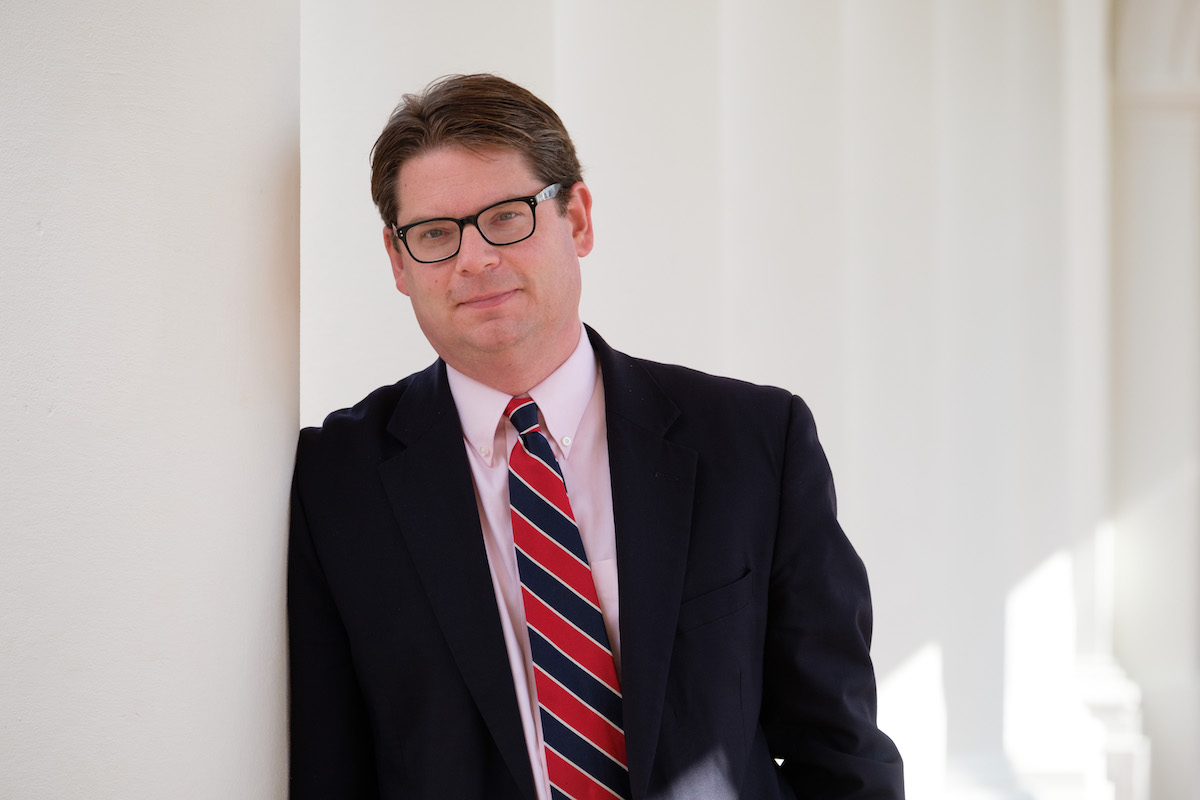
From Academia to Hollywood: An Interview with Tony Tost
Right now, I’m maybe most spooked by how a living, breathing cultural memory is seeming to evaporate.


Clay Routledge is a Professor of Psychology at North Dakota State University.
Right now, I’m maybe most spooked by how a living, breathing cultural memory is seeming to evaporate.
In the main, religion is a force for good in the families we examined in this report—from 11 countries ranging from Mexico to Canada, from the United States to Ireland.
Religion isn’t just like any organization or group that affords people the opportunity to socialize.
Turns out, the traditional masculinity that drives many of us men to be confident, assertive, adventurous, stoic, and willing to take risks for our goals, the people we love, and sometimes even complete strangers are bad for us and society.
When we tell ourselves we can be anything we want to be, which is the myth that emerges from Human Potential and self-esteem ideas, we’re setting ourselves up for unhappiness, because it’s simply not true.
Implicit in the blank-slate take on religion is the idea that religious faith may be diminished simply by changing the type of cultural inputs people receive.
The lack of viewpoint diversity among college and university faculty gives further reason for scholars to be concerned about pursuing and attempting to publish “controversial” ideas.
In this age of omnipresent social media, our greatest challenge may be figuring out how to take advantage of the benefits of the technology that can connect us to each other without suffering serious social costs.
Some of the greatest lessons I learned in actual social justice came from my parents, even if they didn’t use the term “social justice.”
Many argue that American colleges and universities are the envy of the world. Indeed, people from all over the globe flock here to pursue their educational goals.
Why? For one, there is very little political and ideological diversity in the social sciences.