Israel
Israel's Most Consequential Election
Israelis go to the polls on 27 October. After seventeen years of Netanyahu, former IDF chief Gadi Eisenkot is in the lead.
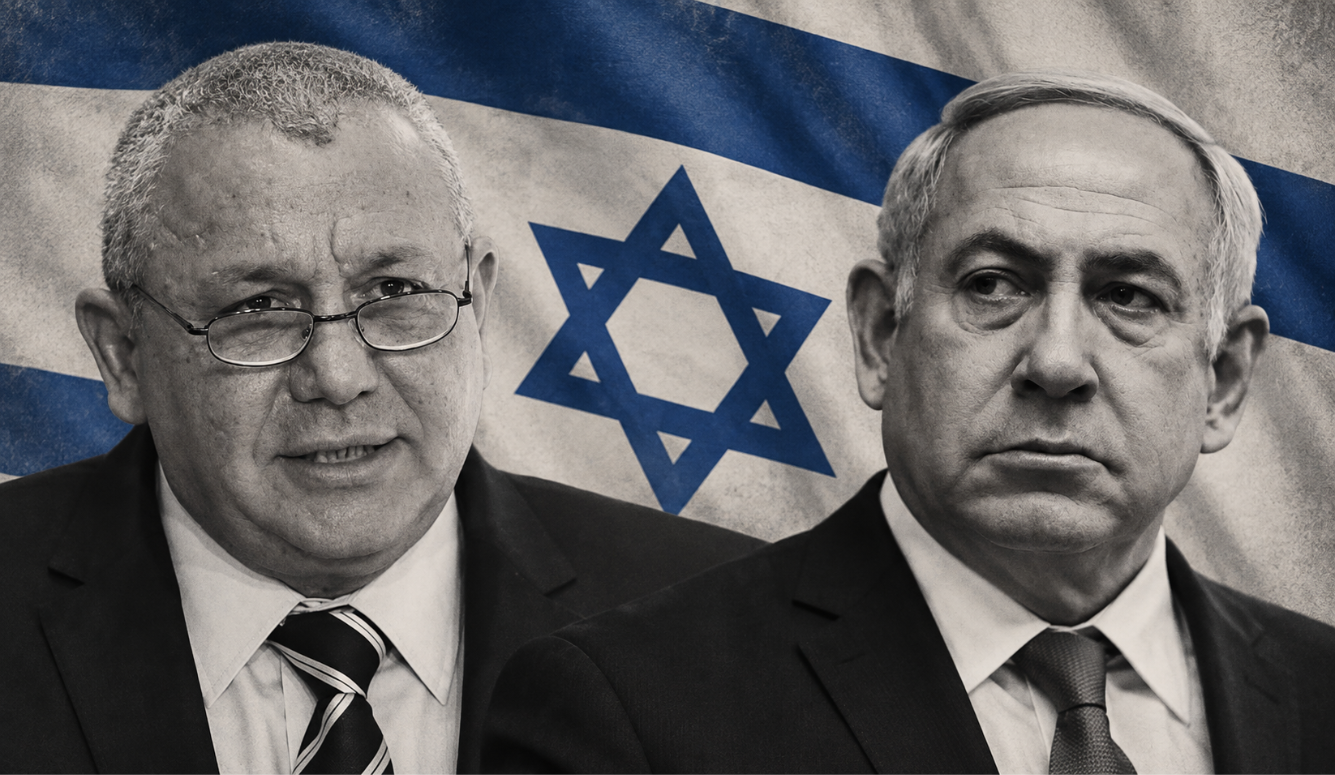
The countdown to the Israeli general elections scheduled for 27 October officially began on Tuesday (8 September) when the contending parties filed their lists of candidates with the Central Elections Committee. But many observers are fearful that sometime in the remaining six weeks the elections will be called off or indefinitely postponed, be it because of a resumption of full-scale warfare between Israel and Hamas in Gaza, Hezbollah in Lebanon, and/or Iran; or because of mass violence or even assassinations by supporters of incumbent prime minister Benjamin Netanyahu; or because of a descent into chaos in the occupied West Bank, where government encouragement has resulted in a steep hike in Jewish settler attacks on Arab rural communities that, in turn, could trigger armed resistance by Palestinians, especially by the Ramallah-based Palestinian Authority’s well-armed paramilitary police force, which so far has passively watched developments from the sidelines.
But the elections may take place as scheduled. All Israelis, and most foreign observers, are at one in regarding the coming vote as “historic,” a vote that may well chart Israel’s identity and course for decades. Netanyahu and his right-wing and religious coalition partners have governed the country since 2009 (apart from an 18-month interregnum during 2021–2022) and have fashioned a polity that is increasingly expansionist and religious, in effect guided by its messianic and ultra-Orthodox extremities, where the law and its traditional guardians—the Supreme Court, the attorney-general, and the police and Shin Bet security service—have been sidelined or weaponised against the opposition. Ideology aside, behind it all lies Netanyahu’s desire to abort his ongoing trial for corruption, now in its seventh year, which is likely to result, if it ever ends, in convictions and a jail term.
Opinion polls these past few months have almost consistently shown that the ruling bloc of right-wing and religious parties—currently holding 68 of the Knesset’s 120 seats but projected to win only 49–53 seats—will lose to the opposition bloc of parties, led by former Israel Defense Forces (IDF) chief of the general staff Gadi Eisenkot. Eisenkot’s party, Yashar (meaning “honest”), is generally projected to win 23–24 seats to Netanyahu’s Likud Party’s 19–21 seats, while the opposition bloc will win 53–57 seats to the Netanyahu bloc’s 49–53. Between the blocs are the two Arab lists, both viscerally opposing a new Netanyahu-led government, which are projected to win 11–15 seats.
The decline in the ruling bloc’s fortunes has been due to the failure to anticipate or forestall the successful Islamist Hamas attack on southern Israel on 7 October 2023 and the subsequent IDF failure to destroy Hamas and the Islamist forces that subsequently joined it in the assault, principally the Lebanese Hezbollah and the Islamic Republic of Iran; to the government’s effective exemption of the country’s Jewish ultra-Orthodox minority from military service while awarding that insular community giant financial subsidies to ensure its continued loyalty to the coalition and to underwrite its demographic expansion; to the general mismanagement, tainted by corruption (as embodied in Netanyahu’s personal comportment), of the country’s institutions, including the education system, transportation grids, and police force; and to Netanyahu’s effort to subvert the independence of the Israeli judiciary.

Eisenkot’s bloc may have the edge, but there are two rubs: his bloc may not—without the support of an Arab party—reach the necessary 61 seats to achieve a coalition-making majority in the Knesset; and, while Netanyahu’s bloc appears to remain loyal and rock-solid, Eisenkot’s bloc consists of a range of parties and figures who espouse divergent positions on crucial issues such as the future of the West Bank and relations with the Palestinians. This issue came to the fore last week when twelve Western democracies, including Britain, France, and Canada, announced plans to impose, in a few months’ time, economic sanctions against Israel’s West Bank settler community. The Israeli government’s (to my mind foolish) immediate response was to announce the closure of the UK’s consulate in Jerusalem, which serves the West Bank and East Jerusalem Arab population, and to expel its diplomatic staff. It is unclear whether and to what extent these Western sanctions will be imposed if the opposition bloc takes power and perhaps changes Israel’s behaviour in the West Bank after the 27 October elections.
The opposition or Eisenkot bloc consists of Yashar; the Beyahad (together) list headed by Naftali Bennett and Ya’ir Lapid, who briefly led the Israeli government in 2021–2022, between the two tenures of Netanyahu rule; the “Democrats Party,” an amalgam uniting the former left-wing Labor and Meretz parties, headed by former IDF deputy chief of the general staff Ya’ir Golan; and Yisrael Beiteinu (Israel is our home), headed by Avigdor Lieberman.
The problem, Eisenkot’s problem, is that the Democrats support the establishment of a West Bank-based Palestinian state and the removal of many of the Jewish West Bank settlements and hilltop outposts (and Golan is regularly denounced as a “traitor” by right-wing politicians) while Lieberman firmly opposes Palestinian statehood; Eisenkot, while opposing Palestinian statehood in the foreseeable future, has not ruled it out “down the road.” Lieberman and Golan reject the idea of inducting the ultra-Orthodox parties in any future post-election coalition while Eisenkot seems open to this possibility under certain conditions. And there are other major bones of contention—and there is no possibility of an Eisenkot-led coalition emerging without all of these constituent opposition elements.
Eisenkot has said that while hoping for an outright victory of the “Zionist” (meaning nationalist Jewish) parties, he is willing, at least initially, to contemplate establishing a “minority” government with 57–59 seats, while relying on Mansour Abbas’s United Arab List, which is expected to win four or five seats, either joining the coalition or at least supporting it from outside the government (hence a 61–63-seat majority in the Knesset). But Lieberman, who for decades has lived in the West Bank settlement of Nokdim, strongly objects to setting up a government dependent on Arab votes. (Indeed, Lieberman’s antipathy and distrust towards “the Arabs” is essential. Years ago, he proposed that Israeli Arab towns and villages along the West Bank border be transferred to Arab rule, should a Palestinian state emerge in the West Bank as part of a peace settlement. Israel’s Arabs, who constitute 21–22 percent of the country’s population, vehemently opposed this “transfer” proposal. To be fair, Lieberman also said at the time that he was willing to leave Nokdim if such an Israeli-Palestinian peace settlement was reached.)

These differences aside, the political identity and views of bloc leader Eisenkot remain vague in the extreme. Eisenkot is clearly the front-running contender for the premiership should his bloc win the elections (though Lieberman and Bennett have both declared their interest in the job as well; both, unlike Eisenkot, are experienced politicians who have served long stints in senior cabinet positions, including—in Bennett’s case—the premiership in 2021–2022). Eisenkot is new to politics. He served 41 years in the IDF, rising to chief of the general staff, before being elected to the Knesset, where he served for two and a half years, and then as a cabinet minister (without portfolio) for only eight months. His main advantage over Netanyahu is one of character and image. Unlike the arch-manipulator and serial liar Netanyahu, Eisenkot projects honesty, integrity and straightforwardness; and he is an affable, non-divisive figure. He is of Moroccan Jewish parentage (and, if he wins, will be the first Israeli prime minister of Sephardi, working-class origin). Adding to his gravitas and popular appeal, Eisenkot lost a son and two nephews—all combat soldiers—in the war against Hamas. By contrast, Netanyahu’s son, Ya’ir, sat out the war in a luxury hotel in Miami. But Eisenkot has been vague about his views on the future of the West Bank and the Gaza Strip, and on Israeli-Palestinian relations, and on what he would do to reform the Israeli government, beyond insisting on the establishment of a state commission of inquiry to look into the current war’s origins and the events of 7 October, something Netanyahu has strenuously, manipulatively opposed these past three years.
Since 7 October, Netanyahu has tried to distance himself from that day’s debacle—in which the Gaza Islamists slaughtered 1,200 Israelis and took 251 hostage—and to lay the blame squarely on the heads of the IDF and the country’s intelligence services. Indeed, his wife Sara (in interviews), his son Ya’ir (in numerous posts), and Netanyahu’s political acolytes have for years stated explicitly or implied that the country’s security chiefs (and Ya’ir Golan) had had advance knowledge of that Hamas attack and somehow conspired with the attackers to engineer the debacle in order to politically embarrass Netanyahu. This issue was brought into stark focus on 8 September, when the daily newspaper Haaretz published a scoop—drawn from a forthcoming book by the journalists Shlomi Eldar and Ruth Yuval—reporting that about ten days before the Hamas assault, United Arab Emirates president Mohamed bin Zayed had telephoned Netanyahu and, in a 45-minute conversation, warned him that Hamas leader Yahya Sinwar was preparing a major operation that would cause bloodshed, destabilise the region, and damage the Abraham Accords. In the conversation, the report said, Netanyahu brushed the warning aside—and subsequently failed to inform Israel’s security chiefs of the conversation. In the weeks before 7 October, Netanyahu had similarly brushed aside warnings by Egypt and Israel’s security chiefs that an attack was imminent (though the security chiefs pointed to Hezbollah as the likely attacker). For years before 7 October, Netanyahu was fixated on the idea that Hamas was “good for Israel” as a counter to the rival Fatah-based Palestinian Authority, which he saw as a threat because it advocated a two-state solution to which Netanyahu, an annexationist when it came to the West Bank, was opposed.
Netanyahu’s office dismissed the Haaretz report as fake news, and the next day Netanyahu himself denounced it on X as a “sinister libel” timed to the election campaign, insisting that no call with bin Zayed had taken place between early September 2023 and 7 October and that his call logs showed no trace of one. He has instructed his lawyers to sue the paper and the reporter Shlomi Eldar, and Likud has demanded a criminal investigation into the journalists. But the UAE government, pressed for a response (and Netanyahu apparently had asked bin Zayed to issue a denial), merely said that it cooperated with Israel on intelligence matters and would not comment on specific leader-to-leader exchanges—which most commentators interpreted as an implicit endorsement of the Haaretz report.
Netanyahu has for years been at pains to divert the blame for 7 October away from himself and to focus the public’s attention on other matters, such as advancing “Jewish values” and the danger of Palestinian terrorism. Eisenkot and his political partners would do well to keep voters’ eyes focused on 7 October.
Another potential problem troubling opposition supporters is the Yashar Party Knesset candidates’ list. While happy that about half the list consists of women—who barely feature in the ruling parties’ candidates’ lists—they are worried that most are young and politically inexperienced, with unvetted political views. If Eisenkot indeed becomes prime minister, he may discover that some of “his” Knesset members may prove dissentient when it comes to issues such as the future of the West Bank and Gaza.
For his part, Netanyahu—who, as prime minister, has been busy running the country with insufficient time to attend to election issues—has already encountered serious problems with his Likud Party list. He twisted party stalwarts’ arms to ensure that he would control the list and personally select nine of the candidates; he had hoped to fill the slots with prominent military or professional figures who might attract undecided voters. But most of those he approached, such as former IDF chief of the general staff Gabi Ashkenazi, turned him down flat. So the Likud list ended up with a collection of party hacks and toadies such as Yaakov Bardugo, a prominent mud-slinging panellist on Netanyahu’s “own” TV channel, Channel 14.
But other party lists have here and there provided rays of light. The first and most startling innovation has been the inclusion of Yoav Segalovitz—a (Jewish) former senior police officer who served as an effective deputy minister of internal security in Bennett’s interregnum government in 2021–2022—in the number-two spot on the United Arab List, headed by the ex-dentist Mansour Abbas. Abbas these past years has walked a difficult tightrope between assuaging Jewish sensibilities and catering to his (Arab) electorate’s predilections. The UAL’s original constituency was Islamist Muslim Brotherhood supporters. But in recent months Abbas has disentangled the party from the Brotherhood’s spiritual guides, publicly recognised Israel as a Jewish state, and condemned the Hamas assault of 7 October. But he has pointedly refused to designate Hamas a terrorist organisation and continues to espouse the establishment of a Palestinian state (albeit alongside, not instead of, Israel).
Abbas continuously declares that what interests him is not regional geopolitics but improving the lot of Israel’s Arab citizens. And Abbas and Segalovitz found common ground in a desire to break the back of the Arab gangs and protection rackets that hold the Arab minority in thrall. Some 250 Israeli Arabs were murdered by fellow Arabs in 2025 in gangland and clan feuds (they often overlap), and another 170 have been murdered since January, compared with 47 Jews murdered in 2025 (no figures are available for 2026)—even though Jews are nearly four times more numerous than Arabs in Israel’s population. Abbas and Segalovitz hope that the post-election government, with Segalovitz in a position of power (as the new minister for national security?), will be able to radically improve the situation.
Ra’am party head Mansour Abbas and Yoav Segalovitz — a Jewish, Zionist former police official, lawmaker and deputy minister — announced Monday evening that Segalovitz will run with Ra’am, an Arab party, in the October 27 election. The party has never included a Jewish lawmaker.… pic.twitter.com/ebxCwwX4WD
— The Times of Israel (@TimesofIsrael) September 1, 2026
Israel’s Arabs have rightly blamed Netanyahu’s National Security Minister Itamar Ben-Gvir, who controls the police, for the past years’ dismal homicide statistics; all know that he cares not a jot for the welfare of Israel’s Arabs. Indeed, on occasion he has advocated their expatriation. But most commentators (rightly) add that Arab social mores and “culture,” and a reluctance to help the police, have also been at fault.
But Segalovitz’s induction into the UAL may have a significant political result as well: it may pave the way for the list’s co-option into a future Eisenkot-led government. His appearance on the list, and in the number-two spot, will likely make such a co-option more palatable to the Jewish public, which has moved dramatically rightward and is suspicious of “Arabs” in the wake of the Islamist massacre of Israelis—including, incidentally, several dozen Israeli Arabs—on 7 October.
A second positive development has been the removal of Jafar Farah from the Arabs’ anti-Zionist “Joint List,” an alliance of the three small Arab parties opposed to Abbas. Farah was accused by a string of Arab women of sexual harassment. Farah denies the allegations, but Hadash suspended his candidacy and the slate went in without him. For decades, the problem of sexual harassment in Israeli Arab society was taboo. Now, with Farah’s ouster, Arab women’s organisations have been invigorated to address the issue resolutely.
A number of major issues cloud the forthcoming election campaigns and their eventual outcome. One concerns the small outlying parties that may not pass the 3.25 percent threshold of valid votes required to gain seats in the Knesset. In the November 2022 elections, the left-wing Meretz Party and the anti-Zionist Arab Balad Party both failed to attain the necessary 3.25 percent and their combined 290,000 votes ended up in the trash can, helping Netanyahu win his 64-seat majority in the Knesset. Netanyahu now faces a similar potential problem. Despite great effort, he has been unsuccessful in unifying two of his main right-wing outliers, the Am Yisrael (Jewish People or People of Israel) Party, led by Ofer Winter, a retired right-wing general, and the Religious Zionist Party, headed by Finance Minister Bezalel Smotrich. The latest opinion polls have shown that both parties are hovering around the 3.25 percent mark and one or both may fall short and fail to win any Knesset seats. Many of their supporters are disgruntled Likud veterans.
In the gap between the Eisenkot and Netanyahu blocs, there are a number of splinter parties of indeterminate intentions, including the Blue and White Party headed by Benny Gantz, another former IDF chief of the general staff, and the Reservists’ and Economic List, led by Lieutenant-Colonel (reserves) Yoaz Hendel and economist Yaron Zelicha. Both are calling for the establishment of a “Zionist” coalition government whose core will be Netanyahu’s Likud and Eisenkot’s Yashar Party, and hope that their electoral performance will give them the crucial “swing” power to force the two bloc leaders to combine. But so far, according to the polls, both splinter parties have fallen short of the necessary 3.25 percent. Yet both appear determined to run the course up to 27 October—and this may result in hundreds of thousands of lost votes.
Another issue bearing on the elections, barely touched upon in the media, is the threat of violence, including assassination, by right-wing extremists, with Eisenkot at the top of the potential target list. So far, with Netanyahu apparently active behind the scenes, the relevant governmental bodies have failed to accord Eisenkot protection by Unit 730 of the Shin Bet, which is responsible for protecting public figures and Israeli democracy. Ya’ir Golan also remains unprotected by Unit 730. (In 1995, Unit 730 failed to protect Prime Minister Yitzhak Rabin, who was gunned down by a right-wing extremist, Yigal Amir, who is still in jail. The unit was subsequently reorganised and enlarged and may today be more efficient.)
Another issue is the Israeli citizens currently living abroad (there are about half a million of them, at least 300,000 with the right to vote). By law, Israelis, apart from diplomats and official emissaries, can only vote in Israel itself. Commentators agree that most of these potential voters oppose the Netanyahu regime and its policies. In the past few weeks many of these expatriates have been busy organising special flights to Israel—as through the “Fly&Vote” initiative—to facilitate voting on 27 October. But right-wing politicians and activists have been trying to block these efforts, arguing that such flights, which may be partially subsidised, constitute election bribery. Israel’s Transportation Ministry has reportedly been looking into ways to prevent special chartered flights reaching the country before 27 October. The Interior Ministry has also, over the years, removed some expatriates from the electoral rolls—and Israel’s Supreme Court has declined to order the ministry to reinstate them, arguing that there is insufficient time before 27 October for such a rectification.
A related issue barely mentioned in the media has been the steady emigration of middle-class Israelis during the past three years, starting with the hammer blows of Netanyahu’s campaign against the judiciary and the three years of war. Most of these emigrants are seen as potential anti-Netanyahu voters. Hundreds of thousands of Israelis serving in reserve IDF units have been in uniform for two hundred and even five hundred days during the past three years, with severe, sometimes devastating, effect on family life, careers, and businesses, and tens of thousands have reportedly emerged from front-line service physically and psychologically traumatised.
Government statistics show that since the start of 2023, some 300,000 Israelis have resettled abroad, mostly in Western Europe and North America, most of them young or middle-aged, well-educated Ashkenazi professionals and high-tech workers. A Tel Aviv University study published on 6 September showed that 1,370 of the emigrants from 2023–2025 were physicians, many of them specialists. The largest concentration of emigrating doctors was from the Tel Aviv district. Overall, the country lost 6 percent of its surgeons and of its skin, eye, and ear-nose-and-throat doctors during this period. This rate of expatriation was almost twice as high as in the same three-year period a decade ago. However, the study qualified its conclusions by stating that some of the leavers may eventually return home.
So what’s going to happen on 27 October?
Netanyahu and his bloc partners in all likelihood will emerge with 49–53 Knesset seats but will be unable to form a coalition government replicating the current regime. So Israeli President Yitzhak Herzog, by law, will ask the head of the biggest party, meaning Eisenkot, to put together a coalition.
Eisenkot has repeatedly stated that he believes the Jewish opposition parties—Yashar, Bennett-Lapid’s Beyahad, Lieberman’s Yisrael Beiteinu, and Ya’ir Golan’s Democrats—will win 61 (or more) seats and be able to form a coalition without support from any Arab party.
But what if he is wrong? What if Eisenkot and company win only 57 or 59 seats? He has said he will form a minority government and presumably—though he has not said this—invite the UAL (Abbas-Segalovitz) to join him, or ask them to support his minority coalition from outside. But will Eisenkot’s partners, Bennett-Lapid and Lieberman, who have both rejected Arab participation in a future coalition, and perhaps some of Yashar’s new Knesset members, go along with this? Or will they, and Eisenkot himself, succumb to the alternative, of (however reluctantly) coalescing with Netanyahu and the Likud, and agree to a two-headed “rotating” government, with Eisenkot and Netanyahu each serving for two years as prime minister, in rotation, much as Labor’s Shimon Peres and Likud’s Yitzhak Shamir rotated as prime ministers back in the 1980s?
Another possibility is that Eisenkot and his opposition partners will resign themselves to continued Netanyahu rule, say for another six months, in a transitional government until new elections are called and held, and hope that they will then obtain the necessary 61 seats to replace him.
For the moment, Israel’s—and perhaps the Middle East’s—future is up in the air, with any number of scenarios possible, many of them involving major renewed war-making. Most Israelis I know hope that the country, and Eisenkot, will weather the coming six weeks and emerge with an electoral victory and a post-Netanyahu government. But who knows.
Quillette invites thoughtful responses to its essays.
Selected responses are published once per week as part of a curated Letters to the Editor feature. If selected, letters appear under the contributor’s real name and may be edited for clarity and length.
To submit a letter for consideration, please email [email protected].