Economics
The Retro Fashion of the Wealth Tax
Every few decades, the ideas with the worst track records come back into style.
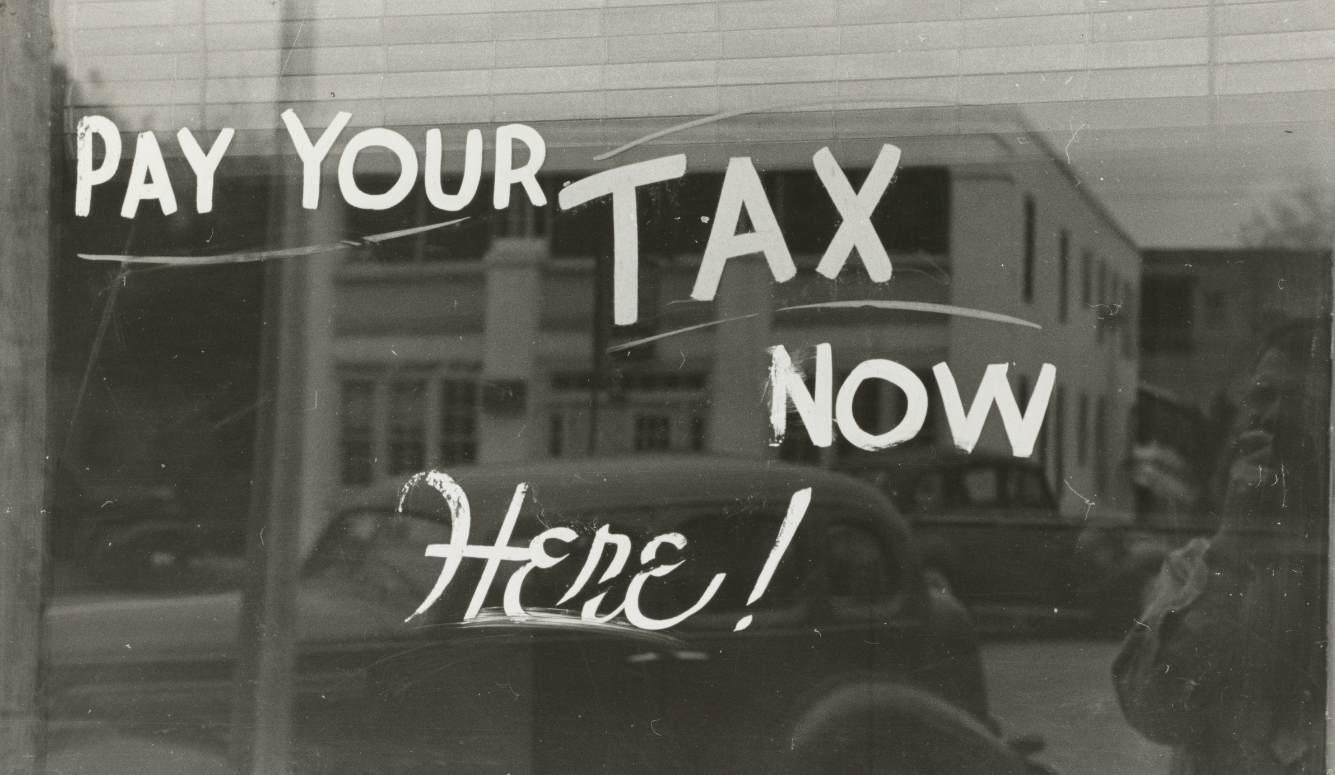

One of the signs that you are well into middle age is that you recognise retro fashions, because you are old enough to remember the last time these styles were around. Generation Z has recently revived fashions from the late 1990s and early 2000s, which slightly pains me, because I remember that period very well, and would like to think that it was not actually all that long ago.
Policy ideas follow fashions and retro fashions too, and unfortunately, there seems to be a negative selection bias at work, where it is always the ideas with the worst track record that are the most likely to make a comeback.
A few examples:
In the 1980s, Sweden introduced a financial transaction tax, which was supposed to curb harmful financial speculation and raise large amounts of revenue in a painless way. It did neither. It just led to capital flight, made financial markets more volatile by reducing the number of transactions, and while it did raise some money (almost any tax does), it reduced revenue from other taxes by discouraging business activity. A few years later, it was scrapped again.
But in the early 2010s, the financial transaction tax—now rebranded the “Robin Hood Tax”—made a sensational comeback, and was suddenly all the rage across Europe and America. The Occupy movement, which had sprung up in the wake of the global financial crisis, managed to create a real hype around it, getting Hollywood actors and other celebrities to endorse it. To its supporters, the Robin Hood Tax was the One Neat Trick that would raise enough revenue to obviate the need for any “austerity” measures, while also preventing future financial crises in the process. Its proponents were curiously uninterested in the previous failure of their idea in Sweden; in fact, when ideas are in fashion, it is often considered gauche to even mention the fact that they have been tried before, and found wanting.
Then in the second half of the 2010s, just over a quarter of a century after the supposed “end of history,” Marxism came back into fashion, as the “Millennial Socialism” hype took off. Most of those Millennial Socialists had no interest whatsoever in analysing why every previous Marxist regime had ended in failure. It will somehow be different next time, and that, to them, is all there is to know.
The call for rent controls is another policy idea that periodically comes back into fashion, completely undeterred by past experience. Britain first introduced rent controls during the First World War as a “temporary” emergency measure, but as Milton Friedman liked to point out, nothing is so permanent as a temporary government programme. Britain’s rent controls remained in place until the late 1980s, by which time there was not much of a private rental sector left in the country. Once they were gone and the private rental sector recovered, rent controls disappeared from mainstream political discourse for a while. But by the mid-2010s, they were back with a vengeance, with prominent political figures such as the London mayor, Sadiq Khan, adopting them as their flagship policy. The fact that virtually all economists, including left-wing ones such as Paul Krugman, oppose them, and that they have demonstrably failed on numerous occasions, did not impress rent control campaigners in the slightest. It will be different next time; you just need to believe in it.
The retro fashion policy idea of the hour is the wealth tax. I have vague memories of wealth taxes being discussed in the 2000s, but mostly in the context of their being abolished everywhere. The Netherlands abolished theirs in 2001, Finland, Iceland, and Luxembourg followed suit in 2006, and so did Sweden in 2007. Denmark, Germany, and Austria had already done so in the 1990s, and even France, not a country that is famous for under-taxing people, later downgraded its wealth tax to a more conventional high-end property tax. Today, there are only three European countries left that still have wealth taxes—Spain, Norway, and Switzerland—and the Spanish one doesn’t really count, because it has so many exemptions that it hardly raises any revenue.
There are plenty of bad taxes, if by “bad” we mean taxes that most economists, regardless of their political persuasion, would disapprove of. Such taxes can nonetheless have a lot of staying power: it is rare for governments to just abolish bad taxes outright, and certainly for so many governments to do so in short succession. So when this does happen, we should pay attention. Why did so many European governments abolish their wealth taxes?
The answer is simple. They did so because of their administrative complexities, their limited revenue-raising potential, the capital flight they cause, and their negative impact on investment. It is not that wealth taxes were a disaster—they were just generally considered more trouble than they were worth.
 Kristian Niemietz
Nonetheless, today, wealth taxes are suddenly all the rage again. Californians will vote in November on Proposition 40, a one-off five percent levy on the state’s billionaires, and similar initiatives are underway in other US states and across much of Europe. To its supporters, the wealth tax is a multi-purpose tool, which will fund all sorts of social and environmental programmes while also decreasing wealth inequality and enabling tax cuts for the non-wealthy. Needless to say, no actually existing wealth tax has ever achieved half of that. But as is usually the case when an idea is in fashion, its proponents show very little interest in its actual track record. So what if it has failed before? It will work next time. Because… it just will.
It will not, though. There are reasons why wealth taxes turned out the way they did, and those reasons have not gone away.
Take the issue of administrative complexity. There is a reason why wealth taxes are so exceptionally bureaucratic. For taxes on income, profits, or consumption, it is, at least in principle, relatively easy to work out who owes how much. We know how much people earn, because it says so in their employment contracts. We know how much profit companies make, because it says so in their accounts. We know the price of consumer goods, because it is printed on the price tag. So we just need to take those numbers, subtract a tax-free allowance, and then apply the tax rate.
Wealth taxes have no equivalent of that. Unless an asset changes hands, we have no idea how much it is worth. I have, for example, no idea how much the building in which I am writing this is worth, because it has not been sold in a very long time. Nor do I have any idea how much the media platform I am writing this for is worth, because Quillette is a founder-owned company which has never been sold. Of course it is possible to get valuations for buildings and companies, but the point is that you have to do this every time the wealth tax bill comes due.
As for revenue: no country has ever managed to raise much more than one percent of GDP from wealth taxes, and most wealth taxes have raised much less than that. If it is tax revenue you are after, wealth taxes are a non-starter.
This is not to say that one percent of GDP is an absolute upper limit. We could imagine wealth taxes that raise more than that, even if they have never existed. It is just that a revenue-maximising wealth tax would have to be almost the precise opposite of what wealth tax campaigners are proposing today.
If you designed a wealth tax with the aim of maximising revenue, you would make it as broad-based as possible. You would set the tax-free threshold low, so that lots of people have to pay it, and you would have few or no exemptions. You would target middle-class wealth, not just the super-rich. You would apply it to primary residences, private pension funds, and non-tradable businesses.
That is very much not what today’s wealth tax campaigners are talking about. What they have in mind is an ultra-progressive wealth tax, which specifically targets billionaires and multi-millionaires, i.e. the people at the very top of the wealth distribution.
Both versions are possible. A wealth tax can be broad-based, or it can be ultra-progressive. You can campaign for either of those. But what you cannot do—or at least, should not do—is campaign for one version, and promise the benefits of the other. You cannot campaign for an ultra-progressive wealth tax and promise the revenue of a broad-based one, because it is not going to deliver that. An ultra-progressive wealth tax, which is only paid by the wealthiest 0.1 or 0.2 percent of the population, would raise even less revenue than its historic predecessors, which were paid by a significantly larger proportion of the population.
This is not some minor technicality. One of the main reasons why wealth taxes are so popular is that their proponents vastly overstate the extent of wealth inequality. They give people the impression that we live in a plutocracy, where all the wealth is hoarded by a few dozen Elon Musk-like figures while the rest of us own nothing. This is not true, though. That description may more or less work for Russia or South Africa, but it does not remotely describe the reality of Europe, Japan, Canada, Australia, New Zealand, or even most US states. In these economies, there is far more middle-class wealth than there is billionaire wealth. If you want to raise non-trivial sums of money, you cannot let the former off the hook. And if you are prepared to tax middle-class wealth, you have to ditch the whole “the people versus the billionaires” rhetoric that makes wealth taxes so popular.
The ultra-progressive wealth tax that today’s campaigners have in mind would also rest on a much narrower base than its historical predecessors, which makes it much more vulnerable to adverse responses. If a wealth tax applies to, say, ten or fifteen percent of the population, you can afford to lose a few of them. If it only applies to 0.1 or 0.2 percent of the population, every taxpayer you lose counts. Thus, the discussion about whether a wealth tax would trigger a mass exodus of wealthy people is missing the point: it would not even have to.
All in all, wealth tax campaigners have not just refused to learn the lessons from previous failures of their idea. They have managed to come up with a version of a wealth tax which would almost certainly be even worse than previous ones. I do hope it goes out of fashion again before it can cause any real economic harm, although I already dread the next retro fashion that is going to replace it.
Quillette invites thoughtful responses to its essays.
Selected responses are published once per week as part of a curated Letters to the Editor feature. If selected, letters appear under the contributor’s real name and may be edited for clarity and length.
To submit a letter for consideration, please email [email protected].
Keep reading

What the Navigators Knew

Gemma Tognini on Australia’s Political Revolt

Rubio in Athens
How France Lost Control of Its Streets