Skip to content

Education

The Learning Crisis Begins Before the Classroom

Differences in height between men and women—a biomarker of stressor exposure in childhood—suggest that poor early health and nutrition constrain what children are achieving at school.
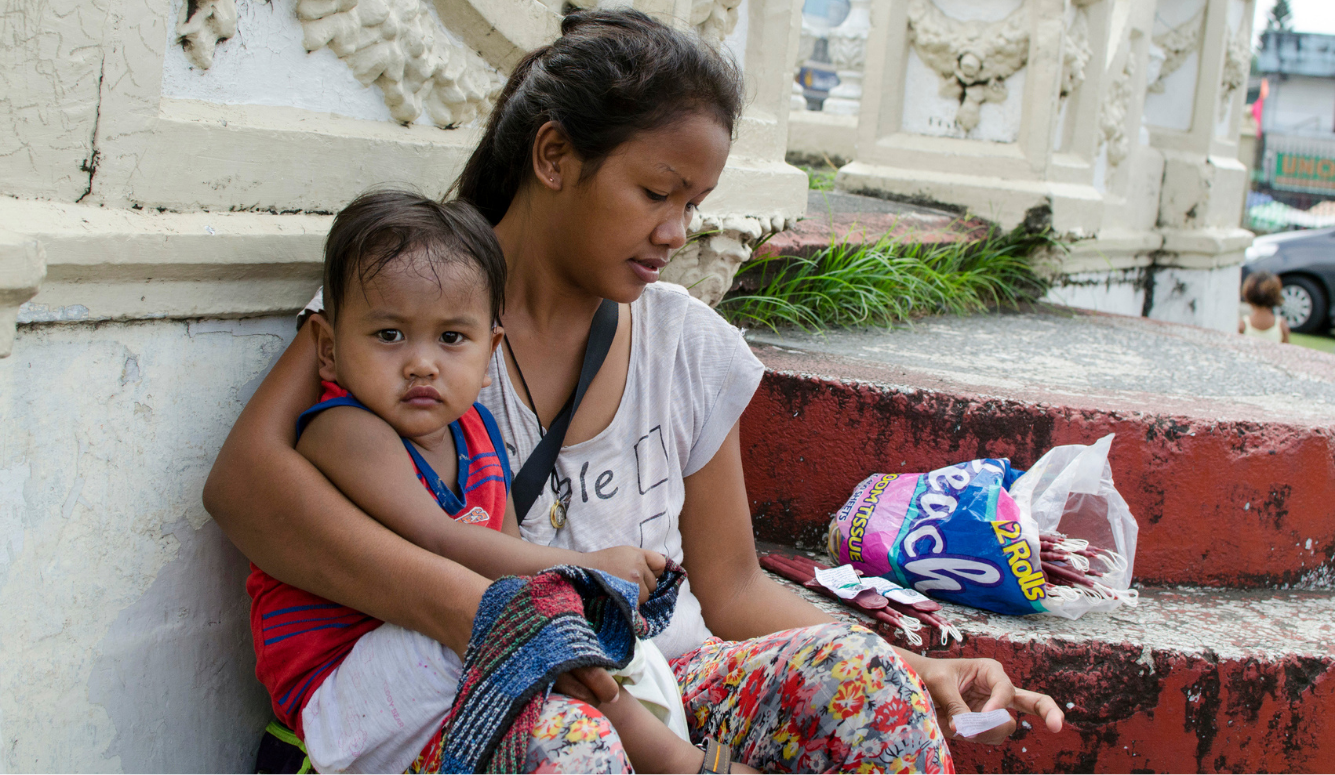
Woman holding a baby boy sits on church steps beside packets of candles for sale.
San Pablo City, Laguna, Philippines - December 9, 2016: Mother with baby son at church yard patio selling candles as a means of basic support. Getty

The scale of the global learning crisis is difficult to exaggerate. A recent analysis of international and regional assessments estimated that at least two-thirds of the world’s young people fail to acquire the basic skills needed to participate effectively in a modern economy. In affluent countries, roughly one child in four falls short. In low-income regions, the proportion is far higher. Published calculations estimate that broad improvements in children’s academic development could add more than US$700 trillion to the world economy by 2100. 

The standard response is to demand better schools: more competent teachers, stronger curricula, greater accountability, higher standards, and longer school days or more years of education. All of these may help, but they begin too late for many children. The comforting assumption that schools can compensate for almost any earlier disadvantage is false in many cases; a child whose prenatal and early development is plagued by poor nutrition and health will often have a reduced capacity to later benefit from schooling.

Our research examined a biological record of those early conditions: the average difference in adult height between men and women. Across countries, populations in which the average height between the sexes is greater (that is, greater sexual height dimorphism) tend to perform better on international measures of academic achievement, at least up to a point. This relationship suggests that poor prenatal and early-childhood conditions can suppress not only physical development but also the capacity to profit from schooling.

A Biological Record of Childhood Conditions

Height is not merely a product of inheritance. At the population level, it also records nutrition, infectious-disease exposure, maternal health, and other conditions experienced during development. When living conditions improve, average height generally rises. But the increase is not identical in the two sexes.

Men are taller than women in every well-sampled human population, but the magnitude of that difference varies. In a recent cross-national and cross-generational study, we found that improvements in living conditions were associated with gains in male height and weight that were more than twice as large as the corresponding gains in women. As a result, healthier populations tend to exhibit a larger sex difference in stature, while populations exposed to heavier developmental stressors tend to exhibit a smaller one.

This pattern makes sense biologically. Boys begin life on a steeper growth trajectory—they are already about 1.6 percent longer than girls at birth. Rapid growth, however, is expensive, and this creates vulnerability. Poor maternal nutrition, childhood illness, and inadequate food compromise boys’ growth more strongly than girls’ growth, increasing boys’ risk of stunting and reducing the height they eventually attain: boys under five are more likely than girls to be stunted, wasted, or underweight.

This makes the male–female adult height ratio a potentially useful population-level marker of health during early development. But why not simply look at adult heights themselves? Absolute national height is difficult to interpret because populations innately differ in their typical stature. Instead, our approach of comparing men against women within the same population greatly reduces that problem. The measure of male-female height ratio is far from perfect, but it captures a meaningful feature of developmental conditions: when growth is constrained, the more condition-sensitive male trajectory is disproportionately curtailed.

What the Height Gap Predicts

We combined adult-height data with harmonised scores from international academic assessments from the World Bank. Our prediction was that as the sex difference in height was approaching its maximum potential—indicating good early developmental conditions—academic or cognitive performance would increase along with it. 

That is broadly what we found across countries. A one-percentage-point increase in the male–female height difference was associated with a modest but noticeable increase in academic achievement. The relationship largely levelled off once men were about eight percent taller than women. Together, this suggests that where malnutrition and disease are severe, improvements can release substantial unrealised potential, and once those constraints have receded, further gains in health produce diminishing academic returns, and other influences—school quality, family environment, incentives, culture, institutions, and various individual differences—account for more of the remaining variation. This pattern resembles the Flynn effect: the large rise in measured cognitive performance seen across many countries during the 20th century, followed in some highly developed countries by slowing or stagnation.


Diet Reporting Is the Real Fake News | John Staddon | Quillette
Experimentation is usually impossible for ethical and practical reasons—subjects cannot be sacrificed and dissected to see the physiological effects of different food regimens.

This represents an important correction to the way educational inequality is often discussed, especially with international comparisons. It is tempting to treat achievement gaps as though they are generated mainly by what happens in school. But the same lesson, teacher, or textbook will not yield the same result when children differ markedly in the health and nutrition that supported their neuronal development.

The Classroom Cannot Undo Every Early Deficit

Education unquestionably improves academic performance and expanding access to effective schooling remains essential. But education and developmental health are complements. Better health allows children to gain more from education—a rigorous education converts that greater capacity into more advanced knowledge and skills.

A long-running nutrition intervention in Guatemala illustrates the point. Pregnant women and young children in several villages received supplements containing additional calories, protein, and nutrients. The children were followed into adolescence—those who had received the more substantial supplements showed advantages in academic achievement and general cognitive ability. The gains were especially marked among children from poorer backgrounds and increased with years of schooling. The intervention thus enabled children to gain more from their subsequent education.

The timing of support is crucial. Prenatal development and the first years after birth are periods of unusually rapid brain growth. And different neural systems require particular macro- and micronutrients at different stages. Research on brain energetics shows that the brain’s demand for glucose rises sharply after the first two years and peaks at roughly five years of age, when body growth has slowed.

The policy implication is that interventions must match the nutritional needs of the developing brain and must arrive during the periods when particular cognitive systems are the most sensitive. By the time a poorly nourished child is struggling with reading or arithmetic, some of the damage may already be difficult to overcome.

Education Policy Must Begin Before School

Educational bureaucracies manage schools while health bureaucracies manage maternal and child health. Development agencies divide budgets into separate programmes. Children do not develop in these administrative compartments, however, and poor prenatal nutrition, maternal illness, repeated infection, micronutrient deficiency, and early stunting can all carry forward into the classroom and increase the odds of educational failure.

A serious learning strategy for developing countries therefore requires more than school reform. It should include maternal nutrition and healthcare, prevention and treatment of infectious disease, reliable access to sufficient protein and energy, and appropriate micronutrient provision and support through the preschool years.

None of this reduces the responsibility of schools. Poor teaching wastes healthy potential, just as poor early health limits the returns from good teaching. The point is that the two failures compound one another. Focusing on enhancing education while neglecting child health will have limited results in poorer nations.

The largest untapped education reform may therefore begin not with a new curriculum, a new test, or another year of compulsory schooling, but before the child is even born. Focusing here could represent the most effective way to develop the knowledge economies, and in turn the financial economies, of developing countries.


Quillette invites thoughtful responses to its essays.
Selected responses are published once per week as part of a curated Letters to the Editor feature. If selected, letters appear under the contributor’s real name and may be edited for clarity and length.

To submit a letter for consideration, please email [email protected].

headshot

David C. Geary

David C. Geary is a Curators’ Distinguished Professor in the Department of Psychological Sciences and the Interdisciplinary Neuroscience Program at the University of Missouri.

headshot

Lewis G. Halsey

Lewis G. Halsey is a Professor of Environmental Physiology in the School of Life and Health Sciences at the University of Roehampton, London.