Podcast
Why So Many Young Men Are Giving Up on Work
Sydney psychiatrist Tanveer Ahmed on why men who quit work aren't depressed but demoralised, and how mental health labels became a rival source of status and dignity.
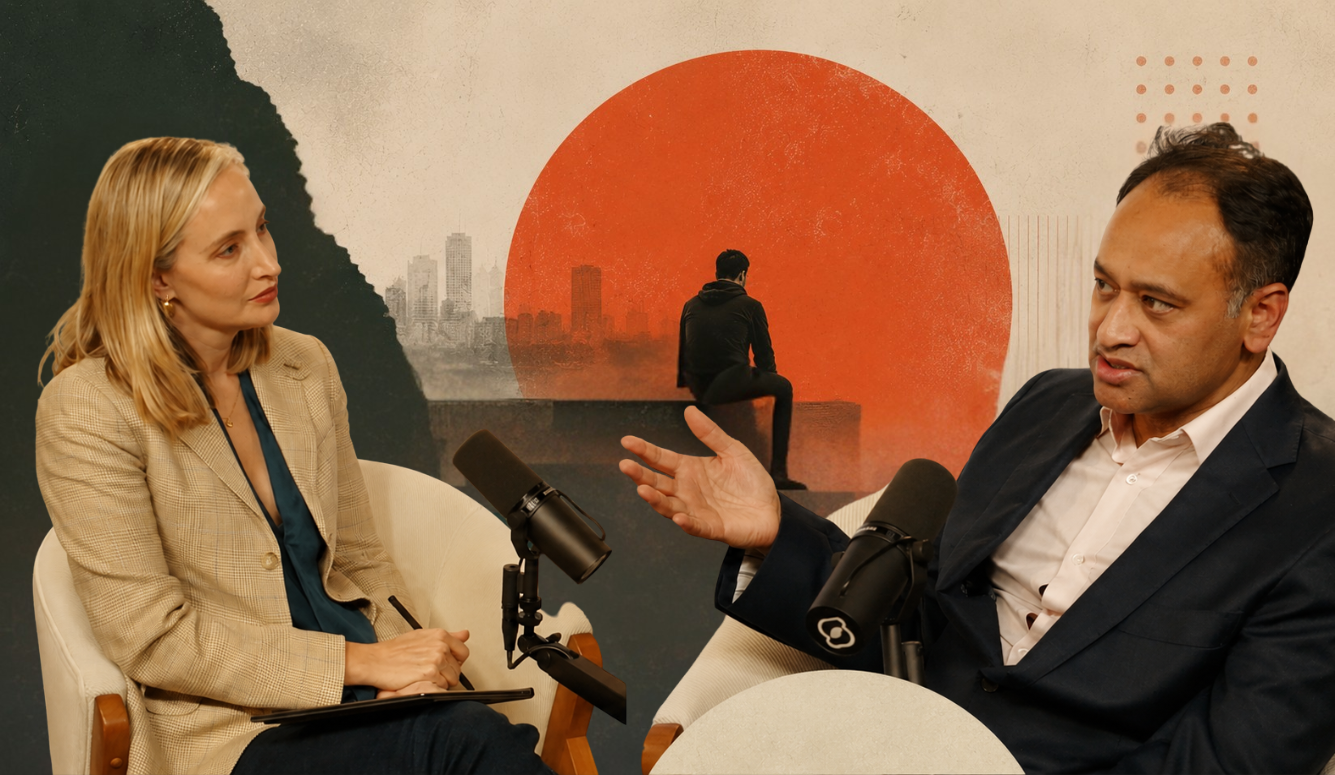

My guest today is Tanveer Ahmed. He’s a psychiatrist and the author of three books, Fragile Nation, In Defence of Shame and The Exotic Rissole. He’s just written a piece for Quillette about something he sees in his consulting room and in the data at the same time: men who have quietly stopped working and who have stopped looking for work. Not unemployed exactly, but demoralised. It’s a distinction that turns out to matter enormously, and we get into why.
Transcript
Editor's note: This transcript has been lightly edited for readability.
CL: Hi, Tanveer. You’ve written a piece for Quillette this week called Men Without Meaning, and you open the piece by identifying a paradox where employers keep saying that they can’t find workers, but we’ve got increasing numbers of men out of work. So what’s going on here?
Tanveer Ahmed: Yeah, I guess employers see it from one direction. I see it in my work. So as a psychiatrist, I work across Sydney, metropolitan Sydney, often in lower socioeconomic areas, but right across the socioeconomic spectrum, also in ethnic multicultural areas with big sort of refugee or migrant populations. And it can be a frustrating job. But, you know, modern psychiatry has a big profile now, especially advanced economies like Australia, Canada, UK, America. So there’s so much more mental health awareness, but so many of the people we see do not fit into the kinds of labels that I guess we deal in, that we delve in. And this group, I see more and more people, especially young men, but arguably right across the spectrum, who come to you in these states that don’t entirely fit into our traditional categories of mental illness.
CL: They don’t fit a DSM.
TA: Yeah, not technically diagnosis. You can fit them into it. It’s not hard to fit people. And when you’re talking about work is a classic one where you see so many people, particularly probably at the lower ends of the label—and by lower I mean unskilled or semi-skilled jobs—where they sort of bounce from job to welfare to disability type payments to kind of loose mental health diagnoses, and they almost kind of flip around, and many of them then get entrenched out of the workforce. Yet you can see that when they’re motivated, they can get stuff done. Like, for example, if they need to, say, sort out forms or if they see a mistake, an error in, say, we’re applying for some sort of extra benefit, they can be motivated and be really quite methodical and, you know, quite impressive in how they interact on that level. So you see people who are probably quite capable and they can still enjoy some things. They might be playing, doing a bit of leisure. They can enjoy… So they’re not clinically depressed in the way we—there’s a term in depression called anhedonia, which is really this, where you’re no longer able to enjoy things that you traditionally would. They don’t fall into that. Yeah, they don’t fall into that. So you’re seeing more and more people, and the statistics bring this out right across the Western world. I obviously see it in Australia, but, you know, only earlier this year… Part of the inspiration for this article was a statistic I saw about the US labour market, which showed a lower and lower proportion of men seeking work.
CL: Yeah.
TA: Yet there was more and more work and bigger labour shortages. And that’s actually what triggered me wanting to write this article, ’cause I thought, “Oh, hang on, this is exact…” That was US statistics.
CL: Yeah. So I’m familiar with the work of Nicholas Eberstadt and his book Men Without Work, and one thing he identifies is that a lot of these men actually don’t show up in official unemployment statistics because you only show up as unemployed if you’re actively seeking work. But if you’re not actually looking for a job, at least in the US, you’re not showing up in unemployment statistics. And he identifies that a lot of men are NEETs. So what does NEET stand for again?
TA: Uh, it’s not in education, employment or training. And it’s an OECD statistical category. So that is very interesting. And certain countries like the US, it’s showing up more. In Australia we’re not necessarily right at the top, but it’s still an increasing trend. The key, I guess, category in Australia is the participation rate.
Which also shows decline among, what, say, under-35 men. Generally, the people opting out of the participation rate—one broad trend we can identify is in the last 20 years, the people opting out, if there was a graph drawn, it would get skewed younger and younger.
CL: Right. Yeah. And you’ve made the point in your piece that this does dovetail with increased awareness around mental health conditions, and the mechanism is possibly that people identify themselves in a diagnosis, and then that diagnosis becomes their identity.
TA: That’s correct.
CL: So can you explain that dynamic a bit more?
TA: Look, another interesting thing I’ve read here… Now look, only a month or so ago, the Indian Prime Minister Narendra Modi visited. Now, a few years ago, he visited as well, and at the speech he gave in Australia, he was lauded here, and big sort of expatriate Indian communities, diaspora, came. He had, you know, tens of thousands come to see him speak in Melbourne, in particular in Australia. And I remember a few years ago—now, Modi has the big personal story where he was a tea seller in train stations in Mumbai, and he grew from that to provincial leader and later Prime Minister of India. And I remember him saying one of the things he really admired about the Western world was the dignity you could have in the most ordinary of jobs.
CL: Mm-hmm.
TA: You know, you could be a cleaner, you could be a garbage collector, but there’s still a really innate dignity. And we can argue about that. Some people say, yes, that’s linked to individual dignity and Christianity. We won’t necessarily go deeply into that. I remember being really impressed by that. But the reason I was interested, because I was increasingly seeing in my work, particularly, I would say, in the last decade… You know, I guess I still consider myself a relatively young psychiatrist, but I’ve been a psychiatrist for, you know, over 15 years now. Increasingly, the dignity of work competes with other types of status and dignity that are emerging. And one of them is a kind of identity and status attached to both mental health labels and disability labels.
CL: Right.
TA: So it’s almost like there now, whereas previously you weren’t competing with that in terms of status and identity. There wasn’t a competition between that. But arguably now, as part of us, I guess, becoming more mental health aware, greater awareness about that, there’s obviously more diagnosis. We live in a more therapeutically based, medicalised society regarding the human experience and human psychology, and obviously, you know, you and I are both trained in those fields, and there are overwhelming benefits to that, you know? But that’s what I… I remember when I heard Modi talk about that, it just peaked something. I thought, “Oh, it…” What I’m actually increasingly seeing is people—yes, there’s a dignity to ordinary work, but not quite as much. Not quite as much, and there are competing trends there now. One is there is some attraction and some incentives to a mental health diagnosis and to a disability label. Right? There’s, you know, and we’ve elevated those things. Not only that, the other thing I would point, the other competing component is large-scale migration. Now that has also affected this.
CL: Mm. Well, let’s get to that.
TA: We’ll touch on that a bit later.
CL: Let’s talk about what you’ve identified, which is really interesting, there being potentially more status and dignity associated with a diagnosis. I’ve noticed people putting their mental health diagnosis on their social media profiles. So people describe themselves as neurodiverse, ADHD, autistic, and it’s like a badge of honour. And I would agree with you that this is not altogether a bad thing. I think having more knowledge about mental health conditions is extremely empowering. But when it becomes an identity, it can be hard to separate oneself and one’s behaviour from that which is predetermined, that comes in a box. And we know from the DSM that these diagnoses are quite crude. They’ll come with a short checklist.
TA: Tick a box sort of checklist. Yeah.
CL: And if you’re wrapping your identity around this short checklist that comes from a statistical manual, that’s going to be self-limiting, right? And the job of a therapist is to get people out of their self-limiting behaviours and beliefs. So this is somewhat ironic. It’s like counterproductive to what the therapist, the therapeutic culture should be doing.
TA: Part of the big movements we’ve had the last half century, whether they be around gender, race, just minority groups in general, you know, that’s been overwhelmingly positive. Now disability’s also fallen into that category. So there’s been a big movement to be more inclusive of disability, allow it to be, I guess, an identity with great dignity. You know? And this is where sometimes there’s overreach, where we’ve talked about, you know, there’s a lot of talk about superpowers and neurodiversity, autism. At the same time, there’s a lot of demands. You know, parts of the disability movement is we need to make it more… Not that they need to adjust, that society needs to adapt or adjust at least a little to make it more inclusive. And again, there’s a lot of positives there. But one of the things you learn in psychology or psychiatry, anyone with a really rigid, narrow identity, that’s awfully damaging. And can actually be a vulnerability to mental illness when things go wrong in your life. I think the language of therapy is highly positive, but it can also limit you because you almost get stuck in the language of vulnerability, victimhood, incapability, and also sometimes a degree of entitlement, that people need to adjust or they need to accommodate you. So that’s where I think it can go wrong in terms of identity and mental health. And again, it overlaps. It’s a weird type of individualism. You know, part of what’s happened the last few decades, and widely chronicled, of course, is these collective identities have weakened. You know, whether it’s to nation, whether it’s extended family, all sorts of tribes have weakened. And people still seek things, and I think this is one of the things—disability or a mental health label is one of the things that’s filled that gap. It offers a degree, if not—I mean, status is a funny word for it, but certainly a level of dignity. And sometimes it’s a level of dignity that in some people’s mind might be either equal or even slightly better than a job that is not seen as terribly attractive.
 Lucy Kross Wallace
CL: That’s a really interesting point. So when we think about status hierarchies, you know, we often hear proponents of economic progress explain that, you know, we’ve lifted so many people out of poverty and, you know, we’re sharing in a lot of wealth globally and even, you know, domestically, we’ve had massive gains in prosperity across all socioeconomic levels. You know, like I live in a much more prosperous environment than my grandparents did, you know, or my great-grandparents and so on. So we understand that economics is positive sum, but status isn’t. So even though we might have all been lifted up, we’re still sort of jostling for status within our hierarchies. And so if someone has a choice of having a minimum wage job or a gig economy job like being an Uber driver or a DoorDash delivery person, or going on the disability pension, if they’re equal in status, one’s a lot easier to do than the other, right? So it kind of makes sense that you would then opt for the easier path. Is that kind of what you’re getting at?
TA: Definitely. And there are very strong incentives. Think of something like the disability pension, and that will have different names across the Western world. And I know in places like Canada or the US sometimes very much depends on provinces and different parts of the country. So, and Australia is probably arguably leads the world in it because of what we have, the National Disability Insurance Scheme. And arguably that has expanded the labels of disability, especially in mental health. So the predominant, you know, third of the people on the disability payments here have an autism diagnosis. There are also huge incentives economically. So arguably, the economic incentives are actually quite strong. So it’s almost like if you’re in lower middle class, that kind of stuff, or semi-skilled jobs, and you’re busting your gut commuting an hour a day, getting, you know, a little bit more than, you know, the average wage or thereabouts, you’re working really hard. Yet some people just below—and this is at the heart of a lot of modern politics, particularly populism—people just a little bit below, as soon as they qualify, say, for a diagnosis and many benefits, can suddenly be showered with quite significant help. You know, suddenly people, they’re cleaning, they’ll come in and help you childcare, they’ll do your garden. So not only even without those incentives there’s some dignity in a mental health label and a disability label, but then you add the economic incentives and you get that sooner. For example, one of the arguments for, say, doing what might be considered a lowly job is that, okay, look, you start here, you chip away, you know, slowly but surely, in a few years you’re gonna get a better job, and then there’ll be a better job. Now, that’s a long way away.
CL: Yeah.
TA: It’s like losing weight.
CL: Yeah, yeah, yeah.
TA: You gotta work hard, you gotta eat well, you gotta exercise. Whereas potentially this will come sooner. So even me, if I was a coach or a parent or a doctor trying to build incentives for a person and giving this picture, it’s not quite as compelling as you might think it would be.
CL: And modern life actually makes staying at home pretty easy. I mean, I’ve got my Netflix subscription. I can order everyday goods on Amazon Prime, and they’re delivered, like, the same day or the next day. You know, we can live very comfortable lives. I’m not saying that being on welfare, you know, you’re living a decadent lifestyle or anything. Clearly, people aren’t. But, you know, if we’ve got housing and food sorted out, if we’ve got the essentials sorted out, the entertainment available for being at home is unlike anything we’ve ever seen before, the options available for our own entertainment. Do you think that’s playing a role here as well?
TA: Absolutely. Well, what else has changed? If we think of the last few decades, one of the things that’s changed is a much greater availability of mental health diagnosis and disability associated with. Another thing is the huge proliferation of online stimulation. We’ve never had more novelty at our fingertips. So many of our needs can either be met or at least partially met. They can be sort of partially met. Our social needs, you can meet them online. You can even meet some status needs. So not only can you have some status with a label, you might be a hotshot on some sort of forum or some sort of video game, which gives you some, albeit limited, status. It can be still exciting. You can order food. You can increasingly—pornography, et cetera, is getting more and more sophisticated. You might have online romantic relationships. So, so many different needs. Almost all your needs potentially, it can be—they may be at a lower level than some of us might think, but they’re not bad. So that’s a huge change in recent decades. Whereas previously, I think the penalty for not working was greater. If you’re just sitting at home, you feel kinda miserable. There’s a huge, much bigger gap. A much stronger drive for you to go, “Look, I really don’t wanna live like this.” But suddenly that gap’s not as great.
CL: We’ve sort of cured boredom with modern technology, no longer—
TA: That’s correct. Especially short term. You know, a lot of talk about the dopamine fixes. We can definitely give you lots of almost continuous short-term dopamine hits. They may not be terribly deep, but you can almost be, in terms of opiate of the masses, we can give you a consistent drip of opiate. A bit like you get at a hospital.
CL: Well, and whatever it is. I mean, you’ve got video games, you’ve got pornography, you’ve got social media, you name it. For me it would be SBS Nordic noir TV shows.
Andrew Yang
TA: Well, this morning, I mean, I’ll tell you an extreme of this. You know, only this morning, and without going too off the topic, I’ve just noticed in Korea a site which allows you to buy things, fake buy things online. One of them’s called Food Never Gets Delivered or something. So you can have this kind of short-term pleasure of feeling like you’ve bought something—
CL: Wow.
TA: —but no money is exchanged. Nothing is delivered. And you know that, but you just get a sense, “Oh, I bought, I think I bought something.”
CL: Wow.
TA: So this is a real extreme of exactly what we’re talking about.
CL: That’s quite next level, isn’t it? It’s like, you know, the Tamagotchi of online shopping. So you point out in your article for us that we’ve been really good at catering to the needs of consumers, and all of this technology that we’ve just been discussing is part and parcel of that. But we’ve become less good at developing citizens. What did you mean when you wrote that?
TA: I think one of the big, you know, challenges in advanced Western economies, which, as we’ve talked about, we’re very wealthy. We’ve got amazing technology that’ll live longer and longer. But there are things, but there’s a huge emphasis on consumption. And consumption overlaps exactly what we’re talking about, where you can do it quickly, you can get quick bursts of pleasure, that it’s very individualistic. It doesn’t necessarily build—sometimes it does, but it doesn’t necessarily build, I guess, aspects that I think humans need at a deeper level for flourishing. That really is about feeling needed by others, possibly a sense of community, strong relationships, all of those elements which I think we all intuitively know. So when you elevate consumption so much, it potentially dilutes many other of the key things that we need to be good citizens. You need to be connected to institutions, you need to be connected to types of communities, you know, whether it be church or school or your sporting association. All of these things that, again, many other thinkers have talked about. You know, classically, say, Robert Putnam, the bowling alone, these kinds of trends. And it’s almost like this is happening in parallel. So this idea of men being almost the canaries in the mine, young men—they’re probably a marker of these bigger trends. When combined with modern technology, modern consumerism, it’s making it much easier to fall down in this rabbit hole of the online world, unemployment, a mental health label, and real world disconnection and partial almost, if not fake, but an inferior type of connection online.
CL: And do you think this is, you know, a very long-term trend that’s just maybe been accelerated by technology in recent years? You know, this trend away from having shared cultural beliefs, like belief in religion has declined in secular—you know, in Australia and other countries. Do you think this is just a very gradual process or has something really shifted in the last decade or so?
TA: I’m not actually sure, Claire. I mean, there’ll be others who’ve written about this in greater depth, you know, have something happening over, I would say over the last century, but particularly over the last half century. Again, all these trends that have been really positive about race, gender—but that’s also weakened things. And possibly big growth in much more multicultural societies, which, you know, I’m wholly in favour of as someone from Bangladesh. But that’s also weakened certain ties, certain shared cultures, moral things that morally bind us. So there has been, I think there have been weaknesses there. But again, it’s hard not to see the huge growth in the online world in parallel with the huge growth in the therapeutic—
CL: Right. So they’re dovetailing together somehow.
TA: I feel like they’ve come together in a special way that is then linked with the broader economy. And we should touch on the labour market here. So men arguably have been hurt more by big labour market changes. Obviously the reduction importance of physical labour, outsourcing of manufacturing to other parts of the world. Essentially what traditional male labour is weakened and today’s skills, whether it be emotional, communication, caring-related, these are the jobs that have increased, which is another reason that men and young men are possibly more acutely affected by these trends.
CL: And an interesting fact that Nicholas Eberstadt identifies in his analysis of Men Without Work is that a lot of these men are actually being supported by wives or girlfriends or mothers. So with the increase of women in the workforce, you’ve got this corresponding decline of men, and it’s often within the same household. Which I think is fascinating. I don’t know if you’ve seen any of that in your practice.
TA: Well, they definitely have women in their lives propping them up. Yeah, I would definitely say many of the people I’d say are not necessarily working. They might be on the disability stream. But they’ll certainly have—they might have carers or partners helping them, certainly a mum, there’ll certainly be maternal figures. And it reminds me also of—many of your listeners would have heard, would have watched Louis Theroux’s Manosphere Netflix documentary. Even that was interesting where it was trying to profile, I guess, you know, these excesses of the manosphere. But even then, they’ll kind of… There’ll often be quite strong, important women propping them up or supporting them in other ways around them. So again, it shows the proportional change. Sometimes the importance of the female role has, in many instances, been sustained or elevated. And many young men, they depend on being useful, being competent, providing. And that seems less and less available for a portion.
CL: And this, if there’s more men, particularly young men out of work and not looking for work, this is going to have downstream effects on their ability to date and form relationships with women because, as you said, you know, women are looking for competency and mastery, and men who have some ability to provision, if not now today, then perhaps in the future. So, you know, females look for some kind of skill set in a man. You know, a proxy for conscientiousness or potential skills in being a father or whatever. You know, that is something that women are looking for. And so if there are fewer ways for men to demonstrate competency, that’s going to affect the dating market as well.
TA: Absolutely. You know, women dominate education figures now. They’re often more likely to be in the top courses at university. We already know there’s trends in lower birth rates, lower marriages. All of these trends are there. And it’s still a relatively small portion that we’re talking about, but it is potentially a trend. And if they’re looking at the labour market and thinking, “I can’t see great value, it’s not terribly compelling,” then we don’t need to necessarily harp on about AI. But the value of human labour will potentially—potentially, I don’t know this for sure—will get further eroded. So this trend may only be on the increase.
CL: Yeah. It’s worrying, isn’t it? Because there aren’t that many ways to fix it. We can’t bring back jobs that have been offshored. We can’t, you know—women aren’t going to suddenly become uncompetitive in the workplace and, you know, stop studying advanced degrees. So there’s no clear solution to any of these issues. What do you notice in your practice? What actually helps people who have lost a sense of purpose?
TA: Look, ultimately it’s relationships, isn’t it? And look, there still needs to be—I mean, there are things you can do where ultimately the incentives around some of these mental health disability, you know, can be tweaked. You know, people still need to be looked after. But when we’re getting such growth in able-bodied young people, when the incentives are so strong to grab onto this type of explanation for why your life’s gone a certain way, I think states and institutions can do something about it while still looking after people. So we can definitely work on some of those incentives. I mean, in terms of how people get better, yeah, it usually depends on a relationship, beginning in potentially a healing, a formal healing point of view, but not always. To be honest, actually, this is something has just come to me now. When I look at many people stuck on the disability stream, that there are sets of people who really struggle to get out. Sometimes they need, I guess what we get almost, you call, like, a supported labour stream. And I think historically, what would’ve happened historically, so a lot of kids growing up or young adults who are struggling, they would’ve been supported by extended family. Right? So I think arguably, or another factor now is the demands can be quite challenging in a more impersonal labour market where, I think for most of human history, some of these people, they’d be like, “Okay, look,” what might be called disability supported work now, and we have those, but they’re not nearly as effective as… So often the people do okay is where they get a kind of a caring extended family member or someone who is playing that role, knowing that they’re not gonna get full value for this person for a good six, 12 months and or ever. But they play a kind of a role. So this is where we’re not very good in a market economy at having labour purely for a social role.
CL: Right. Yeah.
TA: Right? It almost always needs to have a strong economic role.
CL: I’m not opposed to Australia’s minimum wage laws, but if you didn’t have a minimum wage, you would be able to—it’d be easier to hire people without the expectation that they’d be performing at 100%. If that makes sense.
TA: True. Yeah, that’s definitely a possibility. I mean, we do have a lot of disability supported roles, but my observation is they don’t seem overly effective, and sometimes more something temporary for an employer to get a bit of a loading.
CL: Yeah. And so do you find in your practice that when people do get jobs, even if they are menial jobs, there is some benefit psychologically?
TA: Oh, absolutely. Yeah, I think so. I mean—
CL: So there is actually dignity in work.
TA: Once they actually do it—this is the thing, once they do it, it’s their anticipation of what it’s gonna be. Once they’re actually there, suddenly they have structure, they have a routine to their life. You know, almost always there’ll be some improvement. But also this group, they can fail a bit. So sometimes what we talk, you know, the term I use is demoralisation. And this term has a bit of a history in psychiatry where it was a professor of psychiatry, Johns Hopkins, in the ’50s who first coined the term. And it’s really about—it’s people who aren’t clinically depressed, but they just lack, feel like there’s not a—they’re stuck. One way of thinking about it is stuck, and it’s like they don’t have clear goals that they feel like they can reach. And Jerome Frank, Professor Jerome Frank, who first coined the term, you know, he was looking at many people in the Philly. He was at Johns Hopkins, so he was in Baltimore, and he’d look at people, I guess, sometimes homeless, sometimes in and out of the labour market, addiction, a lot of the addiction sufferers. That term is someone, you know, he coined this term pre-DSM.
I think that’s significant ’cause pre-DSM it was easier for psychiatrists to talk in a more philosophical, kind of sociological… It was easier for us to talk about our patients with those things in mind. Now, there’s an Australian psychiatrist who also used the term when he looked at his cancer patients. Well, many of them weren’t clinically depressed, but they sort of just lost direction and purpose, and it could certainly be improved. It could certainly be improved among that group. So with this group, there seems to be large scale demoralisation, and I think this is where we should bring in a dimension I think is—it’s not something I’ve necessarily seen or read about, and this is the—we often talk about migrants, and there’s all these big movements around the world. An interesting thing I see at this labour market is how migrants affect it, right? Is they—it’s almost like they lower the psychological value of some of these jobs.
Geoff Dench
CL: Okay.
TA: ’Cause it is extraordinary that there are so many unemployed, not so many people just around that could actually work tomorrow. They could drive an Uber. They could do a delivery job. But they’re just like, “Oh, I just don’t wanna do that.” And one of the reasons is that these jobs have a different meaning. If you’re a relatively newly arrived migrant, it might actually be, you know, first rung on the ladder. It’s a marker of, yes, you’ve had a loss of status, but there’s a lot more drive for them, and certainly the income might be, you know, far more than they’d earn in other parts of the world. Whereas that increasingly has changed the value of these jobs for local citizens, where they can look at these jobs and it almost feels like it’s another type of stagnation, another type of decline.
CL: Yeah, I mean, I’ve heard there’s lots of businesses such as abattoirs who can’t get any locals, any native Australians to work for them, so we need… So they have very specific targeted immigration programs where people can get visas just to go and work in specific locations because they need workers and they can’t find any. But what about the counterargument to that which is that if the wages were higher, then locals would go and work in these jobs? Maybe—is it that they’re not being—
TA: Look, I know, you know, JD Vance, some of them have made that argument. And there may well be a truth of that and some of what’s happening in America is, I guess, trying to apply that. And, to be honest, yeah, you would change the whole dynamics of status, dignity there. So I think there is—and again, that’s arguably what we’re talking about, that in that level, work isn’t just… You’re sort of giving a social dimension to the economy, ’cause some of those things, a higher wage there may not entirely make sense for the business and the market in some ways. But it may play a strong social—there may be a kind of social dividend to that. So look, I think there’s merit to that. I’m not an economist. I can’t entirely argue for and against for it. But I think there is certainly merit to us thinking how the dynamics of that end of the labour market—where exactly what I began with, where someone is comparing a low-paid, what’s considered a low job, to mental health, disability. There’s suddenly a buffet. There’s suddenly all these funny other options that they’ve actually never had in decades past.
CL: Yeah, yeah. And then when you combine that with the entertainment options that are available. And you raise another point in your essay, which I had not actually given much consideration to at all before, but that is the role of cannabis. And is that something that you see in your practice as a psychiatrist?
TA: Look, a lot of the debates around drugs—the reality is a large portion of the population can use drugs without much harm. We can use it in leisure form, it can improve our social lives. You know, a lot of our laws about drugs are about a relatively small minority that are more vulnerable. Right? That are more vulnerable to becoming addicted and it being… The whole argument is really there are catastrophic effects on a very small minority of the population. And because those effects are fairly catastrophic, we have these strict laws that arguably penalise the wider population. Marijuana, I think, does fall into that, but I think marijuana’s had bigger changes around acceptance. Especially in the United States. But I think it’s fairly international across the Western world. The marijuana, especially when you have medicinal cannabis. I’ll tell you a funny story with some of my patients. Now with many of my patients, I’ll ask them, I’ll take a drug history. I’ll say, “Oh, so, you know, do you, have you used drugs recently? Is that something…” And they’ll say, they might say, “Oh, yeah, I’ve used cocaine,” et cetera. And they’ll say… You often have to even ask specifically about marijuana ’cause they don’t even consider it an illicit drug. So I’ll say, “Do you use marijuana?” And they’ll say, “Oh, yeah, yeah, yeah,” something. Some of them won’t even say they use marijuana. They’ll say, “I use medicinal cannabis.” But then you’ll ask, “Oh, so you’ve got a prescription?” They’ll go, “No, no, I just use the marijuana medicinally.” But that little conversation tells you a few things. One, marijuana is barely accepted as an illicit drug for a large portion of the population.
CL: Yes.
TA: Even when people use it, they can convince themselves it’s a legitimate form of medicinal use.
CL: So it’s normalised.
TA: Not just normalised, almost encouraged, you know? It’s legitimised.
CL: Yeah. Legitimised.
TA: So, but coming back to the original point, there are still a portion… The reality is it still causes demotivation. It can increase the risk of psychosis. But I think it’s that demotivational syndrome that is, in terms of the group I’m talking about, there is a kind of nexus of retreating into the online world, grabbing hold of a mental health disability label, and then having some self-medication with marijuana on top, which accelerates the trend of retreat and demotivation.
CL: Becomes a feedback loop, yeah. So you mentioned earlier in our chat that men and people in general, not just men, but men in particular need to feel needed. So can we end with some thoughts on how we can make the men in our lives feel needed and what we can do just on a day-to-day basis with people that we know, men that we know, to help alleviate some of these stresses in the culture?
TA: Yeah. Look, I think that’s true. It’s funny, we live in a culture which prides, you know, finding oneself or happiness, and arguably that’s not what people need. Certainly not most of all. You know, they need to feel connected. They need to feel useful. They need to feel like they belong somewhere. So I think even a broad shift in how we, you know, see our lives and the lives around us. So sometimes even just asking people to do things—it’s not necessarily… I think often, particularly in Western life, I feel like we often see it as, like we’re intruding. But sometimes it’s not always intrusion in small ways. Sometimes it can be strategic, making sure the people in our lives feel like they’re useful and we appreciate them. I also think male-only spaces are important. Tribes, I do think men need tribes more so. I mean, the classic trend you see in men where even this is high-achieving men even—you know, not necessarily the groups we’re talking about—is classically they’ll get a good job. They work in their 30s and 40s, and the group often get more and more isolated. Social life is often driven by mums and their kids, and often the blokes just kind of waft along. And it’s a different type of group that we’re talking about. But it actually touches on similar trends where they can become increasingly isolated, can feel needed. They certainly feel needed, that group, but in a narrower way. So I think both socially and structurally at a societal level, you know, whether what changes you can make to the economy. But I think at a day-to-day level, women are often self-sufficient. If they need men less and less for either their economic needs or their social needs, I mean, even their sexual needs, right? So, but I think that’s a problem. So I think arguably, certainly not the onus is on women. But even, you know, part of feminism is a celebration that women can be autonomous and they don’t need men. And maybe they don’t to some extent. But that’s certainly not helping men. If we want richer societies, I think there’s some places where women, kids, parents, friends can think about how, you know, some of the males in their life can feel more strongly connected. And not necessarily think in terms of pleasure or happiness. Think, okay, how do we give them a strong sense of competence? How can they feel they’re providing in some way? And that’s not necessarily economically. And belonging. How can they feel a sense of belonging?
CL: Yeah. So we’re thinking things like coaching sport, tutoring kids on, you know, subjects, doing work around the house. Just little things like that.
TA: I guess at a very micro level. And, I mean, to some extent, you know, often women’s frustrations is their men aren’t doing enough of that. But, you know, a lot of these things are very structural and at a big economic level.
CL: At a cultural level, we have to come to terms with the fact that while greater awareness around mental health diagnoses is a good thing on many levels, it also comes with this downside where it can incentivise and then solidify identities that are limiting.
TA: I’ll just add a point there. The disability trends around the world have changed. Even in my work, you know, traditionally mental health diagnoses were meant to be short-term. They’re meant to be relapsing and remitting. So you have episodes, and we treat them, and then you get on with your life, and maybe years later you have another episode. The rise of disability has changed that, ’cause now it’s all about permanency and functional limitation. So it’s actually changed the dynamic of mental health diagnosis, and this is what overlaps with identity. Why should something that’s quite temporary become your identity? But it’s the disability, I guess, movement. This is one of the unintended side effects of that.
CL: Yeah. Well, thanks so much for joining me today, Tanveer. Now, your article is up on the Quillette website, Men Without Meaning. It’s a fascinating article, rich with insights, and where else can we find your work?
TA: Well, at the moment, look, I guess I write across Australian newspapers.
CL: Yep. But you’ve got In Defence of Shame—
TA: Oh, my books, yeah. And Fragile Nation. I’ve got books, yeah. I’m due another book. But these are older books of mine. But certainly my day-to-day is treating patients.
CL: Yeah. Well, thanks for joining me today, Tanveer. It’s been a pleasure.
TA: Pleasure.
More from Quillette Podcasts
- Ep. 70 — The Truth About the Gender Pay Gap, with David Maywald — the female wage premium, the collapse of male rites of passage, boys in the classroom, and what a healthier settlement between the sexes might look like.
- Ep. 49 — Masculinity and Political Extremism, with Josh Roose — on young men searching for meaning and belonging.
Quillette invites thoughtful responses to its essays.
Selected responses are published once per week as part of a curated Letters to the Editor feature. If selected, letters appear under the contributor’s real name and may be edited for clarity and length.
To submit a letter for consideration, please email [email protected].
Keep reading
How Genetics Rewrote History
Equal Pay, Unequal Work

The Genetics of Crime and Punishment


Jerry Kaplan on AI Doomers