Deeply Problematic
They See Dead People
Following on false claims that 215 child corpses were discovered in western Canada, a First Nations chief claims that Indigenous people can communicate with departed spirits.

I’ve often used the term “social panic” to describe the unmarked-graves claims that swept through Canada in 2021. For reasons described below, the term feels inadequate. But I can’t think of any word or phrase that better captures the spasm of manic self-denigration that unfolded following the purported discovery of 215 dead children (some “believed to be as young as three years old,” gullible reporters told us) on the grounds of a former Indigenous residential school in Kamloops, British Columbia.
Those claims, originally announced by Kamloops First Nation Chief Rosanne Casimir, set off a frenzied rhetorical bidding war among pundits and politicians, each trying to outdo one another in heaping shame upon their country. It would take months, or even years in many cases, before mainstream media outlets began admitting—tacitly or otherwise—that they’d been duped by Casimir’s fake news (as the Globe & Mail newspaper finally did last month).
Despite the passage of five years since the original announcement, many public figures, including former prime minister Justin Trudeau, have never come clean on the issue. And a few even say they still believe the graves are real—including former Globe & Mail Ottawa bureau chief Robert Fife, who recently told a podcast host that journalists must align their reporting with the “lived experience” of Indigenous people.
 Jonathan Kay
Scientific ignorance helps explain why Canadians proved such easy marks. The unmarked-graves claims were based on soil dislocations turned up by a ground-penetrating radar (GPR) survey. Journalists and politicians simply assumed (falsely) that GPR acted like an X-ray machine, displaying little pictures of child skeletons beneath the earth’s surface. In the five years that have passed since that unhinged moment, not a single actual grave has been found.
It’s now clear that the detected soil dislocations were artefacts associated with irrigation ditches, septic lines, tree roots, or something equally mundane. No one knows for sure because the Kamloops First Nation has refused to dig, for reasons that will be perfectly obvious to anyone old enough to have seen Geraldo Rivera perform his infamous 1986 reveal of Al Capone’s vault.
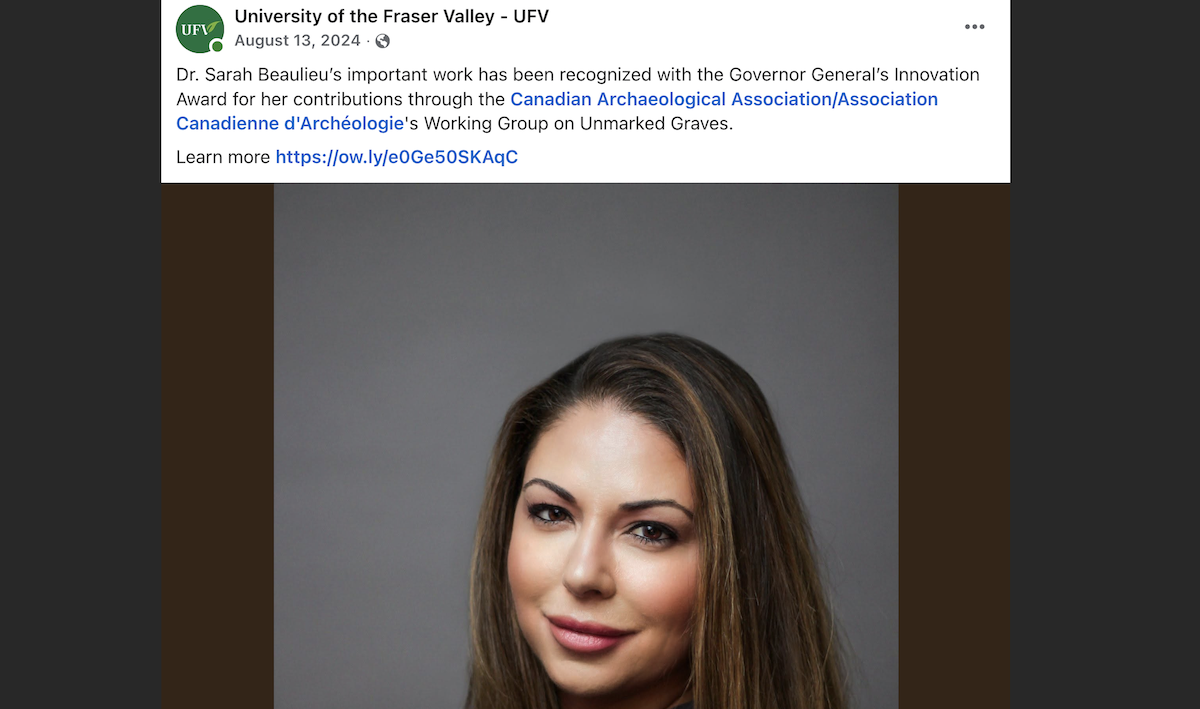
One telling detail that Canadians should have paid more attention to at the time: The Kamloops GPR survey was conducted by an activist anthropologist named Sarah Beaulieu, who’d explicitly set out to provide “validation” for pre-existing Indigenous claims in Kamloops.
The way Beaulieu’s data was presented to Canadians by reporters is important, as it shows that it wasn’t just simple ignorance that sparked the unmarked-graves social panic, but also the more general tendency to treat Indigenous claims about the past as beyond refutation, passed down in the manner of religious truths. This is why the term “social panic” can be misleading, as it suggests a phenomenon that is reflexive and mindless; whereas what happened to Canada in 2021 is connected to a well-established ideological movement.
When Chief Casimir made her false claims, Beaulieu’s university put out a press release approvingly quoting her description of this activist approach. (“My findings confirmed what Elders had shared…an example of science playing an affirming role of what the Knowledge Keepers already recognized.”) In 2024, long after ordinary Canadians had figured out there were no unmarked graves in Kamloops, Beaulieu even received an award from the Governor General for her important “innovations” in the archaeological field.
There’s a great book (or, at least, a PhD thesis) to be written about how the use of profound-seeming cultic language contributed to the sense of certainty surrounding the non-existent graves. Casimir herself said that Beaulieu’s survey project had been directed by “knowings,” which in turn had been provided by “Knowledge Keepers.”
One of the most prominent journalists to immediately leap on the story was Tanya Talaga, who’d already instructed Canadians that they inhabited a genocide state, and that anyone denying this fact was functioning as “a tool of genocide”. She proceeded to write a book called The Knowing, channelling the fashionable idea that Beaulieu’s GPR readings weren’t mere scientific data, but rather the electromagnetic manifestation of unfalsifiable Indigenous lore.
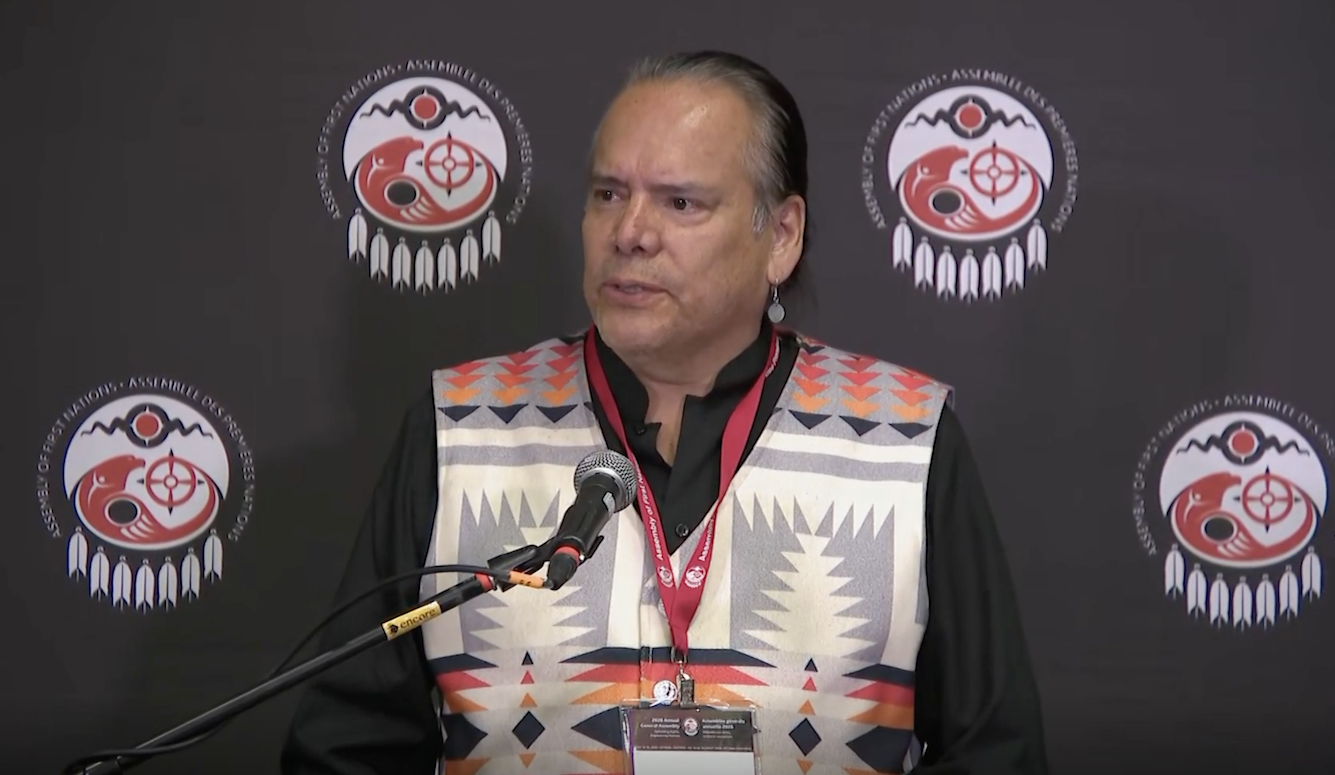
Last week, an Indigenous chief named Garrison Settee went even further by claiming that there was no need to exhume the 215 supposed graves at Kamloops because Indigenous people, himself included, receive “messages” from the buried children; and that their corpses exude “power and energy” that (apparently) can’t be sensed by white people.
Alas, these “messages” don’t include details that one might normally find useful in the investigation of a mass-murder crime scene—such as, say, the names of the children, their manner of death, or the identity of the killers. What’s important, apparently, is that everyone acknowledge that these dead children exist.
Indigenous leader declares that no proof is necessary that 215 dead children lie below the surface in Kamloops because indigenous people have the psychic power (which white people cannot “understand”) to communicate with dead people & experience their “energy” https://t.co/r2RcPl2Z9G
— Jonathan Kay (@jonkay) July 18, 2026
And just to be clear: this wasn’t some confused rando describing his 20-minute session at a strip-mall psychic shop. Chief Settee leads a large umbrella group of Manitoba-based Indigenous communities. And he was speaking at a press conference conducted under the auspices of the Assembly of First Nations (AFN), Canada’s best-known Indigenous lobby group.
Indeed, the AFN had just passed an “emergency resolution” demanding the criminalisation of “denialists” (such as myself) who dispute the existence of these telepathic martyrs. In Chief Settee’s view, the power of Indigenous necromancy helps explain why the denialist position is untenable.
Keep reading
How Genetics Rewrote History
Equal Pay, Unequal Work

The Genetics of Crime and Punishment
Jerry Kaplan on AI Doomers