Interview
Why Australia's New Capital Gains Tax Is the Best Tax Policy for Crushing the Economy
Fund manager Derek Francis tells Claire Lehmann that Treasury's modelling of Australia's new capital gains tax contains a basic error — one that could push tax rates on shares as high as 70 percent.
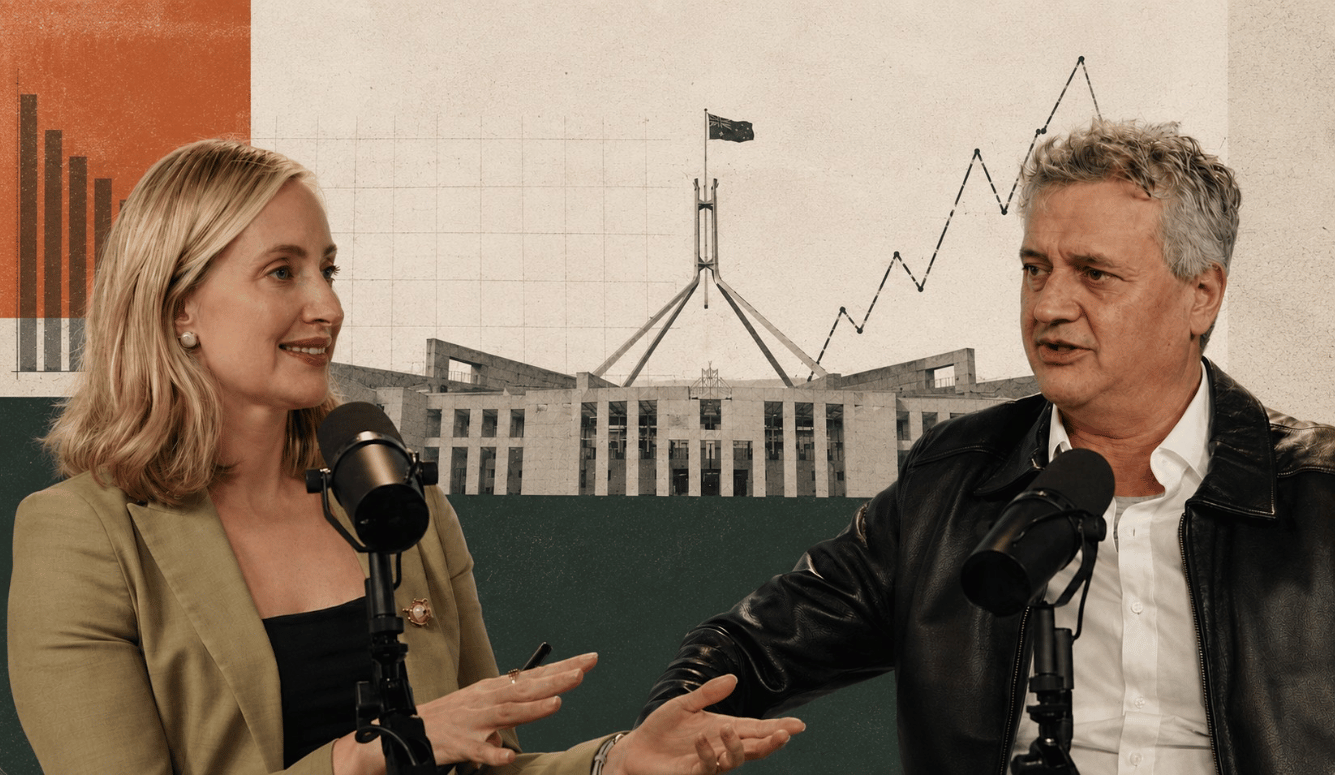

Recorded on 30 June 2026, Claire Lehmann sat down with Derek Francis— former chief economist at the NSW Parliamentary Budget Office and a fund manager—to discuss a flaw in Treasury's modelling of Australia's new capital gains tax, one that could push effective tax rates on shares as high as 70 percent.
Transcript
Claire Lehmann: Last month, Treasurer Jim Chalmers delivered one of Australia's most ambitious and controversial budgets to date. It was framed as an attempt to restore intergenerational equity, in light of the fact that house prices have become completely unaffordable for young people across the country. To address this, negative gearing on established housing has been scrapped, along with the capital gains tax discount that had been encouraging investment in existing property.
These changes were widely anticipated and have been welcomed by many Australians, including me. However—and this is important—the budget also scrapped the capital gains tax discount for all other asset classes, which means that people who own shares and invest in businesses, the productive economy that creates jobs and innovation, are now being treated as if they were property speculators.
While there is broad agreement that something had to be done about house prices, nobody was calling for shares and business investment to be taxed more heavily, and the government did not take these changes to an election. Joining me today to discuss the impact of these changes on the share market and the broader economy is Derek Francis, former chief economist of the New South Wales Parliamentary Budget Office and a fund manager. Hi, Derek. Thanks so much for joining me today.
Jim Chalmers' budget was handed down around six weeks ago and it's still in the news every day. Why won't this story go away?
Derek Francis: Well, the story on the capital gains tax won't go away for a couple of simple reasons. The first is he's initiated the highest capital gains tax in the world—a capital gains tax that no other country has ever done. That's why it produces the highest tax rates in the world. And it's also a capital gains tax that no reputable economist would ever support.
So Jim Chalmers calls this ambitious tax reform. I call it a complete dog's breakfast. If you actually had to design a tax to crunch the economy and crunch the risk-taking areas that we want to grow the economy, this is the tax to do it. So if Jim thinks this is dying away, if Albo thinks it's dying away, I can assure you it's not. This is the start of the kerfuffle about it, not the end. It's at best the end of the beginning, not the beginning of the end.
CL: Now, you identified a flaw in the modelling handed down by Treasury. Can you tell me about that flaw?
Keep reading
A Pop Fiction Master and Monster
Australia’s Coming Censorship Machine
Anatomy of a Book Promotion

They Walked in Line

Anti-Catholic Social Panics, Then and Now