Politics
Perceptions of Weakness
In his panic-stricken effort to disentangle America from the Middle Eastern mess, Trump now appears to be falling into line with Tehran’s wishes.
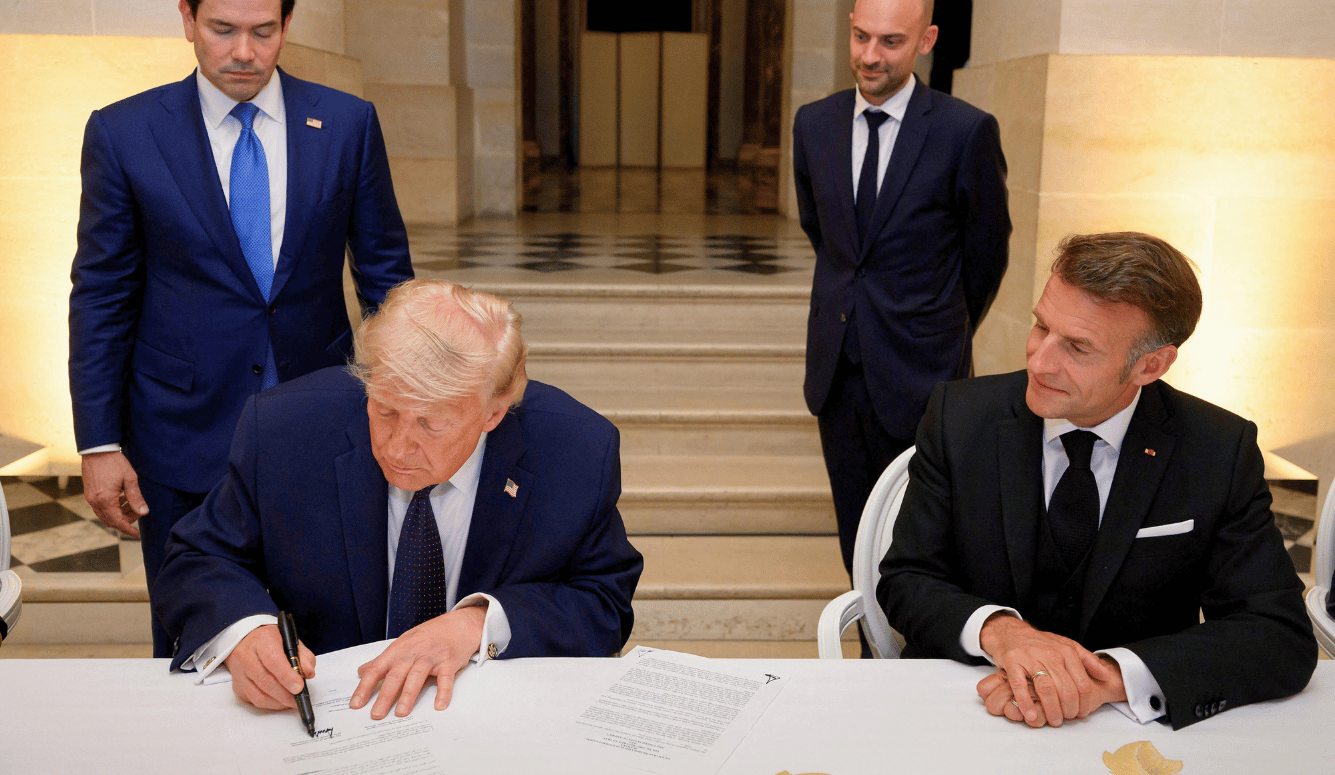

Since 28 February, the American and Israeli air forces have killed key leaders of Iran’s regime, levelled its military-industrial complex, and badly mauled its armed forces. But in the battle of wills between Trump and the rulers in Tehran, the Iranians have won a clear victory. This victory is embodied in the Memorandum of Understanding (MoU) signed by the leaders of the two countries on Thursday, and in the way that Israel was completely sidelined while that document was being negotiated.
The Americans and Israelis went to war in February with three goals—to overthrow the ayatollahs’ messianic and totalitarian regime (an aim not explicitly declared but clearly apparent even so); to eradicate Iran’s nuclear-arms project; and to destroy Iran’s ballistic-missile capabilities. The MoU demonstrates that none of these objectives has been achieved and that Trump has no intention of restarting the war to achieve them, even though he continues to bluster about sending Iran back to the Stone Age if the Islamic Republic fails to behave itself.
The most obvious failure is the non-attainment of the US-Israeli objective to destroy Iran’s ballistic-missile arsenal. During the war, Iran deployed those missiles (and its drones) to excellent effect, cowing its Sunni Gulf neighbours—Kuwait, Qatar, Bahrain, Saudi Arabia, the United Arab Emirates, and Oman—so thoroughly that they began to plead and demand that America and Israel halt the bombing campaign. Israel, which remained uncowed, nonetheless suffered serious economic damage from the five hundred or so missiles that Iran sent its way.
Iran refused to even discuss the ballistic-missile issue with the American negotiators, which is why it appears nowhere in the MoU. During a press conference on Wednesday, Trump absurdly declared that it would be unfair to strip Iran of every ballistic missile since its neighbours have them. (With characteristic ignorance, he compared Iran’s stocks to those of “Qatar and Saudi Arabia,” even though the Saudis have only thirty antiquated Chinese ballistic missiles, none of which was used during the war, and Qatar possesses none at all.)
Mentions of regime change—which Israel and the US had hoped would follow from the assassination of most of Iran’s military and political leadership, including Supreme Leader Ali Khamenei, on day one of the war—are also absent from the MoU. To the contrary, Clause 2 of the agreement implicitly accepts the continued rule of the ayatollahs and their henchmen, the Iranian Revolutionary Guard Corps, when it states:
The United States of America and the Islamic Republic of Iran undertake to respect each other’s sovereignty and territorial integrity, and to refrain from interfering in each other’s internal affairs.
This runs contrary to Trump’s promise to rescue the Iranian people, after Tehran slaughtered tens of thousands of unarmed anti-regime demonstrators back in January–February.
Clauses 6, 7, 10, and 11 of the MoU commit Trump to dropping all economic sanctions and actively promoting a US$300 billion plan to reconstruct and develop Iran—money that will ensure the regime’s economic stability and longevity. (Observers have long argued that only severe economic distress could cause mass disaffection and bring about protests that would topple the regime.) Of course, the promised financial largesse will also enable Iran to rebuild its devastated military-industrial complexes, including the missile production and nuclear installations.
Then, there is the nuclear issue.
Keep reading
Robert Lynch on Status, Humour and the Apes We Pretend Not to Be | Quillette Cetera Episode 74

The Radicalisation of Tucker Carlson
A Pop Fiction Master and Monster
Australia’s Coming Censorship Machine
Anatomy of a Book Promotion