Politics
Nicholas Kristof and the Pornography of Accusation
Investigating abuse is a duty. Laundering propaganda is not.
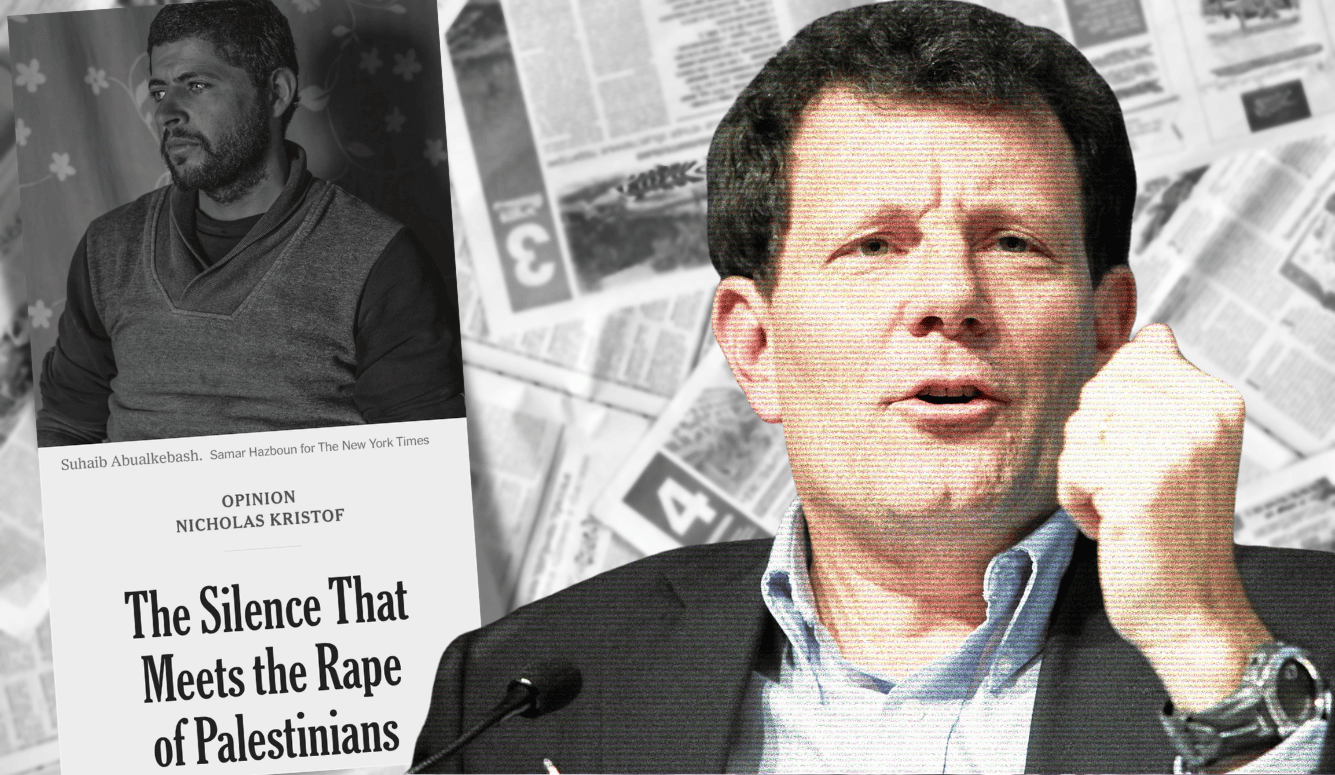

Nicholas Kristof’s recent New York Times essay “The Silence That Meets the Rape of Palestinians,” displays a corruption in the moral language used to denounce Israel. Ostensibly a report on sexual abuse in detention, its actual function is to turn Israel into an object of revulsion: a state reimagined as an agent of rape, humiliation, bodily degradation, and bestial violation. Abuse in prisons and wartime detention obviously ought to be investigated, thoroughly and without prejudice. No state, including Israel, deserves exemption from scrutiny. But Kristof’s column—printed in the opinion section rather than the news section of America’s paper of record—is not content to ask for scrutiny. It gathers anonymous and politically mediated claims and arranges them into a grotesque moral tableau. The obscene result demonstrates how sexual accusation can become a political cudgel.
I. False Symmetry
Kristof opens his essay with a sentence designed to make disagreement look indecent: “It’s a simple proposition: Whatever our views of the Middle East conflict, we should be able to unite in condemning rape.” He frames his column as a plea for consistency. After the Hamas-led attacks of 7 October 2023, he notes that supporters of Israel demanded that the world condemn the sexual violence inflicted on Israeli women. Why, he continues, should the same moral outrage not be expressed on behalf of Palestinians who allege sexual abuse by Israeli prison guards, soldiers, Shin Bet interrogators, and settlers? No serious person would reject the proposition that rape is wrong regardless of the victim. The problem lies in the false symmetry he constructs.
Since 7 October, the distribution of belief has been one of the most revealing features of public discourse. The sexual atrocities committed by Gazans on that terrible day have been carefully documented using autopsy information, forensic evidence, the testimony of survivors and first responders, and the perpetrators’ own recordings and confessions. Despite the wealth of accumulated evidence, many anti-Israel activists and international officials still responded with suspicion, denial, euphemism, and demands for unchallengeable proof. Activists insisted on incontrovertible evidence, they warned of propaganda, they spoke about the importance of context, they carefully parsed testimony, and they treated Israeli suffering as a field of possible manipulation. The dead were cross-examined before their blood was dry.
However, the most tawdry and dubious accusations against Israel are now being received by those same activists with a striking generosity, despite their reliance on anonymous witnesses, politically interested intermediaries, and organisations embedded in an anti-Israel advocacy ecosystem. Anonymity has become understandable, inconsistency has become evidence of trauma, political contamination has become social context, and advocacy reports have become documentation. Those who treated Israeli testimony as suspect now treat accusations against Israel as morally self-authenticating. This is how the politics of defilement works. And in a hierarchy of credulity, Israeli victims must pass through a tribunal of suspicion while accusations against Israel, no matter how far-fetched or poorly supported, enter the public imagination half-canonised.
“In wrenching interviews,” Kristof reports, “Palestinians have recounted to me a pattern of widespread Israeli sexual violence against men, women and even children—by soldiers, settlers, interrogators in the Shin Bet internal security agency and, above all, prison guards.” He allows that there is “no evidence that Israeli leaders order rapes” then immediately follows that disclaimer with this:
But in recent years they have built a security apparatus where sexual violence has become, as a United Nations report put it last year, one of Israel’s “standard operating procedures” and “a major element in the ill treatment of Palestinians.” A report out last month, from the Euro-Med Human Rights Monitor, a Geneva-based advocacy group often critical of Israel, concludes that Israel employs “systematic sexual violence” that is “widely practiced as part of an organized state policy.”
Kristof’s column depends on this kind of drift from caveat to heinous accusation. Individual accounts become a pattern; the pattern becomes a structure; the structure becomes a national indictment. By the end of the essay, readers are no longer asked to consider whether or not instances of abuse have occurred in Israeli detention facilities, they are invited to condemn Israel tout court. The Times transforms unresolved, poorly corroborated, and politically mediated claims into a totalising moral portrait of a nation.
Francesca Albanese, the United Nations special rapporteur on the occupied Palestinian territories, exemplifies this posture. Repeatedly criticised for casting doubt on evidence of Hamas’s sexual violence while treating accusations against Israel as proof of guilt, Albanese belongs to a wider class of international functionaries who speak the language of law while they direct suspicion in one direction only. The Albanese method, as it now appears in practice, is simple: disbelieve and seek to discredit every instance in which the Jew is a victim; believe and promote every instance that makes the Jew look obscene. The formulation is harsh because the double-standard is not simply a matter of tone; it is one of the routes by which antisemitism enters respectable discourse in humanitarian drag.
 Brian Stewart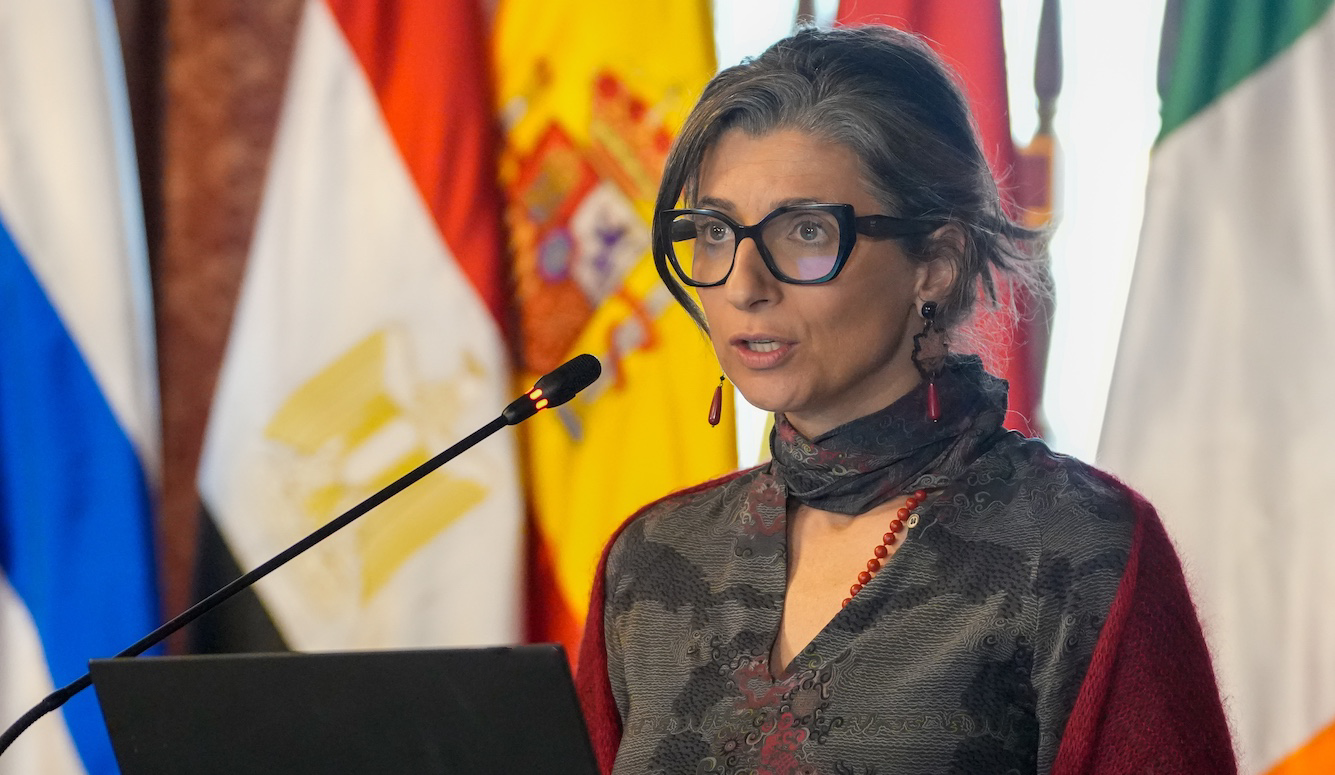
There is an older and more perverse irony at work here, too. In 2007, Tal Nitsán published a Hebrew University MA thesis titled “Controlled Occupation: The Rarity of Military Rape in the Israeli–Palestinian Conflict.” In that paper, Nitsán marshalled anecdotal evidence and interviews with soldiers in support of a hypothesis that the comparatively low rates of sexual violence committed by IDF personnel are actually evidence of anti-Arab racism:
Sergeant Dima also describes the Palestinian woman as fundamentally other by virtue of being Palestinian—an otherness that prevents any connection between them. Later in the interview, referring to the group he perceives as the most extreme and most capable of committing such an act, he argues that wartime rape would not occur because, for them, she is not considered a woman of the human race at all.
This was not an official report. It was an academic attempt to explain why Israeli wartime rape is statistically rare compared to other theatres of conflict. And even here, the evidence was twisted to indict Israeli dehumanisation of Arabs. Today, Kristof and others perform the opposite manoeuvre. Israel is guilty not because its soldiers do not rape Palestinians, but because accusations of sexual abuse ratify a verdict that has already been decided. The conclusion is stable. Only the argument changes. Evidence is simply the surrounding scenery.
II. The Collapse of Evidentiary Standards
Keep reading
How France Lost Control of Its Streets
How to Suppress Men’s Writing
Back to the Dark Ages

Prison or Peer Review
France’s Imaginary Austerity