Podcast
Podcast Episode #334: Documenting a Decade of Academic Meltdowns
Podcast host Jonathan Kay speaks with filmmaker Ric Esther Bienstock about her new CBC/BBC documentary, ‘Speechless’—which explores the rise of censorship and mobbings on campus.
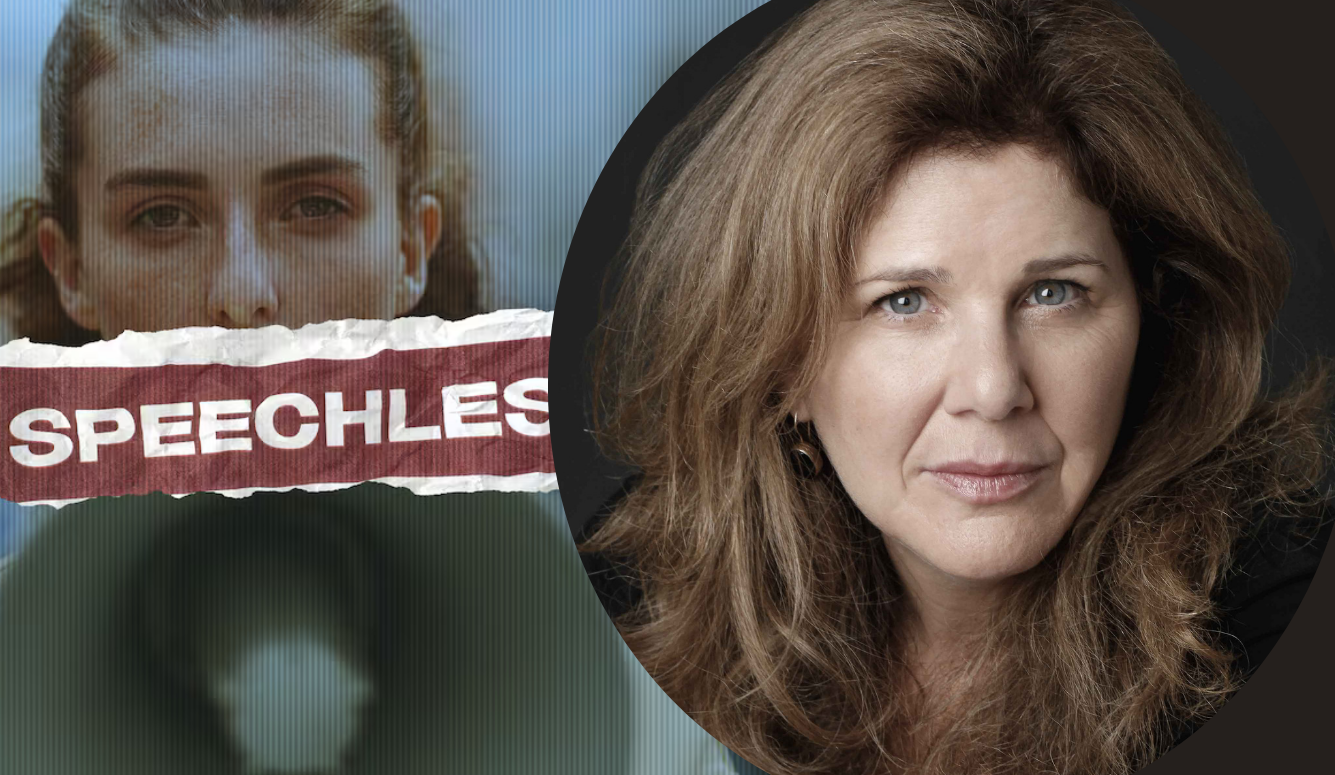

This week on the Quillette podcast, I’ll be interviewing the director of Speechless, which is a great new two-part documentary film about free speech that just appeared on the CBC and BBC.
Yes, you heard that right. The CBC and the BBC are now airing Quillette-approved liberal takes on free speech. Crazy times, right?

To make sense of what you’re about to see and hear (depending on whether you’re listening to this on Spotify or watching on YouTube), let me give you some personal back story.
So, as I sometimes mention, I live in a fairly left-liberal neighbourhood in Toronto. There are lots of media types and university professors; and we all basically get along fairly well—especially if we have dogs. Because no one wants to get into a heated political debate when they’re out walking their mutt.
One of these neighbourhood dog owners is my guest today—Ric Esther Bienstock, who, it turns out, is a pretty famous documentary filmmaker.
About eight years ago, around the time I started work at Quillette, Ric told me that she was working on a documentary about free speech on campus. Every time I see her, she’s talking about it. She even floated the idea of me participating in the project. And finally, I said, “Ric, let’s just talk about dogs. I get enough of this cancel-culture free-speech stuff when I’m at my desk doing my Quillette day job.”
And to be honest, I thought Ric’s project was doomed to failure anyway. The free-speech landscape was changing every day back then. It still is. Making movies takes a long time. So I thought her project was hopeless, since as soon as she’d prepared a final cut, the thing would be outdated.
And besides, who was going to air this documentary anyway? Not the CBC, I figured. At the time, and even now to some extent, many CBC journalists seemed to be cheering on cancel culture.
But Ric proved me wrong. Her creation, whose premier I attended earlier this month in Toronto, is a thoughtful retrospective on the last decade or so of illiberal progressive mobbing and censorship campaigns—from Bret Weinsten’s disgraceful treatment at Evergreen State College back in 2017; through the gender wars and the vilification campaigns against so-called gender-critical women such as JK Rowling; and on into 2023 and beyond, when campuses were rocked by protests and encampments led by aggressive activists whose rhetoric sometimes veered into terror apologism and calls for violence against Jews.
As I was watching Speechless, I realized that campus “cancel culture”—a term that now seems somewhat antique—has been around long enough that it has a history. And Speechless tells that history thoughtfully and fairly by focusing on a handful of major case studies—no fewer than five of which center on figures who will be well-known to loyal Quillette readers and podcast listeners: former Evergreen State biologist Bret Weinstein; Erec Smith a former professor at York College of Pennsylvania; philosopher Kathleen Stock, formerly of Sussex University; former Harvard evolutionary biologist Carole Hooven; and right-wing warrior Christopher Rufo, whom Ric and her producer accompanied as he was leading the teardown of DEI programs at New College in Florida, on behalf of his political ally, Ron DeSantis.
In our conversation, Ric discusses why she devoted so much of her life to this project—almost a decade in the end; and how she successfully sold her two-part documentary to the CBC, the BBC, and a number of non-English markets in Europe as well.
She also discusses her own personal intellectual journey during the process. Like me, she’s a middle-aged Canadian liberal who’s spent much of her time since the mid-2010s trying to figure out how the good intentions originally embedded in diversity and inclusion became a radicalized cult of eggshell emotional fragility and censorship, while turning many campuses into intellectual milieus where there is only one acceptable view on issues connected to race, gender, and even Middle Eastern geopolitics.
Please enjoy my interview with acclaimed Canadian documentary filmmaker Ric Esther Bienstock.
Quillette invites thoughtful responses to its essays.
Selected responses are published once per week as part of a curated Letters to the Editor feature. If selected, letters appear under the contributor’s real name and may be edited for clarity and length.
To submit a letter for consideration, please email [email protected].
Keep reading
How France Lost Control of Its Streets
How to Suppress Men’s Writing
Back to the Dark Ages

Prison or Peer Review
France’s Imaginary Austerity