Politics
Postliberalism After Hungary
Orbán’s defeat should scare the hell out of populist authoritarians.
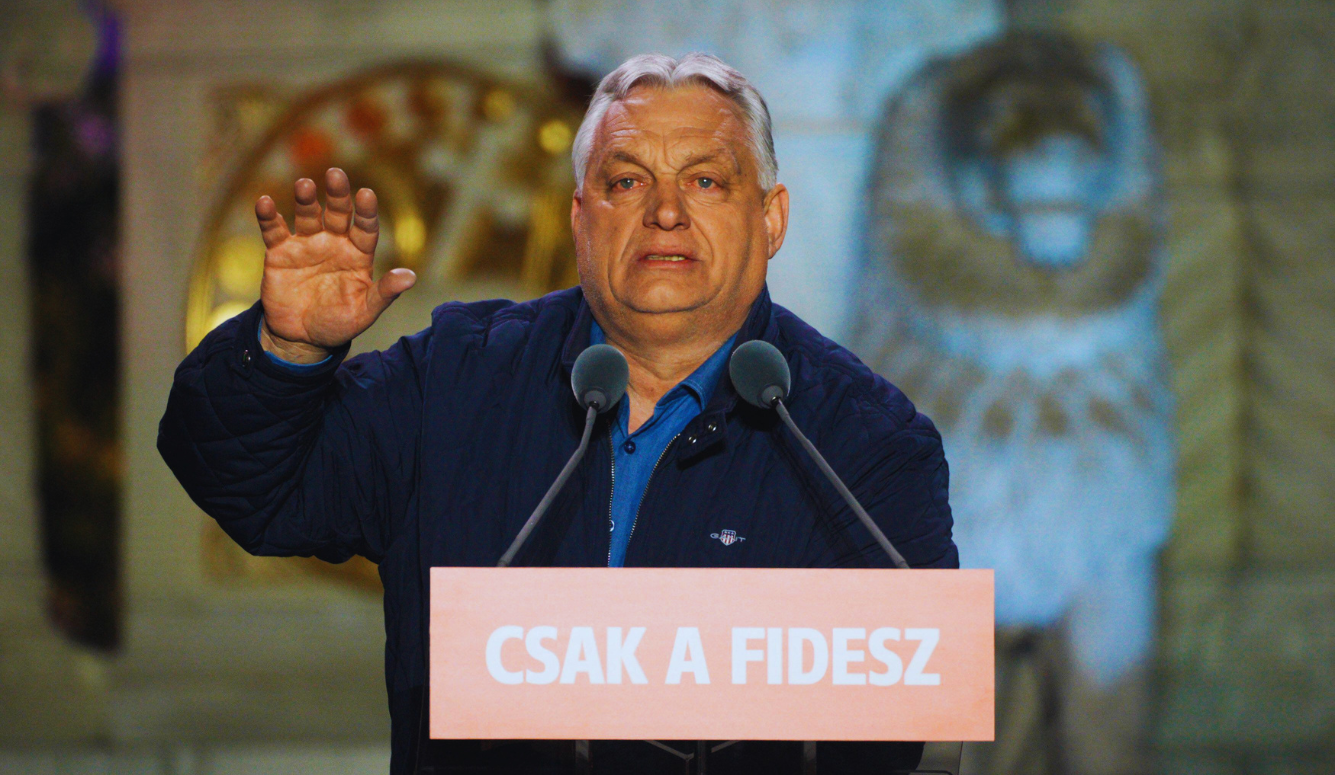

The landslide defeat suffered by Viktor Orbán in Hungary on 12 April has dealt a body blow to global postliberalism at a moment when the democratic recession may be on the brink of a reversal. Although Hungary is a nation of fewer than ten million people with a GDP about half the size of Elon Musk’s net worth, its global significance is magnified by the political model Orbán spent over a decade and a half building. He called it “illiberal democracy,” but it has attracted emulators and apologists from across the liberal-democratic world. Orbán’s massive defeat arrives as Donald Trump’s popularity is cratering, and even some of his firmest foreign supporters are backing away. Liberals should seize this momentum, and they can learn from the example set by the Hungarian opposition.
Trump’s “complete and total endorsement” did nothing to help Orbán, who had spent many years cultivating an extremely close relationship with the US president. In February, US secretary of state Marco Rubio travelled to Budapest and expressed the Trump administration’s support for Orbán’s regime. Last week, vice president J.D. Vance stood alongside Orbán at a rally in Budapest and delivered a grandiose campaign speech during which he said: “Will you stand against the bureaucrats in Brussels? Will you stand for sovereignty and democracy? Will you stand for Western civilisation? Will you stand for freedom, for truth, and for the God of our fathers? Then my friends, go to the polls in the weekend, stand with Viktor Orbán.” The magnitude of Orbán’s defeat was a humiliation for the Trump administration.
In fact, Hungarian voters did stand up for their sovereignty and democracy by decisively rejecting Orbánism and throwing their support behind Péter Magyar’s Tisza Party, which is projected to secure a seventy percent supermajority in the Hungarian National Assembly. Magyar is a former Orbán loyalist who first rose to prominence by exposing corruption within his own party. He left Fidesz in protest in February 2024 and organised a massive opposition rally a month later before joining the tiny Tisza Party, which had been established just four years before. Within months, Tisza had managed to secure seven seats in the European Parliament. These victories contributed to Fidesz’s worst showing in any EU election. As is often the case with dissident political movements, charges of corruption found a receptive audience in the general public (Aleksei Navalny’s resistance movement in Russia also focused on this issue). Political opponents of authoritarianism the world over—particularly in the United States—should be taking note.
Magyar was able to draw upon many examples of brazen corruption in Orbán’s Hungary. Government contracts were often granted to friends of the regime, such as Orbán’s childhood pal Lőrinc Mészáros, who built a vast business empire with state and EU funds. The scandal that made Magyar a national figure centred on Hungarian president Katalin Novák, who secretly pardoned Endre Kónya, the deputy director of a state-run orphanage, convicted of covering up the sexual abuse of children. Justice minister Judit Varga, Magyar’s ex-wife, resigned amid outrage over her certification of the pardon, and Magyar released a recording of her admitting that government officials had tampered with evidence.
Keep reading
Robert Lynch on Status, Humour and the Apes We Pretend Not to Be | Quillette Cetera Episode 74

The Radicalisation of Tucker Carlson
A Pop Fiction Master and Monster

Australia’s Coming Censorship Machine
Anatomy of a Book Promotion