
Iran has never confined its interference in other countries to the Middle East, nor have its activities been restricted to attacks on Israel. Long before the horrors of 7 October 2023, Argentina had already become a target of the Islamic Republic.
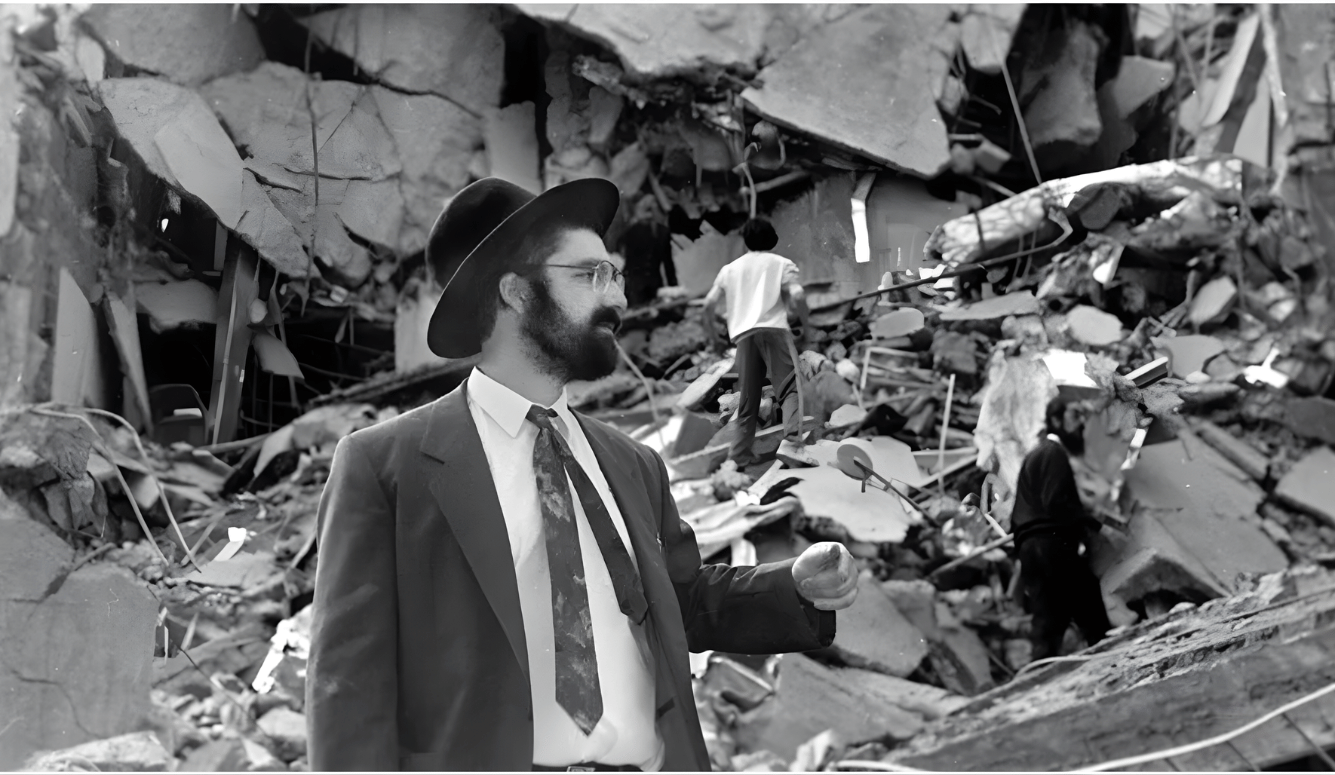
On 17 March 1992, a suicide bomber drove a Ford F-100 pickup truck packed with explosives into the Israeli embassy in the Retiro neighbourhood of Buenos Aires. The blast destroyed the embassy building and surrounding structures, including a Catholic church and a school, killing 29 people and injuring more than 200. The victims included both Israeli embassy staff and Argentine citizens, Jewish and non-Jewish alike.
Responsibility for the attack was immediately claimed by a group known as Islamic Jihad Organisation, a Lebanese Shia militia widely believed to have links to Hezbollah and the Iranian state. Their stated motive was revenge for the assassination of Abbas al-Musawi, Secretary General of Hezbollah, which Israel had carried out a month earlier, on 16 February. (Musawi was replaced by Hassan Nasrallah, who was also assassinated by the Jewish state, on 27 September 2024).
The attack sent shockwaves through Argentina, a country whose intelligence apparatus had little experience dealing with international terrorism. At the time, Argentina was a fragile, nascent democracy, having experienced alternating periods of civilian corruption and draconian military rule throughout its history as a nation state, culminating in the brutal military dictatorship of 1976–83, during which the ruling junta committed widespread crimes against humanity in what became known as the Dirty War.
What made the Buenos Aires bombings remarkable was not simply their brutality but their location. Argentina is a long way away from the traditional theatres of Middle Eastern conflict. Yet a network of logistics, financing, and intelligence infrastructure that supported Iran’s proxy warfare had already begun to extend across continents to reach the Tri-Border Area between Argentina, Paraguay, and Brazil, a region notorious for smuggling and lax law enforcement. By the 1990s, the area was also home to a sizable Arab diaspora, mostly comprised of Lebanese and Syrian immigrants and their descendants, whose commercial networks Hezbollah operatives used to raise funds and move money. Messages intercepted by Argentine, Israeli, and American intelligence later showed that the Iranian government had had prior knowledge of the coming attacks.
 Daniel Raisbeck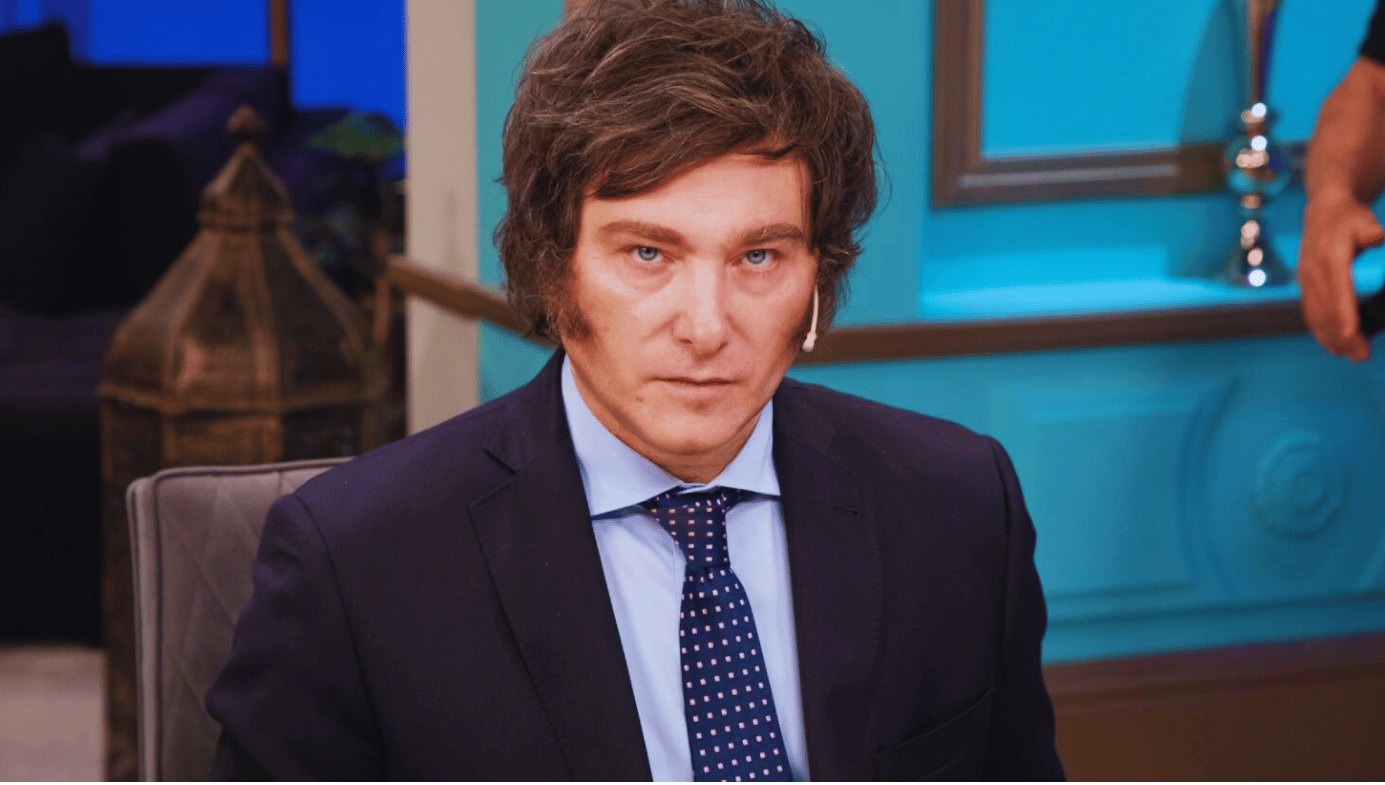
On 18 July 1994, a van carrying hundreds of kilogrammes of explosives detonated outside the Argentine Jewish Mutual Association (AMIA) building on Pasteur Street in a busy commercial part of Buenos Aires’s Balvanera neighbourhood known as Once. The explosion collapsed the seven-storey structure and buried dozens beneath the rubble. Eighty-five people were killed and more than 300 injured. It remains the deadliest terrorist attack in Argentine history.
Unlike the embassy bombing, which targeted a diplomatic facility, the AMIA attack struck directly at the heart of Argentina’s Jewish community. During the late-19th and early-20th centuries, hundreds of thousands of Jewish immigrants came to the country from the Russian and Ottoman empires. They established agricultural colonies, synagogues, schools, and communal institutions and made Argentina one of the most important Jewish diaspora centres outside Israel and North America, with a Jewish population numbering some 200,000 by the 1990s. Argentine territory was even considered as the site of a potential new Jewish state by Theodor Herzl and other early Zionists. The destruction of the AMIA building therefore carried both strategic and symbolic weight. It demonstrated that Iran’s war on the Jewish state could reach not only Israeli diplomatic installations but also Jewish communities far removed from the Middle East.
The AMIA attack did not occur in a vacuum. Working alongside Israeli and American intelligence, Argentine investigators quickly identified connections between the bombing and the 1992 embassy attack: both operations had employed the same networks and state sponsors and had the same strategic logic. But translating that intelligence into legal accountability would prove far harder than identifying the perpetrators. The investigation that followed spanned decades and implicated senior Iranian officials including a future president and commander-in-chief of the IRGC. It ultimately exposed not just the reach of Iran’s proxy infrastructure but the corruption and institutional failure within Argentina itself that both allowed the attack to happen and would cause miscarriages of justice for years afterward.
The investigation would go on to become one of the most consequential judicial failures in Argentine history. Within days of the AMIA bombing, investigators had traced the vehicle used, a Renault Trafic van packed with explosives, to Carlos Telleldín, a small-time car dealer with connections to Argentina’s criminal underworld and to networks of corrupt police. His arrest appeared to confirm a theory that had been circulating within Argentine intelligence: that in addition to the Iranian masterminds and Hezbollah operatives who had ordered and executed the attack, there existed a local facilitator network, possibly including members of the Buenos Aires provincial police, who had helped source the vehicle and provided logistical cover. The theory was not implausible.
The federal judge assigned to the case was Juan José Galeano. He became a judge a year before the bombing at the age of 35 thanks to his political connections with Hugo Anzorreguy, chief of the Argentine intelligence service (SIDE) under then-president Carlos Menem. In 1996, Galeano authorised a US$400,000 payment to Telleldín, drawn from reserved funds from SIDE, in coordination with Anzorreguy. Galeano’s motivations remain unclear. What is certain is that when the payment came to light, it destroyed the prosecution’s case. At the first AMIA trial in 2004, all the defendants were acquitted—not because the court doubted that Hezbollah and Iran had carried out the attack, but because the investigation had been irredeemably tainted by the illicit payment. Galeano was impeached and in 2019 he was sentenced to six years in prison. For their part in the scheme, Telleldín and Anzorreguy were sentenced to three-and-a-half and four-and-a-half-year prison sentences, respectively.
Menem, who served as president from 1989 to 1999 and was therefore in office for both attacks, embodied the peculiar complications of Argentine politics in the post-junta era. Born in the northwestern province of La Rioja to Syrian immigrants of Sunni Muslim background, he cultivated deep ties to the Syrian-Argentine business community throughout his political career, ties that cast a long shadow over his handling of the AMIA investigation. He was also a spectacularly corrupt politician, even by Argentine standards: his government treated state institutions as instruments of personal and political advantage, and foreign policy as an extension of private relationships. Menem’s later conviction for illegal arms trafficking to Ecuador and Croatia was overturned on appeal, on procedural grounds, in 2018. In many people’s minds, however, it nevertheless confirmed what they had long suspected about the character of his administration.
Perhaps the most consequential decision Menem made in regard to Iran was the cancellation of the Condor II ballistic missile program. Argentina had spent the 1980s developing both Condor II and a dual-use independent nuclear enrichment capability and was under intense pressure from Washington to dismantle these projects. Condor II was cancelled in 1990, but the cancellation carried a diplomatic cost: Syria had invested heavily in the program, and Hafez al-Assad responded by eliminating Argentina from the list of countries where Hezbollah operations were prohibited. The operational infrastructure that Hezbollah had been quietly developing in the Tri-Border Area for years could now be activated. Two years later, it was.
The figures who surfaced at the margins of the investigation are difficult to explain away. Menem had appointed Ibrahim al-Ibrahim, a Syrian intelligence colonel who barely spoke any Spanish, to oversee customs at Ezeiza Airport, Buenos Aires’s international hub. Al-Ibrahim was later implicated in money laundering. Alberto Kanoore Edul, a Syrian-Argentine family friend of the Menems, had called Carlos Telleldín, the car dealer who sold the van used in the bombing, in the days before the attack. Investigators also found the name and phone number of Mohsen Rabbani, the Iranian cultural attaché later accused of masterminding the bombing, in Kanoore Edul’s personal planner. None of these connections were ever adjudicated as proof of involvement. The investigators never thoroughly pursued these leads.
Syria’s potential role was not sufficiently investigated either. This was partly for diplomatic reasons: Bashar al-Assad was a useful interlocutor in the ongoing Middle East peace negotiations, and pressing the Syrian angle would have complicated relationships that Washington and Buenos Aires both preferred to preserve. In addition, Menem himself seems to have been reluctant to pursue that line of investigation. He was later tried on charges of having ordered Galeano to abandon the Syrian trail and to back off from examining Kanoore Edul’s role in particular, though he was acquitted of these charges by a three-judge panel in 2019. The acquittal did not resolve the underlying questions, however; it just closed the courtroom door on them. Thirty years on, the questions of what Syria knew, and what role Menem’s appointees played remain unresolved.
Meanwhile, the evidence against the Iranian officials believed to have planned and ordered the bombing was accumulating. Federal prosecutor Alberto Nisman spent a decade building the case against Iran. In 2006, Nisman issued an indictment naming nine individuals, including former Iranian president Akbar Hashemi Rafsanjani and then-Intelligence Minister Ali Fallahian, who were accused of having ordered the attack through the Iranian embassy network in Buenos Aires. Among those indicted was Mohsen Rabbani, the Iranian cultural attaché who operated in Argentina during the early 1990s and whose connections to both the local Syrian-Argentine community and to Hezbollah’s operational planning group had been documented by multiple intelligence services. The indicted also included Ahmad Vahidi, the former commander of the Islamic Revolutionary Guard Corps’ Quds Force, whom Nisman accused of having directed the unit responsible for planning the operation. Interpol issued red notices for several of the suspects, notices that remain active to this day.
The Iranian suspects, however, were beyond Argentina’s reach, and Tehran had no intention of extraditing them. For a time, the governments of first President Néstor Kirchner (2003–07) and then President Cristina Fernández de Kirchner (2007–11 and 2011–15) appeared to accept this impasse. Then they ended it on terms that horrified the families of the victims. In January 2013, Argentina and Iran signed a memorandum of understanding that would have established a joint commission of jurists to review the evidence in the AMIA case, effectively substituting a bilateral political arrangement for the existing Interpol notices and criminal proceedings. The deal was widely understood as an exchange: Argentina would provide Iran with a path out of the international legal exposure created by Nisman’s indictment, and Iran would increase oil trade with and investment in Argentina, which was then, as so often, suffering under severe economic constraints. Nisman called it a cover-up. An Argentine federal court declared the agreement unconstitutional in 2014, and when President Mauricio Macri took office in December 2015, his government declined to appeal that ruling, effectively voiding it. But the episode made explicit something that had long been implied: accountability for the AMIA bombing was negotiable for certain Argentine governments.
Nisman did not live to see the case resolved. On 18 January 2015, the night before he was scheduled to present formal charges to Congress accusing Fernández de Kirchner and her foreign minister Héctor Timerman of encubrimiento (concealment) for their role in drafting the memorandum, he was found dead in his apartment with a single gunshot wound to the head. The initial finding ruled the death a suicide, but subsequent judicial investigations concluded that Nisman had been murdered, and that the scene had been staged after his death. The circumstances surrounding his death remain a mystery. He was 51 years old.
The decades of institutional failure that defined Argentina’s response to the AMIA bombing reached an inflection point with the 2023 inauguration of President Javier Milei. Whereas Kirchner was willing to accommodate Tehran, Milei has anchored Argentina firmly within a Western–Israeli security axis, designating Hamas, Hezbollah, and the IRGC’s Quds Force as terrorist organisations and joining the Combined Maritime Forces to combat Iranian-backed threats in international waters. In April 2024, Argentina’s Federal Court of Criminal Cassation, the country’s highest criminal court, formally declared the AMIA attack a crime against humanity and attributed responsibility to senior Iranian officials and to Hezbollah, thus lending the weight of the country’s highest criminal tribunal to what investigators had argued for thirty years. In 2025, Milei’s government used newly passed legislation to authorise the trial in absentia of ten Iranian and Lebanese suspects—among them former intelligence minister Ali Fallahian and Ahmad Vahidi, the former Quds Force commander who directed the unit responsible for planning the AMIA operation and who has been subject to an Interpol red notice since 2007. On 28 February 2026, US and Israeli strikes killed Supreme Leader Ali Khamenei and decapitated much of Iran’s senior military leadership, including IRGC commander Mohammad Pakpour. Vahidi, who is wanted for the murders of 85 people in Buenos Aires, now commands the IRGC.
What Argentina’s experience reveals is not simply that Iran projects violence across continents, though it does. It also shows that such projections are more likely to succeed when a target’s state institutions are vulnerable. The lawlessness of the Tri-Border Area enabled the logistics. The corruption of Judge Galeano provided impunity. The political calculations of successive governments delayed justice. Each failure compounded the last, and for thirty years the gap between what is known and what has been adjudicated has remained almost unchanged. The names of the planners are on file at Interpol. The mechanics of the attack are documented in thousands of pages of investigative records. The dead have been counted, mourned, and memorialised. But justice has never been served.
Recent US–Israeli strikes on Iranian nuclear facilities have triggered fresh security alerts across Argentina at Jewish institutions, airports, and border crossings. The Buenos Aires bombings serve as a reminder that Iran’s willingness to strike at Israeli and Jewish targets outside the Middle East is not merely hypothetical. Argentina has already been a front in this war, and the traces of that history remain visible on its streets today. Concrete barriers line the entrances of Jewish community centres across the city, standing as a permanent physical acknowledgment that the threat that destroyed the AMIA building has never fully receded. Thirty years on, the most important question is whether the lessons of that experience have been learned by those who failed to deliver justice—and by those who may yet need it.
Quillette invites thoughtful responses to its essays.
Selected responses are published once per week as part of a curated Letters to the Editor feature. If selected, letters appear under the contributor’s real name and may be edited for clarity and length.
To submit a letter for consideration, please email [email protected].
Keep reading
Foreign Power, Local Politics
Podcast #333: The Search for Truth
A Costly Misconception
Addressing the Academic Skew
Letters to the Editor