Politics
American Liberalism and Illiberalism
Americans who may have ferocious disagreements about the size of government, foreign policy, and a wide range of other issues must find a way to unite around their shared commitment to the liberal idea.

I.
In February 1775, Alexander Hamilton wrote a caustic response to a loyalist pamphlet published by Samuel Seabury, in which he accused Seabury of advancing the “cause of despotism.” “The sacred rights of mankind,” he writes, “are not to be rummaged for, among old parchments, or musty records. They are written, as with a sun beam, in the whole volume of human nature, by the hand of the divinity itself; and can never be erased or obscured by mortal power.”
The American Revolution was the most radical of history’s successful political projects. It began as a revolt to defend the rights of the colonists under English common law and tradition, but it became something far more ambitious than that in scope and impact. Once the colonists decided that the oppression of King George III was so onerous that the only solution was independence, they had to justify the break on grounds that challenged the foundational concepts of parliamentary sovereignty and hereditary rule. This was more than mere tactical necessity—it was also the practical culmination of Enlightenment thought, to which founders like Hamilton were fervently committed.
John Locke argued that rights aren’t a gift from rulers or even bestowed by representatives of the people—they are inherent in every human being, which makes them natural and inviolable. Until the American system was created, no previous form of government had been designed to defend and uphold the dignity and sovereignty of the individual. And although compromises between the northern and southern states ensured that the practice of chattel slavery remained protected, America’s founding documents contained the seeds of that terrible institution’s destruction. Abraham Lincoln began the Gettysburg address with a direct reference to America’s Declaration of Independence when he affirmed that the United States was “conceived in liberty, and dedicated to the proposition that all men are created equal.”
The United States emerged from its war of independence half-slave and half-free, a state of affairs that led to the bloodiest war in the country’s history. And when the Civil War ended with the defeat of the South, slavery was abolished by the Thirteenth Amendment to the Constitution, while universal citizenship and a ban on racial discrimination were enshrined by the Fourteenth and Fifteenth Amendments, respectively. The South resisted these developments by passing the Jim Crow laws that limited the voting rights of blacks, segregated schools and other public institutions, and banned marriage and relationships between black and white Americans. However, the phrase “all men are created equal” remained a standing rebuke to these efforts, and it was to these words that Martin Luther King Jr. referred when he called upon the United States to embody the “true meaning of its creed.”
Notwithstanding the unique centrality that individual liberty and universal dignity hold in American political and civic life, illiberalism will always exert a degree of countervailing pressure. It is, after all, an expression of natural human instincts and tendencies like patrimonialism, prejudice, tribal solidarity, and certain forms of immediate self-interest. The American system was designed to contain and suppress these all-too-human shortcomings and this has resulted in a competition between our baser instincts and the “better angels of our nature” invoked by Lincoln in his first inaugural address.
Aspirational ideas about universal human rights and equality have always been at the heart of the American project, and our commitment to these ideas has always and inevitably been imperfect. Liberalism, after all, does not come naturally to most people most of the time. “We have changed our forms of government,” the American founder and abolitionist Benjamin Rush observed in 1786, “but it remains yet to effect a revolution in our principles, opinions and manners so as to accommodate them to the forms of government that we have adopted.”
Rush’s observation remains true today, when liberalism is besieged in the United States to a degree not seen in the modern era. The threat is sufficiently potent that a new political coalition—one that treats liberalism as an end in itself rather than as a means to other political ends—is now required to defend it.
II.
Over the past decade, identity has been a powerful engine of political mobilisation in the United States. On the Left, a crude and reductive form of identity politics wedged people into rigid categories of oppressors and oppressed, allies and enemies. This shift toward identitarianism smothered free speech, demanded ideological conformity, and indulged reactionary forms of racial essentialism and prejudice. This was the political context in which Nikole Hannah-Jones won a Pulitzer Prize for an essay arguing that the United States was “founded not as a democracy but as a slavocracy.” The New York Times’ 1619 Project claimed that the United States’s true founding occurred when the first slaves arrived at Point Comfort in Virginia.
 Robert C. Thornett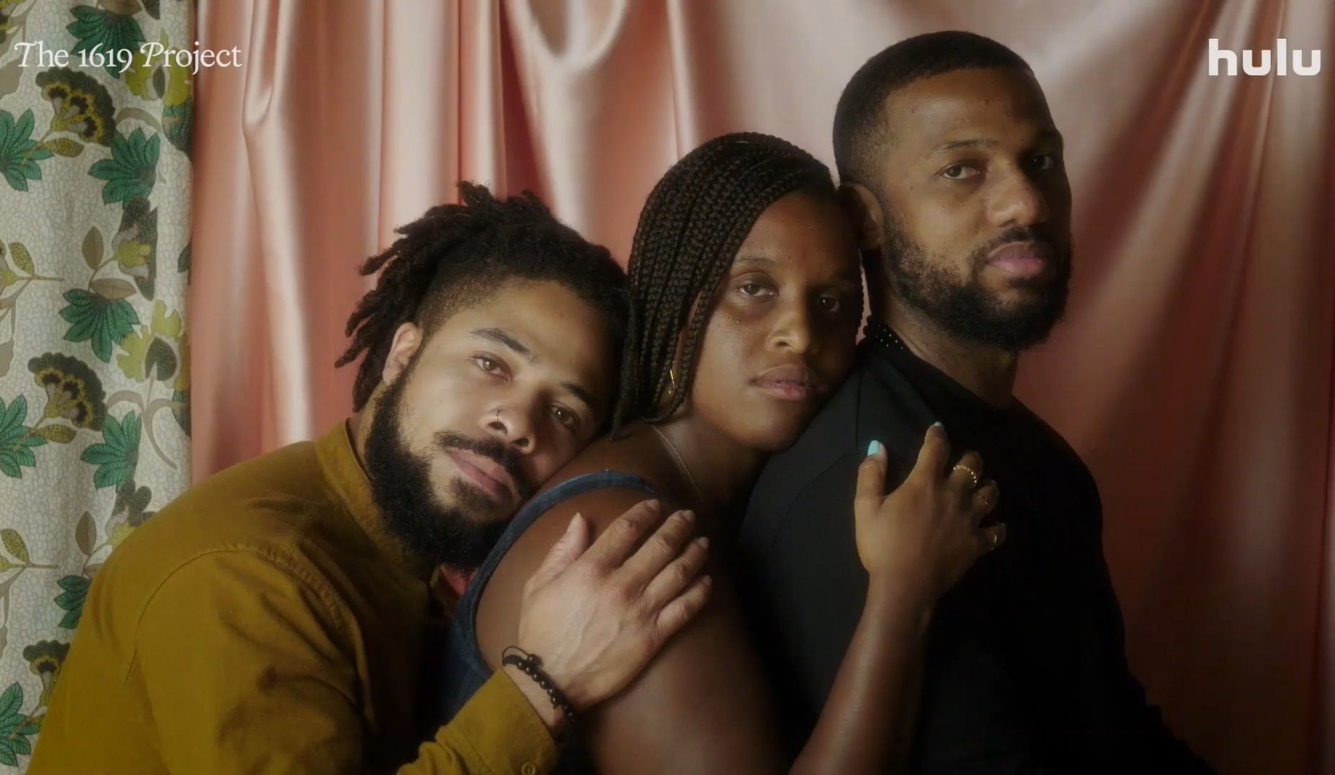
The idea that the United States was established more than a century before its founding fathers were born is strange, and the New York Times stealthily removed this claim from its website amid the uproar about its implications. Still, Hannah-Jones’s original formulation usefully illuminated the spirit of left-wing identitarianism in the late 2010s and early 2020s, which routinely denied the moral and political progress accomplished in the United States since 1776. As the Yale historian David Blight writes in his introduction to a 2018 report from the Southern Poverty Law Center: “The biggest obstacle to teaching slavery effectively in America is the deep, abiding American need to conceive of and understand our history as ‘progress.’” Blight wrote these words two years after the end of President Barack Obama’s second term.
After the killing of George Floyd by Minneapolis police officer Derek Chauvin in May 2020, the United States experienced its most significant period of sustained racial unrest since the mid-20th century, the largest protests in the country’s history, and an upsurge in a particularly divisive and authoritarian form of identity politics. Media organisations, universities, and other important institutions participated in the suppression of speech, while mobbing activism and demands for people to lose their livelihoods became pervasive on social media. New political speech codes were introduced and zealously enforced, and pleading ignorance of rapidly shifting taboos did not protect the accused.
The most serious problem with what became known as “wokeness” was its explicit illiberalism. This ideology privileged group rights over individual rights, and collective racial affinity was wedded to collective racial punishment. White Americans weren’t just encouraged to be allies; they were told that their whiteness implicated them in centuries of slavery, imperialism, and all other kinds of racial oppression. Activist groups and educators pushed for segregated classrooms to increase racial affinity between diverse students. Some doctors, activists, and public-health experts even argued that racial equity should be prioritised over saving as many patients as possible during the COVID-19 pandemic.
Illiberal identitarianism was propelled by several factors: disillusion with the state of race-relations at the end of Obama’s presidency, the rise of Trump, and the frustrations and resentments incubated by the COVID-19 lockdowns. But this wasn’t the first time that Americans had employed illiberal instruments of racial activism and politics. As the civil-rights movement was successfully securing racial equality with large-scale protests, sit-ins, and boycotts, revolutionary Black Power activists like Stokely Carmichael were criticising leaders like King for their commitment to nonviolence and coalition-building. In a weird convergence with the ethnonationalist far-right, the Black Power movement advocated its own version of racial separatism, such as a self-contained black economy.
This illiberal solution was consistently and firmly rejected by liberal civil-rights leaders like Bayard Rustin. In a 1965 essay titled “From Protest to Politics,” Rustin observes that the civil-rights movement had been “compelled to expand its vision beyond race relations” after it was confronted with a question: “What is the value of winning access to public accommodations for those who lack money to use them?” Motion, he writes, “must begin in the larger society, for there is a limit to what Negroes can do alone.” In a 1967 speech titled “Firebombs or a Freedom Budget,” he argued that “no economic or social order has ever been developed on the basis of color.” In a 1970 essay titled “The Failure of Black Separatism,” he deplores the idea that “blacks must be guided in their actions by a consciousness of themselves as a separate race,” and predicts that a policy of reparations would “isolate blacks from the white poor with whom they have common economic interests.”
Keep reading
AI and the Wiki Wars
Foreign Power, Local Politics

Podcast #333: The Search for Truth

A Costly Misconception

Addressing the Academic Skew