Science / Tech
Self-Defeating “Sustainability”
The sustainable agriculture movement’s ideological opposition to biotechnology undermines genuine environmental progress and food security.
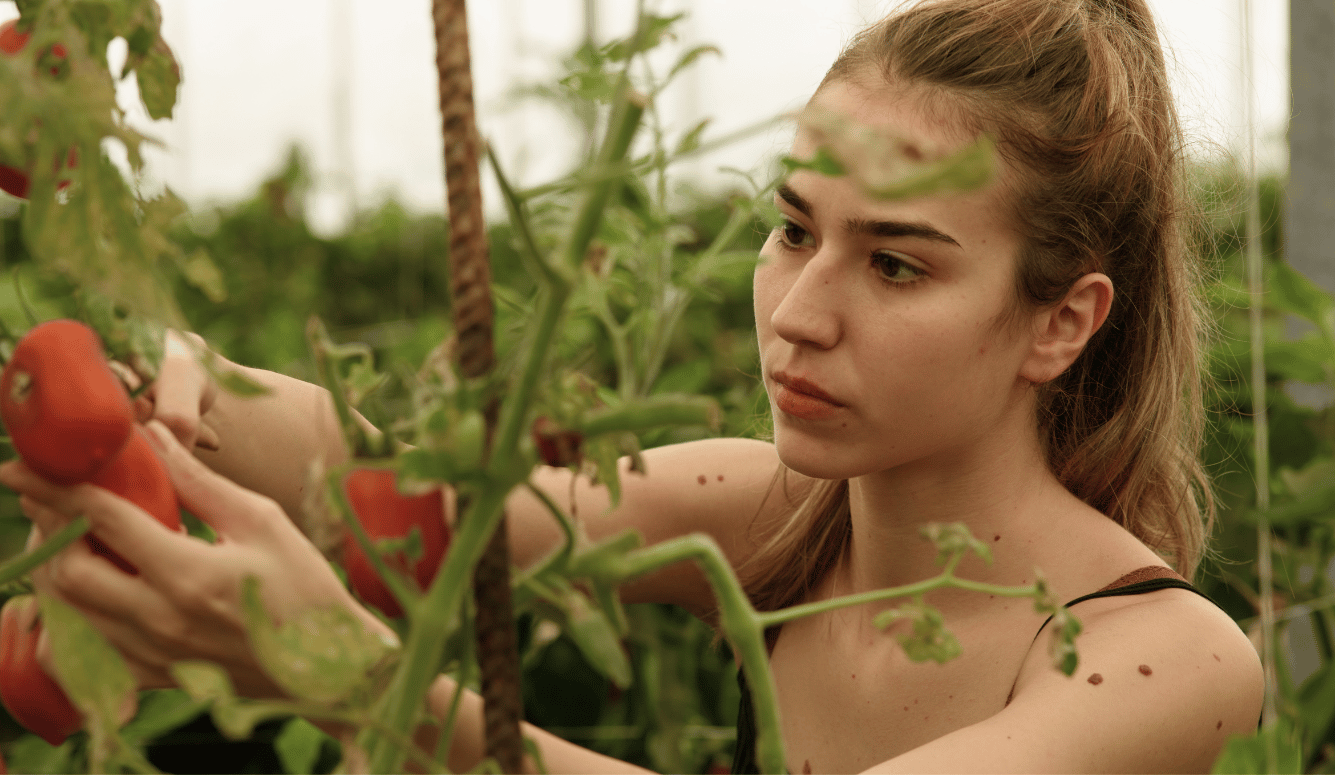

The Trump administration’s US$700 million Regenerative Pilot Program, announced in late 2025, is one of the most significant federal investments in sustainable farming practices in recent history. It was greeted with widespread, almost reflexive approval by everyone from environmental groups and farm organisations to public-health advocates. But few people paused to ask what exactly “regenerative” and “sustainability” mean.
Beneath the agreeable language of soil restoration and ecological harmony lies a modern “sustainable agriculture” movement that rejects some of the technologies responsible for the greatest environmental and humanitarian advances in the history of food production. What began as a legitimate critique of soil erosion, chemical misuse, and monoculture farming has hardened into something closer to ideology, often characterised by suspicion of modern science and hostility to innovation.
Early advocates of sustainable agriculture focused on measurable outcomes: reducing erosion, improving nutrient efficiency, conserving water and protecting its quality, and preserving long-term productivity. Their questions were pragmatic—what works, under what conditions, at what cost?
These advocates became prominent in the 1970s and 1980s, often working outside mainstream agricultural institutions. Wes Jackson at The Land Institute championed perennial polyculture systems that mimicked prairie ecosystems, arguing that annual monocultures inherently degraded soil. His research teams spent decades developing perennial grain crops that could anchor topsoil while producing good yields, in order to address the erosion crisis that had plagued industrial agriculture.
Meanwhile, farmers like the Rodale family in Pennsylvania championed organic agriculture. The Rodale Institute farm compared organic and conventional methods, measuring variables such as soil carbon levels, earthworm populations, water infiltration rates, and economic returns. They claimed positive results for organic versus conventional agriculture that have not been replicated in real-world settings.
The sustainable agriculture working groups that formed during this era—often combining farmers, agronomists, and soil scientists—focused on replicable techniques. They documented cover cropping strategies that built nitrogen naturally, tested integrated pest management protocols that reduced chemical inputs without sacrificing pest control, and refined no-till methods that preserved soil structure.
Over time, however, sustainability rhetoric shifted. Practices were judged not by their environmental footprint but by whether they “looked natural.” Inputs were condemned not because they caused harm, but because they were somehow “unnatural.” Scale itself became suspect, as if large farms were inherently less ethical than small ones. This transformation mirrors broader cultural trends: the romanticisation of pre-industrial systems, suspicion of expertise, and a moral elevation of “naturalness” that has little grounding in reality.
Yet, the true believers continue to reject conventional “industrial”farming in favour of more “natural,” “organic,” “sustainable”—and significantly more expensive—offerings, ignoring the fact that industry and governments are constantly tweaking the definition of “organic” in ways that permit the use of ever more chemical fertilisers and pesticides because organic farmers would be unable to function without them.
Nowhere is the paradoxical nature of the sustainable agriculture movement more obvious than in its hostility toward molecular genetic engineering. Genetically modified organisms (GMOs) are routinely portrayed as unnatural, risky, or ethically suspect—despite decades of research, regulatory scrutiny, and real-world use demonstrating otherwise.
Traditional plant breeding—by means of random mutagenesis caused by chemicals or radiation, wide crosses, or chromosome doubling—is celebrated as natural, even though it may introduce thousands of uncharacterised genetic changes. Conversely, molecular techniques, which insert or modify specific genes with exquisite precision, are condemned as reckless. From a scientific standpoint, the distinction is nonsensical. There in fact, a seamless continuum of techniques for genetic modification from ancient times to the era of molecular biology.
The irony is that many of the environmental benefits touted by sustainability advocates were made possible by biotechnology. Insect-resistant crops have reduced reliance on chemical insecticides. Herbicide-tolerant crops have enabled no-till and conservation-till farming at scales previously impossible, dramatically reducing soil erosion, runoff, and, possibly, carbon loss.
One of the most persistent myths in sustainability discourse is that higher yield is somehow morally suspect. Higher yields are framed as evidence of exploitation—of soil, ecosystems, or farmers themselves. Low-input, low-yield systems are praised as inherently superior. But yield is not a vanity metric. It is the single most important determinant of agriculture’s environmental footprint. Producing more food on less land reduces pressure on forests, wetlands, and grasslands. It limits habitat destruction. It lowers emissions per unit of food produced. The cumulative impact is significant, as agricultural economist Graham Brookes has pointed out:
In 2020, the extra global production of the four main crops in which GM technology is widely used (85 million tonnes) [soybeans, corn, cotton, and canola], would have, if conventional production systems been used, required an additional 23.4 million ha of land to be planted to these crops.
Ironically, a movement that claims to prioritise biodiversity routinely endorses practices that require more land to produce the same amount of food.
The costs of anti-technology "sustainability" are not confined to abstract environmental models. A calamity was created in Sri Lanka in 2021 when the country’s president abruptly instituted a nationwide ban on the importation and use of chemical fertilisers and pesticides and required the country’s two million farmers to switch to organic farming. This significantly worsened Sri Lanka’s food security crisis, leading to drastic reductions in crop yields (especially in rice and tea), soaring food prices, and increased imports.
As Lionel Alva pointed out in 2021:
Sri Lanka’s economy is structured in such a way that it depends heavily on imports for many essential commodities. Tea and coffee were some of the country’s primary exports. With organic farming, the end outcome was harsh and quick. Domestic rice output plummeted 20% in the first six months, despite assertions that organic methods can deliver equivalent yields to conventional cultivation. Sri Lanka, which had previously been self-sufficient in rice production, has been compelled to import $450 million worth of rice, despite domestic rice prices rising by roughly 50%. The embargo also harmed the country’s tea harvest, which is its main export and source of foreign currency.
Another detrimental effect of flawed agriculture policy is resistance to nutritionally enhanced crops engineered to address micronutrient deficiencies. In regions where rice or maize dominates diets, vitamin deficiencies remain a leading cause of preventable disease. There are GMO crops designed to address these problems, but their introduction has often been delayed or prevented due to ideological opposition.
In the Philippines, for example, there have been years-long attempts to introduce a product called Golden Rice, which has been genetically modified to contain beta-carotene, the precursor of vitamin A, thus helping prevent vitamin A deficiency in developing nations where white rice is the major source of calories. According to the last Expanded National Nutrition Survey (ENNS) in the Philippines, an estimated 15.5 percent of infants and children aged six months to five years were vitamin A deficient. This level meets the World Health Organization (WHO) classification of a moderate public health problem (10–20 percent prevalence). Golden Rice could have been a viable solution, and in 2021, the Philippines became the first country to permit its commercial cultivation, but it met with continuing, relentless opposition from activists; and in 2024, the Filipino Court of Appeals withdrew permission for the growth of Golden Rice in the country.
 Craig DeLancey
So, why has sustainable agriculture drifted so far from evidence? Part of the answer lies in its transformation from an agronomic framework into a cultural identity. “Sustainable” no longer describes a set of outcomes; it signals membership in a worldview—anti-corporate, anti-industrial, sceptical of institutions, and suspicious of scientific advances. Once sustainability becomes identity-driven, contrary evidence is dismissed. Studies are accepted or rejected based on who funded them, not how they were conducted or on the results. Consensus is reframed as corruption. None of this is an argument for uncritical adoption of every new agricultural technology, but there is a crucial difference between regulating technologies based on evidence and rejecting entire categories of innovation based on ideology.
The most damaging legacy of modern sustainable agriculture may be the false choices it imposes: nature or technology, tradition or innovation, stewardship or productivity. The most sustainable food systems of the future will integrate all of these. They will use genetic tools to develop crops that need fewer inputs, tolerate stress, and deliver better nutrition. They will manage those crops using practices that protect soil, conserve water, and enhance resilience. There is no contradiction here—except the one imposed by ideology.
We do need better agriculture. We also need healthier soils, cleaner water, lower emissions, and more resilient food systems. But we will not get there by rejecting the tools that make progress possible. True sustainability is not about looking backward. It is about using the best available evidence to move forward—feeding more people, at lower cost, on less land, more reliably and with less harm to the environment.
Keep reading
AI and the Wiki Wars

Foreign Power, Local Politics

Podcast #333: The Search for Truth


A Costly Misconception
Addressing the Academic Skew