Podcast
Podcast #323: British Columbia’s Radical Political Landscape
Politician Dallas Brodie explains why her province continues to promote dubious social-justice policies and myths—including the false claim that 215 dead Indigenous children were discovered four years ago in ‘unmarked graves.’
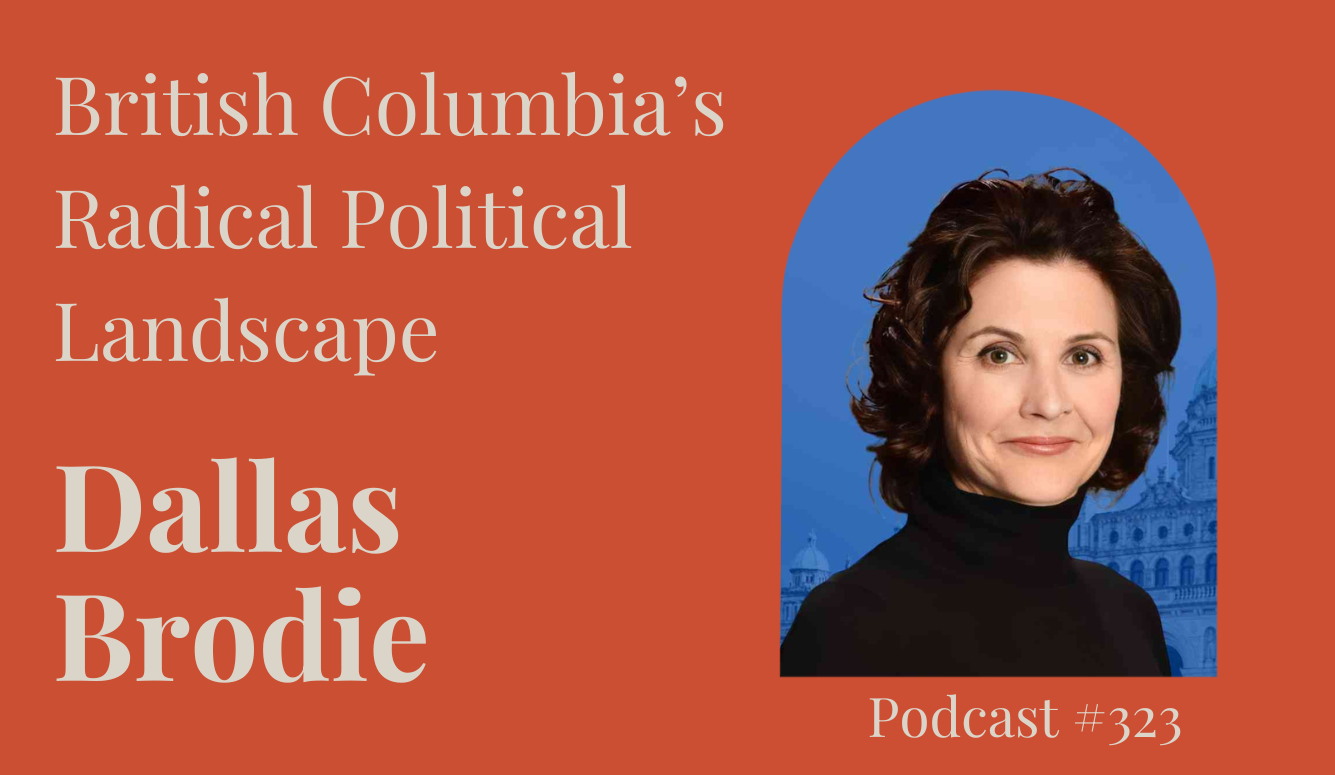

Welcome to the Quillette podcast. I’m your host, Jonathan Kay.
This week, we’ll be examining the strange and unique political culture of British Columbia, Canada’s westernmost province.
As most Quillette listeners will know, Canada as a whole is a socially progressive country.
But even by Canadian standards, British Columbia has become something of an outlier—having embraced trends such as drug decriminalisation, transgender activism, environmentalism, DEI, and, especially, Indigenous causes, with extraordinary fervour.
Moreover, even as other jurisdictions have begun to back away from some of the radical policies that became popular during the heady days of Justin Trudeau’s tenure, British Columbia’s left-of-centre New Democratic Party government, led by premier David Eby, remains in a kind of late 2010s time-warp.
As we’ll hear from my guest today—more on her in a minute—British Columbia was not always like this. Not so long ago, B.C.’s unionised labour force was dominated by blue-collar workers in forestry, mining, and other resource industries.
But thanks to automation and the rise of the post-industrial economy, that has changed. And the New Democrats—or NDP, as the party is known—now increasingly caters to white-collar social-justice constituencies.
To give some specific examples: British Columbia is the province where nurse Amy Hamm was recently disciplined by the B.C. College of Nurses and Midwives for the crime of stating that men cannot become women, medically speaking or otherwise.
 Amy Eileen Hamm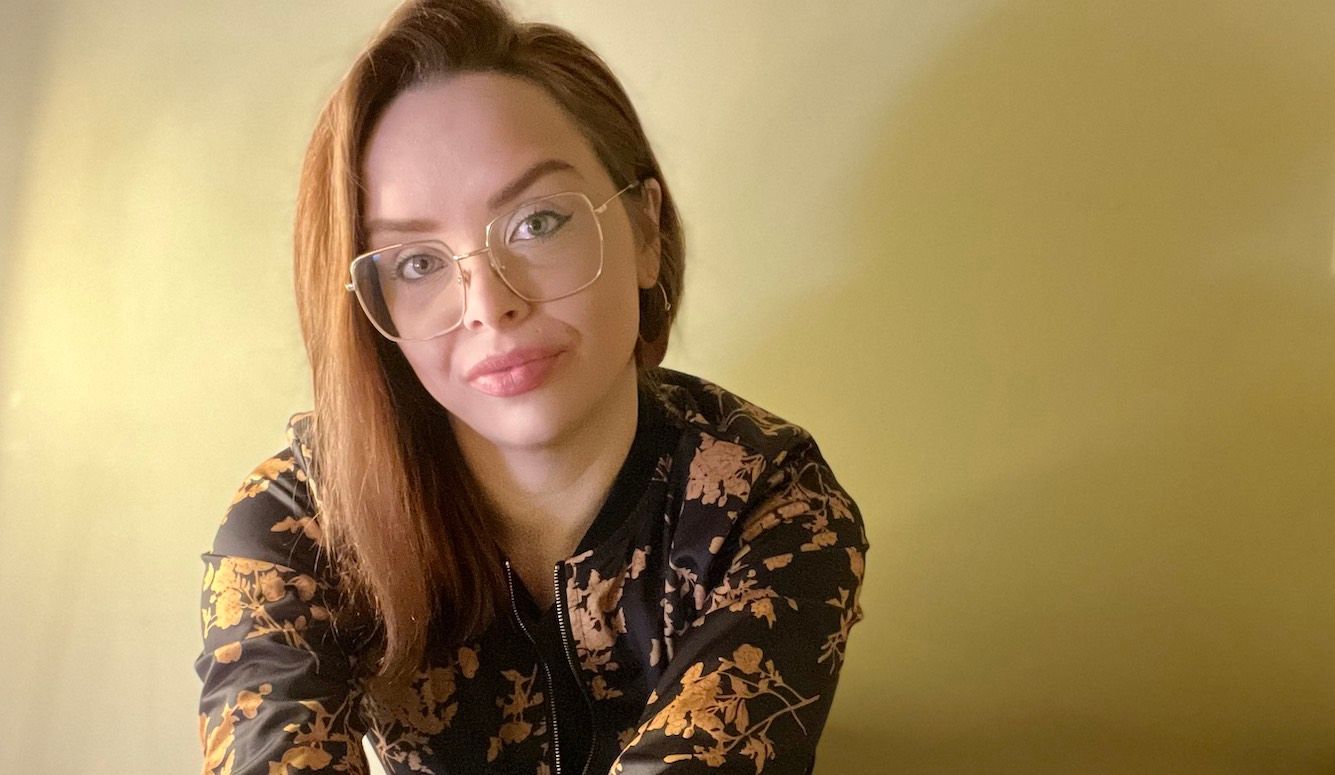
British Columbia has enshrined the UN’s Declaration on the Rights of Indigenous Peoples Act into law, a move that requires the province to reconcile its legal code with the increasingly expansive set of rights attributed to First Nations—an approach that could, in theory, jeopardise the ability of B.C. homeowners to retain legal title to their homes.
And from 2023 through 2025, B.C. implemented a policy that allowed residents to legally possess up to 2.5 grammes of hard drugs such as cocaine, heroin, or fentanyl—a move that turned parts of Vancouver into open-air drug dens.
One factor that has contributed significantly to the leftward radicalisation of politics in British Columbia was the claimed discovery, in 2021, of 215 supposed Indigenous child graves on the grounds of a former school in the city of Kamloops.
Chris Champion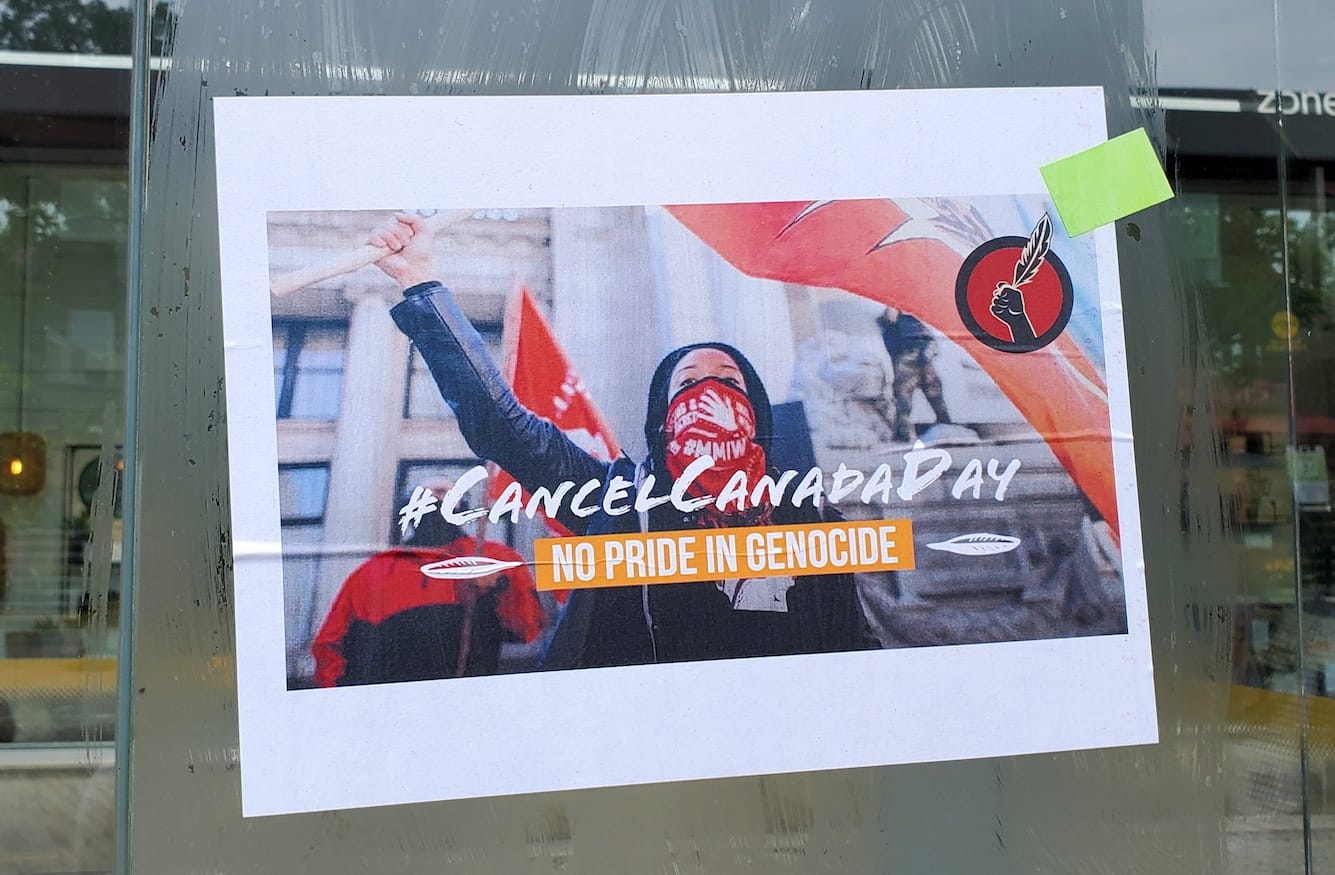
As Quillette readers will know, that claim led to a wave of social panic throughout Canada, boosted by journalists, academics, and governments at all levels.
As it turned out, however, those graves don’t seem to actually exist. In the four and a half years since the initial blockbuster claims were made, in fact, not a single actual grave has been found at any of the claimed sites—a fact that even the left-of-centre CBC was forced to admit in 2025. For many Canadians, that whole 2021 unmarked-graves episode now seems like a case study in the madness of crowds.
James Snell
But in British Columbia, the idea that 215 real Indigenous child corpses were truly discovered on the grounds of an old school in 2021 remains ensconced as a sort of semi-official sacred martyrs’ myth—despite the fact that a panel of judges from the province’s highest court, led by the chief justice, who is Indigenous himself, has noted plainly that no graves have been found.
In a development that is central to the story you’re about to hear from my guest today—and I promise I’ll be properly introducing her in short order—even the British Columbia Law Society, the regulatory body that oversees the province’s lawyers, recently circulated professional-development materials that repeated 2021-era misinformation about the discovery of 215 child graves. And when a B.C. lawyer named Jim Heller objected, the B.C. Law Society tried to smear him as a racist. (He is now suing the Law Society for defamation.)
Michael Higgins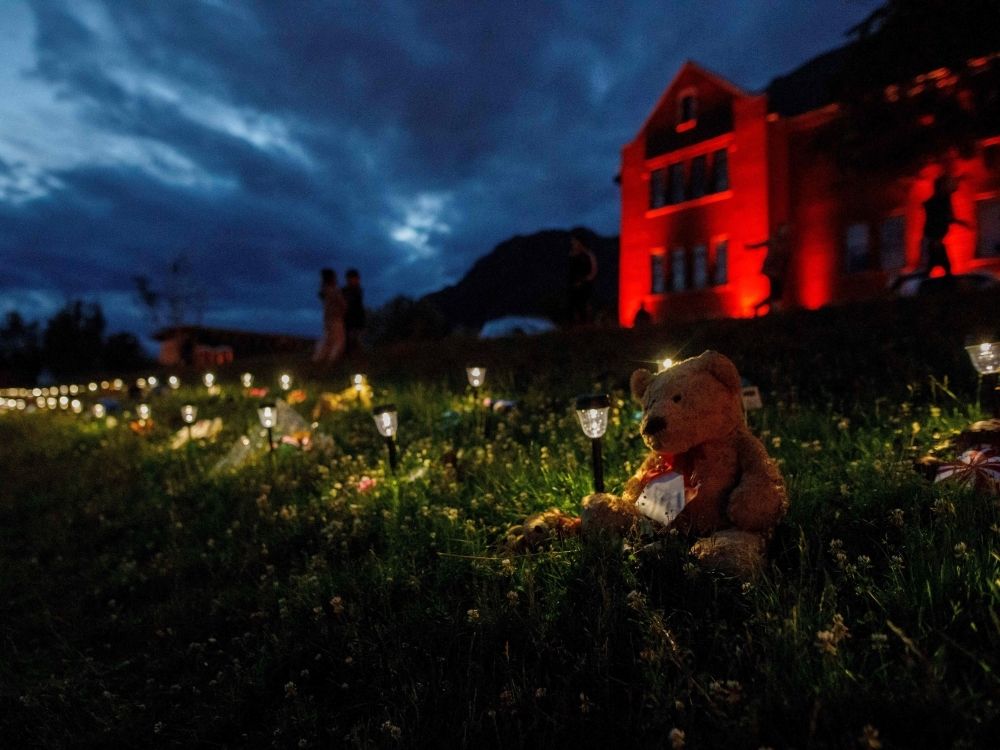
In this episode of the Quillette podcast, my guest, politician Dallas Brodie, will try to help us understand how British Columbia got like this—and, more specifically, how David Eby’s government managed to narrowly win the most recent provincial election, in 2024, despite his embrace of such dubious policies and debunked myths.
As you’ll hear, one of the reasons the NDP government has managed to cling to power is that its political opponents have been fractured. In that 2024 election, the main opposition was cobbled together from a legacy centre-right party in the midst of collapse (known as the B.C. Liberals), and an upstart Conservative party with weak and amateurish leadership.
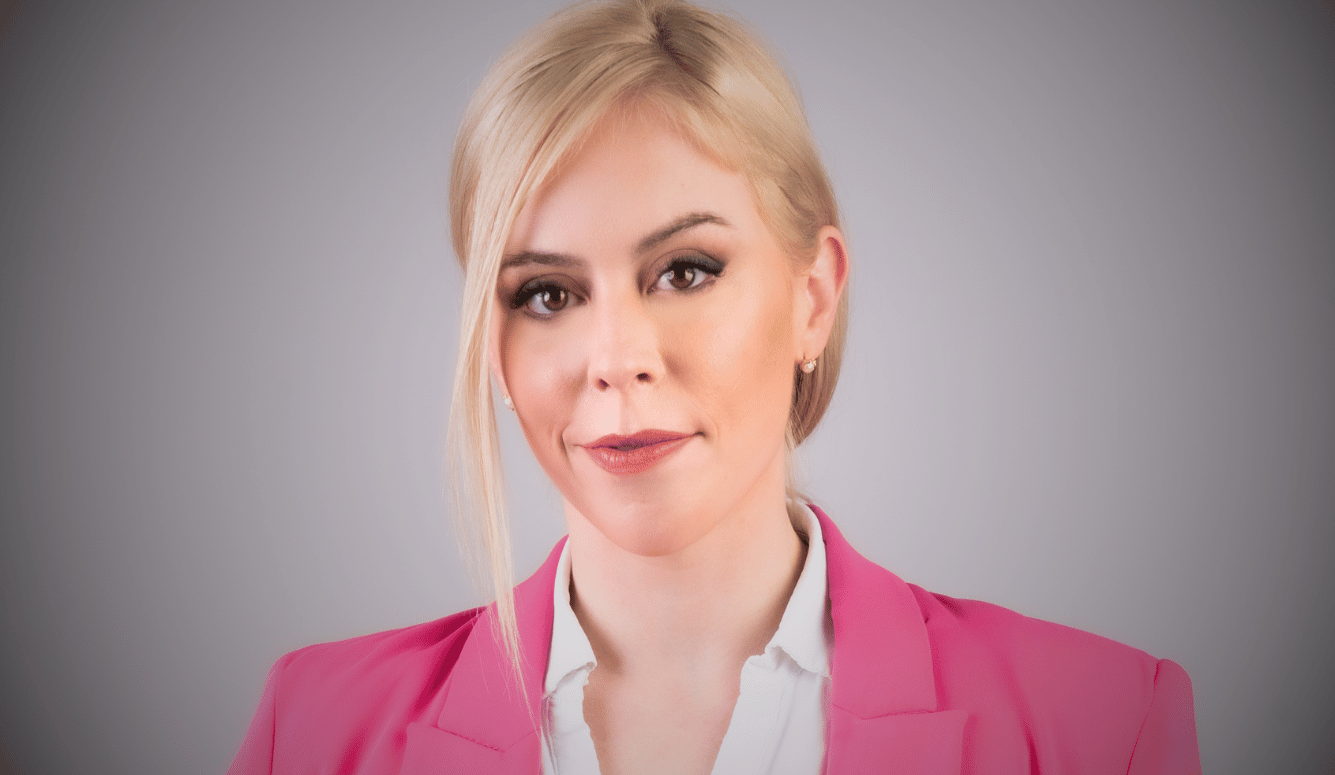
Ms Brodie has become a controversial and well-known figure in British Columbia, despite the fact that the 64-year-old lawyer has been in politics for just a few years. In the 2024 election, She was one of 44 Conservative candidates elected to B.C.’s Legislative Assembly—a tally just shy of the 47 won by David Eby’s NDP. And for a brief period, she was Official Opposition Critic for B.C.’s Ministry of Attorney General.
But Ms Brodie’s position began to unravel a year ago, after she tweeted her support for the aforementioned Jim Heller—remember, he’s the lawyer who’s now suing the Law Society of British Columbia for defamation after it tried to smear him as a racist.
Brodie’s X post read as follows: The number of confirmed child burials at the former Kamloops Indian Residential School site is zero. Zero. No one should be afraid of the truth. Not lawyers, their governing bodies, or anyone else.
The number of confirmed child burials at the former Kamloops Indian Residential School site is zero.
— Dallas Brodie (@Dallas_Brodie) February 22, 2025
Zero.
No one should be afraid of the truth. Not lawyers, their governing bodies, or anyone else. 1/3https://t.co/ymtHLhdmZn
Everything in that tweet was accurate. But it rankled Ms Brodie’s Conservative Party bosses, who were then trying to ingratiate themselves with an Indigenous activist named Áʼa:líya Warbus. By this time, Ms Warbus had actually been named as the Conservatives’ house leader.
In the chaotic Conservative Party meltdown that followed, Ms Brodie was thrown out of caucus by party leader John Rustad, who himself was tossed aside by the party shortly thereafter.
Ms Brodie and another former Conservative then started up a new alternative right-of-centre party called OneBC—though, even then, her troubles continued.
Shortly after the new party’s formation, Ms. Brodie began complaining to her OneBC peers about a right-wing party staffer who’d exhibited deeply unsettling online behaviour. In the dust-up that ensued, Ms Brodie was thrown out of her own party—a move she blames on what she calls the “woke right.” That move proved temporary, however. And Ms Brodie, who remains an elected member of the legislative assembly, once again took the leadership of her fledgling OneBC party.
Quillette
As we’ll hear, Ms Brodie is absolutely not backing down. She’s become a documentary filmmaker while in office, and has taken to visiting B.C. university campuses with a fellow unmarked-graves heretic named Frances Widdowson, spreading the same zero-graves message that cast her into political purdah in the first place.
All this, and more, in my Quillette interview with maverick OneBC politician Dallas Brodie.
Keep reading
Treating Myths as Science
The Edifice Complex
Letters to the Editor
Criminal Research
Getting Away With It