Politics
The Fall of Zhang Youxia
A septuagenarian loyalist may be facing execution for the crimes of caution and professionalism.
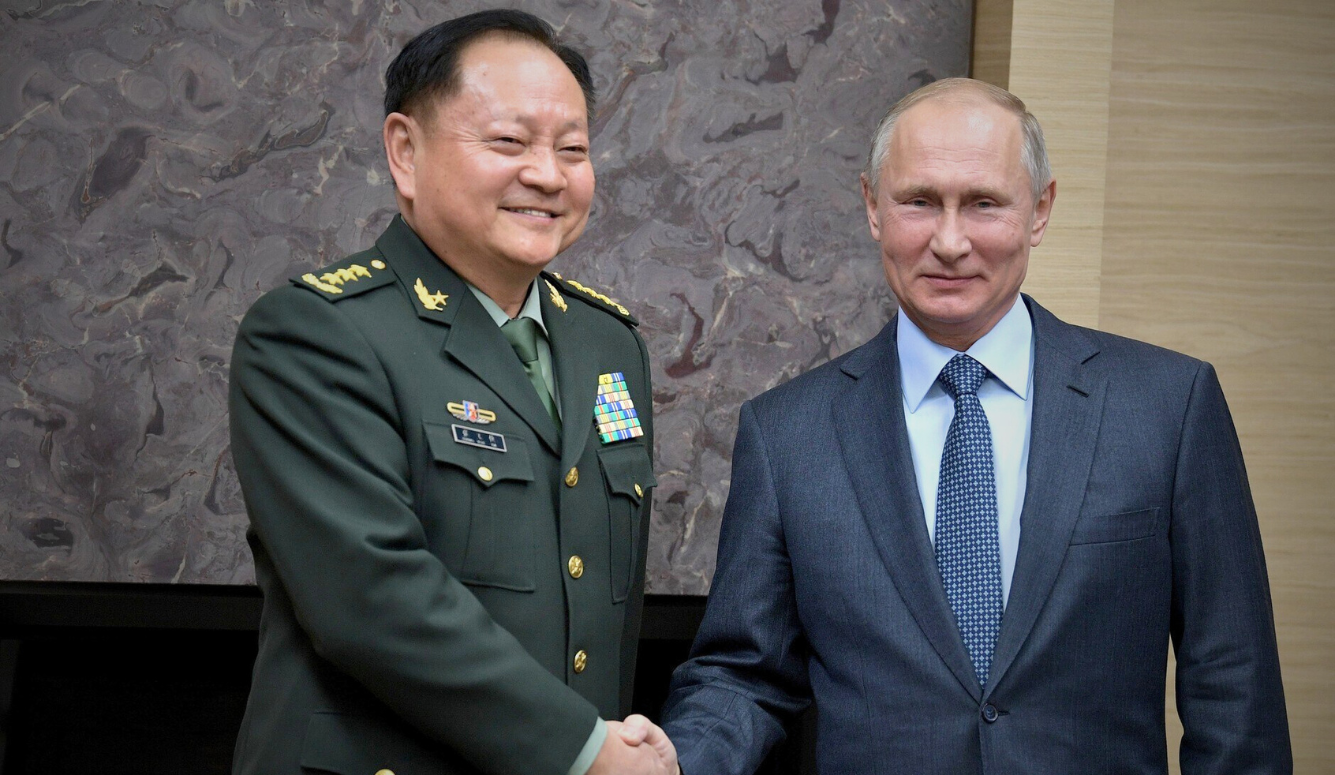

Xi Jinping purges a million officials a year. China’s president finds corruption wherever he looks for it, like a Grand Inquisitor rooting out heresy. Lately, his fury has turned to members of the military command, and on 24 January, the great purge finally reached its zenith—a moment described by Dennis Wilder, former China analyst at the CIA, as “the most stunning development in Chinese politics since the early days of Xi’s rise to power.”
As vice-chairman of the Central Military Commission, which heads the armed forces of the Chinese Communist Party (not of China, which has no army), Zhang Youxia was second only to Xi. He was also a longtime ally. Nevertheless, he is now being investigated along with Liu Zhenli, another general, for “suspected … serious disciplinary and legal violations.” This makes him the most senior serving military leader to be targeted in the modern era—indeed, the most senior target since the fire and ferment of Mao’s Cultural Revolution (1966–76).
There are just two members still unpurged from the Central Military Commission: Xi’s enforcer Zhang Shengmin, secretary for the commission of discipline inspection, and the president himself. Until new appointments are found, Xi will hold supreme authority over the two million members of the People’s Liberation Army (PLA), the 1.5 million members of the People’s Armed Police (PAP), and the eight million members of the Militia of China.
A task force has been dispatched to Zhang Youxia’s power base in Shenyang, ostensibly to investigate his time as commander in the region. No doubt the real reason is the decimation of Zhang’s clique. A mutiny must be forestalled. Mobile devices have been seized from officers linked to the fallen general. In an intriguing detail, the task force is reportedly staying in local hotels rather than on military bases, where Zhang’s network is dominant. The general faces a slew of charges: bribery, “clique-forming,” abuse of his authority, and more. But most headlines focused on one rather more dramatic accusation. Zhang was allegedly accused at a high-level briefing of having provided Washington with “core technical data” on Beijing’s nuclear-weapons program.
The recruitment of someone as high-ranking as Zhang would be a remarkable win for American intelligence. It would be unprecedented. It would, in fact, be implausible. Neil Thomas, a fellow on Chinese Politics at the Asia Society Policy Institute, asks how Zhang could even manage it practically. All the general’s communications are monitored and all his meetings are accompanied, so his treason would require a very large conspiracy indeed. And in the Communist Party’s strictly siloed system, he would be unlikely to gain access to such details in the first place.
I'm a little skeptical of the claim in this @WSJ piece that top PLA general Zhang Youxia "leaked core technical data on China's nuclear weapons to the U.S."
— Neil Thomas 牛犇 (@neilthomas123) January 25, 2026
I could be wrong and the "people familiar with a high-level briefing" could be right, but here are some questions and… pic.twitter.com/xnTqyWDDDc
Evidence against Zhang came from Gu Jun, former general manager of China National Nuclear Corp, who is currently under investigation for “violating Party discipline.” Upon reading this news, my first thought was that a man will say anything under duress. But there may be more to it than that. Some observers are suggesting that the nuclear story is deliberate misinformation; a fake narrative fed to Western media by CCP mouthpieces. This fake narrative essentially accuses Zhang Youxia of “colluding with foreign forces”—that tired old Communist canard. Perhaps Xi Jinping has been successfully slipping his propaganda into Western headlines.
The Wall Street Journal story reads more like disinformation than genuine reporting. The alleged details do not withstand basic scrutiny. The charge itself fits a familiar political pattern in China: a catch-all accusation—“colluding with foreign forces” (里通外国)—often used… https://t.co/MqDvxnkG1S
— 周锋锁 Fengsuo Zhou (@ZhouFengSuo) January 26, 2026
Debates rage about the real reason for Zhang’s fall. Corruption? Zhang headed the PLA’s procurement enterprise for five years, and in that system, officers routinely pay for promotion. But in a Marxist-Leninist state, bribes and backhanders are the most natural of all laws. Everyone partakes, everyone knows everyone else partakes, and the charge of corruption, when it comes, is little more than a formality; about as meaningful as “colluding with foreign forces.” Xi’s thirteen-year corruption dragnet was launched to catch his political rivals rather than China’s chief grafters. And Zhang Youxia was the closest of allies.
Keep reading
Doomscrolling into Adulthood

Podcast #331: The Ayatollahs’ Assassins
The Disgrace of Tariq Ramadan
Apocalypse ’92