United States
When Narrative Outpaces Evidence: The Minnesota ICE Shooting
What four videos show—and fail to show—about a deadly ICE encounter.
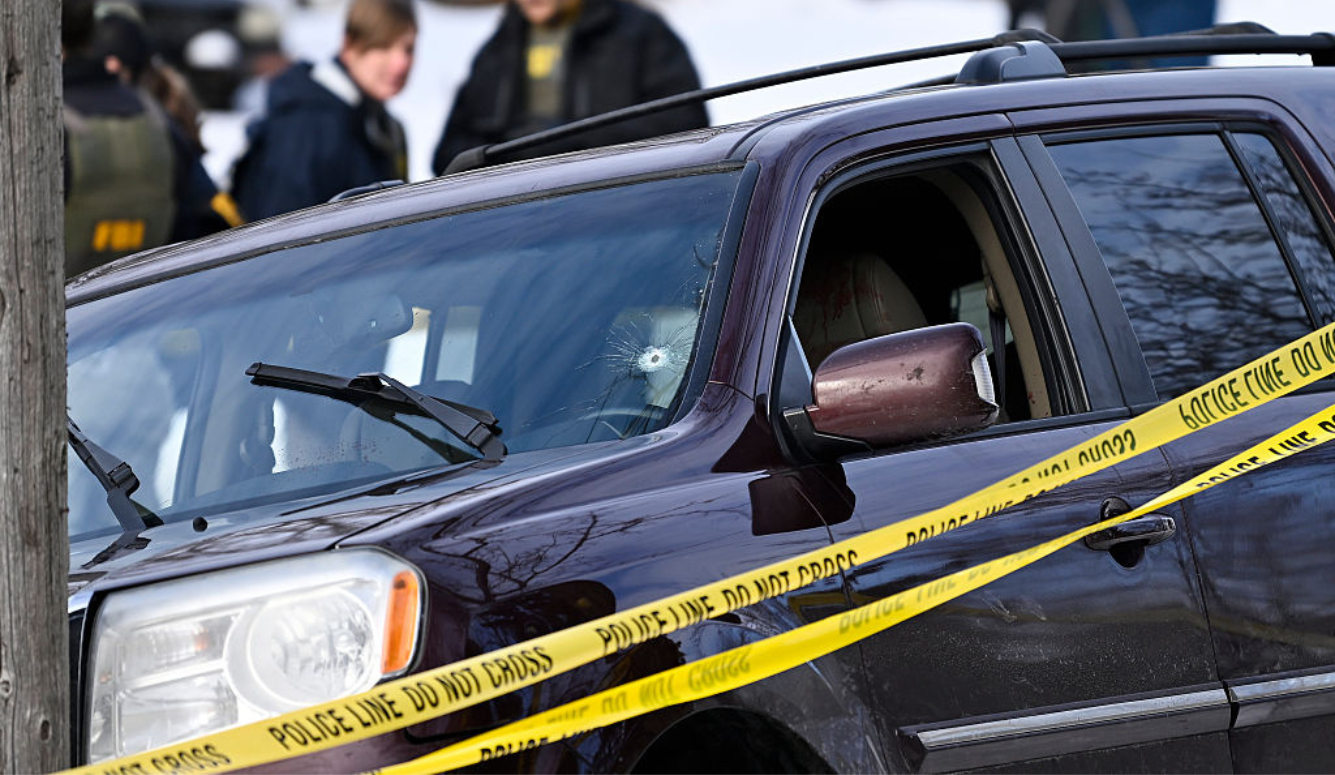

In politically charged incidents, narratives often arrive before evidence. The Minnesota ICE shooting is a recent and unusually clear example. Within hours of the event, competing accounts hardened into fixed positions, even as the available evidence remained fragmentary and incomplete.
The shooting involved Renee Nicole Good, who was fatally shot during a federal immigration enforcement operation in Minneapolis. Video of the encounter spread rapidly online, and interpretations diverged almost immediately. Federal officials and some commentators described the shooting as an act of self-defence; local leaders and others described it as unjustified. Both sides spoke with confidence. Neither had a full factual record.
Multiple videos of the incident surfaced within hours, with additional footage appearing later. What those videos appeared to show depended heavily on who was watching, and, more often than not, on that person’s prior political convictions. The same fragments of footage were treated as decisive proof of mutually exclusive conclusions.
What follows is not an argument for either narrative. It is an examination of what the available video evidence can support, what it cannot, and why video, especially degraded, partial video, so often produces certainty where restraint is warranted.
The First Three Videos
NEW: Here is an eyewitness video of the shooting, posted by Daniel Suitor on Bsky. While it doesn't capture the actual moment itself (the shooting is blocked by the car), @TriciaOhio's claim below of an attempt to run down an officer already appears to be demonstrably false. https://t.co/AS6z11IyBG pic.twitter.com/HuWzsoHAcI
— Aaron Reichlin-Melnick (@ReichlinMelnick) January 7, 2026
It shows a snowy street with ICE vehicles stopped in the road. An ICE agent shouts, “Get out of the car. Get out of the fucking car.” Good’s maroon Honda Pilot reverses slightly, then drives to the right. Gunshots and screams are heard, but the shooter only appears after the car has moved away.
The nonchalance of the agents after one of their own has just shot a woman is a dangerous sign.
— Jerusalem (@JerusalemDemsas) January 7, 2026
They do not feel accountable to the public, they are not afraid of repercussions for their actions. https://t.co/7JmBesXMls
The second video begins earlier and from closer range. We see Good wave one vehicle around her. An ICE pickup truck pulls up and two agents approach. She brings her hand back inside the car, backs up perhaps three feet, then moves forward and to the right. As she starts moving, ICE agent Jonathan Ross draws his weapon and moves left as the car moves right. He fires one shot, then two more.
🚨 BREAKING: New angle from the ICE involved shooting in Minneapolis shows the woman CLEARLY hitting the agent with her car before he fires at her
— Nick Sortor (@nicksortor) January 7, 2026
A vehicle is a deadly weapon. And she used that deadly weapon against an agent.
Self-defense. pic.twitter.com/kw3SbBzSrP
The third video is filmed from roughly 200 feet down the road and is low-resolution when zoomed in. Ross is seen standing in front of the car. He steps back and appears to be pushed slightly by the vehicle. Gunshots are heard. The car continues down the road and crashes.
None of these videos shows the complete picture, even when combined with others that followed, yet each was quickly treated as decisive.
Lessons From Video Analysis
I’ve spent many years analysing video, including footage of shootings ranging from JFK to LaVoy Finicum, as well as more recent political violence. Two lessons are especially relevant here.
First, video quality matters. Phone cameras do not record raw sensor data. Footage is immediately compressed, discarding information. From there, quality usually worsens. Videos are uploaded, downloaded, re-uploaded, and re-encoded. Influencers often circulate fourth-generation or worse copies. People then form strong opinions based on materially degraded evidence.
Second, disagreement over video interpretation is inevitable, especially when politics are involved. After more than sixty years, people still argue over what the Zapruder film shows. The same footage continues to produce incompatible conclusions.
Political Narratives Form Instantly
The Minnesota shooting followed this pattern at remarkable speed. Donald Trump shared the long-distance third video, claiming that the woman “violently, willfully, and viciously ran over the ICE officer,” who then shot her in self-defence. That description quickly became the dominant Republican narrative.
Democratic leaders responded just as forcefully. Hakeem Jeffries called the killing “an abomination, a disgrace.” Chuck Schumer said there appeared to be “no justification” for the agents’ actions. Both sides spoke with similar certainty. But the degree to which that certainty was supported by evidence varied considerably.
What the Footage Supports
In the 24 hours after the shooting, many analysts, myself included, examined the footage frame by frame. A few things became clear. First, Trump’s claim that the officer was “run over” is not supported by the videos. Ross appears upright, with no visible signs of injury. At no point in the videos was he on the ground. That point should not be controversial. Beyond that, agreement collapses.
A new argument emerged, amplified by Trump, quoting former FBI agent Nicole Parker: “when a vehicle is used as a weapon, deadly force is justified.” That is technically correct. DOJ policy guidelines (1-16.200) permit deadly force against a vehicle if serious danger exists, but only if no objectively reasonable alternative, including moving out of the vehicle’s path, is available.
That shifts the analysis to harder questions.
- Was Good trying to hit Ross?
- Did Ross reasonably believe she was trying to hit him?
- Could he have moved out of the way?
- Were all three shots justified?
The Critical Details
The first question is easier to answer than the others, and the available footage weighs against the claim. In the second, close-up video, Good does not appear to be trying to strike Ross. She backs up with the wheels turned left, angling the front of the car to the right. As she moves forward, the wheels turn to the right, away from him. Ross is on her left.
As she turns, Ross leans forward and makes contact with the car. He appears to be pushed back slightly just before firing. At the moment of the first shot, his feet are clear of the vehicle, and the wheels are visibly angled away. The claim that she “gunned” the car relies on misreading a brief wheel twitch during an R-to-D shift on ice. This movement, known as driveline shunt, is normal. A partial wheel rotation is not acceleration, a spin-out, or evidence of intent.
Could Ross nonetheless have believed she was trying to hit him? Possibly. But the following day, a fourth video was released. This was shot by Ross himself, on his phone. It clearly shows that Good was turning the steering wheel away from him.
BREAKING: Alpha News has obtained cellphone footage showing perspective of federal agent at center of ICE-involved shooting in Minneapolis pic.twitter.com/p2wks0zew0
— Alpha News (@AlphaNews) January 9, 2026
Should he have moved out of the way? The video suggests he could have. Instead, he appears to lean forward, possibly placing a hand on the car.
Federal agents are trained not to stand in front of vehicles. Once the car began moving, stepping aside would normally be the correct response. The counter-argument is that icy conditions made movement unsafe. But here we are deep into subjective speculation.
The uncertainty about how Ross himself perceived the situation will give his defence a plausible justification for the first shots. The next two shots, which seem to be fired after he is well out of danger, would present a more difficult legal justification, should charges ever be filed.
The Broader Problem
Taken together, the available footage does not support the claim that the officer was deliberately attacked with a vehicle. On that point, Trump was wrong. There is no clear evidence that Renee Nicole Good intended to strike him, and the vehicle movement, wheel angle, and timing of the shots argue against that interpretation.
At the same time, the footage does not eliminate uncertainty. Video cannot tell us exactly what Ross perceived in a split second, whether he believed he was losing balance on ice, or whether he reasonably thought he could not move out of the way. Those subjective elements matter legally, and they cannot be resolved by replaying degraded clips online.
That uncertainty made the incident politically exploitable. Claims of certainty filled the gaps left by missing information. Video fragments were treated as verdicts rather than evidence. Reactions were mistaken for analysis.
The Minnesota ICE shooting will be investigated, and additional evidence will matter. But by the time that process concludes, the narratives will already be fixed. That is the lesson here. Not that video is useless, and not that conclusions are impossible, but that accepting immediate reactions as analysis leads to political convenience outweighing the evidence.
Keep reading
Made in Moscow

Letters to the Editor
A Paradoxical War
Hearts of Darkness
A New World Order in the Making

Podcast #328: The Extraordinary Exploits of Agent Zo