Israel
A Fragile Alliance
Despite public displays of mutual support, the Trump–Netanyahu partnership is on shaky ground.
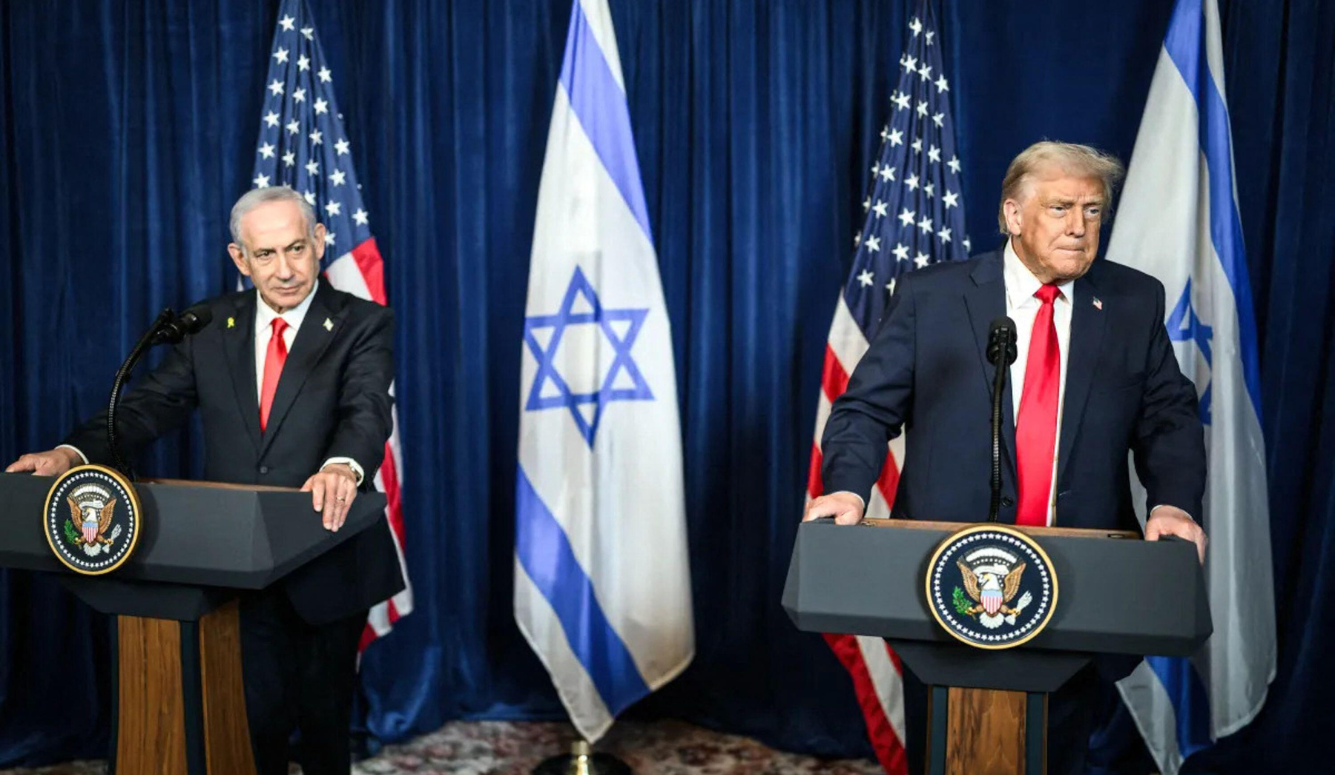

On 29 December, in front of reporters and the general public, Prime Minister Benjamin Netanyahu and President Donald Trump praised each other fulsomely and made a display of their mutual affection and of Israeli–American solidarity. Trump publicly endorsed Israel’s firm stance against Iran, giving the Israelis a green light to attack Iranian sites if the Islamic Republic renewed its nuclear weapons and ballistic missile programs. But off-stage, the deep divisions between the American and Israeli positions over the future of Gaza and other areas in the Middle East have only been papered over and remain in great measure unresolved.
Initially, Netanyahu requested that the implementation of Phase 2 of Trump’s twenty-point Gaza peace plan be delayed until Hamas release the remains of Ran Gvili, the lone Israeli hostage from the 7 October 2023 Hamas assault on southern Israel whose corpse remains in Palestinian hands. When they accepted the peace plan last October, Hamas agreed to hand over all the remaining hostages, both alive and dead, in exchange for several thousand Palestinian prisoners and for Israel’s agreement to a ceasefire. The ceasefire went into effect but Hamas has failed to hand over Gvili’s remains, arguing that it cannot locate them. Whether or not Trump believes this statement is untrue, he ruled that this should not delay the start of Phase 2—despite Netanyahu’s stratagem of bringing Gvili’s parents with him to Mar a Lago to meet the president in the hope that they might influence his decision.
So, Netanyahu has grudgingly agreed to start Phase 2 later this month and—more significantly—that this can go ahead although Hamas has still not disarmed, a stipulation to which the terrorist organisation had also agreed. Hamas has been reorganising and re-equipping its formations and reasserting its control over the two million or so Palestinian inhabitants who live in the 47 percent of the Strip it governs. The group has insisted that it will not give up its arms, which, according to Israel, consist mainly of 60,000 Kalashnikov assault rifles, alongside an unknown number of RPGs, a few hundred short-range rockets, and a variety of IEDs. Until last week’s Netanyahu–Trump meeting, Israel had been insisting that Phase 2 could not begin until Hamas disarmed.
 Benny Morris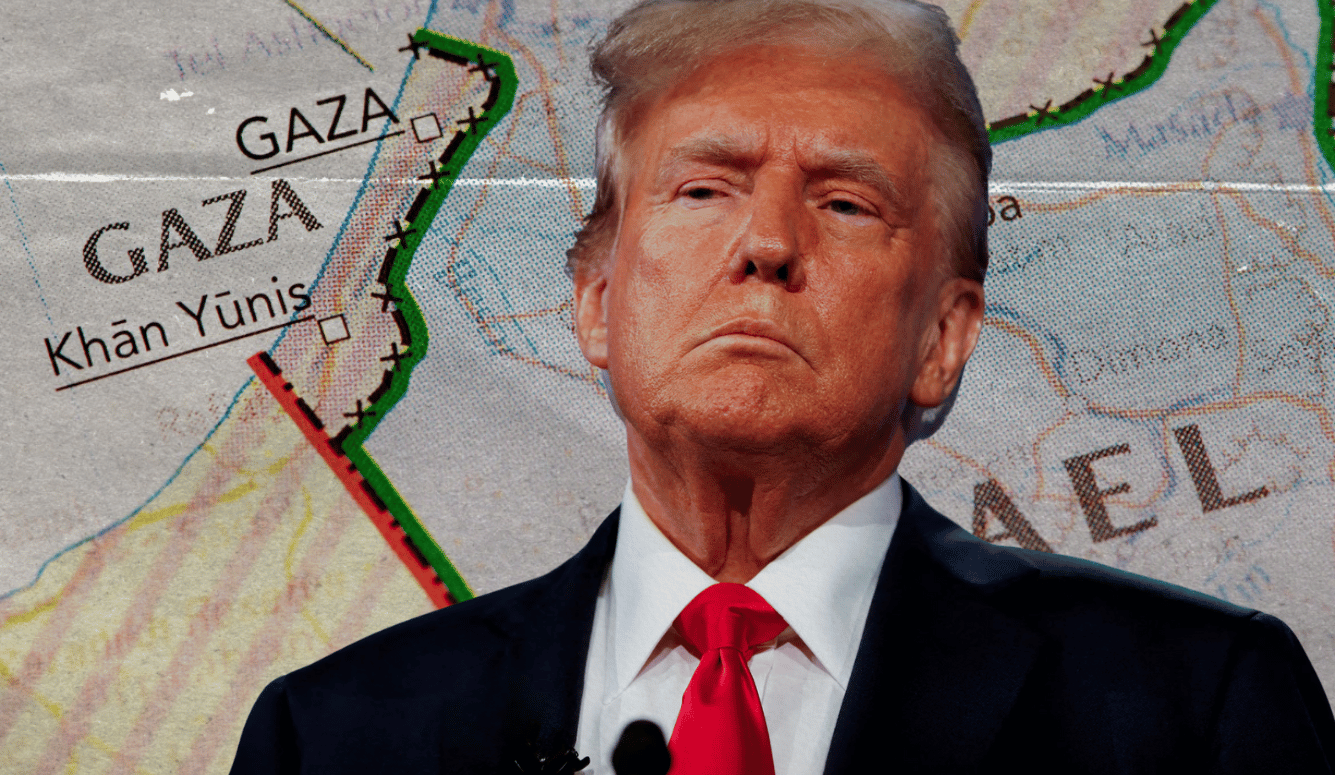
There have also been problems with the projected “International Stabilization Force” (ISF) mandated by the Trump plan. So far, the American administration has almost completely failed to persuade countries to contribute troops to the ISF—and those few countries, such as Indonesia and Azerbaijan, that have hesitantly hinted that they might be willing to participate in some form have insisted that it must be a peacekeeping organisation, not a force empowered to fight and disarm Hamas.
Israeli government spokesmen therefore regularly continue to say that the only organisation both willing and able to disarm Hamas is the IDF. But Trump—who has been basking in his status as the man who brought peace to Gaza and is still covetously eyeing the Nobel Peace Prize that he believes he deserves—opposes the renewal of the war, a war that has badly eaten away at American support for Israel among both Democrats and Republicans and rendered Israel an international pariah. And besides, after two years of combat and close to 1,000 IDF dead and 20,000 seriously wounded, many Israelis, including some of the IDF brass, are averse to renewing a war in which victory will likely remain elusive. Few Israeli observers believe that the IDF, restricted by the international community and under American pressure, will actually be able to conquer the sixty devastated square miles held by Hamas, with their tightly-packed civilian population, among whom the Hamas fighters are embedded. Although the charge of genocide levelled against Israel over the past two years is, in my view, both unwarranted and unjust, renewed Israeli warmaking against the remaining 20–30,000 remaining Hamasniks under present conditions might well result in massive Palestinian civilian casualties.
The only country unequivocally willing—indeed eager—to contribute troops to the ISF is Turkey. Trump, who speaks of Turkish President Recep Tayyip Erdogan as an admired “friend,” supports Turkey’s participation in the ISF. But Netanyahu has quite rightly vetoed the idea. Erdogan, an Islamist who recently compared Netanyahu to Pharaoh and Hitler—a bit of a stretch even for Netanyahu detractors—has vilified Israel and supported Hamas for years. Israel believes that if Turkish troops are installed in Gaza, they will protect Hamas—indeed, help it re-arm—and that their mere presence in the Strip would hinder Israel from getting at Hamas personnel and targets, should Israeli–Hamas hostilities be renewed. Above all, Israel is wary of a situation in which its troops might clash with Turks—and such a possibility already exists in Syria, where Turkey is actively supporting the new Islamist regime recently installed in Damascus with arms and advisors.
The Americans are currently proposing that Turkey take a backseat in the ISF, manning logistical bases in Egypt and Jordan, but not putting any boots on the ground inside the Strip. Netanyahu appears to have agreed to this during his meetings with Trump last week. It is still up in the air, however, whether Israel will agree to future Turkish participation in the envisioned reconstruction operations in the Gaza Strip, and to what degree. Egypt hopes that its construction companies will dominate the reconstruction project, which will presumably be financed by the Saudis, Qatar, and the United Arab Emirates—and Egypt has a peace treaty with Israel. Israel’s fragile relations with Cairo are at stake and for Egypt, with its exploding population and economy under duress, the promise of billions of dollars underwrites the imperative to keep the Turks out.
Netanyahu is also trying to persuade Trump to keep Erdogan off the “Board of Peace,” the group of international figures, led by Trump himself, that the peace plan envisions as overseeing the transition of Gaza from war and Hamas control to the “New Gaza” (deradicalised and prosperous) and the reconstruction effort.
During the Trump–Netanyahu meetings in Mar-a-Largo it emerged that Washington is “seriously considering,” as Trump put it, selling Turkey 25 F-35 stealth fighters, the world’s most sophisticated combat aircraft. F-35s led the twelve-day Israel Air Force (IAF) assault on Iran last June, in which Iran’s air defences and ballistic missile and nuclear sites were devastated, with no Israeli losses. Israel opposes the mooted F-35 sale to Turkey but it looks as if Trump will not back down on this one. Perhaps as compensation, while Netanyahu was in Florida the Pentagon announced that it will supply Israel with 25 more F-35s (though they are not expected to be delivered until 2030).
Brian Stewart
Netanyahu appears to have told Trump that Israel continues to oppose beginning reconstruction in the 47 percent of the Strip controlled by Hamas, but is agreeable to a limited start in the areas under its own control, starting in Rafah at the southern end of the Strip. Netanyahu also appears to have agreed to the re-opening of the Rafah border crossing, next to the ruins of Rafah city, which connects Gaza with Sinai in Egypt. This will enable the entry into the Israeli-held part of the Strip of the heavy equipment needed to clear away the rubble and begin the reconstruction effort. Trump has pressed Israel to allow Palestinian Authority (PA) policemen from the West Bank to take control of the “Israeli” side of the crossing. Netanyahu, who opposes the establishment of a Palestinian state, which he views as an existential threat to Israel, and distrusts the Ramallah-based PA, has consistently rejected the insertion of PA personnel into the Strip. But it appears that Netanyahu and Trump have now agreed to some sort of non-Hamas Palestinian control at the border crossing, whether or not they wear PA identification tags. This concession will likely trigger the ire of Netanyahu’s extreme right-wing government partners but, on its own, will not bring down the coalition.
The US and Israel hope that the start of reconstruction in Rafah will act as a lure to Gazans living in the Hamas-controlled areas to move to the Israeli-occupied zone. Hamas will likely try to stymie any such movement.
Meanwhile, as part of the Israeli–American trade-off, Trump has agreed that, for the time being, Israel retain control of the 53 percent of the Strip it holds, as long as Hamas refuses to disarm and Israel allows large amounts of humanitarian aid to reach the Hamas-controlled part of Gaza—even though both countries understand that this aid helps Hamas, as their fighters seize some of the aid trucks and sell the goods to merchants, who sell them on to the inhabitants at local markets.
As for the rest of the Middle East, Trump and Netanyahu remain somewhat out of step and the loose ends will require further Israeli–American negotiation. With regard to Iran, which has so far refused to negotiate a halt to its nuclear weapons program with Washington and which has been in shambles since Israel’s American-assisted aerial campaign of last June, Trump sounded as if he was giving Netanyahu a free hand. The IAF is apparently gearing up for a new assault on the Iranian nuclear installations and the ballistic missile production sites, but will only get an “action now” order from Netanyahu if Israeli intelligence concludes that the Iranians have reactivated both programs.
Regarding Syria, Trump made a public point of urging Netanyahu to be conciliatory and reach a security agreement with the supposedly reformed jihadist Ahmed al-Sharaa, who ousted Bashar Assad from power in December 2024. But an agreement with al-Sharaa may not mean very much as his administration is still in its infancy and effectively controls only some fifty percent of the country, while armed jihadist groups continue to harass Syria’s minorities. Even as Netanyahu and Trump met in Florida, reports came in that Sunni Islamists, possibly with al-Sharaa’s connivance, were once again attacking Alawites (Shi’ites, the traditional supporters of the old Assad regime) in Latakia and intimidating Druse communities in the south of the country.
More saliently, the joint Washington–Jerusalem deadline for the Lebanese government to complete the disarmament of Hezbollah in southern Lebanon by the end of 2025 came and went without substantially changing the situation on the ground. Iranian efforts to rearm Hezbollah seem to have actually intensified in recent weeks and Israel is threatening to mount a major offensive against Hezbollah in the near future. The Lebanese government promised Israel and Washington that it would clear southern Lebanon of Hezbollah fighters and bases. But the government is afraid of triggering a new civil war and has therefore been lackadaisical in its moves against Hezbollah. Over the year since Israel and Hezbollah agreed to a ceasefire in November 2024, the Jewish State has intermittently attacked Hezbollah positions and personnel and some 400 Hezbollah fighters have been killed. So far, Trump has not restrained Israel. But it appears that in his talks with Netanyahu he vetoed a major Israeli assault for the time being, which leaves the situation along the Israel–Lebanon border precarious. Many of the Israelis who left their border-hugging communities during the Israeli–Hezbollah clashes of 2023–24 have still not returned to their homes.
Lastly, it appears that at their meetings, Trump urged Netanyahu to clamp down on Israeli settlers’ attacks on Palestinian communities in the West Bank. Settler violence has risen several notches since 7 October 2023, claiming dozens of Palestinian lives and forcing many small Palestinian communities to flee their homes, especially along the southern and eastern flanks of the West Bank. Netanyahu appears to have agreed to a clamp-down, but most Israeli observers doubt that he will actually order the IDF or the police to do anything, as this might imperil his coalition government, which is propped up by extreme right-wing ministers, including the police minister Itamar Ben-Gvir, who support the settlers’ assaults on the Palestinian farmers and shepherds as furthering their strategic goal of ultimately annexing the West Bank. The United States has traditionally opposed such an annexation.
All in all, the Trump–Netanyahu partnership appears to be holding—though the Middle East is so volatile that significant challenges to their unity could arise from any of the region’s hotspots at any moment.
Keep reading
AI Is Not About To Become Sentient

The Innovation Trap

Treating Myths as Science
The Edifice Complex
Letters to the Editor

Criminal Research