Skip to content

Decolonization

The Infinite Reopening of History

Removal, expulsion, ethnic cleansing, erasure, even genocide. These are the fruits of the idea that the world can be made right again by undoing history.
· 7 min read
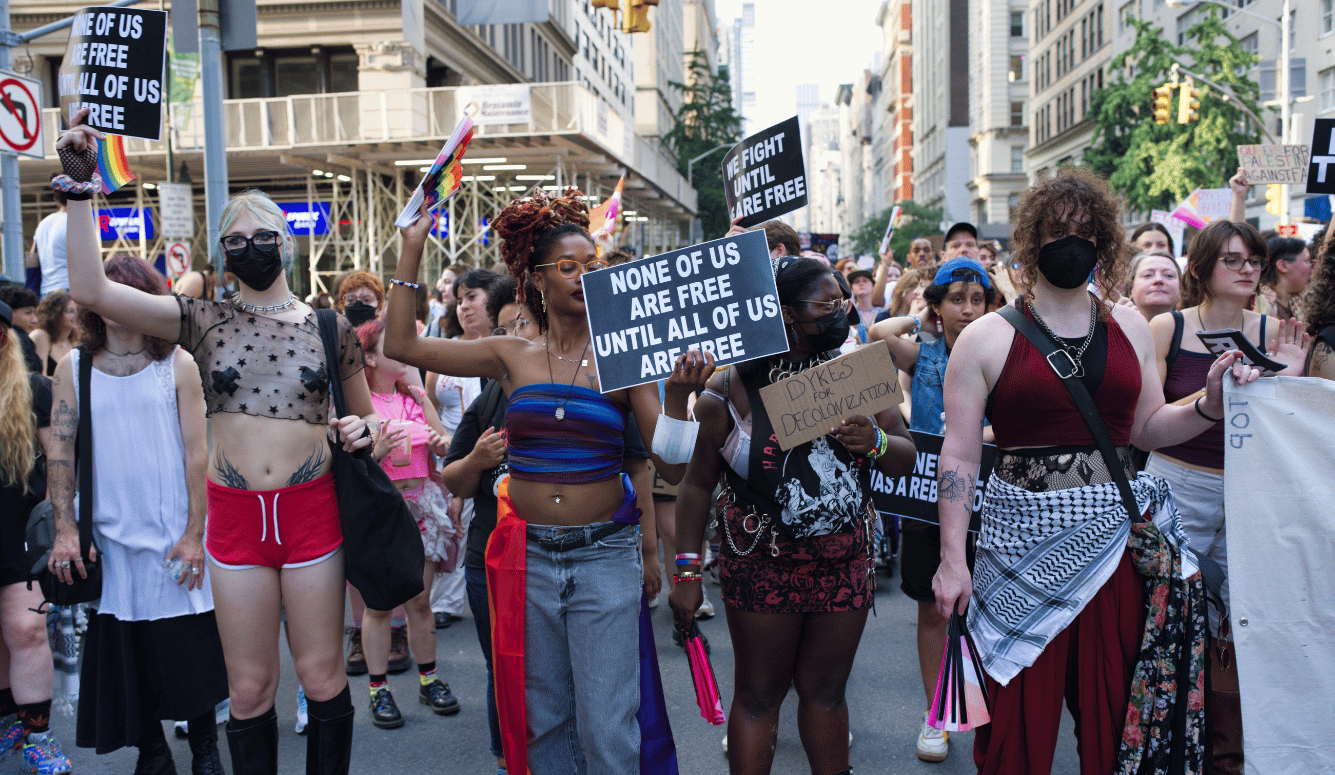
Protesters holding signs reading "NONE OF US ARE FREE UNTIL ALL OF US ARE FREE."
New York, NY—28 June 2025: The NYC Dyke March on Fifth Avenue from Bryant Park. Shutterstock.

Over the past year, a new ideological framework, which I’ll call neo-decolonialism, has been taking hold in activist, academic, and political discourse. This framework has the potential to reopen and reinflame a vast number of conflicts. This is where slogans like “globalise the intifada” ultimately lead—to a world in which no political settlement is ever final, and no peace is durable.

It’s important to make a clear distinction between actual decolonisation and what I am calling neo-decolonialism. Real decolonisation was a concrete, historically specific process in which empires withdrew from territories they had been administering, as exemplified by the end of the Raj. These withdrawals changed legal and political realities on the ground: e.g. British colonial governance in India ended, and two new sovereign states, India and Pakistan, emerged.

This is not to say that the end of empire erased the effects of colonialism. Political borders, legal systems, and economic structures often outlived the formal withdrawal, and many societies still live with deep, measurable legacies of colonialism. It is one thing to argue for civil rights, equal representation, or institutional reform within an existing civic order.

But neo-decolonialism is not about dismantling real empires—even though some empires still exist today, such as the Russian Federation and the People’s Republic of China. Instead, it retroactively reclassifies political arrangements as “colonial” based on contemporary group dynamics, racial or ethnic categories (e.g. “whiteness”), and the question of which side has the most power.

In the neo-decolonial model, you don’t need an actual empire. Some vestigial remnants of a historical empire will do—hence you can take issue with the European colonisation of the Americas, or even the waves of continental migration to the British isles, or Scottish migration to the island of Ireland. Then you draw lines: one side is framed as indigenous; the other becomes “settler-colonial.”

These distinctions often get muddy. In North America, European settlers arrived long after the native American tribes: the question of who has been there the longest is undisputed. But in Israel and Palestine, there are two competing frameworks. Some on the Israeli side might claim that Arab presence in the land is “colonisation” as a result of the Arab conquests, when Muslim Arab armies swept through Arabia and North Africa. Others on the Palestinian side might claim that Zionism is “colonisation.”

What complicates matters is that Jewish people have had a long history in the land, but many were displaced over time—most famously under Roman rule—with descendants scattering across Europe, North Africa, the Arab world, and elsewhere, and returning in significant numbers only with the rise of modern Zionism. On the other hand, many Palestinians also have deep ancestral roots in the land, even though Palestinian nationhood, like many modern national identities, crystallised relatively recently. Today’s Palestinians—like most peoples in the region—are there as the result of centuries of migration, conversion, and successive empires and conquests.

In most of the rest of the world, too, history is messy. There are migrations, conquests, intermarriages, conversions, displacements, and returns. Empires rise and fall; borders are drawn and redrawn; peoples are renamed, identities are invented and reinvented.