Skip to content

Art and Culture

Is the Great Feminisation Inevitable?

We must act quickly to reverse illiberal trends among young men and women alike.
· 10 min read
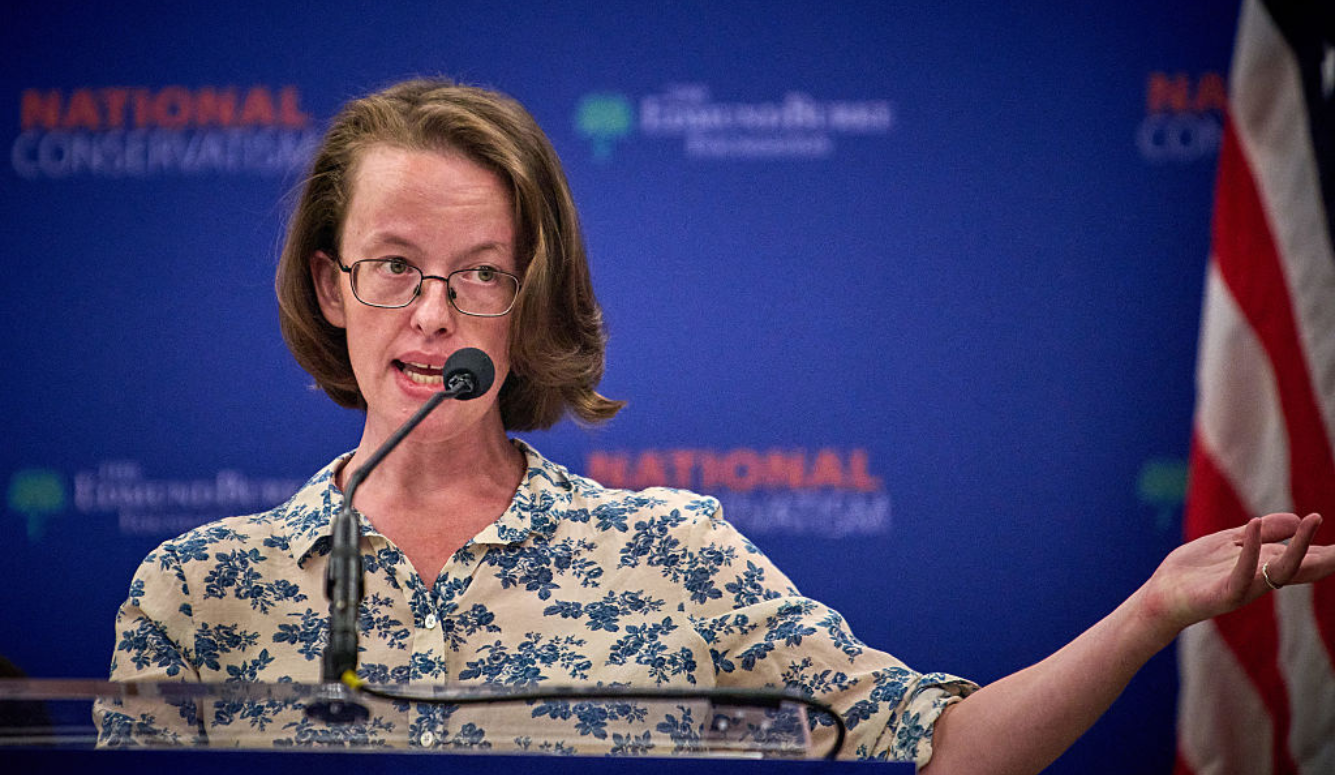
Helen Andrews is a middle-aged woman with short hair and glasses, wearing a floral shirt. She is at a podium.
Helen Andrews speaks at the National Conservative Convention in Washington D.C., 2 Sept. 2025. Photo by Dominic Gwinn via Getty.

Postliberal commentator Helen Andrews made quite a splash in October with her Compact essay titled “The Great Feminization.” Andrews argues that the suppression of unpopular views in the name of protecting groups perceived as vulnerable—the ideology often known as “wokeness”—is the inevitable consequence of women achieving greater participation in public life. Her thesis has provoked a wide range of responses, ranging from those who broadly agree with her to those who find what she is saying absurd and laughable.

Andrews is not wrong to be noticing a significant sex difference here. Some polls do indicate that the views of men and women diverge on some of these questions. For example, a 2022 poll of college students conducted by the Foundation for Individual Rights and Expression found that 85 percent of women would not allow a speaker who claimed that “[t]ransgender people have a mental disorder” to speak on campus, compared with only 58 percent of men. Similar gaps were found when students were asked whether they would allow a speaker who believes that “Black Lives Matter is a hate group,” that “[t]he 2020 election was stolen,” or that “[a]bortion should be completely illegal.” We should be concerned by these results, but Andrews is mistaken to conclude that this is an inevitable consequence of women’s increased power, or that reducing the number of women in public life is either necessary or sufficient to fix the problem.

Andrews argues that if a particular trait is more prevalent among a particular demographic group, then increasing the percentage of individuals who are members of that group in an organisation will cause the character of the organisation to shift in the direction of that trait. However, this alone is not enough to make such a shift inevitable. Three additional criteria must also be met. First, the individuals being added to the organisation must be representative of the demographic group with respect to this trait. Second, the trait must be common among the demographic group. Finally, the trait cannot be amplified or diminished by social pressure.

Violence, for instance, is uncontroversially more prevalent among men than it is among women. FBI crime statistics show that 88 percent of murders are committed by men. Suppose there were two American companies, each employing 1,000 people, one consisting entirely of men and the other consisting entirely of women. According to the reasoning that Andrews uses, we would expect the company of men to have a much higher rate of murder among its staff than the company of women. However, if we were to find two such companies, the number of murders would most likely be zero in both. This is because, in the United States, murder is exceedingly rare and because the respective employee populations would not be representative of the general population of men and women. A highly selective hiring process would also lower the probability of murder by excluding those with criminal records or selecting for traits that are negatively correlated with a propensity for violence.

Furthermore, the rarity of murder is the result of social conditions that have been created and enforced over time. As psychologist Steven Pinker documents extensively in his book The Better Angels of Our Nature, rates of violence were much higher in ancient and prehistoric societies than they are today. The reduction in violence he describes had already been in progress for a long time before feminism arrived. It was not achieved by excluding men from positions of power. Rather, the men in power established systems such as police and prisons to incentivise restraint. Those who engaged in violent behaviour were removed from society so they could no longer pose a threat to others. As a result, those who remained did not need to resort to violence to protect their own safety. In this way, civilisation tamed the worst aspects of men’s nature.

If it is true, as Andrews suggests, that “wokeness” is an aspect of women’s nature, then there are good reasons to believe that it is possible for society to tame this undesirable trait as well. Of course, given that most of the behaviour in question here is nonviolent, a remedy as extreme as incarceration is neither necessary nor justifiable. However, changes in social norms can reduce the tendency towards illiberal behaviour among citizens, whether they are male or female. To demonstrate that this is possible, I will offer two examples of environments that I have personally experienced with sex ratios far from 50/50 where the culture is the exact opposite of what Andrews would predict.

In the software industry—which is where I work—the overwhelming majority of software engineers are men, and this remains the case despite extensive efforts to attract more women to the profession. Currently, women make up only 21 percent of those receiving computer-science degrees that would make them eligible for software-engineering jobs. Given this environment, where most if not all of the people in the room are men, one might expect very little illiberal progressivism. But as I have discussed at length, software engineers are threatened with the loss of their jobs if they express any disagreement with diversity initiatives, and those with dissenting views can be openly disparaged as “sub-human.” A man determined to prove that he is not sexist can do every bit as much damage to other men as a radical feminist.

Smearing Free Thought In Silicon Valley
Damore stresses that these are differences at a statistical level between large populations and that we should not assume that they are descriptive of any particular individual.

The faculty and staff of the elementary school where I spent the first six years of my formal education, on the other hand, consisted almost exclusively of women. The principal was a woman and the number of men working full-time in the building was so small that I could count them on the fingers of one hand. And of those five people, two were custodians who had little or no say in institutional culture. If it were true, as Andrews contends, that “[c]ancel culture is simply what women do whenever there are enough of them in a given organization,” then it follows that these teachers would have invented it if it did not already exist. Yet, no such thing happened. The classroom was never politicised during the time that I was at that school, and I never knew whether any of my elementary-school teachers were Democrats or Republicans until years after I graduated. We were taught traditional American values such as free speech and equality before the law, not cancel culture and DEI. In fact, I credit the woman who was my fourth- and fifth-grade teacher for first exposing me to the reasons why I should be proud of my country and its history.

So, is illiberal progressivism notably more common among women than it is among men? The statistics cited at the beginning of this article suggest that it is. However, these data show the largest sex differences. Other studies suggest that the gaps are much smaller. A survey of college students in 2025 conducted by the Buckley Institute asked a range of questions, including:

  • Is the First Amendment important or is it outdated?
  • Is encouraging free speech and intellectual diversity more important than preventing offensive or insensitive dialogue?
  • Does hearing and discussing opinions you disagree with give you a better education and better prepare you to be a leader in the future?
  • Can you be close friends with someone who affiliates with a different political party?
  • Should offensive speech be subject to criminal prosecution?
  • Is it sometimes appropriate to shout down or disrupt a speaker?

On all of these questions, the sex difference was less than three percentage points, and not always in the direction that Andrews would predict. In fact, one of the questions with the largest sex difference was whether “physical violence can be justified to prevent a person from using hate speech or making racially charged comments.” This illiberal idea was supported by 43 percent of men but only 35 percent of women. Overall, the survey indicates that an alarming number of students of both sexes support many of the illiberal ideas examined.

Andrews cites the Democrats’ attempt to derail the confirmation of Justice Brett Kavanaugh to the United States Supreme Court as an example of women’s negative influence on the law. While there is no doubt that feminist ideology played an important role in that debacle, all but two of the senators voted with their respective parties, which suggests that party affiliation and loyalty was a far better predictor of voting behaviour than the sex of an individual Senator. There was no movement of Republican women opposing the confirmation or Democratic men supporting it.

Andrews also offers the mistreatment of Bari Weiss at the New York Times as an example of what can go wrong when women hold too much power in an organisation. She is right to be troubled by this episode, but she fails to consider that Weiss subsequently established the Free Press, which—like Quillette—is a female-founded-and-edited heterodox publication contesting illiberal progressivism in the mainstream media. With this in mind, reducing the number of women in positions of leadership might actually impede two of the most effective publications presently waging the cultural struggle Andrews wishes to encourage.

When Women Are Radicalised
Men aren’t the only ones susceptible to extremist thinking.

The remedy Andrews proposes for the problems she identifies is the abolition of sex-based affirmative action. She contends that removing the “thumb on the scale” would cause the number of women in our institutions to decrease, thereby reducing instances of progressive censorship. I entirely agree that sex-based affirmative action should be discontinued, but not for this reason. This change is needed to address the injustice of depriving qualified men of the opportunities they’ve earned in the name of diversity, and the injustice of depriving society of the contributions of its most qualified individuals. In light of the statistics presented above, there is good reason to believe that the cultural change effected by reducing the number of women in an organisation would be inadequate to address the problem of “wokeness.”

One other aspect of civil-rights law that warrants examination is the notion of disparate impact. This concept originated in a 1971 Supreme Court case called Griggs v. Duke Power Company, in which the Court held that a criterion used for hiring can be found to constitute illegal discrimination when individuals of one race or sex are more likely to meet the criterion, even if the employer does not treat applicants differently on the basis of their race or sex. The specific practice at issue in the case was a test on which the average score for blacks was lower than for whites.

Within reason, disparate impact makes sense in civil-rights law if criteria are genuinely arbitrary and serve no purpose other than to exclude members of a particular demographic group. For example, if an employer discriminates against applicants with long hair, it’s reasonable to view this as discrimination against women, even if long-haired men are similarly treated and short-haired women are not. However, disparate-impact litigation could have a disastrous effect on company culture. To the extent that a “woke” corporate culture attracts more women to a company, failure to create such a culture could be found to have a disparate impact on women. Congress codified the Griggs decision in a statute known as the Civil Rights Act of 1991 (not to be confused with the Civil Rights Act of 1964, the landmark legislation passed in response to the activism of Martin Luther King). Congress can fix this problem by amending the Civil Rights Act of 1991 to add an exception specifying that the establishment of a corporate culture that prioritises truth-seeking and intellectual honesty over emotional comfort is not subject to legal challenge on disparate-impact grounds.

Congress can also help by enacting legislation to protect employee free-speech rights. While the First Amendment only protects citizens from the government, legislation could protect employees from having their freedom of speech restricted by their employers. There are legitimate disagreements about employees’ freedom to express their political views while on the job. It seems reasonable to me that employers should be able to restrict this when an employee is representing the company to customers, and special types of employers such as political parties and certain non-profits have a legitimate interest in ensuring that their employees are genuinely committed to a political mission in a way that a for-profit company does not. At a bare minimum, though, employees of for-profit companies should have the freedom to express a broad spectrum of political, religious, and ideological views when they are off the job.

The politically correct trope in recent decades has been that, when sex differences in political attitudes arise, women are presumed to be right and men are expected to change their views accordingly. This presumption needs to end. Instead, we should adopt an approach of dialogue towards mutual understanding, with an openness to the possibility that men and women may both have something to learn from one another. A mature society does not fetishise either sex. It seeks to harness the good that both bring while suppressing the vices that may be more prevalent among each.

The most important changes go beyond sex differences and consist of ensuring that future generations understand why free speech, equality, and tolerance need to be cherished and protected. It is the failure of our education system to transmit these values that has caused the current crisis, and we need to act quickly to reverse these troubling trends among our young men and women alike. Organisations like the American Council of Trustees and Alumni, the Foundation Against Intolerance and Racism, and the North American Values Institute are already engaged in this crucial work and they deserve our support. Andrews contends that “the rule of law will not survive the legal profession becoming majority female.” I’d rather see a Supreme Court with nine female justices who are committed to our Constitution than the confirmation of even one male justice who believes that the First Amendment is outdated or that offensive speech should be criminalised. If the ideological makeup of the Senate shifts far enough that such a justice could be confirmed, then it may be too late to reverse the cultural shift before it proves catastrophic. The time to act is now.