public health
A Brief History of Inbreeding
How kinship, culture, and genetics shaped one of humanity’s oldest taboos.
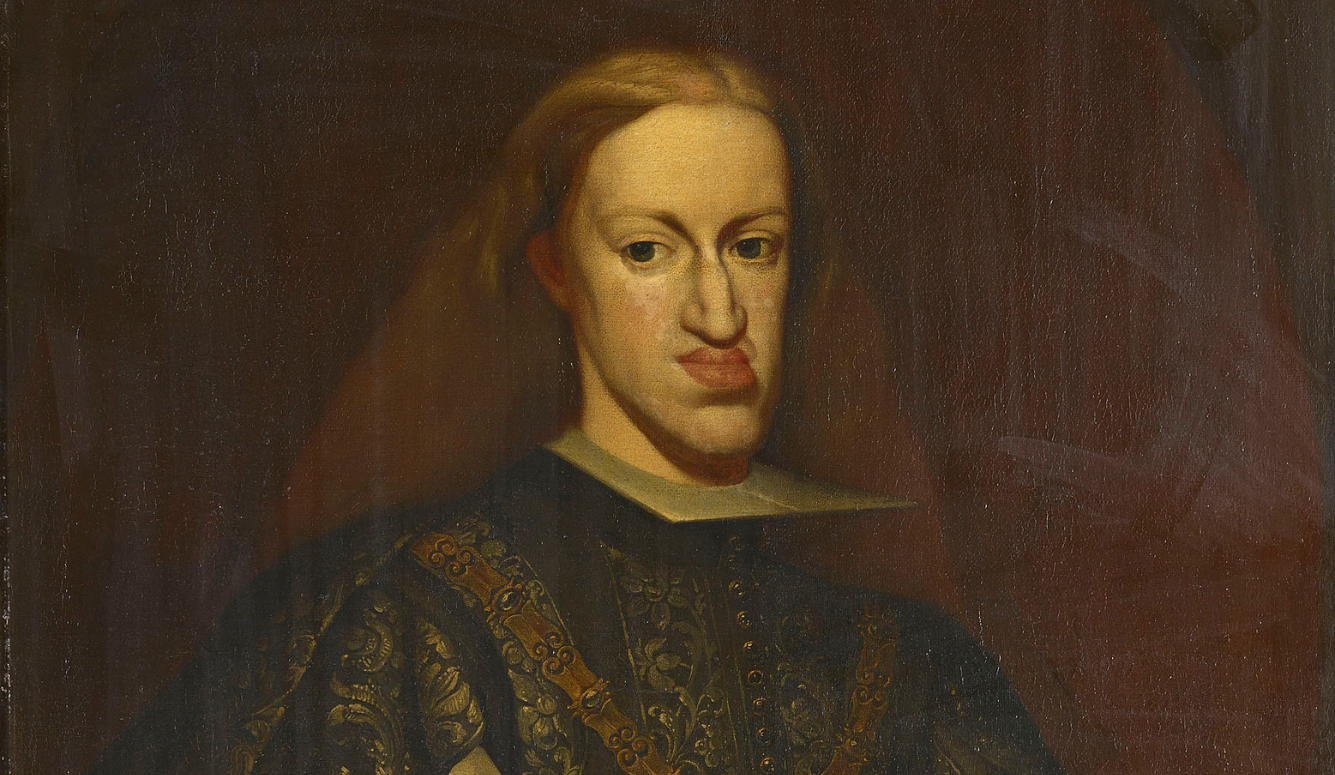

Inbreeding has always occupied a strange place in the human imagination. It unsettles and fascinates at once. From the tangled family trees of Game of Thrones to the time-bending ironies of Back to the Future, stories about kinship and lineage invite us to peek behind the curtain of biology and culture, into that space where bloodlines, desire, and taboo converge.
Anthropologists, psychologists, and philosophers from Freud to Lévi-Strauss have long been preoccupied with it. And now, in an age of genetic sequencing and political debate, inbreeding has re-entered the public conversation. In Britain, for instance, Parliament has recently discussed the health consequences of cousin marriage within certain communities. What was once the domain of royal genealogies or ancient clans has become a matter of modern medicine and public health.
The paradox is that, while humans treat inbreeding as a moral boundary, we have deliberately practised it elsewhere. We have shaped dogs, cattle, and crops through intentional inbreeding, selecting for traits we desire, docility, muscle, yield, colour, until we remade species in our image. What we condemn among ourselves we have used to engineer the living world around us. And in doing so, we have discovered something about our own nature: our willingness to manipulate heredity, and our ambivalence toward what that power entails.
Before going further, we should pause and clarify what “inbreeding” means in genetic terms, because the word itself hides a spectrum of realities. There are, broadly, two ways that inbreeding arises in humans. The first is passive, almost accidental: it happens when a population is small, isolated, and intermarrying by necessity rather than design. Geneticists call this endogamy, mating within a closed group, and the mechanism behind it is genetic drift. Imagine a small village cut off for generations. Even if no one deliberately marries a cousin, the limited number of partners means that, over time, everyone becomes related. Genes recirculate like familiar stories, passed down and recombined until variety itself begins to fade. This is the inbreeding of geography and chance.
The second form is deliberate. Humans, uniquely among species, sometimes choose to marry within their family. This is consanguinity, a conscious decision to keep alliances, property, or lineage “in the blood.” Geneticists call this systematic inbreeding, and anthropologists recognise it as a cultural invention, not a biological inevitability. It appears relatively late in our evolutionary history, coinciding with the rise of agriculture, private inheritance, and social hierarchy. Where the first form of inbreeding is demographic, the second is symbolic. It carries meaning.
For centuries, genealogies were our only tool to measure how inbreeding shaped human life. They were kept meticulously by certain groups, European royal houses, Christian churches, Mormon pioneers, Islamic clans, Brahmin lineages, each providing, unknowingly, a natural experiment in heredity. The royal families of Europe, in particular, offered what one might call an inbreeding human laboratory. Within their pedigrees, we traced the effects of consanguinity on fertility, survival, and disease. From all these records, researchers like Alan Bittles estimated that roughly ten percent of the world’s population today descends from consanguineous unions, proof that inbreeding is not a historical footnote, but a contemporary human reality.
Yet the story of inbreeding took an unexpected turn with the arrival of the genomic era. In 2001, the first draft of the human genome was published, a scientific milestone that transformed biology and medicine alike. For the first time, we could look directly at the molecular traces of ancestry, not just infer them from family trees. And in that new light, inbreeding appeared as a measurable pattern in our DNA.
 Zoe Booth
Keep reading
Made in Moscow
Letters to the Editor
A Paradoxical War
Hearts of Darkness
A New World Order in the Making

Podcast #328: The Extraordinary Exploits of Agent Zo