Politics
American Power in an Embattled World Order
If the stewards of American power wish to act effectively and preserve the liberal order in this dangerous new era, they will have to act with the self-confidence of the just man armed.


I.
Proof that power and diplomacy go together arrived earlier this summer in the Middle East. As Israel was pulverising Iranian regime targets in June and fears loomed of a wider conflagration, President Donald Trump brought the Twelve Day War to an end with a hammer blow to the Iranian nuclear program followed by the immediate imposition of diplomatic pressure. But the apparent success of this limited but consequential military operation felt anomalous. Ever since the Iraq War was declared more than two decades ago, American foreign-policy discussions have been preoccupied with fears of quagmire and failure. This inclination to fight the last war would be understandable had the right lessons been learned from it. Unfortunately, they have not.
Two popular strands of thought now disfigure the US foreign-policy debate, both of which converge on an ambivalence about the use of hard power as an instrument of policy. But neither understands the wellsprings of global order and international legitimacy, the importance of using (or credibly threatening to use) military might to suppress anarchy in the global commons, or the ideological character of liberal civilisation’s enemies. As a result, since the end of the Cold War, these discrete ideological tendencies have tended to act as mutually reinforcing barriers to the application of American power.
The first tendency is conservative “realism,” the adherents of which have a reflexive suspicion of ideals and abstract principles in statecraft. Instead, they are chiefly committed to maintaining a balance of power in the interests of stability. Realists’ fixation on narrow national interests prejudices them against grand crusades, especially in a country as distant and complex as Iraq. The brand of realism in vogue today holds that Saddam Hussein’s cruelty and expansionism never posed much of a threat to the United States, and that American power should therefore never have been used to topple his regime or establish consensual rule in its place. This counsel of restraint arises from a concern with the external conduct of regimes and indifference to their internal characteristics. This creates unhelpful illusions about ideological foes and unconventional dangers that make this ostensibly bullet-biting doctrine unfit for purpose in the real world.
If realism takes a crabbed view of national interest, the debilitating flaw of liberal internationalism is the reverse: it finds power politics so disagreeable that it recoils from promoting anything resembling a national interest.
The second common argument against the Iraq War usually comes from the more progressive quarters of liberal internationalism. It rests on a belief in collective security and looks to the world community and its institutions as the ultimate source of legitimacy. Whereas adherents of realpolitik define vital interests in terms of oil wells, strategic chokepoints, and regional stability, liberal internationalists place a premium on a global system in which raisons d’état are subject to international law. In this view, the Iraq War wrecked America’s position as the chief upholder of a rules-based order and corrupted the ideal of a law-bound world. If realism takes a crabbed view of national interest, the debilitating flaw of liberal internationalism is the reverse: it finds power politics so disagreeable that it recoils from promoting a national interest. This post-national set of beliefs emphasises the limits of power and—if only implicitly—global responsibility. It conceives of collective security as a principally pacific task save in those vanishingly rare instances when international institutions approve the use of force to keep peace. This preference for quixotic and legalistic idealism in foreign policy is a poor alternative to a tradition that blends raw power and high principle.
The misconceptions about national purpose and policy shared by these approaches betrays confusion about the way the modern world works. The consequences of this confusion—an aversion to the serious and sustained assertion of American power—are particularly ominous in a world of gathering geostrategic peril. Coming to grips with the actual legacy of the Iraq War is therefore a prerequisite for fending off a reticent or merely cynical foreign policy, and for evolving a muscular internationalism that offers the best means of defending a fragile and embattled liberal order.
II.
As President Trump deliberated about bombing Iran’s nuclear facilities, the interventionist-turned-restrainer Sohrab Ahmari invoked the spectre of Iraq to caution against military action. In a June essay for UnHerd titled “The Regime Change Maniacs Are Back,” Ahmari reminded his readers that the Iraq War began “with scant resistance from the mainstream media or wider establishment.” The decision to remove Saddam Hussein from power was indeed the collective decision of a governing class convinced that his regime was a menace to US national security and regional order. The war was waged with congressional authorisation, and every subsequent Democratic and Republican presidential nominee who was a member of Congress at the time of the 2003 invasion blessed it with their vote. It was also a popular cause with the American public—a CNN/USA Today/Gallup poll conducted on the eve of the invasion found that 72 percent of respondents approved.
 Sohrab Ahmari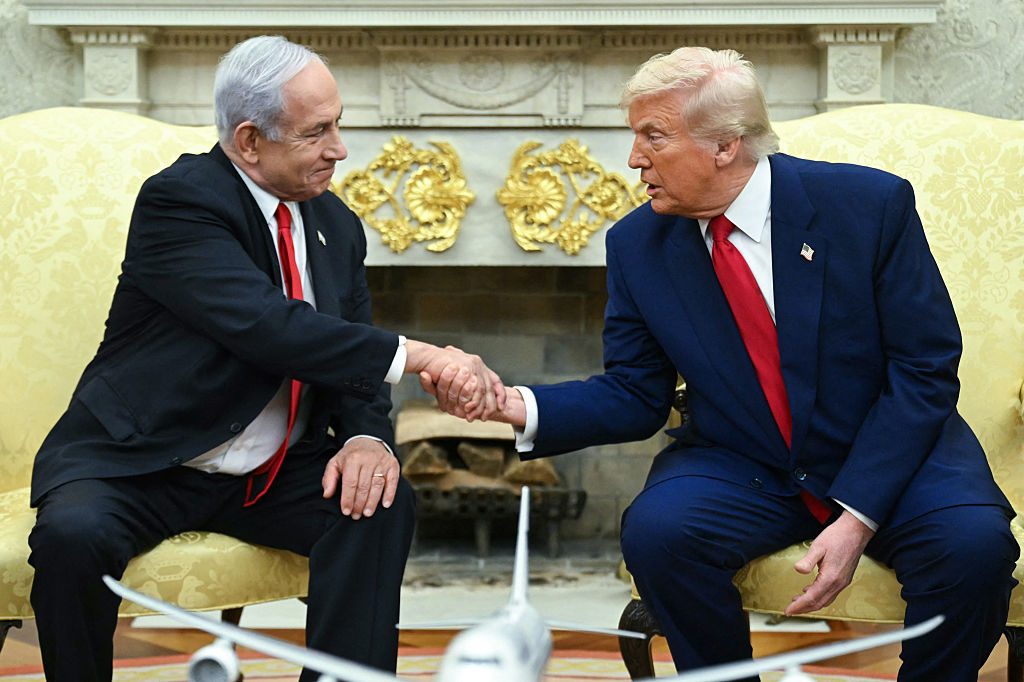
But the bitter experience in Iraq, Ahmari argued, exposed the folly of using American power against Iran and he invoked the cautionary wisdom of a handful of Iraq dissenters who he said had been vindicated by that war’s outcome—“above all Brent Scowcroft.” Back in 2003, it was Scowcroft, the two-time former national-security adviser (under Gerald Ford and George H.W. Bush), who had urged America “to consider the law of unintended consequences—and to open its imagination to nightmare scenarios.” For conservatives in Ahmari’s mould, this unheeded “realism” requires little elaboration, since it is self-evident in the tragedy that subsequently befell America in Iraq. “Drawing on his experience as the elder Bush’s adviser during the Gulf War,” Ahmari relates, “[Scowcroft] warned that regime change would mean ‘occupation of an Arab land, hostile Arab land.’ Not for months, but for years. In short, Scowcroft predicted everything that went wrong with Operation Iraqi Freedom.”
Within a year or two of the fall of Baghdad, US public support for the invasion had suffered a decline from which it has never recovered. But it should be noted that not every problem Scowcroft and other foreign-policy realists forecast came to pass. In an article for the Wall Street Journal in August 2002, Scowcroft predicted that Israel would be the first casualty of any military action against Saddam Hussein—just as it had been after Iraqi forces were expelled from Kuwait. The Jewish state would be provoked to join the fray, he went on, and perhaps even use its own (secret) nuclear arsenal. But Israel was not pulled into the conflict, and Armageddon did not result. Scowcroft also predicted that the war would result in a “serious degradation in international cooperation against terrorism” as friendly Arab regimes were destabilised. He was wrong about that, too.
The realists were correct, however, on one important point. The liberation of Baghdad was followed by a large-scale, long-term military occupation. Once the Bush administration decided that a hostile tyrant would not be replaced by a compliant one, a prolonged American commitment became inescapable. But the baleful effects of Saddam Hussein’s divide-and-rule policies on Iraqi society—once memorably described as a concentration camp above ground and a mass grave beneath it—ensured that a wrecked and traumatised country lay in wait. Under such circumstances, it should have been obvious that anarchy followed by a reversion to dictatorship was a distinct possibility, and that any durable order following the end of Iraqi Ba’athism would impose onerous burdens and require patient sacrifice.
In his gripping 2005 history of the war, The Assassins’ Gate, American journalist George Packer details the Bush administration’s breathtakingly naïve assumptions about postbellum Iraq and its fatal hope that imperial domination could be achieved on the cheap. Just weeks before the war, for example, Defence Secretary Donald Rumsfeld selected Jay Garner, a retired lieutenant general, to lead the Office of Reconstruction and Humanitarian Assistance that would administer Iraq for an indeterminate period after the fall of the regime. In a prewar meeting at ORHC headquarters in Kuwait City, Garner outlined a sparse plan to put Iraq back on its feet that included a timetable for reconstructing utilities, standing up ministries, ratifying a constitution, and holding elections. Garner told the meeting that “by August, Iraq would have a sovereign, functioning government in place.” (This was in keeping with Pentagon plans to reduce US troop levels from more than 160,000 in April to 25,000 in September.) “There was a stunned silence,” Packer reports. “Someone at the table said, ‘Which August?’”
Brian Stewart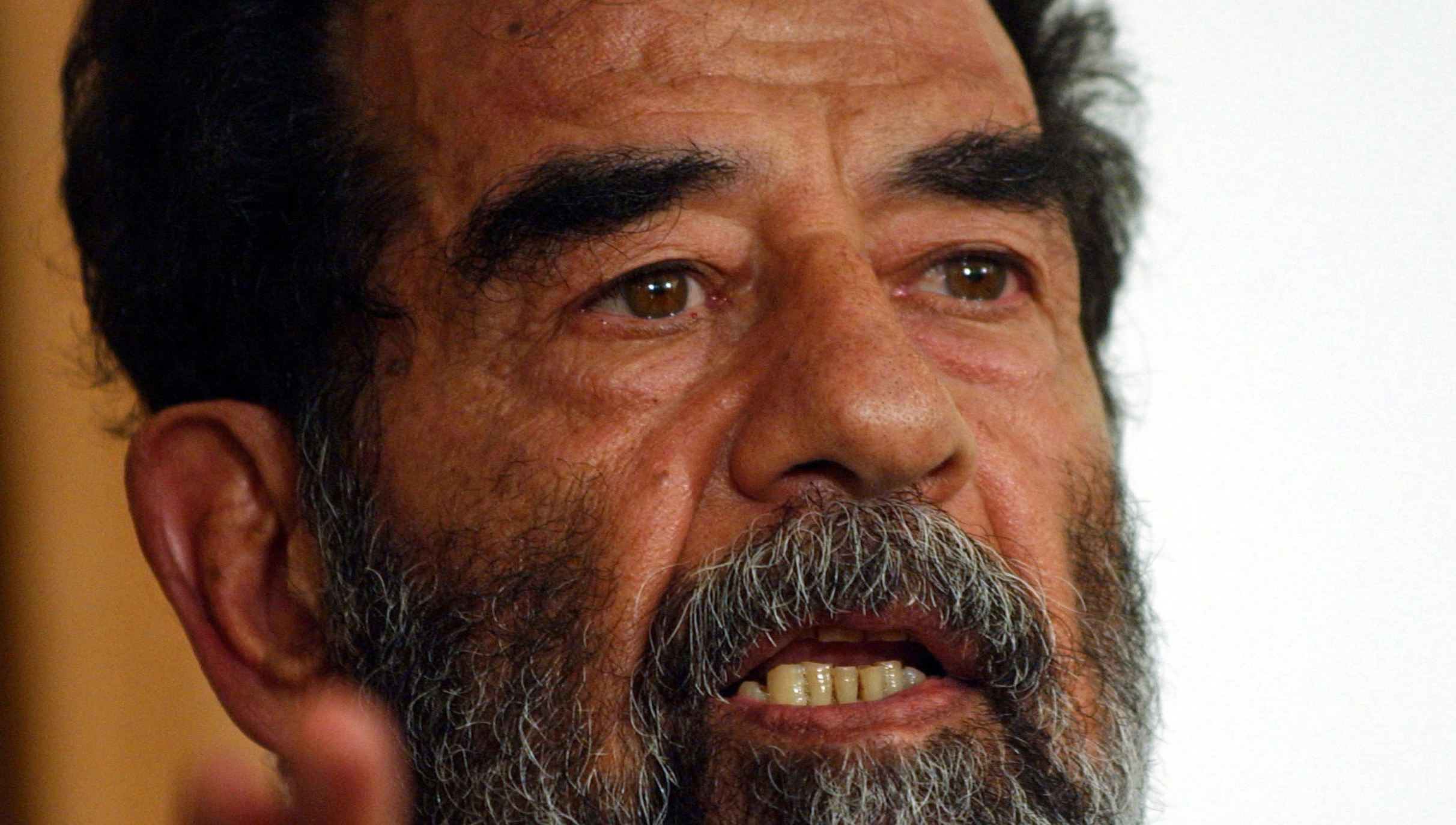
Packer writes with quiet indignation about the Bush administration’s oddly cavalier approach to postwar planning in Iraq, and his prose is all the more damning for its understatement. Its hit-and-run war plan and economical timetable only made sense, Packer observes, “if one thought of postwar Iraq as a limited humanitarian operation as opposed to an open-ended political-military undertaking more vast and complex than anything the United States government had attempted since the end of World War II.” This ambitious mission—to uproot a heinous tyranny, rebuild a broken state, repair a ravaged society, and secure a strategic foothold in a benighted region—required a program of imperial tutelage backed by garrisons of troops and civilian administrators looping around the Tigris and Euphrates river valleys. Instead, the Iraq War was prosecuted “with the army we have” on the presumption that the enemy was a bystander and that the boys would be home by Labour Day. This was, Packer writes, war without politics—the opposite of Clausewitz’s famous dictum.
America’s quasi-imperial commitment to Iraq was unforeseen by the war’s architects, an indictment of the Bush administration’s complacency about the difficulties of raising a democracy in the Middle East. But that is not enough to discredit Operation Iraqi Freedom wholesale. The costs of the war were hefty, but they were hardly exorbitant (the price tag was lower than that of Obama’s ill-fated 2009 stimulus plan), and a full account of the war must also consider its necessity, along with the strategic advantages it conferred and the calamities it prevented. In 2003, the antiwar faction insisted that deterring and containing Saddam Hussein (the main alternative to war) was feasible, but this would also have required gunboats and barracks and outposts. Realists John Mearsheimer and Stephen Walt even argued that the US could contain a nuclear Iraq.
As the philosopher Michael Walzer put it in an essay for Brookings’ Liberty and Power symposium:
The campaign against the war should never have been only an antiwar campaign. It should have been a campaign for a strong international system, designed and organised to defeat aggression, control weapons of mass destruction, stop massacres and ethnic cleansing, and assist in the politics of transition after brutal regimes are overthrown. But an international system of this sort has to be the work of many different states, not of one state.
The risks and expense of such an indefinite mission would have been enormous: a continuous mass military deployment on the borders of Iraq in addition to maintaining the no-fly zones established after the first Gulf War, to say nothing of tightening economic sanctions and an inspections regime robust enough to withstand Ba’athist intimidation and fraud. Even if other world powers had resolved to go along with this kind of operation (and there is no evidence they were prepared to do so), there was no way of ensuring an avoidance of conflict in the long run. Saddam Hussein’s record of inveterate antagonism and near-suicidal aggression virtually guaranteed a showdown with the world’s liberal superpower (or Walzer’s “strong international system”). Realists claimed that Saddam Hussein was deterrable because he was chiefly concerned with his own survival, but his actual record indicated the psychology of a pathological gambler. It was therefore prudent to conclude that coexistence with Saddam Hussein in the post-9/11 world was neither possible nor desirable.
The determination to misread the Iraq War has had deranging effects on commentary. In an essay co-written with one of Bernie Sanders’s former foreign-policy advisers and published in the Washington Post on the day of America’s strikes against Iran’s nuclear facilities, Sohrab Ahmari predicted that even a limited use of force would spiral out of control. “A U.S.-Iran war would be anything but quick,” he warned.
Even if the Trump administration could satisfy itself that a “one-and-done” operation had achieved all that was necessary, as the saying goes, the enemy gets a vote. A cornered, vengeful Iranian leadership enjoying a rally-around-the-flag effect may feel the need to escalate. Iran could close the Strait of Hormuz, through which about 20 percent of the world’s oil supply traverses, and target vulnerable U.S. bases across the Middle East with an arsenal of sophisticated short- and medium-range missiles that have yet to be impacted by Israeli airstrikes.
Attacks on U.S. bases would require the United States to respond in kind. And there we’d have it: another big Mideast war, unfolding amid the American public’s exhaustion with wars in the region.
But instead of all this lurid carnage, the clerical regime in Tehran forewarned the US of its perfunctory retaliatory strike and then immediately sued for peace. Years spent accommodating the mullahs had allowed the expansion of their Islamist imperium and produced bloody mayhem throughout the region. Conversely, a vigorous application of American (and Israeli) airpower has now checked Iran’s malign influence, actual and potential. Although Iran remains a threat, the regime has sustained massive damage. Too many Western analysts, commentators, and policymakers lost confidence in American power after Iraq, and in the fear it could elicit in bad actors. After years of bad behaviour was allowed to pass unchecked by a diffident United States, the Trump administration has at last provided the autocratic axis with a potent display of American deterrence.
III.
Today, the Iraq War is widely considered the greatest strategic blunder in modern US history. That judgment isn’t simply based on the assorted errors of execution (of which this war had as many as any other); it is an attack on the conception of the war itself. In the popular narrative, marching to Baghdad was an unnecessary venture founded on deceit or delusion—“a war of choice,” as it is frequently described. But this objection does not explain why the war initially attracted such broad liberal support, and it betrays a misapprehension about the nature of global order.
Any conflict except one involving a truly existential threat to one’s country can presumably be described as a war of choice. And in the annals of elective warfare, the Iraq war qualifies as a particularly noble and far-sighted endeavour. In the aftermath of 11 September—which had placed America in the crossfire of a civil war raging within the Arab world—the prevailing order in the Middle East was a font of internal repression and external violence that did no favours to American interests at all (to say nothing of American principles). In a region of paranoid and sadistic autocrats, Saddam Hussein was in a class by himself, posing not so much an imminent threat to the outside world as a permanent and inevitable one.
Under such circumstances, was the desire to make American power more credible and effective really so unimportant? Was it a matter of indifference to the civilised world that Iraq—or the Muslim Middle East more broadly—was being indefinitely denied self-rule? The nontrivial prospect of regime collapse in Baghdad without intervention also raised the prospect of a Hobbesian hellscape in post-Saddam Iraq that was almost too ghastly to contemplate. The realists who proposed abdication never took the measure of jihad and nursed their own illusions about the rationality of the strongmen they favoured to produce regional stability. Even after Saddam Hussein was overthrown, their call to abandon Iraq to a Baathist-Bin Ladenist alliance ignored the fact that America’s military presence was the vital buffer between relative order and total chaos.
Scowcroft and the realists believed the undemocratic status quo in the Middle East was conducive to US interests and therefore preferable to any likely alternative. In reality, one-party and one-leader states are inherently dangerous and unstable, and Saddam Hussein’s regime was an unusually menacing example. The Iraqi Ba’ath Party had revealed itself as such during the 1980–88 war with Iran and the 1990 invasion of Kuwait. It was not just bellicose, it was also irrational in its ceaseless anti-Americanism and antisemitism, which included assassination plots against ex-US presidents and lavish support for Palestinian rejectionists and suicide terrorists. Saddam Hussein’s persistent recalcitrance over weapons of mass destruction violated the terms of the Gulf War armistice, which required compliance with UN weapons inspections. And he hosted a bevy of international gangsters and jihadist organisations in his capital. All of which made the Iraqi regime an omnidirectional threat.
When the smoke cleared after al-Qaeda’s attack on America—which Iraq was the sole government in the world to praise—the nexus of Arab autocracy and Islamist terror became hard to miss. On 7 October 1998, regime change in Baghdad had become official US policy when the Iraq Liberation Act passed through the Senate without a single dissenting vote. Saddam Hussein was not implicated in 9/11, but he shared the perpetrators’ resentment of American power and contempt for democracy, and the attacks had now changed the threat assessments being made within the US governmental and security apparatus. Regime change in Iraq would finally enforce more than a dozen UN Security Council resolutions, but it would also punish the leader of Arab rejectionism and restore American deterrence in a region highly sensitive to configurations of power.
Getting rid of Saddam Hussein, Washington dared to hope, might even reorder the regional balance of power, undermining brutal police-states and autocracies while bolstering more liberal forces. As Fouad Ajami pointed out, the 9/11 terrorists had been forged “in the crucible of Arab society, in the dictators’ prisons and torture chambers. Arab financiers and preachers gave them the means and the warrant for their horrific deeds.” Saddam Hussein was as poisonous an influence as could be found in the Middle East’s sprawling and dysfunctional political culture. Consecrated to sadistic nihilism at home and ferocious belligerence abroad, he nursed the pathologies of the whole region—paranoia, religious fanaticism, lawlessness, and terror.
Fearing instability more than tyranny, realist statecraft has long betrayed a preference for “modernising” authoritarian order over the upheavals of participatory politics.
Scowcroft’s scepticism about upending Saddam Hussein’s rule—and instituting a new regional order midwifed by American power—was motivated by a reactionary impulse to minimise the disruption to the Middle East after 11 September, as if America’s top regional priority was shielding the very Saudi monarchy that had helped stoke the furies of holy war. Fearing instability more than tyranny, realist statecraft has long betrayed a preference for “modernising” authoritarian order over the upheavals of participatory politics.
But for Americans living nervously in the shadow of 9/11, these doctrines had lost their appeal. The corrupt kings and presidents-for-life in the Middle East were incubating religious absolutism and violent fanaticism with their misrule. In these despotisms, dissent was largely confined to the mosque, where the popular Salafist orientation swelled the ranks of global jihad. But even after the pursuit of “stability” in the Middle East had brought slaughter to New York and Washington, Scowcroft ardently defended a policy that he claimed had produced “fifty years of peace.” Was it any surprise that an apologist for the old order urged the United States not to topple Saddam Hussein, and likewise deplored the ambition to create a representative regime in his place? This was surely a sincere view, but it lacked any sense of the threat’s gravity.
Once the Iraq War ran into severe difficulty, the realist faction redoubled its efforts to end American involvement that it maintained should never have occurred in the first place. But another faction, that of the liberals, joined the stampede for the exits and disavowed a war it had once endorsed and championed. A common refrain from these disaffected liberals went like this: notwithstanding its good intentions, the Bush administration exploited the 11 September 2001 attacks to lash out against a convenient enemy rather than staying focused on the present danger. In so doing, it overreacted to al-Qaeda’s onslaught, which ought to have been countered by means of law-enforcement and intelligence work rather than the 101st Airborne. Worse, the administration undermined liberal principles by taking up the role of global sheriff for which it did not possess legitimacy. In choosing war, it was not constrained by international opinion, but guided by its own morality and sense of justice. Hubris was then duly followed by nemesis.
IV.
In a searching two-part analysis of US foreign policy for Quillette, Matt Johnson provides a version of this narrative. On the whole, Johnson offers a stimulating review of international politics in the post-Cold War era, but his analysis falters when he addresses the use of US military force and discounts the decisive role of power in creating and sustaining the international order since the end of World War Two. As so often, it is a tendentious reading of the Iraq War that leads him astray.
Matt Johnson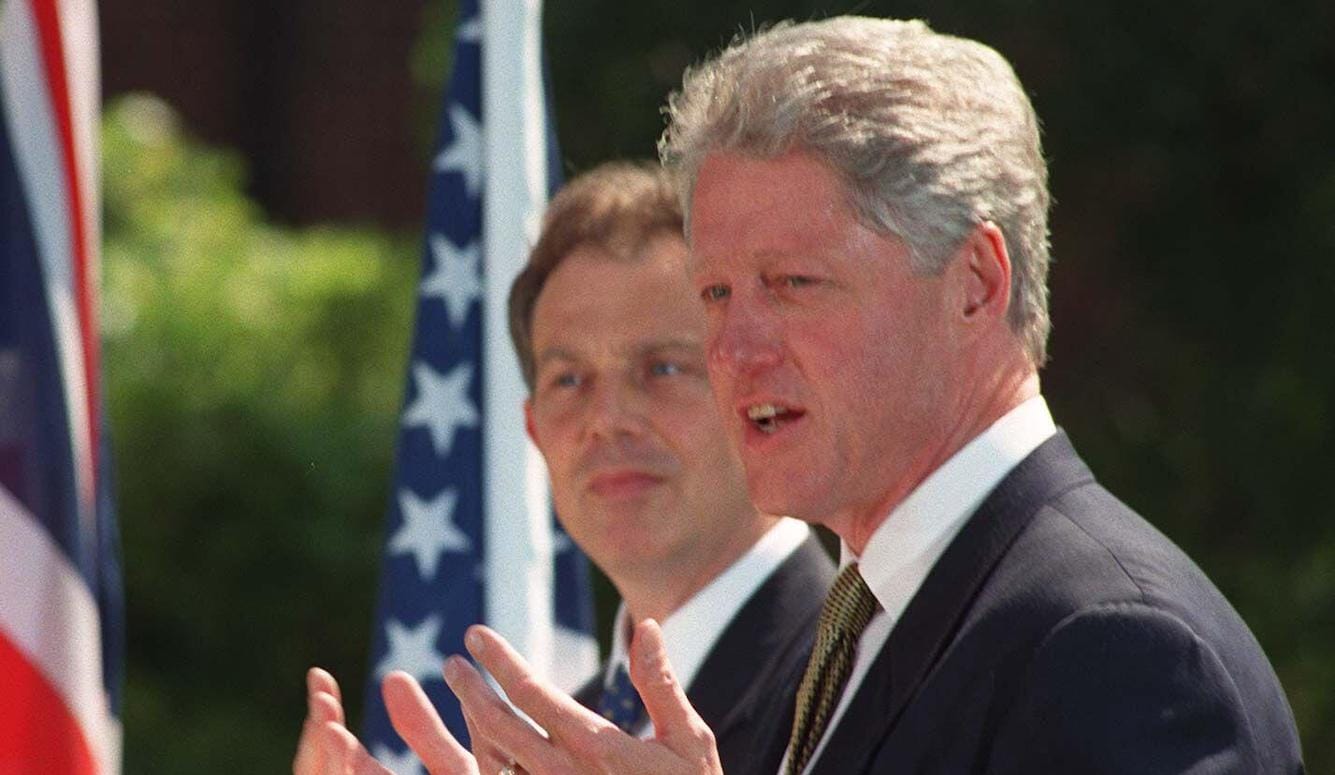
Johnson is a liberal, so it is striking that, like Ahmari, he makes favourable references to Brent Scowcroft’s realist arguments on the Iraq War. He praises Scowcroft (and his boss, George H.W. Bush) for not invading Iraq in 1991 after Saddam Hussein’s seizure of Kuwait was undone, and upbraids the architects of regime change in Baghdad a dozen years later for disregarding their forebears’ prudence in a frenzy of post-9/11 martial zeal. No mention is made of the Iraqi Kurds and Shi’ites who, encouraged by the American president, revolted against Saddam Hussein’s government, or of the massacre those communities then suffered at the hands of the Republican Guard divisions retreating from Kuwait. It may be that Johnson shares Scowcroft’s wish that the popular revolt simply hadn’t happened.
Johnson argues that pressing on to Baghdad in 1991 would have compromised the liberal-internationalist ideal, since it would have fractured the coalition against Saddam Hussein’s bid to conquer Kuwait. In this respect, he echoes the view of Bush and Scowcroft that regime change would have “destroyed the precedent of international response to aggression that we hoped to establish.” But this was an excessively optimistic reading of human nature and events, albeit a fairly conventional one. In a September 1990 address, Bush declared that the world had been given a “rare opportunity to move toward a historic period of cooperation,” and he called for a “new world order” in which the “rule of law supplants the rule of the jungle” and the “strong respect the rights of the weak.”
This tantalising vision of a new age captivated realists and liberal internationalists but it was a false dawn. Fashionable notions about material progress and moral improvement in a new world order were no match for the dark forces that drive the warp and woof of history—hypernationalism, despotism, economic protectionism, genocide, and imperial conquest. Since time immemorial, peoples and states have reliably pursued their self-interest, and they generally lack the sort of anxious foresight or enlightened thinking required to collaborate in upholding international peace and harmony. So, the likelihood of a binding commitment to collective security was always remote. No precedent lasts in this fallen world. As Edmund Burke observed, “Experience is the school of mankind, and they will learn from none other.”
In any case, merely responding to aggression is an inadequate basis for international order. Policing actions that repulse interstate assaults (Kuwait in 1991 or Ukraine since 2022) do not prevent them, and they seldom punish the predatory regimes responsible. The invasions and attempted annexations of Kuwait and Ukraine were destructive campaigns that could easily have been worse. The world was fortunate that Iraq did not possess nuclear weapons that would almost certainly have deterred any attempt to come to Kuwait’s rescue. But leaving Saddam Hussein in power allowed a vicious aggressor to molest Iraq and the region for years to come.
Meanwhile, it was only the valour of Volodymyr Zelensky in the winter of 2022 that rallied the Ukrainian nation to resist the Russian juggernaut and kept it outside the gates of Kyiv. Had Russia’s initial blitzkrieg been successful, it would have expanded the Kremlin’s writ across the Black Sea, and the world might well have accepted the outcome—just as it accepted Russia’s land grab in Crimea eight years previously. Here, though, Russia’s nuclear arsenal, and Putin’s corresponding brinksmanship, has sharply limited the scope of military assistance that the United States has been willing to provide to Ukraine. Despite the stalemate that overtook the war long ago, it has been a human and strategic catastrophe that may yet leave Ukraine dismembered and Putin emboldened.
Johnson grieves for what has been lost—or at least for what he perceives has been lost. “After the Cold War,” he writes, “the United States and other Western powers were attempting to pursue a historically unprecedented geopolitical project—the creation of a law-bound international community.” In Johnson’s telling, this project began to fade with the failure of George W. Bush to follow his father’s temperate example. Reiterating Bush and Scowcroft’s cautious approach to American power in A World Transformed, he laments that the younger Bush didn’t “read his father’s book more carefully” and struck into Iraq without the one great asset of the Gulf War: international legitimacy. After the botched intelligence about weapons of mass destruction was exposed, Johnson avers that America’s mission in Iraq “torpedoed” the gathering global shift toward liberal internationalism, ending dreams of establishing a “new world order.”
Of course, when military action becomes necessary, it’s preferable to act in concert with other states. But must multilateral approval be secured before the United States contemplates any use of force? Is unilateral military action inherently illegitimate? Was President Clinton wrong, for instance, to launch Operation Desert Fox in 1998 over the objections of France and Russia in response to Iraq’s obstruction of weapons inspections? The following year, was Clinton wrong to order airstrikes to halt Serb ethnic cleansing in Kosovo after the UN Security Council declined to support a resolution calling for action? Was President Obama wrong to order the covert raid on Osama bin Laden’s compound in Abbottabad? Did these military operations lack legitimacy because they were largely unilateral assertions of American power?
It is hard to agree that legitimacy in the global commons is simply a matter of adhering to international law. Since international institutions have a dismal record of keeping the peace and defending human rights, it would be truer to say that respect for principles of international law can just as easily thwart the pursuit of justice. Not so long ago, this was recognised by the good and the great across Europe. In 2002, British diplomat Robert Cooper issued a warning. “The challenge to the postmodern world,” he argued, was for Europeans to remember that hard power still mattered outside their own peaceful continent’s borders. “Among ourselves,” he wrote, “we keep the law, but when we are operating in the jungle, we must also use the laws of the jungle.”
Cooper’s plea was made after Slobodan Milosevic’s ruthless campaign in Bosnia, which the Clinton administration and its European counterparts deplored but did almost nothing to stop for almost three years. In the end, Europe decided to act with the United States in Bosnia and later in Kosovo, bypassing the Security Council. In that case, two of the loudest voices raised on behalf of armed intervention belonged to then-British prime minister Tony Blair and then-German foreign minister Joschka Fischer—both of whom Johnson salutes in his essay. According to these men, traditional principles of sovereignty and nonintervention had to yield in the face of mass murder. So, did military action to punish gross and systematic violations of human rights in the Balkans, carried out without the Security Council’s legitimising sanction, prevent “the creation of a law-bound international community”? Johnson doesn’t appear to think so, but he doesn’t explain why not.
In Kosovo and Iraq, Blair was consistent in his adherence to the defence of liberalism over the sovereign equality of all nations, while Fischer supported liberal intervention in the former and opposed it in latter. But Fischer’s emphasis on multilateral legitimacy grants too much sway to autocratic powers with no concern for human rights. As Charles Krauthammer pointed out, effective action on behalf of liberal principles or international security is seldom possible if American power is hostage to global consensus. “Multilateralism,” he observed, “is the isolationism of the internationalist.” And yet, the illusion persists that the United Nations is the world’s highest moral authority (or at least, “the best we have”) and the repository of mankind’s most high-minded instincts and ideals.
But do international law and institutions really deserve credit for upholding global order all these years? Multilateralists would say so. But the UN is just a collection of sovereign states—and one that makes no distinction between tyrannies and democracies, both of which enjoy equal clout. How could such a body possibly keep peace on terms about which there is fierce disagreement? The world order we have known for more than three-quarters of a century has little to do with growing fidelity to the rule of international law or obeisance to the UN charter from the world’s great powers. It is the product of one nation’s power and purpose—specifically, that of the United States, which took special responsibility for providing security and preserving liberalism after World War Two.
In this period of American primacy, Washington did not look to the United Nations for permission to use force, nor did it usually consult allies. In defence of the liberal order the United States policed, American leaders defended their country’s interests but they also frequently sought to advance the welfare of others. And in the unipolar moment that followed the collapse of the Soviet empire, America did not exploit its newfound dominance or treat its allies as tributary powers. Instead, it sought to prevent a reversion to the historical norm that defined the world before 1945. It was precisely the lack of a decent and hospitable international order that initially summoned Americans to global leadership.
Keep reading
Payback Time for Steven Galloway
War Stories

Life in The Grim Old Days
In Defence of Academic Standards

Letters to the Editor