Education
What Is the Point of Anthropology?
How a discipline lost interest in the people it was founded to understand.

He who only knows his own side knows of the case, knows little of that.
~John Stuart Mill
I started graduate school in 2006. Like a lot of anthropology departments at the time, Rutgers was split between the biological anthropologists and cultural anthropologists. Although we were all supposedly in the same department and required to take some of the same classes, it was like putting the math and the art departments together—except they hated each other.
In anthropology, graduate students have to conduct field research, and the first few years are spent figuring out the topic and where to go. I had come to Rutgers to study under Robert Trivers, a well-known evolutionary biologist who died a few months ago, and I decided to do my fieldwork in Iceland, testing hypotheses based on Trivers’s theories of parental investment and sexual selection. What was the trade-off between having more children and investment in each one (quantity vs quality)? How many kids should parents have when mortality was high (say, after a massive volcano) vs when it was low? How did a parent’s wealth and resources predict whether they invested more in boys vs girls?
 Steven Pinker
In our second year, all the graduate students had to present their hypotheses at something called the Dissertation Proposal Defence. It was a crucial moment in the process of getting your PhD in anthropology. All of the biological anthropologists presented research questions that they were planning to test. My wife, for example, was planning to travel to Kenya, where she would study whether or not male olive baboons recognise and invest in their own offspring. (It turns out they can and do.) Another student, Drew Gerkey, announced that he would spend two years studying cooperation among reindeer herders in Siberia. (It turns out that these herders are some of the most cooperative people ever studied.)
I was already used to the massive differences between the two wings of anthropology, and familiar with the jargon employed by the cultural wing (embodied subjectivity, intersectionality, structural violence, hegemonic knowledge production), but I was still taken aback when the cultural anthropology students went up one after the other and explained what they were going to find. Not what they were hoping to understand, or learn, or test, or discover, but what they were going to find. Here is an excerpt from a representative defence that was read to us titled “Portside Synaesthetics: Sensing the Politics of Place”:
Architectural models and projections in Marseille are experienced as uncanny, rather than as communicative. … Based on the ethnographic evidence, I argue that there is progressive potential in taking seriously the impacts material “objects” have on human “subjects.”
There were no questions. No hypotheses. No data to be collected, let alone analysed. There were claims about arguments being “based on the ethnographic evidence”, but no evidence was ever presented. Conclusions were drawn from a series of assertions. It sounded like they weren’t interested in actually learning anything at all. Why, I wondered, were they bothering with this field at all?
I had been trained to always ask, “What’s the evidence?” My advisor would never let me get away with vague bullshit about what “the research says” or what “studies show”. If I tried to handwave with that kind of thing, he would immediately interrupt me and ask: “Which studies?” He wouldn’t even give the result of a paper without explaining its methodology. Instead of saying that an Implicit Association Test (IAT) was a measure of unconscious biases, for instance, he would spend eight minutes explaining exactly what was being measured—how quickly people categorise words and pictures associated with black people and white people. This insistence on method and the integrity of data could be exhausting, but it was a discipline I never forgot. He actually wanted to know the answers to questions because he was authentically curious. The idea that people might hold different beliefs, and that data could adjudicate between these beliefs, was as foreign to my cultural anthropology classmates as examining semiotic post-textual theory was to me.
The founding premise of anthropology was audacious: that you could actually go and find out what humans are like, rather than simply assume it from the comfort of your own tiny corner of the world. Franz Boas, the discipline’s American founder, rejected the racial hierarchies earlier scholars had simply assumed instead of testing, and he demanded that anthropologists spend years in the field before making any claims about another culture.
My postdoc advisor at the University of Missouri, Napoleon Chagnon, came straight out of that tradition. He spent more than a decade among the Yanomamö in the Venezuelan Amazon, testing fundamental questions about kinship, violence, and reproduction. He once told me that he awoke in his hammock to find the village headman standing over him with an axe raised over his head ready to strike. Do more violent men have more wives and children? It turns out that—in Yanomamö villages, at least—they do. I spent three years working and publishing with Chagnon, and in his day he was one of the most famous anthropologists alive. Because that’s what anthropologists did in the 1960s and ’70s. They asked the most interesting questions they could think of about people and their cultures, then they conducted field work in an attempt to answer them. Today, asking those same questions can get you labelled a racist or colonialist, and studying small-scale societies at all is dismissed as cultural voyeurism.
Matthew Blackwell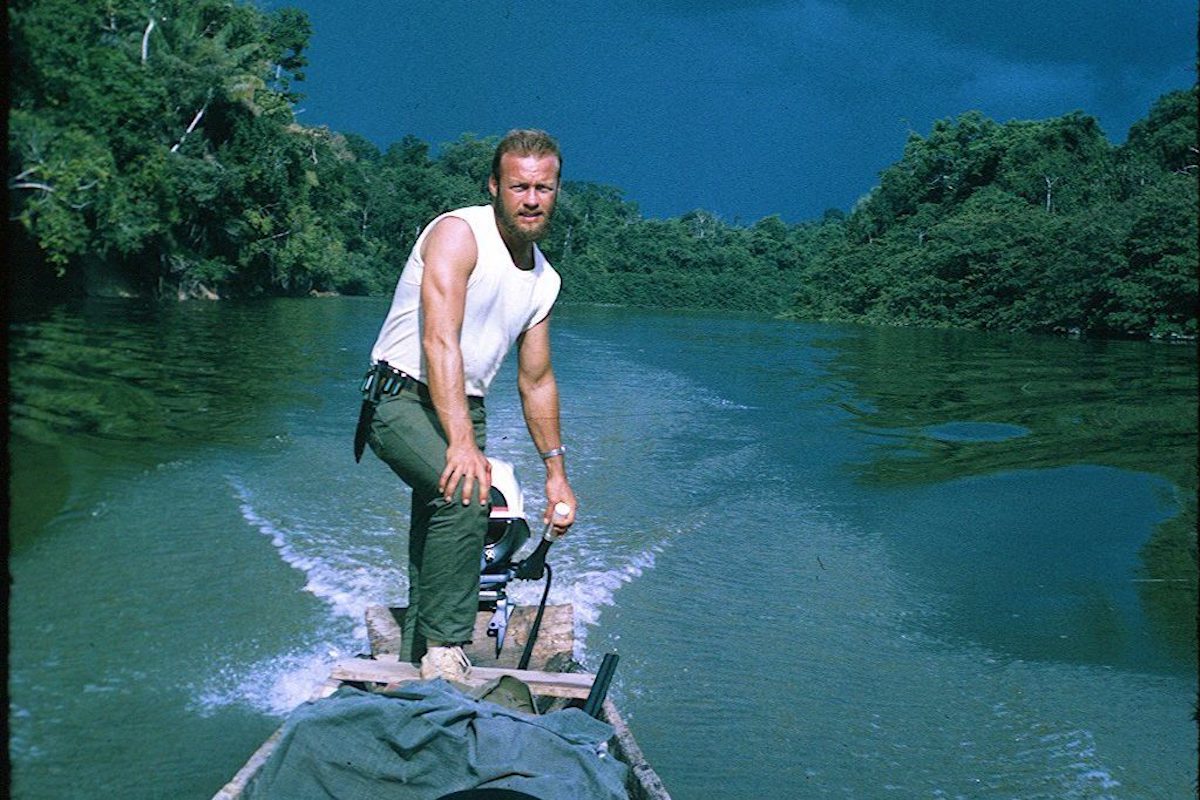
What are universities for? They used to be places where humans would search for truth. “It is well worth searching for truth,” the philosopher Karl Popper once remarked; “and we do this chiefly by searching for mistakes, so that we have to correct them.” My cultural anthropology classmates believed that people like Chagnon, Trivers, and Popper had it backwards. Truth is not an empirical matter of correct or incorrect, it is a moral matter of right and wrong. Objective truths cannot be sought, relative truths can only be defended. And those who demand empirical support for assertions are attempting to destabilise moral truths, usually in the interests of some powerful interest or other.
Carolyn Rouse is the president of the American Anthropological Association (AAA). Earlier this year, a Chronicle of Higher Education reporter offered her the chance to respond to a report that alleged an extreme politicisation of anthropology. The authors of that report found “a widespread deterioration in scholarly standards grounded in a pervasive repudiation of ideals of objectivity together with a toxic intellectual climate in which reasonable dissent on politically charged topics is routinely suppressed and punished.” By the time of the interview, Quillette had already published most of the report.
Paul Boghossian
Rather than reckon with these findings, Rouse doubled down on the very claims the report had flagged as most absurd. No criticism that I could offer—not this essay, not the report itself—was as damning as simply letting the discipline’s most prominent member speak for herself. In 2023, her organisation cancelled a panel discussion at its annual conference about the importance of biological sex as an analytic category in anthropology on the grounds that it might have harmed members’ “safety and dignity”, and that its premise contradicted “settled science”. Asked if she regretted that decision, Rouse said:
Keep reading
Jerry Kaplan on AI Doomers
Payback Time for Steven Galloway
War Stories

Life in The Grim Old Days