Marxism
This Is Not Late-Stage Capitalism
Automation, artificial intelligence, and robotics are set to redefine the relationship between labour, capital, and production.
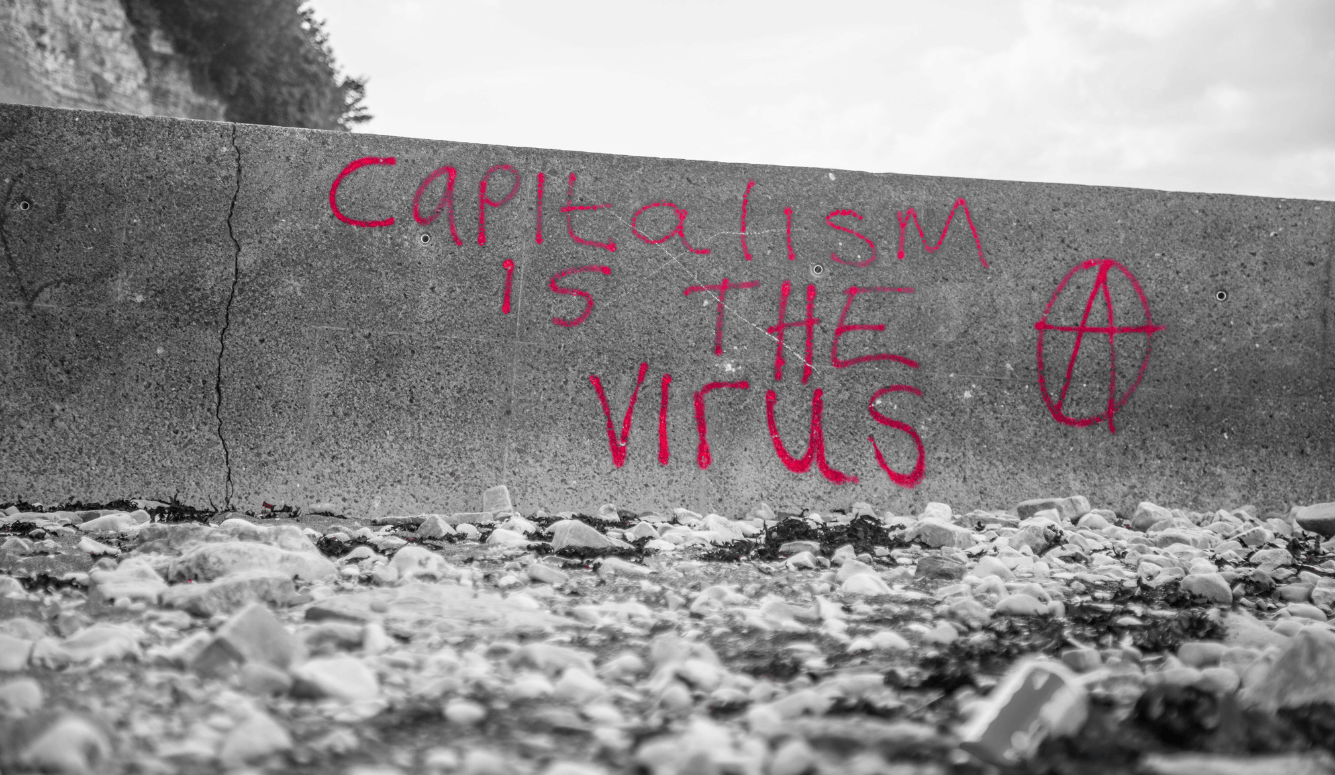

The idea that we are living in the era of late-stage capitalism has recently gained traction on the Left, particularly among Millennials and Gen Z. The evocative phrase paints a picture of a crumbling economic system, ravaged by mounting social tensions, teetering towards a Marxist revolution.
Karl Marx believed that capitalism was unsustainable and prone to collapse, soon to be replaced by his favoured system of communism, in which goods and services would be distributed by a “dictatorship of the proletariat” on the basis of need, rather than bought and sold in the marketplace. But while capitalism has some tendencies towards inner turbulence, it is quite resilient, having survived in various forms for 177 years since Karl Marx published his treatise The Communist Manifesto advocating and predicting its overthrow.
The term “late-stage capitalism” originally gained prominence in the 1970s, when the Marxist sociologist Ernest Mandel used it to describe a new globalised phase of capitalism marked by the dominance of multinational corporations, financial speculation, and mass consumerism. We have been waiting for this “late-stage” to pass for half a century now—and yet it has not passed.
This is not the first time a Marxist theoretician has labelled a contemporary phase of capitalism as terminal. In 1916, Vladimir Lenin—who was later to become the first Soviet dictator—wrote a treatise entitled Imperialism: The Highest Stage of Capitalism, in which he identifies imperialism as capitalism’s “highest” and final stage. For Lenin, the rise of imperialism and the concentration of capitalism into monopolies were the harbingers of capitalism’s demise and the dawn of socialism.
One might easily mistake the emergence of nominally communist states like the Soviet Union and the People’s Republic of China as some kind of pragmatic victory for Marxism. But it was no such thing. These were not places where a collapse of capitalism gave way to communism. What took place was actually the result of opportunistic thuggery, as revolutionaries seized power under the banner of communism only to rule autocratically—or even monarchically, as in contemporary North Korea. And with the collapse of the Soviet Union and the reform of Maoist China into a state capitalist autocracy, the world has become more capitalistic, not less.
In fact, since Lenin’s day, capitalism has ascended to newer and higher forms. Lenin was wrong—imperialism was not its highest stage. Western economists developed new ways to balance the dynamism and economic opportunities of capitalism with the human desires for stability and predictability, and the need for jobs for the general population. In the wake of the Wall Street Crash of 1929 and the ensuing Great Depression, John Maynard Keynes published his seminal treatise proposing that governments adopt countercyclical economic policy: spend more heavily to create jobs and build infrastructure when unemployment is higher and the private sector is depressed and cut back when the market is booming and unemployment is already low.
One of the most influential critiques of communism was written by Friedrich Hayek, whose concept of informational efficiency highlighted capitalism’s unique strengths. In his 1945 essay “The Use of Knowledge in Society,” Hayek argues that the price system in a market economy is an unparalleled mechanism for coordinating dispersed knowledge. In a capitalist economy, prices reflect millions upon millions of individual decisions about supply and demand, and therefore act as signals that guide resource allocation dynamically and efficiently.
There is no such informational network in a centrally-planned communistic system. The knowledge needed to run an economy is not just statistical or aggregate; it is local, dynamic, and often tacit. For example, a small business owner’s understanding of their customers’ preferences or a farmer’s knowledge of local soil conditions cannot be easily centralised or standardised. The market leverages this dispersed knowledge through competition and price adjustments, whereas central planning is inherently rigid and prone to inefficiency.
Aside from a change in emphasis from government spending to monetary policy as the main countercyclical mechanism in the 1970s, capitalism with a few countercyclical adjustments has ruled the day from World War 2 until the present. Yet the Western Marxists never fully went away. Although they have mostly been banished from the field of economics—simply because Marx’s theories about the way the economy works and how capitalism will give way to communism don’t reflect reality—his disciples have continued to beaver away in academia, trying to apply Marxian analysis based on class struggle to a broad variety of topics, including critical theory, sociology, and gender studies.
 Christopher Reuenthal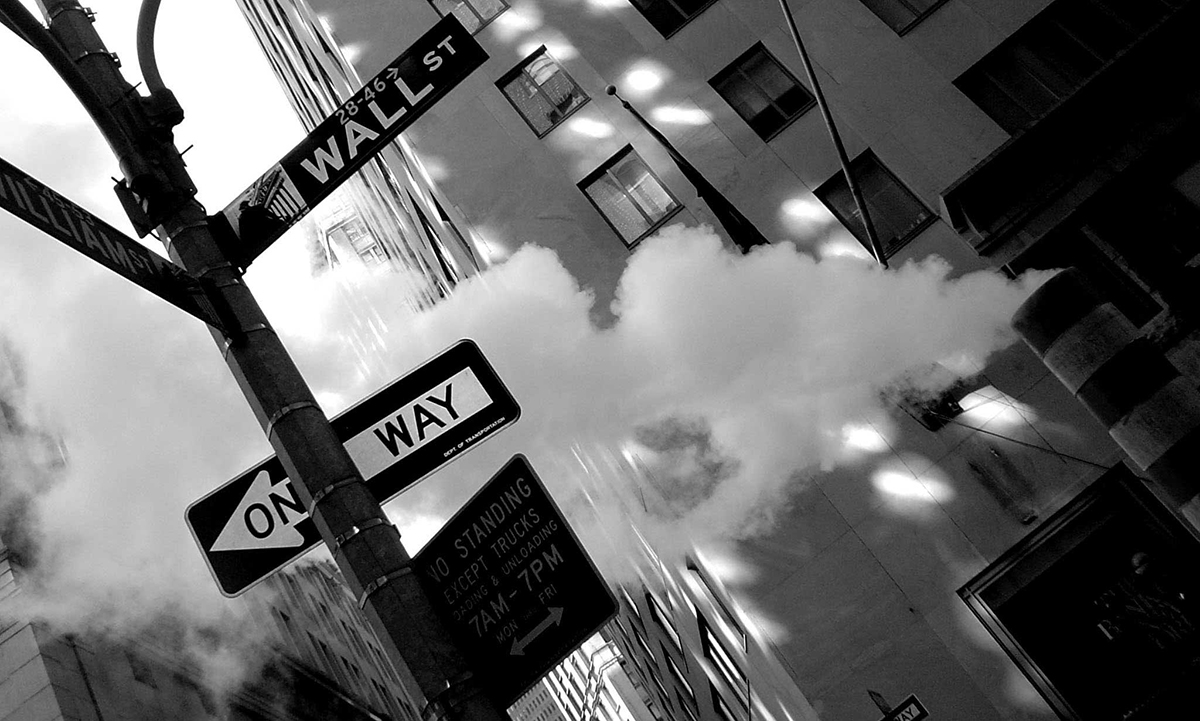
Marxists and their ideological fellow travellers used the 2008 financial crisis as a way to return to prominence by arguing that the crisis was the result of some of the systemic contradictions they had long warned about: unchecked financial speculation, massive inequality, and the fragility of globalised markets. The collapse of major financial institutions, the subsequent bailouts funded by taxpayer money, and the deep recessions that followed provided fertile ground for renewed critiques of capitalism. Occupy Wall Street and similar movements drew heavily on anti-capitalist rhetoric as they highlighted the concentration of wealth and power in the hands of a few.
Keep reading
Jerry Kaplan on AI Doomers
Payback Time for Steven Galloway
War Stories

Life in The Grim Old Days