Politics
Cuba’s Imprisoned Truth
An interview with the father of Cuban political prisoner Walnier Luis Aguilar Rivera.
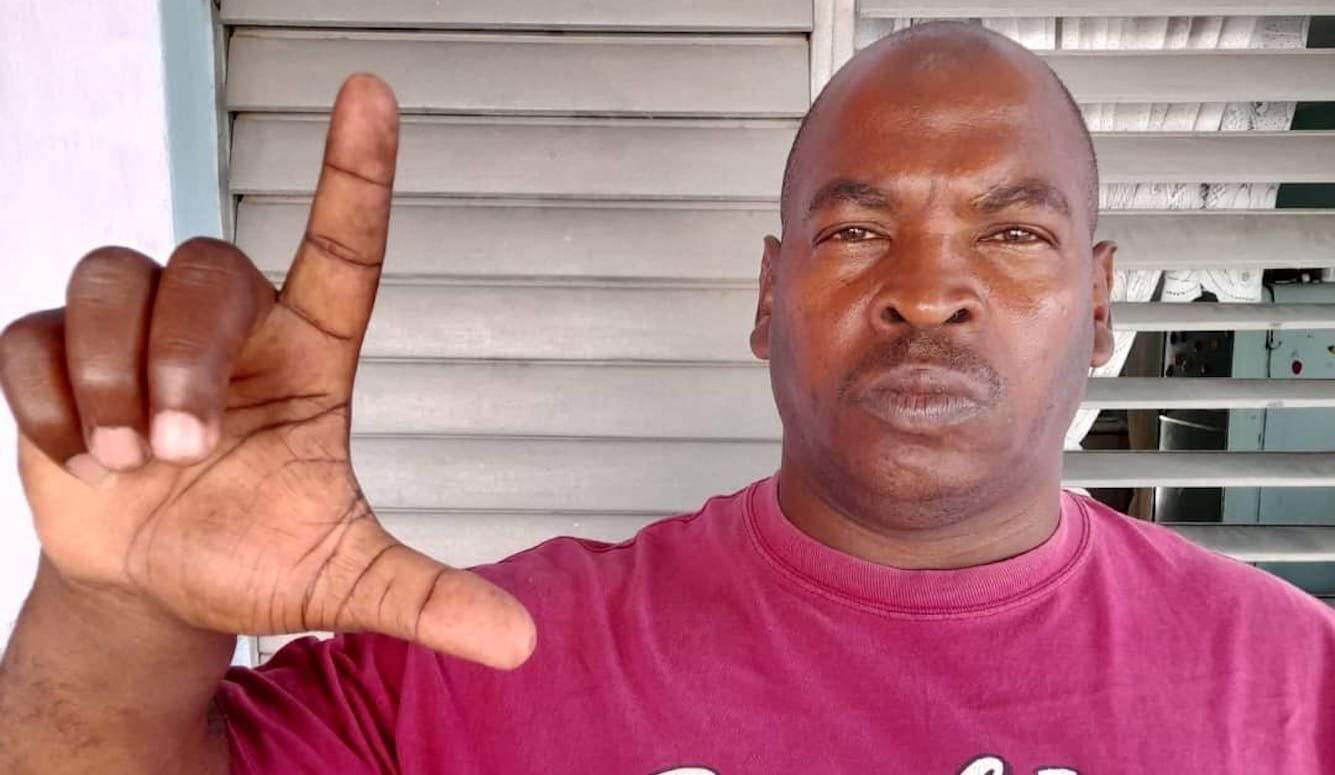

In December 2021, Walnier Luis Aguilar Rivera was sentenced to 23 years in prison by a Cuban court for participating in the mass protests of July 11 and 12. He was 21 years old when he began his sentence and he’s the father of two young daughters. According to a report in Foreign Policy:
[On July 11], tens of thousands of people took to the streets across the island to protest skyrocketing prices of essential goods. It was the largest event of civil unrest in Cuba since the 1990s. Local advocacy group Justicia 11J has counted around 1,500 Cubans arrested in subsequent weeks and months, with around 700 still in prison. The actual number “could be double,” said Camila Rodríguez, one of Justicia 11J’s founders, since the group relies on word-of-mouth accounts from family members and witnesses to gather these figures. The group also says more than two dozen minors have been arrested: The youngest, who is 12 years old, remains in detention.
In the following interview, Cuban-American writer Justo Antonio Triana speaks to Walnier’s 51-year-old father Wilber Aguilar Bravo about the trial and his campaign to secure his son’s release.
This interview was conducted on March 1, 2024. It has been translated from Spanish and edited for length and clarity.
Justo Antonio Triana: Your son Walnier has an intellectual disability, but this was not taken into account during the trial. What other aspects of the criminal process did you find unfair?
Wilber Aguilar: The whole process was completely unfair from the beginning, because he was accused of sedition, a crime he did not commit. My son did not behave violently at any point. In fact, here in La Güinera nothing was damaged during the protests. The violence came from the state security forces. They fomented violence by throwing stones and shots at the demonstrators, and they even murdered someone, whom my son tried to help. They created the violence by attacking the boys while dressing in civilian clothes: they stoned them, beat them, and shot them, and those same people who stoned them, beat them, and shot them later served as witnesses for the prosecution during the trial.
So, they fabricated a crime, and on top of fabricating a crime, they did not allow our lawyer to present the records demonstrating my son’s disability. Walnier has an injury in the left frontal part of his brain, and when our lawyer was about to present the report, he was told to sit down, so it was never presented. I have denounced that every day. I have gone to the Ministry of Justice, I have gone to all the Cuban institutions, and I have still had no response.
Afterwards, the State Security came looking for me. They took me to a military hospital, found me a psychiatrist and a psychologist, and had them check the documentation. The doctors told the SS: “This is all real. The disability case is genuine.” Then they looked for a broader team from the Calixto Garcia hospital, including more psychiatrists, psychologists, and other specialists, and they told the SS in front of me that my son should not be in prison, that he was wrongly sanctioned. One of the doctors told me: “Your son’s freedom does not depend on me; if it did, he would already be free.”
At the trial, the judge started to cry. The SS brought her the sentence sheet, and the judge opened her eyes, as if to say, “It’s out of my hands,” but she still read it. My lawyer stood up and said to her, “Judge, applying these sentences to these young people, who in short are our people, is going to do more harm than good.” I will never forget those words. But she still handed down the sentence, and that’s when she burst into tears. Then, my lawyer walked out of the trial.
That’s the situation with my son. It’s all a lie, a set-up. They fabricated a crime for him and presented false witnesses at the trial. Everything has been abusive. They have lied before the world, and I am very hurt by that.
JAT: La Güinera was the neighborhood with the highest number of people prosecuted after the protests (96 of the 790 total). They were all charged with “sedition,” and handed sentences of up to 25 years in prison. Do you believe that factors like the socioeconomic status of the defendants influenced the severity of their sentences?
WA: Yes, of course. Well, no lieutenant colonel lives here. This is a marginal neighborhood, a very poor, low-income neighborhood. Here the people did feel the poverty, and that day the boys saw the opportunity to go out and participate in a peaceful demonstration that was going on all over the country. But when they went out, a “combat order” was given. [President Miguel Díaz-Canel gave a televised address during the protests and said: “The combat order is given. Revolutionaries take to the streets!” Many have interpreted this statement as a call for the State Security services to crack down on the protestors.]
JAT: Where is Walnier Luis being held?
WA: Walnier is being held in the Combinado, Building 1, on the fourth floor south. Building 1 is where they keep the common prisoners with the most severe sentences—those sentenced to death or life imprisonment who have committed two or three homicides. That is where they are holding my son, who has never been in jail, who has never been in trouble with the law before. They have placed Walnier there in response to my demands for his freedom. Here [in Cuba], they punish us that way. They torture us. If you are a relative of a political prisoner and you complain, they take it out on him.
 Jorge C. Carrasco
JAT: What are the general conditions of his life in prison?
WA: The conditions are subhuman. Sometimes they have no water, the medical care is inadequate, the food rations were reduced to 30 percent. It is unbelievable what they are going through. Food is what hits them the hardest. And they get sick, they suffer from diarrhoea, they have skin diseases because the mattresses are infested with insects. They are suffering a lot.
JAT: As a father, how has this situation affected your family emotionally?
WA: Well, this has been the saddest thing that has happened to me in my life, and the hardest thing that has happened to my family. We have always been a well-constituted family, with values. My children have never faced criminal charges before, and nor have I. They have never had any problems with the law; in fact, my other son is a university graduate. They are good boys, who were always at home, but the authorities have treated us like criminals. Well, we are also black, so there is also some racism; I remind you that we are from La Güinera.
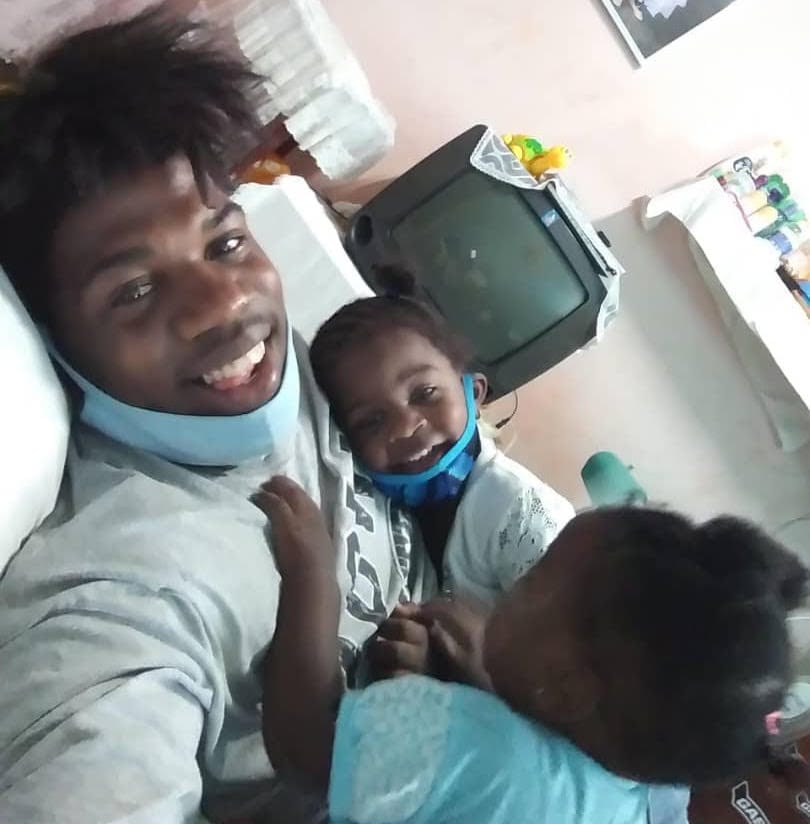
My son was sentenced to 23 years when he was 21. When the sentence was handed down, his mother suffered a nervous breakdown. My son’s mother is crying every day. She gets up at three o’clock in the morning and I find her crying in our living room. So I have had to be mom, dad, everything. My family has supported me, as we are very close, and I am taking care of Walnier’s two little daughters. But we have suffered a lot. For the first time, we are separated from our children, and my family was not prepared for all this cruelty. Yes, we have suffered a lot.
JAT: When did you first feel the need to share your situation on social media?
WA: The day of the trial, after he was sentenced. I had already had some clashes with the State Security, but not publicly. And then that day—December 23, 2021—I exploded. I asked what kind of country are we living in? How can a 21 year-old kid be sentenced to 23 years in jail for demonstrating peacefully? And the next day, the SS comes and gives me a summons in the form of an interview, which is their preferred method. And then they threaten and intimidate me so that I don’t speak out again, because that’s what the regime has always done: threaten us to keep us silent. Well, I am not willing to keep quiet because I feel that my son is being abused, and my conscience does not let me sleep knowing that.
JAT: What consequences have your denunciations had for you and your family?
WA: We have all been summoned and threatened, my son has been sprayed in the eyes while handcuffed. Once I shouted “Freedom for my son” in the cathedral, and that same day—August 1, 2022—they moved him from building 3 to building 1, to the fourth floor, which is where the hardened criminals are.
JAT: When you go live on Facebook, you do not only advocate for your son’s freedom, but for all those who, like him, are still unjustly behind bars. Is there a support network among the families of Cuban political prisoners?
WA: No family member says, “Freedom for my son so-and-so.” There were more than a thousand prisoners detained that day. So, this is not just my problem, it is ours. My son should have been released on parole because of his disability, and they have not let him out because they do not want to “particularize” cases. In other words, they have put us all in the same package. My son was tried along with 17 other people he didn’t even know. So, it is unethical to ask for freedom for just one person. Because we are going through the same pain. There are many families living with the pain I live with. The same injustice they committed against my son was committed against thousands of people. The same mistreatment, the same fabrications, the same staged trial, the same humiliation.
Keep reading
How France Lost Control of Its Streets
How to Suppress Men’s Writing
Back to the Dark Ages

Prison or Peer Review
France’s Imaginary Austerity