
A review of The Russia Conundrum by Mikhail Khodorkovsky with Martin Sixsmith, St. Martin’s Press, 352 pages (October 2022)
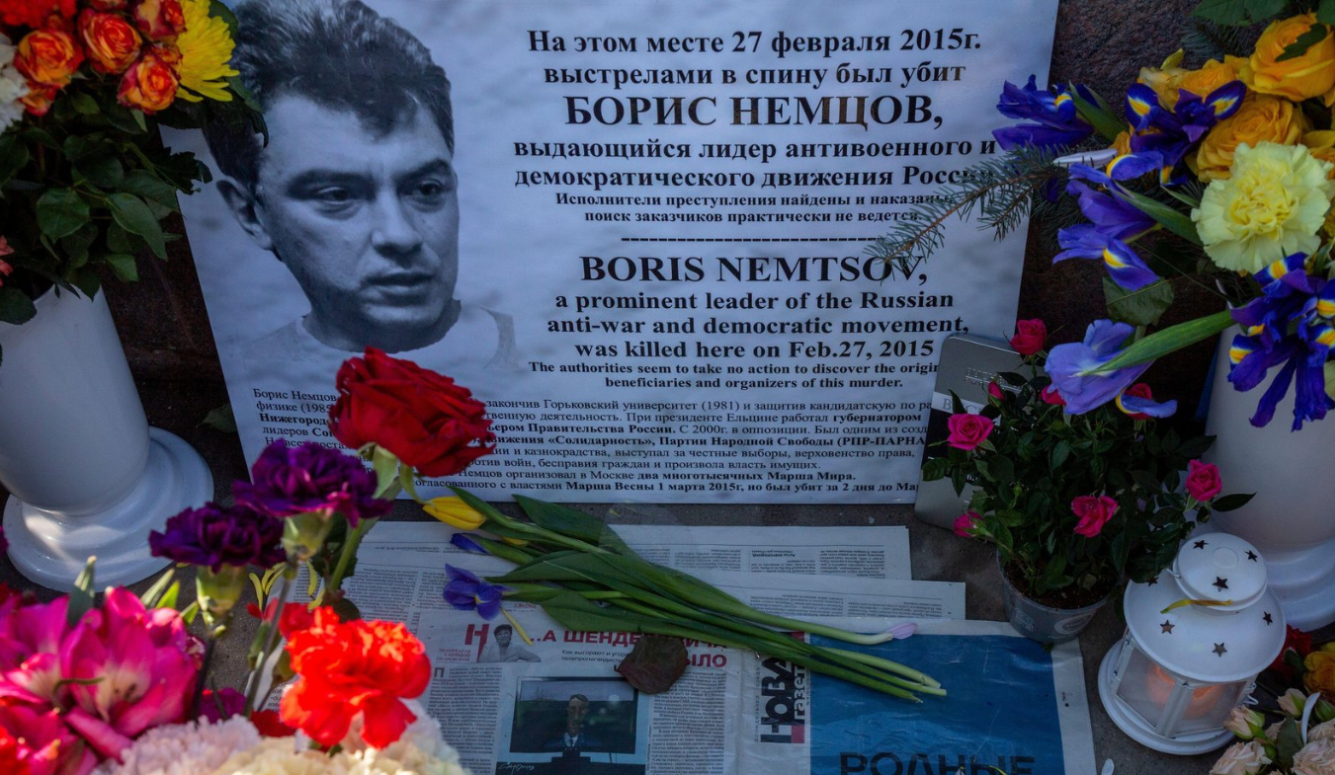
Three prominent Russian men, who might have lived esteemed, comfortable, and (in one case) wealthy lives in today’s Russia, defied Vladimir Putin instead. They did so directly, militantly, uncompromisingly, and from a quality of life perspective they paid a heavy price. One of them, Boris Nemtsov, was a former deputy prime minister in the 1990s decade of rackety liberation and an outspoken reviler of the Russian president. He was shot dead on the Moskvoretsky Bridge in February 2015. Five Chechen men, who had been paid 15 million roubles (over $250,000) for the hit, were found guilty of his murder. Their leader was a bodyguard of the Chechen president Ramzan Kadyrov, a close ally of Putin now noisily urging the use of greater brutality to quell the Ukrainian military.
Alexei Navalny is a Russian lawyer and opposition leader who has been involved in protesting the corruption of Putin and his regime for over a decade. An FSB (secret service) squad was detailed to murder him with poison, and in August 2020, they almost succeeded. Saved from death by a hospital in Omsk and further treatment in Berlin, Navalny returned to Russia secure in the knowledge that he would be arrested, which he was. From June this year, he began serving a nine-year sentence on a variety of charges (he was designated as a “terrorist”) in a high-security prison called IK-6 in Melekhovo. Located over 200 kilometres east of Moscow, it’s a prison for the most violent criminals, against which allegations of torture, murder, and the harshest of regimes are insistently made.
Mikhail Khodorkovsky is one of the first generation of the ’90s “oligarchs,” and for a time, he was the richest among them due to his ownership of the Yukos oil company. During an August 2003 meeting in the Kremlin between the Russian president and other leading business figures, Khodorkovsky confronted Putin with evidence of corruption at the highest level. He was arrested a few weeks later at Novosibirsk airport as he was boarding his private jet, charged with illegal share-dealing, and spent the next 10 years languishing in a camp. Released in 2013, he left Russia immediately. Though much of his fortune has been lost, he remains a moderately wealthy man, living largely in London and funding an opposition group in Russia, most of whose leading members have now been imprisoned.

There are, of course, many others. In 2012, a group of young female activists and performance artists collectively known as Pussy Riot grabbed world attention when five of their number invaded Moscow’s Cathedral of Christ to protest the unholy and corrupt alliance between the Orthodox Church and the Russian regime. Patriarch Kirill—notorious for wearing obscenely expensive wristwatches—demanded severe punishment, and three of the young protestors were duly sentenced to serve two years in a penal colony. Upon their release, they continued their provocations. When they performed a song titled, “Putin Will Teach You How to Love the Motherland,” they were beaten by a group of patriotic Cossacks. At least one member is on a police wanted list, and Maria Alokhina, one of the three previously convicted, escaped Russia earlier this year to evade another spell in prison.
Vladimir Kara Murza, who has been in prison since April of this year, was charged in October with “high treason” following “long-time cooperation with a NATO state,” a charge which carries a 20-year sentence. A close friend of Nemtsov, Murza has twice fallen into a coma, in 2015 and 2017, both probably caused by poisoning. He has said these apparent attacks were ordered in retaliation for his demand that sanctions be imposed on Russian high officials who abuse human rights. In September of this year, the journalist Ivan Safronov was handed an extraordinary 22 years in prison for treason. He had written a series of sensational stories, which the prosecution said exposed top secret information and damaged state security, but which were later found to have been based on freely available information. Ordinary investigative reporting is now clearly impossible without punishment.
In addition, thousands of men and women have protested Putin’s despotic rule and been beaten by police for their trouble. Many have served—or are still serving—time in jail. Many more—and this, if nothing else, must surely cause Putin and his gang some disquiet—have fled into exile in neighbouring former Soviet states, Poland, Romania, and further afield.
Each of these dissidents seems to have decided that they were not going to continue to tolerate the intolerable in Putin’s Russia. Navalny was at one time an enthusiastic nationalist. He might have continued to play that tune and become an occasional adviser, like the Eurasian philosopher Aleksandr Dugin. Nemtsov, on the other hand, might have passed off his earlier pro-Westernism and attachment to democracy as youthful folly, like a BBC presenter shrugging off his post-doc Trotskyism in order to prepare for a working life of impeccable journalistic neutrality.
Khodorkovsky enjoyed a great deal of wealth, which Putin and his cronies might well have thought ought to be theirs—they were running the country, after all, and deserved it. So, he faced a more delicate task. Nevertheless, he could have cosied up to Putin, shelled out millions in bribes, and offered sage and respectful advice on the economy. He might have copied former Chelsea FC owner Roman Abramovich and most of the other oligarchs in genuflecting to the Kremlin’s present inhabitants.
Instead, these three men and others like them displayed courage of the very highest kind. Navalny showed perhaps the greatest courage of all, by voluntarily returning to a fate he knew would be bad and may yet be fatal—he has been dragged in and out of isolation cells and now passes his days in a prison widely advertised as a torture chamber. Nemtsov broadcast his contempt for Putin as loudly as he could, and must have known that he would pay for it with his life. The four bullets he took in the back from a Makarov pistol killed him instantly.
All this showed the hideousness of the regime, even before the invasion of Ukraine. Khodorkovsky’s 10 prison years, most of which were served in a “Common Regime Correctional Facility” in Siberia, has so far been the mildest punishment meted out. Living in London is, he has acknowledged, no guarantee of safety. Alexander Litvinenko, a defector from the FSB, was murdered there in 2006—poisoned with the highly toxic nerve agent, Polonium 210. Which is why Khodorkovsky takes large and expensive precautions that he is wealthy enough to afford.
Khodorkovsky’s new book, The Russia Conundrum, has been written with the aid of former BBC correspondent and government adviser Martin Sixsmith. It reveals what Khodorkovsky became during 10 years of enforced reflection, and the patience he was forced to cultivate in order to bear the consequent deprivation of family, society, work, and wealth for such a large slice of his life. Always considered and contained in his emotions, he found that “prison allows for introspection and a deeper analysis of external reality”; in the tragic heroes of Shakespeare, especially Lear, he discovered a new clarity with which to look clearly into himself and at the world as it is. The pursuit of money and success, which drove him through his 20s and 30s, fell in his hierarchy of the important things in life. What remains, however, is a continuing and fiery commitment to oppose Vladimir Putin—“he must be stopped, regardless of the risks,” he writes in the book’s preface, “for if we do not, he will land us in a global war.”
Putin’s designs on Ukraine and the danger he posed to the world had become themes of both Nemtsov and Navalny after Russia’s bloodless seizure of the Crimean Peninsula. Nemtsov is now dead and many believe that Navalny will never emerge from incarceration. So, Khodorkovsky remains the only one of these three bold men still alive, at liberty, and with the resources to mount a challenge on behalf of the millions of Russians who hate their president, loathe the attack on Ukraine, and must bear the international stigma of being Russian.
Khodorkovsky is also the only one of the three who knew Putin, and later his entourage, personally. For a while, they met quite regularly after Putin became president in 2000. During this time, their relationship was, if never quite friendly, then cordial. On the president’s side, it was even agreeable, and they discussed the need to modernise and even liberalise Russia. At first, Khodorkovsky was impressed and flattered to be asked for advice, until he understood that Putin was simply using his formidable skill in dissimulation to play the role of a pro-Western reformer.
One incident in particular helped to open Khodorkovsky’s eyes. In August 2000, a Russian nuclear-powered submarine called the Kursk sank in the Barents Sea, north-east of Sweden in the Arctic Ocean. A peroxide-based liquid had leaked from a faulty test torpedo, initiating a series of explosions, blowing a hole in the hull, destroying the bulkheads and killing most of the crew. The 23 survivors huddled in a small undamaged compartment for six hours until their air ran out. A subsequent inquiry found that the rescue mission was hopelessly mismanaged, and that a series of lies were peddled about the nature of the disaster. International help was refused (though it probably would have been too late to save the remaining crew).
Putin, reluctant to leave a holiday on the Black Sea, didn’t return to meet the grieving relatives for 10 days. And then, in an aside to a journalist who had asked for a comment, he callously remarked, “So, okay, it sank.” It was the kind of response, primed with untruths and uncomprehending of others’ misery, that has marked his public announcements on the Ukrainian invasion. The Kursk sinking, and the findings of the report into the disaster—“stunning breaches of discipline, shoddy, obsolete and poorly maintained equipment … negligence, incompetence, and mismanagement”—foreshadowed the chaotic ineptitude of the Russian military’s present invasion of Ukraine.
Upon taking office, Putin had offered Russia’s oligarchs a deal—keep your ill-gotten gains, leave politics alone. Unlike Boris Berezovsky, who had seen himself as the main power behind the Yeltsin throne, Khodorkovsky had thought the deal reasonable. But alerted by the Kursk fiasco, he began to reconsider the deal in a new light. Political meddling, he had previously reasoned, contributed mightily to the corruption that had become a great stain on Russian business and Russian life more generally. But now he concluded that the deal had been designed to allow politicians, a growing number of whom were Putin’s former KGB cronies, to plunder state revenues undisturbed.
Keep reading
How to Suppress Men’s Writing
Back to the Dark Ages

Prison or Peer Review
France’s Imaginary Austerity
The Limits of Perfectionism