Politics
Serfing the Future?
Escalating housing costs and regulations are confining young people to renting, straining the traditional democratic ideals of property and autonomy.

Land ownership has shaped civilizations from their beginnings, with a constant interplay between great powers—the aristocracy, the state, the Church, the emperor—and those below them. History has oscillated between periods of greater dispersion of ownership, and those that favored greater concentration.
Today, we live in an era of ever-greater consolidation, not from knights in armor, or Communist cadres, but from the forces of big capital and an ever-more intrusive regulatory state. The result has been record-high housing prices, well above the increase in incomes resulting in a systematic decline in the ability of people, particularly the young, to buy their own house as prices rise even in less expensive areas. Supply also faces great constraints, due in part to labor and supply-chain woes and the demand shock of the pandemic and remote work.
Unless reversed, young people will be forced into a lifetime of rental serfdom. The assets that drove middle-class stability, wider social benefit, and subsidized comfortable retirements, will likely not be available to them. Property remains key to financial security: Homeowners have a median net worth more than 40 times that of renters, according to the Census Bureau. Shoving prospective homeowners into the rental market not only depresses their ambitions, but it also forces up rents, which hurts poorer households and even solid minority neighborhoods.
But this impacts far more than just finances. Low affordability and high rents tend to depress the fertility rate, contributing to what is rapidly becoming a demographic implosion in many countries. More important still, dispersed property ownership has long been intimately tied to democracy while concentration tends to characterize autocracies, whether of the state-dominated variety or that of big capital.
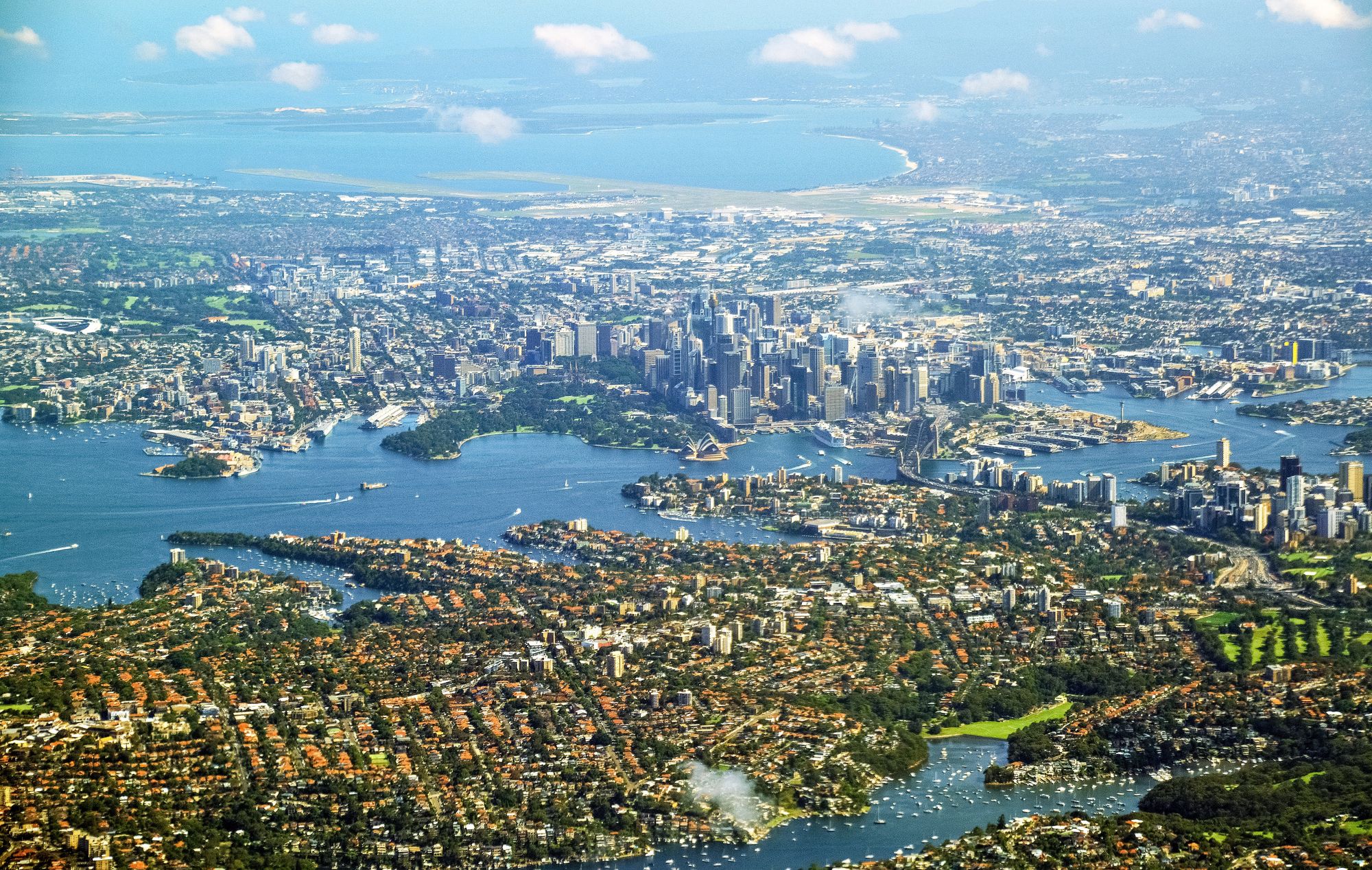
How we reverted to a feudalistic state is a complex and infuriating story. Critical to this change has been a planning theology that holds density itself as intrinsically good and that purposely seeks to block housing on the periphery for societal, and environmental reasons. Where implemented, this approach has driven up prices, as evident in places like Sydney, Vancouver, San Francisco, London, and Paris. This has been a boon to speculators and well-heeled developers, but makes middle-class housing unaffordable to the middle class and intensifies the poverty of poorer residents.
The “pack and stack” planning “vision” has been widely adopted, even in land-rich countries like Australia. This ad from the New South Wales government promises an urban paradise of sorts:

This, as many Sydney-siders will tell you, is not exactly what happened. Instead of flocking to the city, research by the Massachusetts Institute of Technology/Queens University (Canada) estimates that nearly 80 percent of Australia’s metropolitan population lives in automobile-oriented suburbs or exurbs. Further, more than 75 percent of employment growth in Sydney and Melbourne occurred outside the central business districts between the 2011 and 2016 censuses. But due to planning restrictions, taxes, and fees, in the decades since these regulations have been imposed, Sydney has become one of the Anglosphere’s most expensive cities, with prices that have placed most prospective homeowners on the sides. Indeed, under these regulations, house prices have tripled relative to incomes creating conditions where two-thirds of Australians now believe that the next generation will never be able to afford a home.
These trends are distressingly common across the higher income countries. The Organization for Economic Cooperation and Development (OECD) reported in Under Pressure: The Squeezed Middle-Class that the future of the middle-class is threatened by house prices that have been growing “three times faster than household median income over the last two decades.”
This shift reflects, at least in part, the movement of big capital into housing, including foreign investors. In 2014, French economist Thomas Piketty produced a widely referenced analysis of world inequality. Soon after, Matthew Rognlie of Northwestern University found that virtually all of Piketty’s increased inequality was attributable to increased house values. In the United States over the past decade, the proportion of real-estate wealth held by middle-class and working owners fell substantially while that controlled by the wealthy grew from under 20 percent to over 28 percent.
This trend will be worsened by moves on Wall Street to buy up single family homes, further raising their price, and then rent them out, particularly to priced-out millennials, has reached record proportions. Rather than help middle-class families this supports the rentier class—which Piketty calls the “enemy of democracy”—assuring them of steady profits by collecting rents while the middle class loses its independence.
Some densifiers suggest that forced densification will lower prices. In reality, virtually all the regions of the world with the highest house prices have regulations designed to encourage development in the inner urban rings and discourage or even ban construction on the more affordable peripheries. Former World Bank principal urban planner Alain Bertaud describes the associated consequences, noting that urban growth boundaries and greenbelts put “arbitrary limits on city expansion” and that “the result is predictably higher prices.”
Research in Vancouver, Canada and other locations has shown an association between densification, on one hand, and higher land prices and diminished housing affordability on the other. Research on two decades of densification projects in Brisbane—Australia’s fastest growing city—found that housing costs rose even with little private development interest. In the US, meanwhile, higher density urban areas have substantially higher housing costs. Around the world, more severe housing and land-use regulation has been associated with losses. Both the OECD and Rognlie urged a review of such regulations which has been associated with severe losses in housing affordability.
Planners may not have lowered prices or lured people to cities, but they have managed to stomp on the aspirations of homeowners. Even before the pandemic, this hit the young in particular including in the United States, Canada, and Australia. Perhaps nowhere is this hostility to market demands more intense than in California, where oligarchic finance has allied itself with progressive planning. The general thrust of the state’s regulatory regime seeks to limit “sprawl” to reduce greenhouse gasses from cars and make our communities environmentally more sustainable.
The result? Coastal California’s housing prices relative to incomes have risen nearly three times the national average, and now the state suffers from the second lowest homeownership rate in the US after New York. Most impacted have been California millennials suffering homeownership rates that are diminishing more quickly than elsewhere in the country.
Nor does densification have any of the purported environmental benefits now being pushed by the permanent DC urban-centric establishment, such as the Brookings Institution and the Biden administration. The pro-density Terner Center projects that if California’s cities followed the density guidelines, the impact on emissions would be at best one percent. This at a time when we have better, less disruptive ways to address emissions. For example, promoting at-home and hybrid work reduces greenhouse gas emissions without embracing a density mantra which is widely unpopular in most communities.
Rather than impose a density agenda, it is now imperative to embrace the growing pace of suburbanization. Despite all the talk of “back to the city,” suburbs and exurbs account for more than 90 percent of all US major metropolitan growth since 2010. Between 2010 and 2021, the suburbs and exurbs of the major metropolitan areas gained two million net domestic migrants, while the urban core counties lost 2.7 million. Overall, according to a recent MIT study, roughly 80 percent of the nation’s metropolitan population lives in auto-oriented suburbs and exurbs, while barely eight percent live in the urban core, and another 13 percent live in traditional transit-oriented suburbs.
The increased move to the suburbs and smaller cities was evident even before the pandemic, and now it has accelerated. According to Census Bureau data, cited by Brookings’ Bill Frey, most large metros are shrinking. Redfin reports that roughly one-in-three moves by their readers was to another region, the highest level ever, and mostly to less expensive, and usually less dense, locales. This clearly makes the current planning religion particularly misplaced.
These trends can only be amplified by the shift to online work and the continued decline in the historic appeal of dense central business districts, which across the West account for roughly 13 percent of all jobs. Early in the pandemic, perhaps 42 percent of the 155 million-strong US labor force was working from home full-time, up from 5.7 percent in 2019, and had exceeded the share of workers commuting by transit. New research from Jose Maria Barrero, Nicholas Bloom, and Steven J. Davis suggests that, when the pandemic ends, a “residual fear of proximity” and a preference for shorter commutes (or none at all) will mean that roughly 20 percent or more of all work will be done from home, almost four times the already-growing rate before the pandemic.

This is not an extravagant claim. Studies from the National Bureau of Economic Research and from the University of Chicago suggest this could grow to as much as one-third of the workforce, and as high as 50 percent in Silicon Valley, something reflected in the openness with which most tech firms accept new workstyles. Roughly 40 percent of all California jobs, including 70 percent of higher-paying ones, could be done at home, according to research by the Center of Jobs and the Economy. Moreover, advances in artificial intelligence and virtual reality are likely to improve the popularity and feasibility of remote working.
In the process, central business districts like New York, Chicago, Boston, and Washington have all suffered far more than surrounding suburban or sunbelt business districts, losing both residents and businesses. New York has been disappointing, largely due to a rise in crime, employee reluctance to give up a more home-centered lifestyle, and growing acceptance of at-home or hybrid work among employers.
Keep reading
The Genetics of Crime and Punishment


Jerry Kaplan on AI Doomers


Payback Time for Steven Galloway