Activism
The Faith of Systemic Racism
The radicals, always livid, always demanding more, insist that all this is window dressing. A sham.
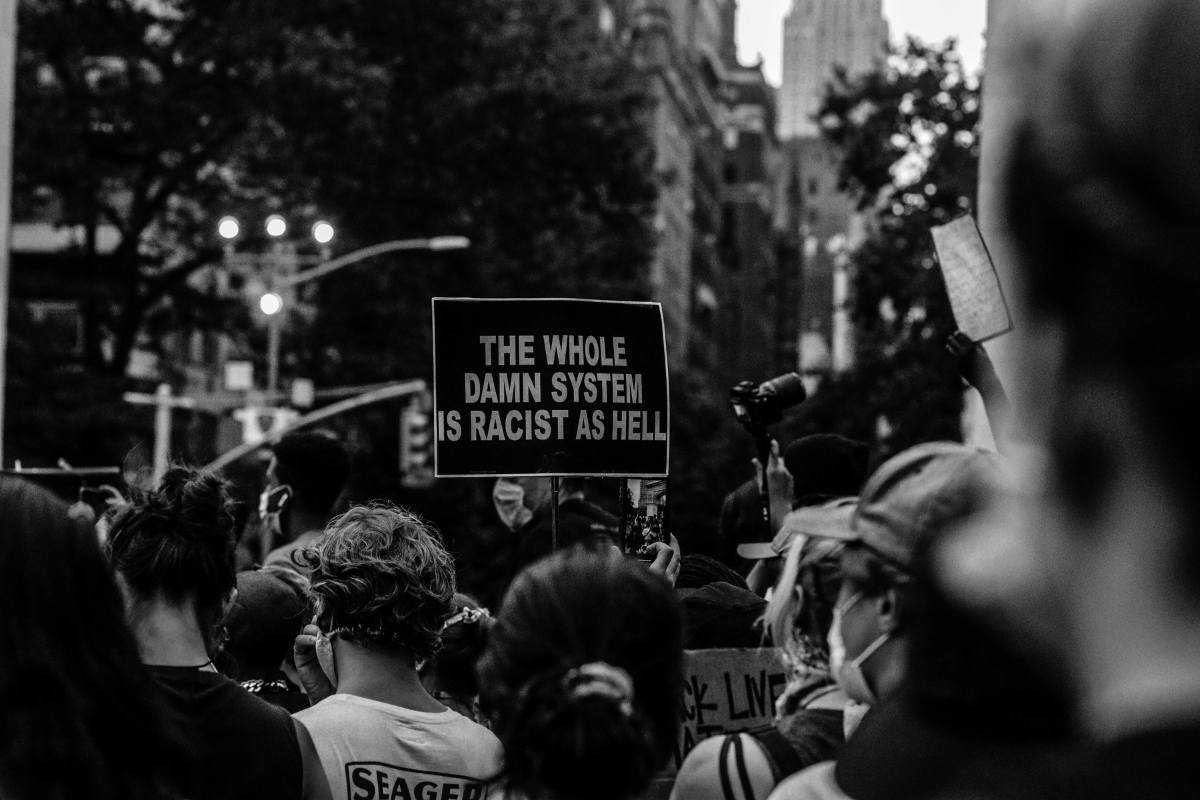

We hear constantly about the systemic racism coursing through America. Everything, we’re told, is shot through with hate. It does not matter if no white person ever has actually thought a hateful thought. The structure, or system, these innocents inhabit and profit from was designed by those who hated with abandon; the hate is baked into the edifice and walls and rooftops. It constitutes an architecture of oppression, and the persistence of that architecture amounts to an indictment of its beneficiaries. They’re fools or, more likely, willing participants who go to inordinate lengths to camouflage their complicity—Dean Armitage of Get Out declaring he would have voted for Barack Obama a third time while living on a latter-day plantation.
Of course, if a system is nefarious, it must be blown up, and the bricks and rubble must be redistributed to the politically favored, and anyone who opposes that—anyone who does not loudly and enthusiastically embrace the new dogma—must be a tool of white subjugation.
This is the not so hermetic logic of most every blue-chip multinational, tech behemoth, university, studio, streaming service, and media conglomerate, which, in the past year, have committed to even bolder and brasher equity targets meant to inoculate those institutions against charges of systemic racism.
The radicals, always livid, always demanding more, insist that all this is window dressing. A sham. It does not matter how much money retailers spend on black-owned suppliers, or what percentage of Princeton’s class of 2025 is BIPOC, or how many movies we watch starring a correctly hued Afro-Dominican. The radical does not negotiate with an eye toward arriving at some peaceful coexistence, but a weakening—a razing—of the old order.
There’s something mystifying about all this endless, unctuous yammering about “systemic racism,” and that is its unverifiability. When the radicals call something “systemic” or “structural,” what they really mean is invisible or, better yet, incapable of being experienced. They are referring to the racism that must exist by dint of our many inequities. They assume a causation they cannot assume. Yes, there is disparity between racial groups. No, we cannot declare that the opinions of dead white people caused that disparity. David Hume was skeptical of asserting that contiguity in time and space was the same thing as causality. In this case, we can’t even go so far as to assert a contiguity in time. We can simply assert a vague contiguity in space. We can say that in America—like many, if not most, places—people once believed reprehensible things. We certainly can’t experience systemic racism, not in the way that “experience” is understood by philosophers or, for that matter, judges. We can’t see or hear or taste or feel it, the way an electric current coursing through a live wire can be felt. Which means we can’t be sure it exists. All we can do is assert, with great conviction, its existence and insist that other people believe in it, too, and threaten them with censure or exile if they believe inadequately.
Alas, if one points this out, if one so much as suggests that we consider other explanations for racial disparity, one inevitably risks being charged with racism. Serious inquiry is verboten.
All of which is to say we are dispensing with the empirical, and conflating truth and belief, and migrating from the logical to the religious, from the rational to the arational. In the context of organized religion, we’re unbothered by arationality. We expect it. We bracket it. We say, This is separate from everything else. This is how we reconcile our technocratic and spiritual identities, the modern self and the self that stretches back to our mythical-primal state.
Until recently, this bracketing enabled us to be simultaneously logical and illogical. Logical in our everyday lives. Illogical while exercising our faith.
Alas, most major institutions in America right now are making important decisions about hiring, firing, investment, programming, content, syllabi, and so forth, on the basis of a religious claim—systemic racism permeates the whole of our existence—that is necessarily unverifiable. They are being illogical when we expect them to be logical.
 Samuel Kronen
The people who run these institutions, one imagines, would respond that they’re doing what the market demands of them. Their decisions, far from being illogical, are calculated and strategic. You idiot, they’d spout, we’re responding to shifting expectations. We’re acknowledging that the way we used to do things does not comport with the way we think now.
The problem is the way we think now. We are not so good at bracketing anymore. Our two selves, our modern self and our mythical-primal self, intertwine and bleed together. We like to believe that the modern self will soon obliterate the mythical-primal self, that an ever expanding reason will inevitably banish from the human experience any vestige of the old drug. That we will finally molt our ancient, religious longings.
How funny, the conceit of the modern.
Keep reading
Hiroshima: A Hinge Point for Humanity
History Uprooted

I, Victim

Claire's Weekly Letter: A Dish in the Sink
Banning the Horseless Carriage