Books
Return to ‘The Unheavenly City’
“This book will probably strike many readers as the work of an ill-tempered and mean-spirited fellow,” Banfield explained, “but facts are facts, however, unpleasant, and they have to be faced unblinkingly by anyone who really wants to improve matters in the cities.”


The late senator, statesman, sociologist, and New Yorker Daniel Patrick Moynihan once famously observed that, “The central conservative truth is that it is culture, not politics, that determines the success of a society. The central liberal truth is that politics can change a culture and save it from itself.” Moynihan balanced one truth with another, in part to show that neither side enjoyed a monopoly on wisdom. Had he offered these competing visions of politics and culture without describing one as “conservative” and the other as “liberal,” however, it would have admitted the possibility that one was more accurate than the other. And whether or not that is in fact the case matters—not merely for philosophical reasons but for political and social reasons, too.
In 1970, American political scientist Edward Banfield had explored this apparently innocuous question in a monograph entitled The Unheavenly City: The Nature and the Future of Our Urban Crisis. The book proved to be so divisive that a slightly revised version appeared just four years later entitled The Unheavenly City Revisited (the edition reviewed here), in which Banfield sought to address the complaints of his critics. Nevertheless, Banfield’s work drew great praise as well as opprobrium, and it has arguably dated better than the preferred theories of its critics. In 2008, Edward Glaeser, an urban affairs expert and professor of economics at Harvard, described it as “one of the most contentious, interesting, and insightful books ever written on urban policy.” On the 50th anniversary of its first edition, it deserves a reconsideration.
Banfield was a former New Dealer who had worked on anti-poverty projects for the Department of Agriculture during the 1930s and as an adviser to Republican presidents Nixon, Ford, and Reagan in the 1970s and ’80s. In 1958, he wrote The Moral Basis of a Backward Society, in which he examined the family-centric culture of an impoverished town in Southern Italy. Banfield subsequently became a renowned dissident scholar at Harvard, where he developed a reputation as a brilliant thinker and sharp critic of liberal shibboleths. The principle source of controversy provoked by The Unheavenly City, he wrote in …Revisited, “is that my main points are deeply subversive of opinions and beliefs to which many highly intelligent and well-informed people are wedded, and without which the world would perhaps be unendurable for them.”
Written at the height of New York’s decline under the mayoralty of liberal reformer and Republican-cum-Democrat John Lindsay, the book’s preface warned that what followed would be provocative: “This book will probably strike many readers as the work of an ill-tempered and mean-spirited fellow,” Banfield explained, “but facts are facts, however, unpleasant, and they have to be faced unblinkingly by anyone who really wants to improve matters in the cities.” He then set forth an indictment of the New Deal/Great Society social services superstructure and a counterintuitive case that conditions had greatly improved in American cities despite the narrative that then prevailed of “urban crisis.”
 David Adler
Nomenclature, Banfield argued, is important, as is perspective and awareness of limitations. The problems comprising urban crisis—congestion, sprawl, commuting, suburban flight, and the decline of commercial activity—were really about “comfort, convenience, amenity, and business advantage, all of which are important.” But, he went on, “they do not affect either the essential welfare of individuals or what may be called the good health of society.” What is injurious to individual wellbeing and societal health is “crime, poverty, ignorance, and racial (and other) injustices.” These pathologies, though mitigated (some more than others), persist because, as a practical matter, there are no solutions to them—certainly none that a constitutional republic would countenance. In this view, Banfield found himself in the company of Adam Smith, Edmund Burke, the Federalists, and Friedrich Hayek. All these thinkers shared what Banfield’s former student Thomas Sowell would later call the “constrained vision” of human affairs, that “sees the evils of the world as deriving from the limited and unhappy choices available, given the inherent moral and intellectual limitations of human beings.”
David Peterson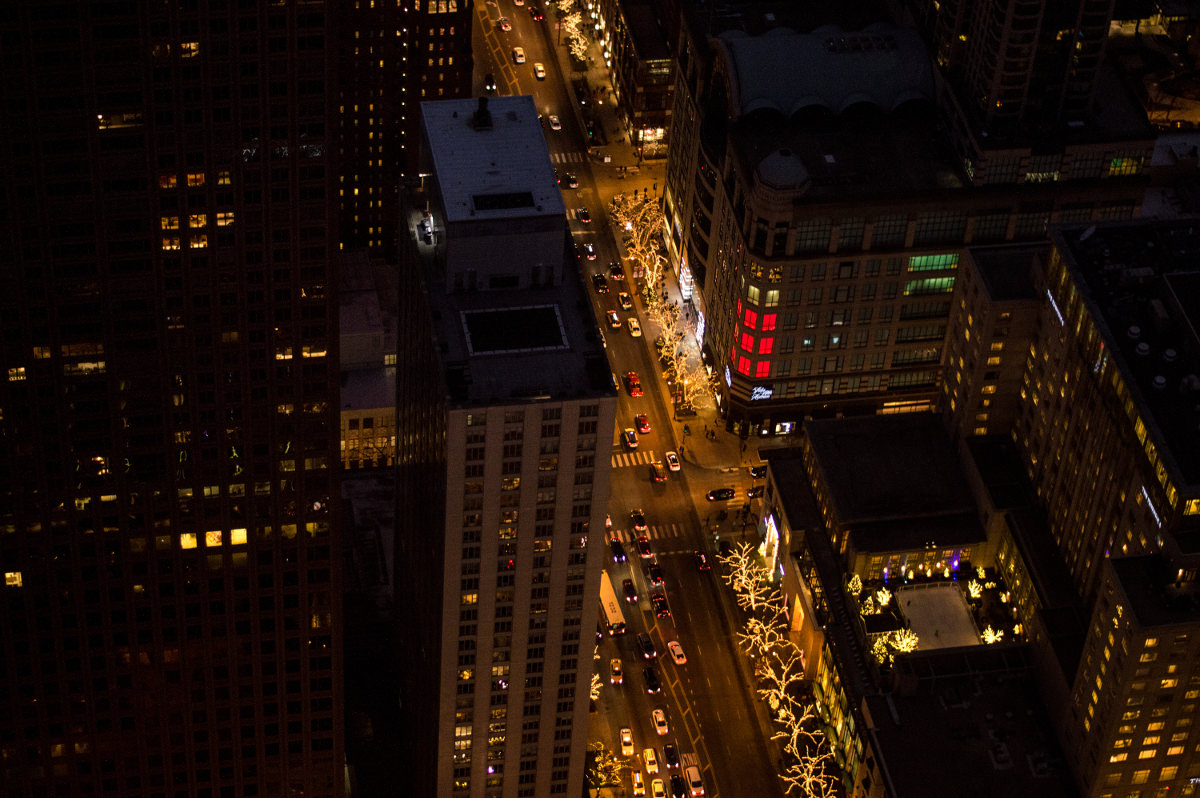
Banfield’s great public service was the examination of these limitations in the cultural context of the American class system. Traditionally (and presently), social class is defined by similarities in position, status, education, income, habits, and tastes. American sociologist Dennis Gilbert observed that those who concluded that “there is as much art as science in the study of social stratification” were “probably right” because “broader statements about the class system run up against inherent inconsistencies of social reality.” Characteristically, Banfield took an entirely different approach to the topic. To analyze “social problems from a policy standpoint,” he wrote, “the most promising principle seems to be that of psychological orientation toward the future.” As political scientist James Q. Wilson later explained in the introduction to Banfield’s book Political Influence: “The longer a person’s time-horizon, the greater his willingness to defer present pleasures for future benefits, the more convinced he is that his own behavior will determine what the future will bring, and so the higher his (or her) class position.”
Banfield divided American society into the upper class, the middle class, the working class, and the lower class. The upper class individual occupies the farthest end of the future-oriented spectrum; he conducts himself and his affairs with an eye toward his heirs and family name. He is reared in a milieu that “teaches the individual that he would be cheating himself if he allowed gratification of his impulses (for example, for sex or violence) to interfere with his provision for the future.” Less future-oriented, the middle class man plans to get ahead and does what is necessary to improve his lot in life and to ensure his children achieve more than he did. Not “heavily” invested in the future, the working class individual is generally unconcerned with self-improvement. Rather, he focuses his attention on job security, his immediate family, and inculcating his children with the ethos of manual labor: “neatness and cleanliness, honesty, obedience, and respect for external authority.”
Concerned primarily with the crime, injustice, and poverty that plagued American cities at the end of the 1960s, Banfield devoted considerable time to analyzing the lower class individual “at the present-oriented end of the scale” who “lives from moment to moment”:
If he has any awareness of a future, it is of something fixed, fated, beyond his control: things happen to him, he does not make them happen. Impulse governs his behavior, either because he cannot discipline himself to sacrifice a present for future satisfaction or because he has no sense of the future.
Moral agency is alien to him. He takes “no interest in his work,” if he works at all. He suffers from “a feeble, attenuated sense of self.” His relationships are devoid of trust, “aggressive yet dependent.” He often does not marry, resents authority, and nurses grievance. Lower class men frequently abandon any sense of responsibility for their offspring, leaving the mother (or her mother) to head the household. And this poverty of values is inter-generationally transmitted: “once children have passed babyhood they are likely to be neglected or abused, and at best they never know what to expect.” Deprived of a stable household and responsible father, the lower class teenager will likely “join a corner gang of other such boys and to learn from the gang the ‘tough’ style of the lower-class man.” Ultimately, these deleterious influences create a person predisposed to the degeneracies of the slum: “a game, a fight, a tense confrontation with the police; feeling that something exciting is about to happen is highly congenial to people who live for the present and for whom the present is often empty.”
From this analysis, Banfield concluded that the dysfunctional elements of city life are not the fault of external forces that demand amelioration by federal or local authorities, such as misallocated economic and material resources, political disenfranchisement, or race-based discrimination. Although he acknowledged the obvious existence of racism, he found that “overemphasis on prejudice” encourages people to define all “troubles in racial terms,” which leads to “the adoption of futile and even destructive policies and to the non-adaptation of others that might do great good.” To the extent there was an American urban crisis in 1970, Banfield perceived it to be a crisis of personal responsibility.
Today, Banfield’s description of the lower class—not to be confused with poor people but, rather, poor people who behave in a particular manner—would more properly be characterized as the underclass. Swedish economist Gunnar Myrdal had already introduced this term in his 1963 book Challenge to Affluence, and it refers to a cohort that political and social scientist Charles Murray has studied extensively. David Green, a British think tanker who wrote the foreword to an essay Murray wrote about the British underclass, provided a succinct working definition of the present-oriented class: “Those distinguished by their undesirable behavior, including drug-taking, crime, illegitimacy, failure to hold down a job, truancy from school, and casual violence.”
Quillette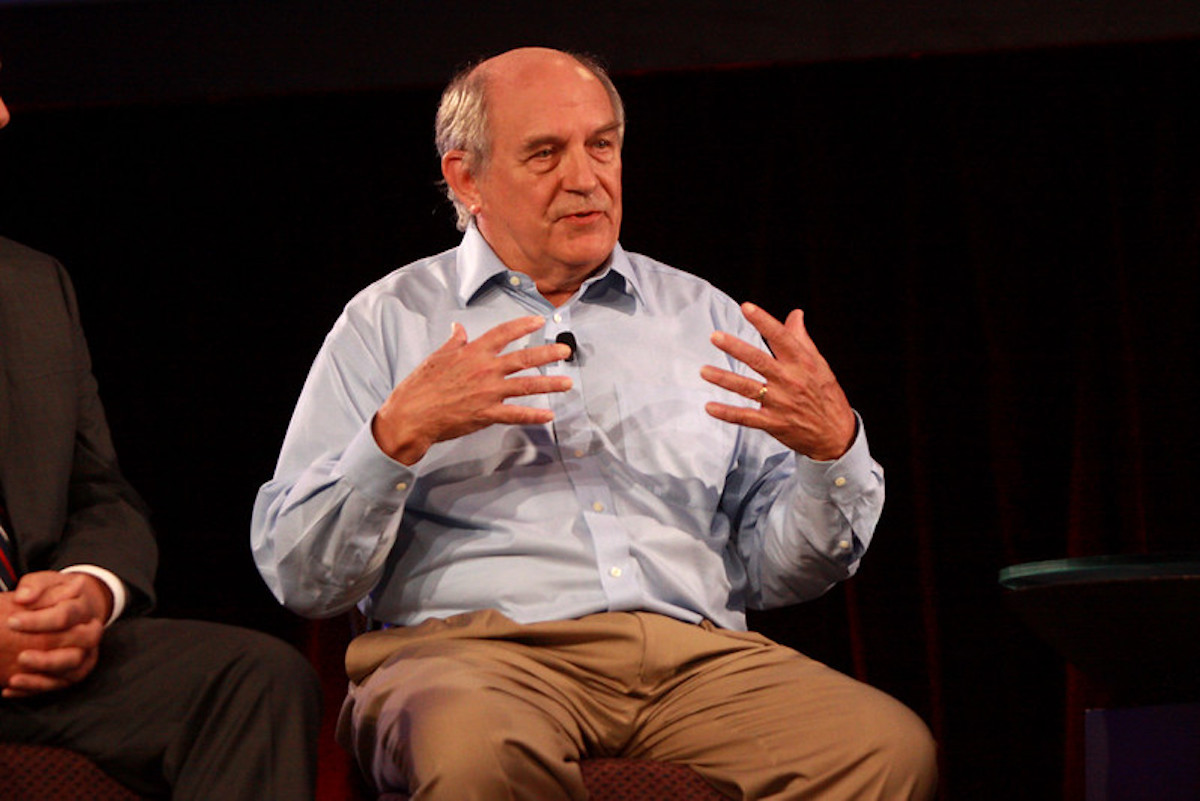
Part of the controversy that engulfed the initial publication of The Unheavenly City was the charge that Banfield’s definition of the lower class was racist. In the …Revisited edition, Banfield took pains to correct ambiguities and re-emphasize that his focus was on orientation and behavior and that those intangibles respect no racial identity. In a thought experiment, Banfield asked the reader to consider what would happen if black Americans became white overnight (“New Whites”):
[I]t must be said that many New Whites would suffer indignities and humiliations not so different from those to which the Negro is now subject. The treatment that the lower class white receives is in many ways like that of the victim of racial prejudice—and a larger proportion of New Whites would be lower class. In one respect their new (class) status might be harder to bear than their former (racial) one; for the victim of race prejudice can take some comfort, however small, in the knowledge that he is being treated unjustly.
Much of what appears (especially to Negroes) as race prejudice is really class prejudice or, at any rate, class antipathy. Similarly, much of what appears (especially to whites) as “Negro” behavior is really lower class behavior. The lower class is relatively large among Negroes; it appears even larger than it is to those whites who fail to distinguish a Negro who exhibits outward signs—lack of skill, low income, slum housing, and so on—which in a white would mark him as lower class, from one whose culture is working, middle, or even upper class but whose opportunities have been limited by discrimination and whose income is low.
Writing in the late-’60s and early ’70s, Banfield focused on contemporary major cities and the underclass contingencies within them. He examined them as he found them and his analysis was unambiguously cultural, not racial. Indeed, Banfield surveyed lower class culture in a variety of ethnic groups, including 19th century Americans of English ancestry who “lived from hand to mouth, worked only when they had to, drank and fought prodigiously, felt no tie to the community, and left their women and children behind to fend for themselves or to be looked after at public expense once they have moved on.” Unassimilated Catholic immigrants from the “peasant cultures” of Europe, we learn, normalized “present-oriented” behavior, and in South Boston, in 1832, “‘to see anything like indigence or idleness,’ a visitor to New England from abroad wrote a few years later, ‘we must penetrate into the purlieus in the seaport towns, occupied by the Irish laboring population.’”
Banfield nevertheless anticipated that “some readers may suspect that when the author uses the words ‘lower class’ what he has in the back of his mind is ‘Negro.’” A dissident intellectual accustomed to accusation, Banfield responded matter-of-factly that there is:
…no arguing with a reader who is determined to mistake one’s meaning. All the author can do is repeat once more that there are lower-class people, as defined here, in all ethnic groups, including the Anglo-Saxon white Protestant one, and to point to the obvious fact that most Negroes are not improvident, do not live in squalor and violence, and therefore are plainly not lower class.
Keep reading
Equal Pay, Unequal Work

The Genetics of Crime and Punishment
Jerry Kaplan on AI Doomers