History
Yukio Mishima: Japan’s Cultural Martyr
Mishima’s reputation has grown in the new century and today there is more serious interest in his work than ever before.


The enthusiasm with which the people of Japan recently celebrated the enthronement of their new emperor, Naruhito, indicates the extent to which Japan has regained confidence in its imperial institution. Not coincidentally, in recent years Japan has also seen a resurgence in the reputation of Yukio Mishima (1925–1970), the writer and activist who most forcefully asserted the cultural importance of Japan’s emperor system at a time when it was considered inflammatory to do so. Though he remains controversial, not least for his notorious samurai-style suicide, Mishima is finally receiving the serious critical consideration he deserves.
Mishima was a formidable presence in Japan’s cultural scene in the years following the nation’s catastrophic defeat in World War II. Immensely prolific, he produced hundreds of works in almost every genre. His novels Confessions of a Mask (1948) and The Temple of the Golden Pavilion (1956) were among the first works of modern Japanese fiction to win an international readership. As a playwright, Mishima achieved success with his modern adaptations of plays from the classical Noh repertoire and his witty comedies for the Kabuki theater. He also worked as a filmmaker and actor.
In the early part of his career Mishima presented himself as an aesthete concerned only with beauty, haughtily indifferent to the world beyond art. After 1960, however, he turned his attention to Japan’s growing sociopolitical malaise. Though the extraordinary success of the nation’s postwar economic recovery was already evident, many Japanese were troubled by a sense of cultural confusion. Japan’s postwar constitution, written by American military lawyers, had renounced forever Japan’s rights to maintain armed forces and wage war. In the land of the samurai it was now unconstitutional to be a warrior. Japan’s military had accordingly been restyled as a “self-defense force” and the status of Japan’s security treaty with the United States had become a fiercely contentious issue.
Meanwhile, Japanese intellectuals were debating the extent to which “Westernization” was undermining Japan’s cultural integrity and traditional ways. On Japan’s university campuses there were prolonged and sometimes violent protests by students complaining of a lack of meaning in the new mass society. On top of all this, communism had gained believers in Japan, and the most radical spoke of leading a revolution and dismantling the emperor system.
Mishima threw himself into the midst of these issues and promoted a staunchly reactionary agenda. He scoffed at the pacifism of the postwar constitution; in defiance he learned martial arts and underwent military training. He visited the besieged university campuses (a bold move under the circumstances) and tried to persuade the students of the importance of their cultural inheritance. Against the “selfish individualism” of Western culture, Mishima hailed the “samurai spirit” of heroic self-sacrifice and praised the “tragic beauty” of the kamikaze squadrons. In his short film Patriotism (1966), Mishima himself played the role of an army officer who commits suicide rather than disobey an imperial command. To many observers it appeared as if Mishima was willfully taunting Japan by lauding aspects of its past that it was now eager to forget. The flippant aesthete had somehow become a dedicated subversive.
With his often outlandish antics, Mishima succeeded in alienating himself from both sides of the political spectrum. Those on the Left objected to what they saw as his crass glorification of Japanese militarism and emperor-centered fascism. Yet, while he asserted the importance of the emperor system as the supreme symbol of Japanese cultural continuity, Mishima was daringly critical of Hirohito, the wartime and postwar emperor, whom Mishima blamed for Japan’s slide into fascist totalitarianism and for “allowing Nazi-inspired villains among our military leaders to begin an unstoppable march to war.” On more than one occasion, Mishima needed police protection after receiving death threats from Japanese far-right groups, who regarded any criticism of the emperor as blasphemy.
 George MacDonell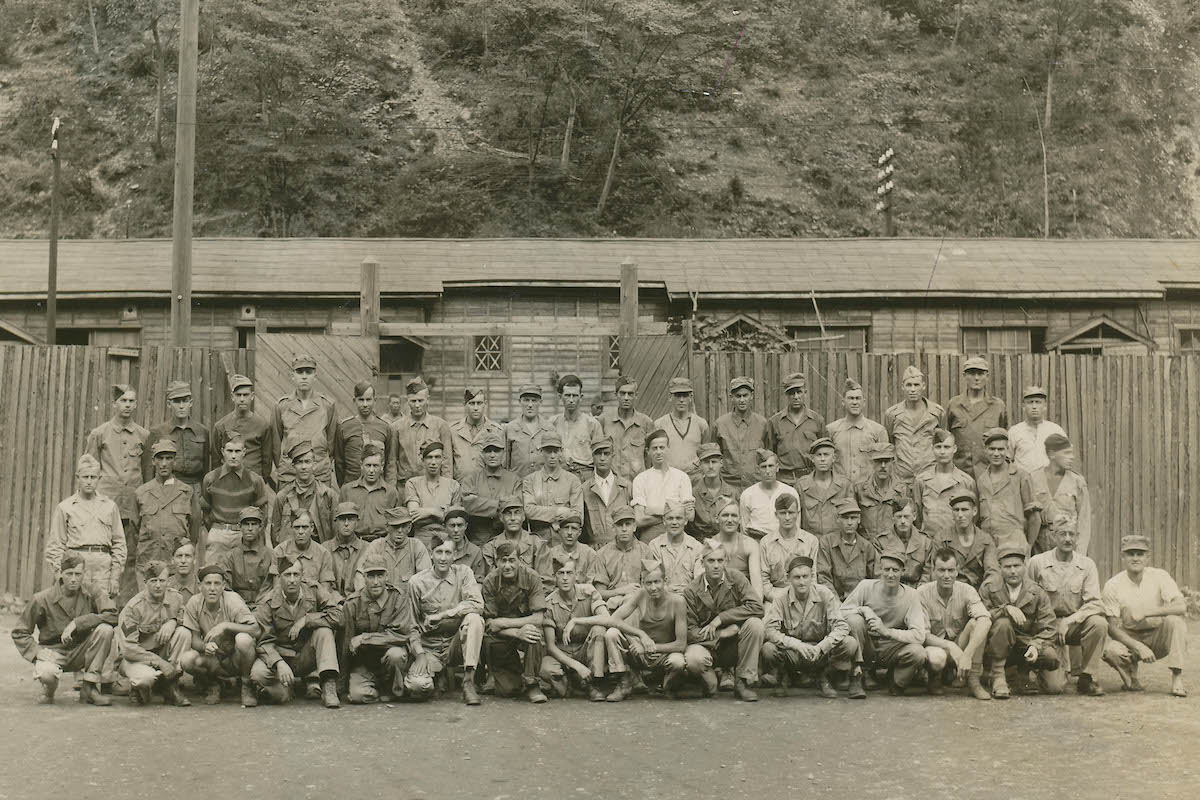
In 1968, when the “global revolutions” were at their peak and riots were breaking out in Japan, Mishima founded a civilian defense group he called the Shield Society. He dressed his men in paramilitary uniforms (which he had designed) and paraded them in front of reporters. The purpose of the group, he explained, was to assist government security forces in the event of a revolution by Japanese communists. Mishima had hoped to die fighting in an epic battle for the soul of Japan. When the revolution failed to occur, he revised his plan for martyrdom.
On the afternoon of November 25, 1970, Mishima and four of his men caused a disturbance at a Self-Defense Force base in central Tokyo. On a pretext of paying a social visit to the base commander, they took him hostage and barricaded themselves inside his office. Mishima used a sixteenth-century samurai sword to fight off rescue attempts by SDF officers and staff. After issuing a demand that all personnel at the base must assemble in front of the main building, Mishima spoke to them from the roof balcony for several minutes.
In his speech Mishima rebuked the SDF for their passive acceptance of a constitution that “denies [their] own existence” and challenged them to join him in trying to overturn it. “Where has the spirit of the samurai gone?” he shouted at them. Mishima’s other complaints were rather less specific. Japan had lost sight of its fundamental principles. The people had forsaken their history and traditions. The emperor was not being properly revered. The whole nation had sold its soul for money and materialism. All that lay ahead was spiritual emptiness. Receiving only boos and jeers in response, Mishima returned inside the building and committed suicide in the old samurai manner by cutting open his stomach and allowing himself to be decapitated by an assistant. Another of his men, the captain of the Shield Society, then killed himself in the same manner.
Mishima’s “failed coup,” as it was initially characterized, generated headlines around the world. Japan’s embarrassed leaders felt obliged to offer reassurances that Japan was not regressing toward the bellicose ultranationalism of its past. Mishima had surely gone insane, they said, and his bizarre stunt represented nothing that was true about Japan or the Japanese people. After a burst of nervous analysis this was also the consensus among Japan’s intelligentsia. For many years thereafter Mishima’s name was virtually taboo in his native country.
Keep reading
How to Suppress Men’s Writing
Back to the Dark Ages

Prison or Peer Review

France’s Imaginary Austerity
The Limits of Perfectionism