China
Why China is Hiding the Horrors of Its Past
While the Chinese government continues to transform Xinjiang through its cultural genocide program aimed at eliminating the distinct identity of the Uyghur population, it is also putting a high priority on controlling the history of the region and its people.

While the Chinese government continues to transform Xinjiang through its cultural genocide program aimed at eliminating the distinct identity of the Uyghur population, it is also putting a high priority on controlling the history of the region and its people. In October 2018, the state-run newspaper People’s Daily published an article outlining the official stance towards Xinjiang’s history, saying, “A correct understanding of the history of Xinjiang is not about examination of specific historical details. It is about a deep understanding of the Party Central Committee’s basic understanding, viewpoints and conclusions on issues related to Xinjiang’s history, culture, religion and so on, and enhancing our confidence in Socialism with Chinese Characteristics.”
The statement illustrates how the Chinese Communist Party (CCP) generally regards the purpose of history. For the CCP, the purpose of historical study is not to understand past mistakes to ensure they are not repeated, an extremely important goal for a nation with the Cultural Revolution and the Great Leap Forward in the living memory of much of its population. The purpose of history is to serve the political and ideological goals of the government.
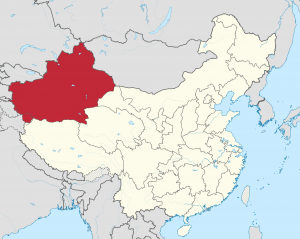
Much of the actual history of Xinjiang runs counter to those goals. The province of Xinjiang was founded when General Zuo Zongtang (in fact, the namesake of “General Tso’s Chicken”), re-conquered the area in 1877 under the order of the Qing Government, setting the foundation for the establishment of Xinjiang Province in 1884. The Qing conquest of this region is associated with widespread violence against the local Uyghur and Hui populations as well Uyghur violence against ethnic Chinese. Such historical facts underscore the overwhelming disunity of the region, thereby undermining the CCP’s current narrative about Xinjiang.
While the CCP has, for decades, treated historical knowledge both as a potential threat, as well as a tool for generating an extreme breed of nationalism, it has grown more hostile towards a wide range of historical facts under President Xi Jinping. In 2018, the People’s Daily reported that Xi declared, “We must clearly stand against the wrong view of history, establish a correct view of history with rational discernment, and ensure that Socialism with Chinese Characteristics in the New Era always follows the correct course.”
Efforts under Xi to promote the “correct view of history” are ambitious. For example, his government established well-funded programs to craft and promote the official history of the Qing, China’s last imperial dynasty. This era is particularly important because, similar to the present, it oversaw a great deal of conflict with the local populations of Xinjiang and Tibet. The Qing era is also important because it witnessed China’s “humiliation” at the hands of Western powers, the memory of which is used by the CCP as an abundant source of nationalism. This history of “humiliation” helps bolster the contemporary wave of propaganda about the “great rejuvenation of the Chinese nation” aimed at legitimizing CCP rule.
What is arguably most sensitive to the Chinese Communist Party are discussions of any historical events in which the CCP appears to be at fault, whether it be violence in Xinjiang or the Tiananmen Square Massacre. In the current political environment, these events call into question the legitimacy of the CCP, and therefore, information about them is increasingly restricted. But it wasn’t always this way. In the 1980s, public discussions and writings (known as “scar literature”) of the horrors of Mao’s rule were largely tolerated by the government. This was also a period when such history appeared to be less relevant, and therefore, less threatening to the Party. At that time, the country was reforming its political institutions, liberalizing its economy, and some high-ranking CCP officials were even considering full democratization.
In contrast, the Chinese government today has recently returned to personalistic rule, entrenched the state deep in the economy, and moved the country toward totalitarianism. Under such conditions, the CCP’s historical mistakes, particularly those of Mao, seem much more relevant and are, therefore, much more threatening to the CCP. The expression “those who don’t know history are doomed to repeat it” speaks volumes about why the CCP is so eager to control and manipulate its history: it may currently be repeating what are widely regarded as some of the Party’s worst mistakes of the 20th century.
 Aaron Sarin
One such highly-relevant historical mistake the government is increasingly eager to control is the Cultural Revolution. Even within China, there is virtually unanimous agreement that the movement was a major failure of CCP rule. While this period has always been sensitive, the Party was, until recently, relatively forthcoming about this. However, it is now moving to further restrict knowledge and discussion of it.
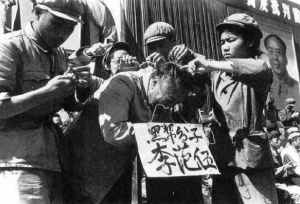
Until 2019, national middle-school history textbooks had an entire chapter on the Cultural Revolution, showing the movement in a distinctly negative light. Of Mao’s errors, it said, “In the 1960s, Mao Zedong mistakenly believed that there were revisionists within the Central Party, and the party and the country faced threats of capitalist restoration.” In 2019, the Ministry of Education released a new version of the textbook in which the Cultural Revolution material was significantly shortened and combined with other periods into a single chapter called “Arduous Exploration and Development Achievements.” It not only took out the word “mistakenly” from the above quote, but also downplays the erroneous and tragic nature of the Cultural Revolution by saying “Nothing happens smoothly in the world, and history is always advancing in ups and downs.”
The government has also moved to further restrict discussion of the Cultural Revolution and other sensitive history throughout society. In 2013, shortly after Xi came to power, the Central Office of the CCP released a “Bulletin on the Current Situation in the Ideological Field” for local officials across the country, stating that “historical mistakes of the CCP” should not be discussed. Continuing this trend, in 2018, a document was leaked online from the National Radio and Television Administration that required TV and internet series to not only avoid discussing history, but avoid drawing any parallels with real historical events or time periods. The document used Game of Thrones as an example of compliance, as the series contains no historical elements or parallels.
The Chinese Communist Party under Xi Jinping has good reason to reduce awareness of the excesses of the Mao period, including the Cultural Revolution: many of President Xi Jinping’s policies and campaigns bear significant resemblance to this period. In 2018, Xi Jinping’s government launched a massive, nationwide campaign called “Eliminate the Dark and Evil Forces.” Both this campaign and the Cultural Revolution were attempts to consolidate personal power over the political system and society. Though billed in China’s English-language media as merely a campaign against organized crime, it is in fact much more far-reaching and ideological in its aims. Similar to the Cultural Revolution, it aims to purge society of “impure” elements.
The targets of this campaign vary by jurisdiction. In multiple locations it has targeted and demonized doctors, as did the Cultural Revolution. In Hunan province, it targeted HIV patients, the mentally ill, and parents who have lost their child as “Dark and Evil Forces.” It has also gone after corrupt party officials with connections to local mafia, making the campaign a convenient excuse to take out political enemies within the party, a liberty that Mao made extensive use of in the 1960s.
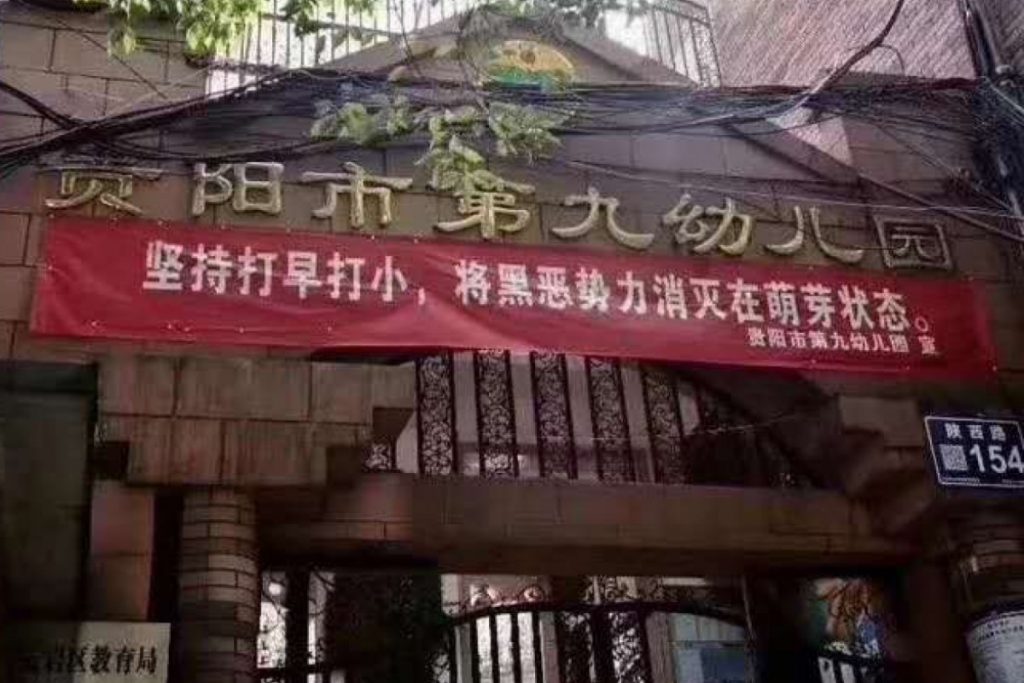
Similar to the Mao-era, the campaign ramps up propaganda dissemination, with local governments encouraged to install public propaganda about the “Dark and Evil Forces.” Frequent visitors to China will notice that, since around 2015, ideological propaganda banners have become omnipresent. Earlier this year, Chinese netizens reacted with fury to pictures of a massive red banner above the entrance to a Kindergarten saying, “Insist on starting early to nip the evil forces in the bud.”
Keep reading
Australia's Coming Censorship Machine

Anatomy of a Book Promotion

They Walked in Line

Anti-Catholic Social Panics, Then and Now
A Dishonest (and Dangerous) Nobel Laureate