Social Media
PewDiePie's Battle for the Soul of the Internet
A small group of journalists have falsely smeared the world's top YouTuber as a Nazi sympathizer.
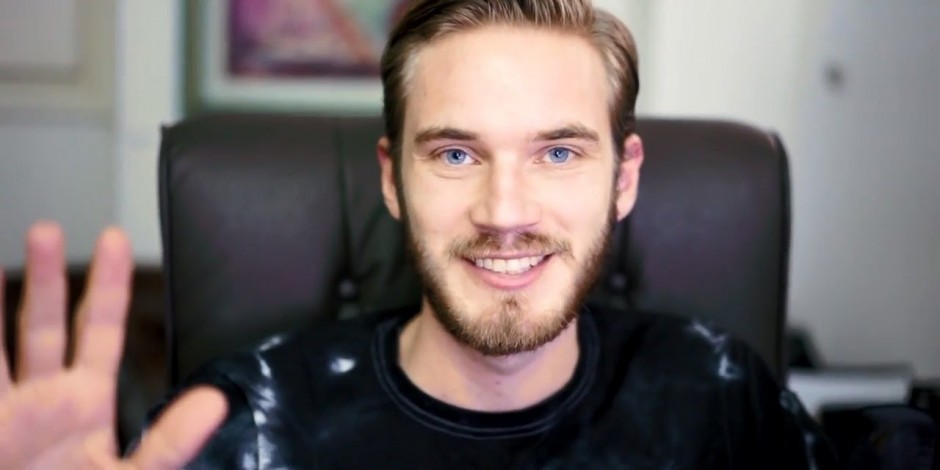

This is a story about the question of who holds power over what we can say, hear, watch and read on the internet—an increasingly urgent issue that many ordinary people have cause to think about every day. And yet the protagonist in this story, the man whose fate symbolizes the future of social media and the corporate web that controls it, is unknown to the vast majority of educated readers.
That man is PewDiePie, a Swedish comedian whose real name is Felix Kjellberg. With 77-million subscribers, he has the most popular YouTube channel in the world. Within YouTube’s video subculture, he is regarded as a true celebrity—a sort of Joe Rogan, Kanye West and Ben Shapiro all rolled into one. As of this writing, PewDiePie is closing in on 20-billion total views—roughly equivalent to three views for every human on the planet.
Yet describing the actual content that Kjellberg delivers to his viewers can be challenging. When he dropped out of school and began seriously promoting his channel in 2010, his feed was largely devoted to video games. Kjellberg, meanwhile, worked day jobs, including a gig at a hot dog stand. But as his fame grew, Kjellberg began branching off into other sub-cultural niches, often in a way that built layers of satire and self-referential humour upon one another in an Inception-type manner: memes within memes within memes. Over the last decade, he’s spent tens of thousands of hours developing this complex, self-referential web of eccentric material into a strangely coherent media identity.
But while Kjellberg’s brand is unique, the story of how he’s been mobbed is distressingly familiar: Thanks to a small group of journalists who’ve distorted his record, he’s been falsely smeared as a Nazi sympathizer. The main mob cheerleader was Vox Media, which recently published a hit piece accusing PewDiePie of having ties to white supremacists.
The lawyer-approved title was “YouTube’s most popular user amplified anti-Semitic rhetoric. Again.” Which sounds ominous, until you find out that the story centres entirely on Kjellberg accidentally throwing a fringe site into a laundry list of other outlets he was seeking to signal-boost. As with everything connected to YouTube subculture, the story is complicated. And it took PewDiePie almost 20 minutes to meticulously debunk the slander, so I’m not going to try to do it inside of this paragraph. If you’re interested, you can watch the video.
This raises an obvious question: If PewDiePie is in a position to immediately debunk the attacks against him, broadcasting his detailed case to a mass audience in such a way that the whole world can listen and decide for themselves, what was the point of Vox’s attack? Could it be that Vox simply doesn’t really understand the power wielded by a true YouTube celebrity?
In his rebuttal video, PewDiePie muses that Vox’s real target was YouTube itself—and possibly even its parent company, Google—since they are (along with Facebook) the only consistent success stories in the brutally competitive market for online advertising. These are broad claims that make more sense when you consider the back story. In recent months, the cultural satire on Kjellberg’s channel has been increasingly self-referential, and mostly focused on T-Series, an Indian media conglomerate that has been approaching PewDiePie’s subscriber count. With T-Series on track to overtake PewDiePie in October, a herculean (and often hilarious) effort from PewDiePie’s fanbase allowed Kjellberg to maintain a narrow lead.
While a battle between two YouTube accounts may not sound dramatic, there is little doubt that the PewDiePie/T-Series feud was the most important thing to happen on YouTube in 2018. It was a case study in new media acting as a force equalizer between David and Goliath. T-Series is an entertainment conglomerate with an enormous production budget and a large workforce that’s able to push out a half-dozen music videos per day, all aimed at an audience migrating from more traditional platforms to online video. PewDiePie, on the other hand, is a single guy cracking jokes in his bedroom.
There’s a sense of solidarity among YouTube’s Davids: The late surge that kept PewDiePie ahead of T-Series was fuelled in large part by other YouTube “creators”—the one- and two-person shops that create original content solely for the YouTube platform. It was in his attempt to reciprocate their kindness that PewDiePie recommended a rapidly recited list of 28 little-known channels to his subscribers, one of which was later discovered, by Vox, to have old Nazi-sympathetic content in its archives. Which means PewDiePie is a Nazi, and you are probably a Nazi, too—because that’s how the Internet now works.
At around the same time, YouTube released its “Rewind” video for 2018—an annual event which, since its debut in 2010, has presented a light-hearted mash-up of the platform’s most memorable moments. And yet, in this year’s installment, the curators failed to include any mention of PewDiePie, the subculture’s most influential protagonist. Grass-roots members of the YouTube community responded with scathing fury. One comment on the video, liked over 100,000 times, described Rewind 2018 as “the annual corporate circle jerk celebrating another year of the least creator-friendly site on the entire internet.” With 13-million thumbs down, the video is the most disliked in YouTube history. Even The New York Times felt compelled to cover the story.
The official YouTube response, courtesy of spokeswoman Andrea Faville, was that “honest feedback can suck, but we are listening and we appreciate how much people care. Trying to capture the magic of YouTube in one single video is like trying to capture lightning in a bottle. We also learned that creating content can be really hard and this underscores our respect and admiration for YouTube creators doing it every day.” But YouTube wasn’t trying to “capture lightning in a bottle.” The real goal seemed to be avoiding anyone deemed controversial—including not only PewDiePie, but also U.S. actor Logan Paul (who got into trouble a year ago, after uploading footage of a recently deceased corpse in Japan) and sketch comedian Shane Dawson, in order to protect its appeal to mainstream advertisers.
This might seem to give weight to Kjellberg’s vaguely argued notion that Vox was looking for a pretext to attack YouTube over its success in Internet advertising. But the line of attack gets muddled when we consider that YouTube seemed to want to avoid the “controversial” PewDiePie precisely because of the backlash promulgated by the likes of Vox. Which is to say: For different reasons—clicks versus ads—Vox and YouTube have made common cause in trying to diminish the influence of PewDiePie and other off-brand YouTube celebrities. Weirdly, Vox may not be alone in failing to understand YouTube: YouTube itself doesn’t seem to fully understand YouTube either.
Like countless other high-profile creators, PewDiePie repeatedly has slammed YouTube for opacity in its policies on monetization, copyright and content restrictions. He also has called out YouTube—a Google subsidiary since 2006—for bowing to corporate whims at the expense of the creators and users who made the platform popular in the first place. As Jordan Peterson—a very different kind of YouTube sensation—would put it, the struggle is archetypal: PewDiePie is what YouTube was supposed to be. T-Series is what it has actually become, with YouTube’s active encouragement.
 Quillette
And it is not just YouTube. As Quillette readers know, something similar is going on with Patreon, Google, Facebook, Twitter and Amazon. Defying its foundational architecture, the Internet is no longer decentralized. A cartel of politically aligned capitalists controls access not just to cyberspace in the abstract, but, arguably, the very means of online business functionality. This is why PewDiePie has become a lightning rod: He has managed to buck this trend by building up a massive following that (for now) allows him to defy corporate control.
The nature of PewDiePie’s pushback isn’t ideological per se. Indeed, he barely touches on mainstream politics in his videos. Rather, he’s a cultural satirist, in the vein of South Park, who will mock anything and everything. At major tech and media companies, promotion of progressive principles has become a matter of humourless, ironclad dogma. On Kjellberg’s channel, by contrast, a video called How to: RESPECT WOMEN! is just another opportunity for silly mockery.
Keep reading
Canada’s Unmarked-Graves Social Panic (2021–26): A Primer for Foreign Scholars

Other People's Children
Lesbian Fragility, Then and Now

Trauma and Terror
An Open Letter to Scott Alexander
From Atmosphere to Empire