Education
Negotiating Standpoints Outside the University Classroom
If universities made this negotiation route available to students as a matter of policy, campus activists won’t have to wave their signs and tread on the grass as their default action.


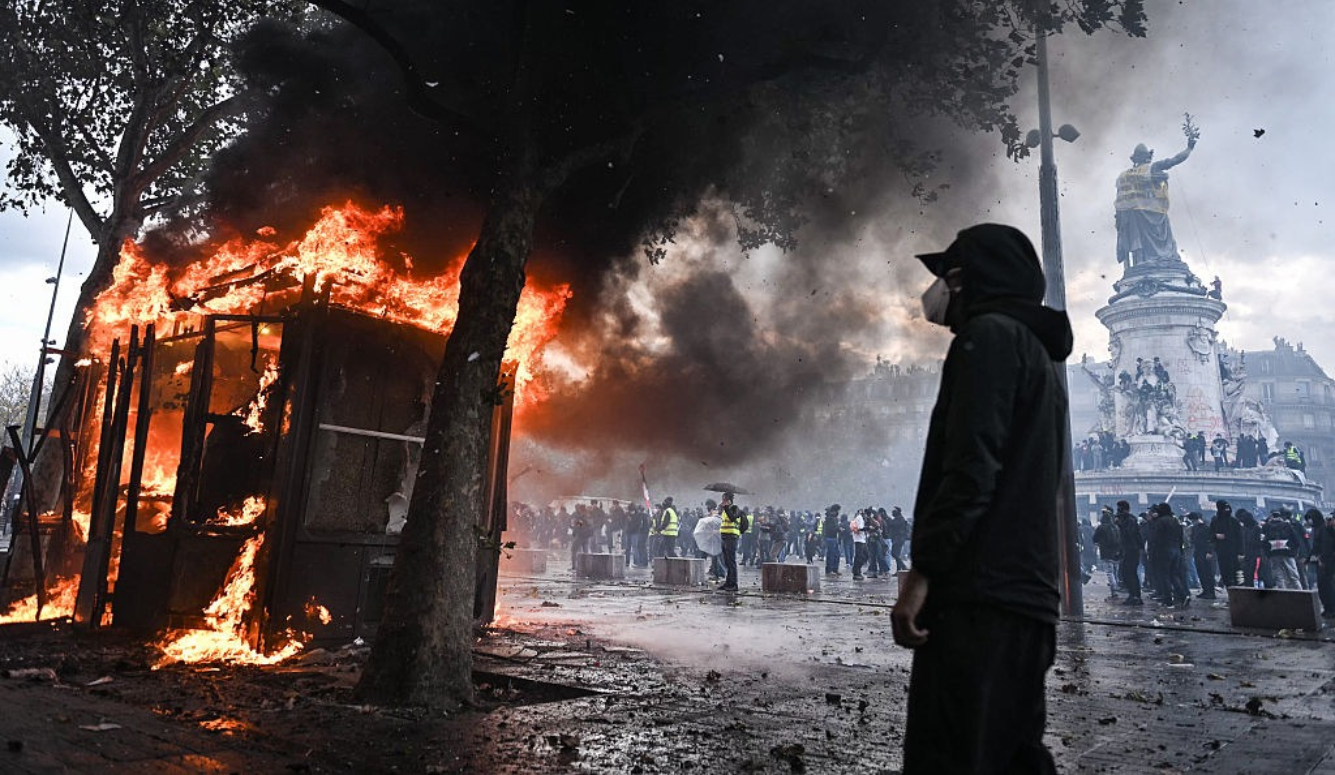
When a protest on a college campus occurs over an issue, an explosion of articles appear, arguing why one position is right and the other is wrong. Tensions rise when no semblance of agreement is reached, and a second wave of essays appear, which take the form of what Michael Sandel calls a “shouting match.” Each side screams at one another instead of engaging with each other. These recriminations shut down any chance of reasonable conversation. How do you react when someone calls you an idiot?
In a small hookah lounge in the East Village in New York, I regularly meet with a close friend to discuss all things political and philosophical. Recently, as we sat blowing smoke rings together we found ourselves digging into some of the political correctness controversies arising on college campuses — things like sexual harassment in academia, trigger warnings, and microaggression policing.
The two of us had taken a philosophy course together in undergrad, and so naturally we examined these topics through a philosophical lens. We went back and forth debating the value of trigger warnings, and whether a policy of policing microaggressions could be a good thing. We disagreed strongly. I held the view that trigger warnings and microaggression policing should (at least) not be required as a matter of policy, and he argued the opposite.
After about three hours we hit an insurmountable wall. Both of us had exhausted what seemed like all possible arguments for and against our positions, and still remained unconvinced by one another. Worse still, we left that day with a bitter taste in our mouths — why couldn’t he just see how my arguments clearly had more force? The smoke-filled air must have clouded not only his vision, but his judgment as well.
This discussion I had with my friend, and its effect on our attitude toward one another, is a small but accurate representation of what happens in political correctness discourse in the wider public sphere. This state of discourse, which revolves around the question of who is right, makes it easy to overlook the fact that these college debates and protests continue to occur, and universities still face the difficult decision of deciding what to do when two groups persistently disagree.
I suspect that the reason we discuss who is right more often than the question of what the universities should do when two parties disagree is because we think that our answer to the first question is simply the answer to the latter. The universities, with protesters filling their lawns, should simply read the arguments, recognize who is clearly correct, and draft their policies (or not) accordingly.
But it simply is never clearly correct who is right. After all, these debates are frequently about moral disagreements, and if you have ever sat in on a graduate course in applied ethics, or watched professional philosophers debate ethical issues, you will have noticed that well-informed, nuanced, intelligent people disagree over basically every moral dilemma.
It might seem clearly correct to me that microaggression policing should not be a matter of policy, but that doesn’t make it clear to everyone, or even the majority of people. Just ask the thousands of protesters waving their signs in front of the administration, or my friend in the hookah lounge for that matter.
There is an even stronger reason why universities should not simply do whatever they deem to be correct. Namely, it is impractical. If they decide to simply ignore the requests to implement microaggression policing policies, they will still have protesters disrupting the daily student life, and if they do implement the policies, they will just be trading one kind of protester for another. Those against microaggression policing will take to the streets and demand change, and the shouting match between opposing political parties will not cease; the hostility between disagreeing parties will only continue to escalate.
So I think the answer to the question of what universities should do in the face of persistent disagreement, and an inundation of protesters, must be answered in a way that minimizes the anger between opposing factions. I have come to believe that the only way to do this is through negotiation — an attempt to reconcile competing parties’ interests as much as possible, though neither party will get exactly what they want.
Let me first illustrate with an abstract example — suppose you come across evidence suggesting that African Americans have a lower average IQ than Caucasians, and that there is a genetic basis for this. You present this evidence and one person says they object to holding such a morally dangerous belief despite any amount of evidence, given that it is likely to be used to cause harm. A different individual says we should be open to going wherever the evidence takes us, because we seek true beliefs.
 Irene Ogrizek
After recognizing these competing values, the best solution, I think, would be to increase one’s standards of evidence for adopting this morally suspect belief — demand more evidence than you would normally require. In this way you have taken an action to respect one person’s moral concern, by raising standards of evidence, and have also left open the possibility that the IQ claim could be true.
In this negotiation, neither party will be fully satisfied. The person in favor of being open to what the data support might feel that they shouldn’t have to raise their standards of evidence, and the person who is against holding such a morally dangerous belief doesn’t like the very idea of holding such a view, no matter what the evidence tells us. But what matters is that they will both leave feeling that their interests have been heard, respected, and acted upon. The virtue of negotiation is that it requires that both parties listen and hear the reasons and values motivating their positions, forcing everyone to listen to each other, and not shout at one another.
Keep reading
How France Lost Control of Its Streets
How to Suppress Men’s Writing
Back to the Dark Ages
Prison or Peer Review

France’s Imaginary Austerity