Why Social Scientists Should Not Participate in the March for Science
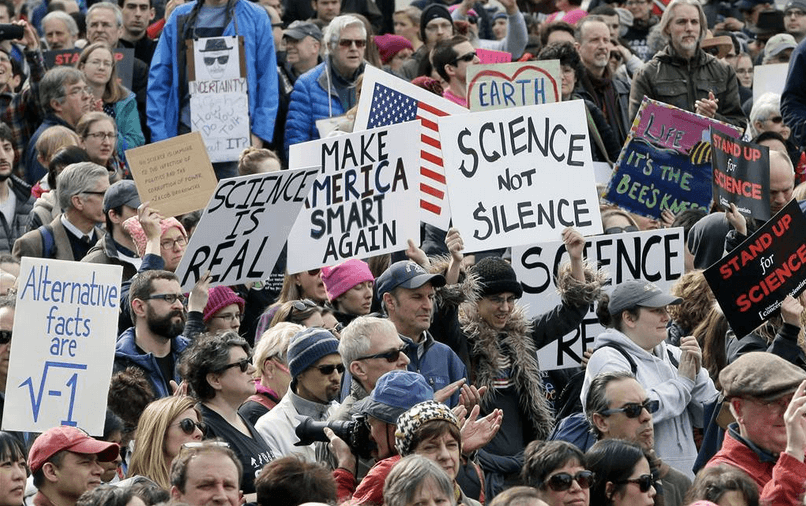
Why? For one, there is very little political and ideological diversity in the social sciences.


Why? For one, there is very little political and ideological diversity in the social sciences.
A number of popular articles (and books) have implored people to have fewer children as a way of minimizing anthropogenic global warming.
The real beauty of the biopsychosocial approach is that it has application to the individual (both in terms of causal explanation and of treatment offered), to the wider population, and to research.
All of this discussion leaves unanswered the question of how we decide if something represents a breakthrough — after all, there isn’t an international court of arbitration for creativity.
Overreliance on slides has contributed to the absurd belief that expecting and requiring students to read books, attend classes, take notes and do homework is unreasonable.
This can be avoided with a moratorium, but then we’re back to square one. This sparks a near infinite regress of bad options.
If the critics are correct that human enhancement is unethical, dangerous or both, then yes, emergence in China would be worrying.
These sorts of games are designed to maximize fun for a wide age range, and are typically extremely quick to grasp.
But the real reason for Duckworth’s genius is that she’s been able to do all of this based on shaky science.
We should start at the beginning, which is to say, conception. That magical moment when sperm meets egg holds an important insight.
Because of its emphasis on the heritability of acquired characteristics, Lysenkoism found itself at home and became an official dogma of Communist ideology.
If the AI that controls other players evolved, it may go through the same steps that made our brain work.