Art & Culture
A Pop Fiction Master and Monster
Rest in Peace, Jeffrey Archer—politician, novelist, and reviled human being.
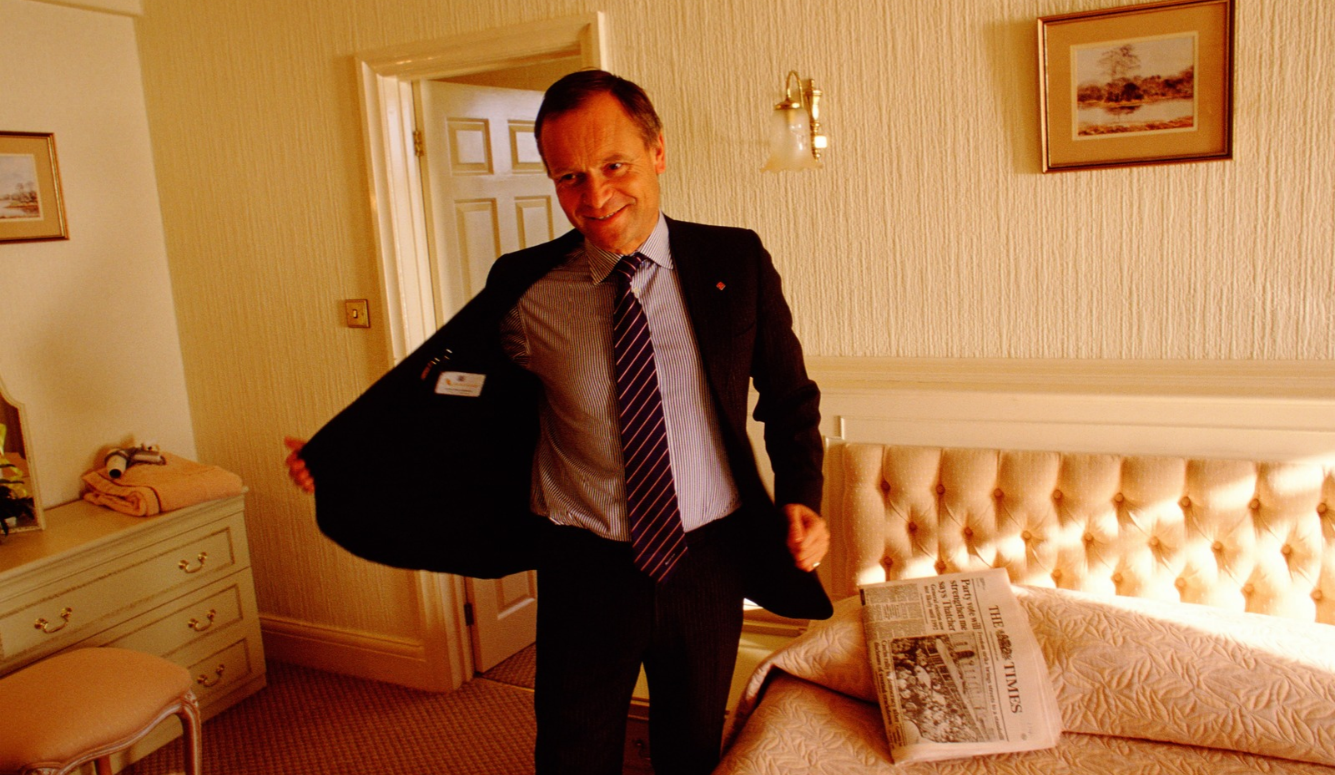

The death on 5 October of novelist/politician/rogue Jeffrey Archer inspired many a British obituarist to bring out the vitriol. They accused him of perjury (fair), suborning perjury (also fair), philandering (also fair), hiring a prostitute (also fair), and murder (not fair). That he was also one of the most successful pop-fiction writers of all time received scant attention. When his fiction was mentioned at all, it was usually to point out that it was atrociously written, or ghostwritten by underpaid publishing-house peons, or plagiarised, or heavily edited to make it readable. Here’s A.N. Wilson, in a representative screed the day after Archer’s death:
Almost everything about Archer was fraudulent. His editor at Hodder and Stoughton, Richard Cohen, told me that his “books” would arrive in the form of a few exercise books full of semi-literate scrawls. Cohen employed a team of English graduates to write the books. Archer had a good idea for plots but was all but incapable of writing. When he died his editor at HarperCollins spoke of the number of times he tolerated his books being “edited.” Evidently, he had learnt to write since leaving Cohen, but it sounds as if what others would call editing others would call rewriting.
It strikes me that Wilson is the one who could use a good editor. It reads about as generously as Emily Wilson’s bitter review of Christopher Nolan’s The Odyssey (Emily is A.N.’s daughter; vitriol seems to run in the family).
A.N. Wilson is also the person who accused Archer of murder. In 1986, Archer employed the services of a prostitute named Monica Coghlan. When the (now defunct) British tabloid News of the World discovered this, it recorded an associate of Archer paying Coghlan £2,000 to leave the country. Archer claimed that this payment was an innocent attempt to spare her unwanted press attention. After the Daily Star reported that Archer had paid Coghlan for sex, he sued the paper and then lied about their encounter under oath. He also asked his friend Ted Francis and his literary agent Terence Baker to provide him with a false alibi. The judge in the case, Mr Justice Caulfield, found it impossible to believe that a man married to a woman as lovely as Mary Archer could possibly have violated his marriage vows and pretty much ordered the jury to find in favour of the plaintiff. The jury obligingly did so and awarded Archer £500,000.
Archer and Francis fell out over money in 1990, and when Archer declared his intention to run for Mayor of London in 1999, Francis went to the News of the World and admitted that he had lied for Archer in 1987. Archer was arrested, convicted of perjury and perverting the course of justice, and sentenced to four years in jail (he served only two). Shortly before his trial began, the unfortunate Monica Coghlan died in an unrelated car crash—Gary Day, a drug-addicted thief, crashed into Coghlan’s car as he fled the scene of a crime in a stolen Jaguar; it took an hour for rescuers to cut her out of her ruined vehicle, and she died the next day in hospital. Day pleaded guilty to the crime and was sentenced to life in prison. But in his obituary of Archer, Wilson wrote this:
Archer and the Establishment were determined to silence [Coghlan] and when a few thousand used notes in an envelope did not work, she mysteriously died in a car crash. I have no doubt in my mind that Archer was responsible for meddling with the brakes. He was a bad, bad man.
Keep reading
A Pop Fiction Master and Monster
Australia's Coming Censorship Machine

Anatomy of a Book Promotion

They Walked in Line

Anti-Catholic Social Panics, Then and Now