Unmarked Graves
Anti-Catholic Social Panics, Then and Now
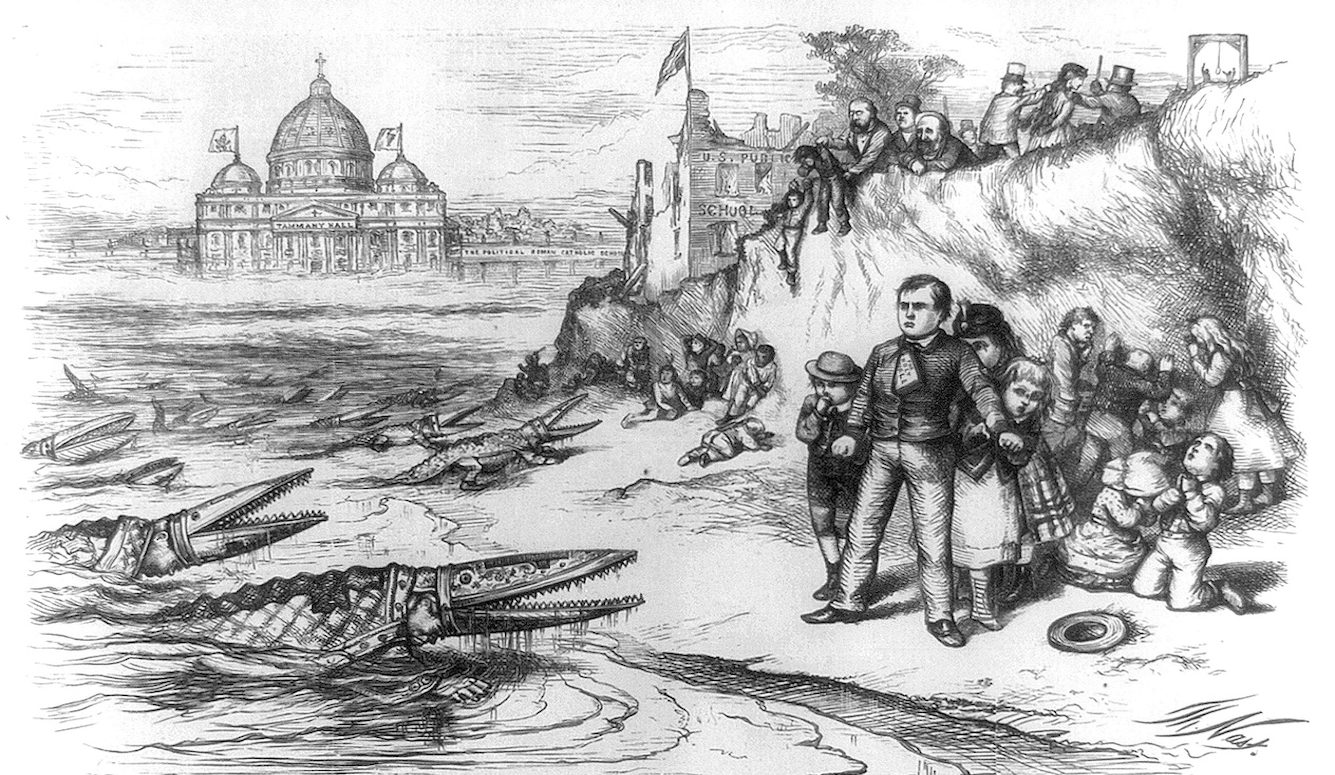
Two centuries before the claimed discovery of non-existent ‘unmarked graves’ in British Columbia, a wave of bestselling ‘convent exposés’ purported to detail mass rape and child murder among priests and nuns.

As has been well documented at Quillette, Canada recently experienced a widespread social panic following false claims that the “unmarked graves” of 215 Indigenous children had been discovered on the grounds of a former residential school that was operated by the Catholic Church between 1890 and 1969.
The lurid narrative, which first emerged in 2021, suggested that sadistic priests and nuns had ruthlessly dispatched these children and buried them surreptitiously (in the dark of night, according to the most breathless media accounts), presumably as a means to hide their crimes. In the five years that have passed since this sensational news ripped through Canadian society, not a single actual unmarked grave (let alone corpse) has been found on the Kamloops property. And it is now recognised by mainstream Canadian media sources that the 2021-era claims were unsubstantiated.
 Jonathan Kay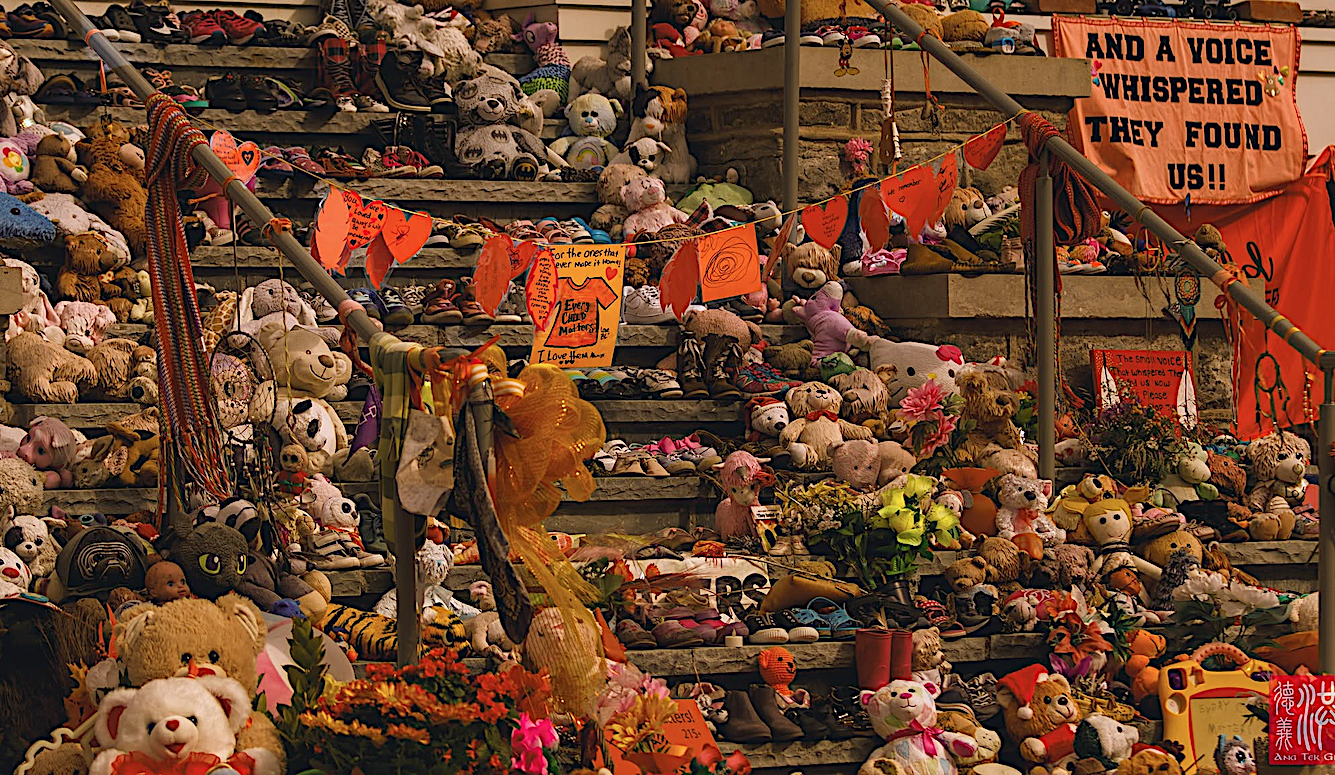
Reaction to the purported discovery of the unmarked graves broke down along the usual cultural fault lines, with progressives such as Justin Trudeau (often theatrically) promoting the graves as proof that Canada is a racist country that must zealously dedicate itself to the project of Indigenous reconciliation. But far from channelling cutting-edge theories of social justice, these progressives were actually tapping into an age-old tradition of dark anti-Catholic folklore that permeates many western societies. In the United States, the Ku Klux Klan once warned Americans that Catholics were scheming to murder non-Catholic babies; and encouraged the stereotype of priests and nuns as sex-crazed deviants. In the Welsh village of Llangrannog, a popular legend centres around an evil nun who haunts a local campground, stealing body parts from children and even engaging in murder.
Then there’s Maria Monk, the author of a blockbuster article that appeared in an anti-Catholic New York weekly newspaper, The American Protestant Vindicator, on this day in 1835. Her example is worth studying in some detail as a counterpoint to the unmarked-graves hysteria: As with the non-existent unmarked graves claimed to have been found in Kamloops five years ago, this story has its origins in Canada.
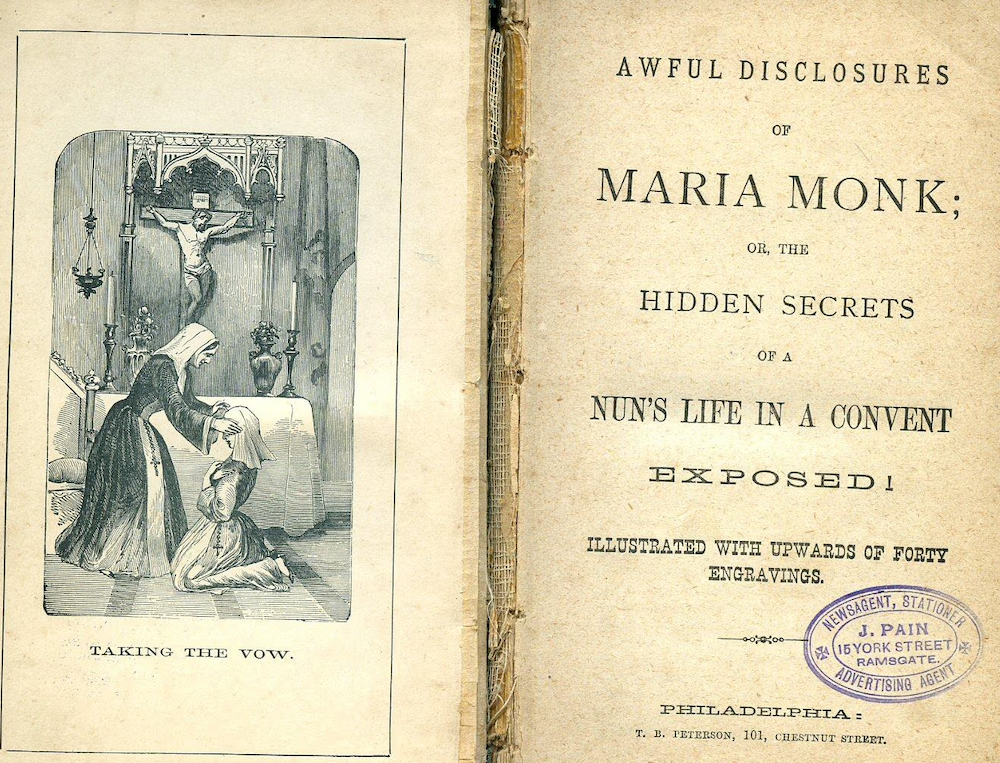
Monk’s article—an excerpt from a then-forthcoming book called, The Awful Disclosures of Maria Monk, as Exhibited in a Narrative of Her Sufferings During a Residence of Five Years as a Novice and Two Years as a Black Nun, in the Hotel Dieu Nunnery in Montreal—was presented as autobiographical non-fiction. But it’s entirely possible that it was ghostwritten by someone else, and that she had simply lent her name to the project (though, as discussed below, Monk seemed to believe that the events she described were true).
A humble servant girl from Montreal, Monk (1816—49) was said to have suffered a childhood head injury involving a pencil being “rammed” into her skull, which predisposed her to bouts of mental illness, as such an injury well might. After seemingly being admitted into a Roman Catholic asylum for recovering prostitutes, Monk claimed that in 1834, she was dismissed after falling pregnant.
At this point, she was taken up by a fanatically anti-Catholic Protestant clergyman named William K. Hoyt and transported across the border to New York City. Monk became convinced (probably with encouragement from Hoyt and his anti-Catholic fellow travellers) that during her stay at the asylum, she’d converted to Catholicism and entered Montreal’s nearby Hôtel Dieu Convent as a nun.
In the convent, Maria purportedly discovered that her fellow nuns were engaged in more or less non-stop sex with visitors. Entering the nunnery-slash-brothel from their neighbouring seminary through a series of underground passages (which readers later looked for, but never found), the clergymen would force themselves upon these helpless women, often resulting in unwanted births.
And what happened to all the babies? Something very similar to what was supposed to have occurred to the victims in Kamloops.
Monk claimed to have become an intrepid in-house sleuth, which is how she discovered the terrifying truth. The ill-fated babes were baptised (so “their little souls would thank those who kill their bodies”), strangled, then dumped into a secret mass-grave lime-pit in the convent cellars, along with any nuns who refused to take part in this ongoing campaign of mass murder.
Relevant extracts from the text sound to modern ears like comically stereotypical Gothic fiction of the kind once parodied by Jane Austen in her 1817 novel Northanger Abbey, mixed in with atmospherics from Edgar Allan Poe’s (as yet unwritten) story The Pit and the Pendulum:
Three or four days after my reception, the Superior sent me into the cellar for coals and after she had given me directions, I proceeded down a staircase with a lamp in my hand. I soon found myself on the bare earth in a spacious place, so dark that I could not at once distinguish its form or size, but I observed that it had very solid stone walls, and was arched overhead, at no great elevation … In a short time, I observed before me a hole dug so deep into the earth that I could perceive no bottom. I stopped to observe it —it was circular, twelve or perhaps fifteen feet across, in the middle of the cellar, and unprotected by any kind of curb, so that one might easily have walked into it in the dark. The white substance which I have observed, was spread all over the surface around it, and lay in quantities on all sides, that it seemed as if a great deal of it must have been thrown into the hole. It immediately occurred to me that the white substance was lime, and that was the place where the infants were buried, after being murdered.
Occasionally, Maria even said she witnessed baby-stranglings with her own eyes:
Keep reading
Anti-Catholic Social Panics, Then and Now
A Dishonest (and Dangerous) Nobel Laureate

Common People
How Genetics Rewrote History

Equal Pay, Unequal Work