Art & Culture
Bad Criticism
Name-calling, guilt-by-association, and other unscrupulous methods of argument are polluting our discourse.

Karl Popper invited us to be clear about the problem we are trying to solve. Testing a claim is not the same as evaluating the character of the person making it, and the latter cannot be asked to stand in for the former. Because it takes cognitive effort to parse data, weigh arguments, and assess logical coherence, we often default to name-calling, ad hominem, and guilt-by-association instead. This is a lazy and unscrupulous way to argue, and it drags down discourse, not least because its prevalence has made it unremarkable.
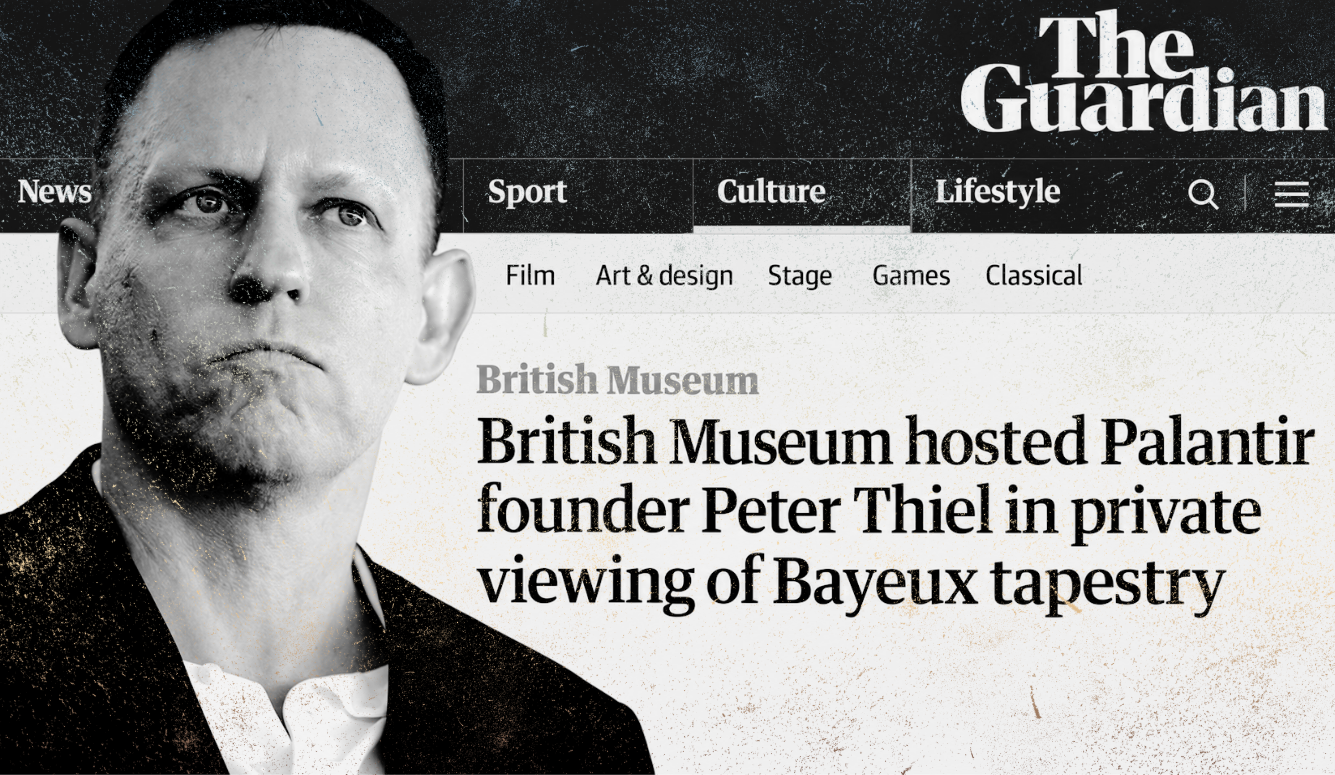
A news item in the Guardian on 31 August by the paper’s arts and culture correspondent amused me before it made me short-tempered. “British Museum,” the headline announced, “hosted Palantir founder Peter Thiel in private viewing of Bayeux tapestry.” The subhead: “Concern among staff that fragile artwork’s scarce ‘light hours’ given to someone with no known interest in museum” (emphasis mine, and a phrase that the great writer, Barbara Pym, would surely have enjoyed). Is there a global “Register of Interest in Museum”? Known to whom? Is the problem that Thiel’s degree of interest in the British Museum is uncertain or insufficient? Would the privileged visit have caused less concern had Thiel been a registered Museum donor?
What’s the story here, really? The Guardian makes a series of assertions that can be sorted as follows:
- Easily confirmed (the tapestry was not open to the public on 18 August).
- Probably true but unsourced and therefore unverifiable (“staff concern over light hours”).
- Partially true framing devices and attempts to tarnish by association that sometimes omit important details (about more soon).
My main problem with the article is that it does not state the central problem plainly: why did the museum invite Peter Thiel to visit the Bayeux Tapestry and why should their decision cause us concern? And because the problem is not identified, assertions are not assessed against their relevance to the key questions. Instead, the story turns out to be a Thiel takedown that encourages us to distrust and dislike him through a slow accumulation of stigma and innuendo. Thiel won’t lose any sleep over it, but we deserve better criticism of public figures from our press.
Keep reading
How France Lost Control of Its Streets

How to Suppress Men’s Writing
Back to the Dark Ages

Prison or Peer Review
France’s Imaginary Austerity