Sociology
The Troubled State of Sociology
Increasingly, sociologists are expected to avoid research questions and theories that involve the role of culture in shaping societal inequalities.
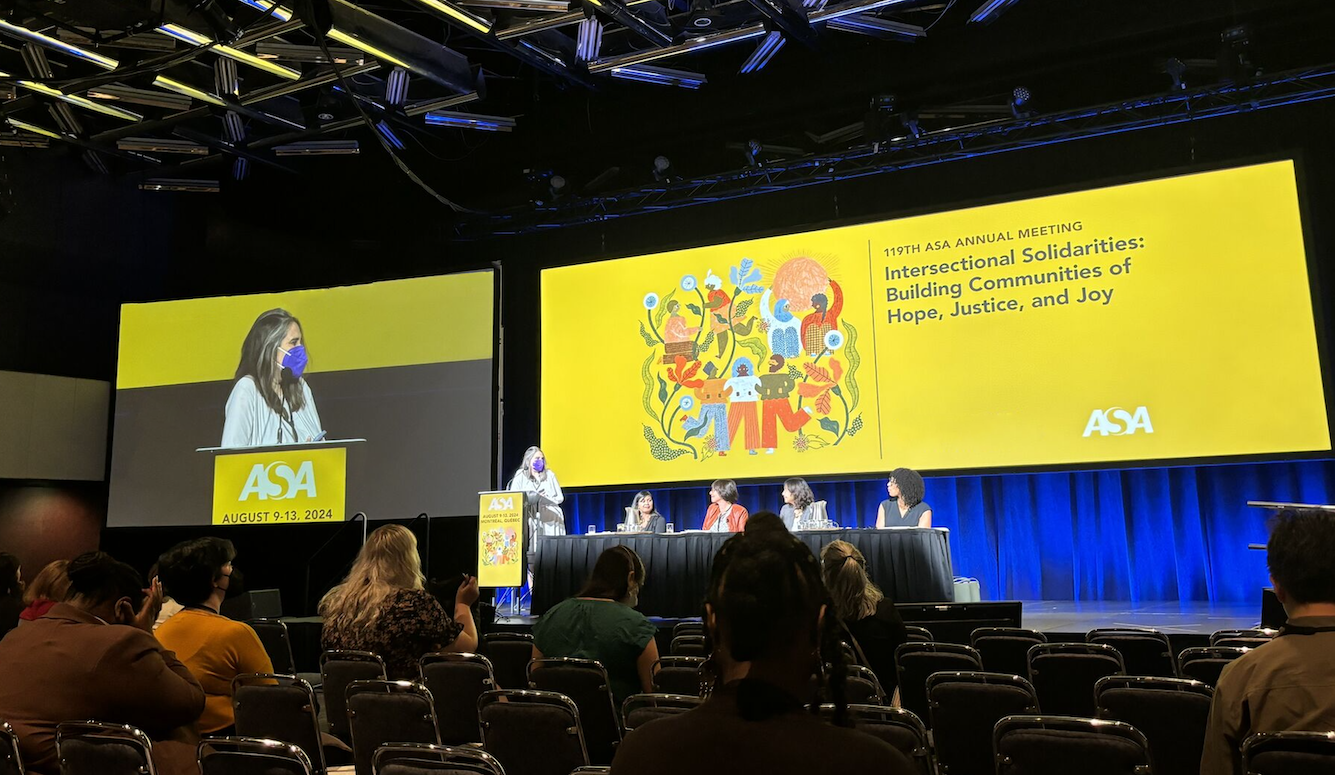

What follows is an excerpt from The Status of Scholarly Standards in Sociology, by Ashley T. Rubin, Professor of Sociology at the University of Hawai‘i at Mānoa. Professor Rubin’s report was published earlier this month under the auspices of the Vanderbilt–WashU Commission on the State of Scholarship in the Humanities and Humanistic Social Sciences. Its Report on the State of Scholarship in the Humanities and the Humanistic Social Sciences was published in April and excerpted in Quillette.
Research Blind Spots and Intellectual Narrowing
Sociology shows a heavy emphasis on some topics and not on others. Some topics' popularity have declined over time for a variety of reasons. Here, we look at why some topics (and theories) are not studied more; focusing on those topics that, according to some scholars, have gone into decline because of politics and ideology.
The Unpopularity of Cultural Explanations for Negative Outcomes
While the sociology of culture remains a fairly strong subfield in sociology, cultural explanations—as opposed to structural explanations—for negative outcomes (crime, poverty, violence, health) and racial disparities are not commonly used.
The underlying logic for this omission appears to be: identifying cultural or other agency-based explanations for bad outcomes may be used to “blame the victim” (or marginalized/vulnerable group). That is, sociologists avoid cultural explanations because they can appear—or be used—to suggest that the responsibility for bad outcomes (e.g., poverty, criminality, obesity, alcohol abuse) lies with the groups who face these outcomes rather than with the larger, oppressive social contexts that—the preferred explanation has it—disproportionately create the stressors that encourage such behaviors.
Conversely, if we can explain bad outcomes like poverty or criminality, especially racial disparities in bad outcomes, by pointing to structural inequalities, then poor people, criminals, and minorities are not to blame for their misfortunes.
Further, there is a commitment to advancing solutions to these problems that are social or structural rather than individual, i.e., policies and practices need changes to avoid these negative outcomes, while people with negative outcomes should not be the focus of interventions.
For most sociologists, structure thus generally outweighs individual or cultural explanations, especially when discussing inequality.
Indeed, on its What is Sociology web page, the American Sociological Association (ASA) highlighted one sociologist who explained, “So much of what is going on with our political climate and the rhetoric right now is all about talking about individual people or individual communities. The reality is that these are collective problems that have structural bases.” For most sociologists, structure thus generally outweighs individual or cultural explanations, especially when discussing inequality.
Interestingly, this structure-over-culture preference conflicts with another set of preferred arguments that seek to respect/celebrate/highlight the agency of marginalized actors, demonstrating how they can overcome structural oppression. As one commentator pointed out of sociological debates over culture and structure in explaining the disproportionate concentration of bad outcomes for Black people, “we must note, in a field traditionally attentive to the interplay of structure and agency, it is unusual to witness such categorical dismissals of autonomous behavior.”
In reality, it is an empirical question how much of the variation in bad outcomes can be attributed to culture, or to individual agency, and how much to structural arrangements (or, for that matter, to interaction effects between culture and structure). Good sociology seeks to theorize and measure those relationships; unfortunately, the expectation in the field is for sociologists to violate scientific standards by eschewing research questions and theories that involve the role of culture because using such questions or theories is politically distasteful.
In 2014, renowned historian and sociologist Orlando Patterson wrote an op-ed for The Chronicle of Higher Education titled How Sociologists Made Themselves Irrelevant, in which he noted how sociologists had “become distant spectators rather than shapers of policy.” Patterson’s explanation lay in the politicization of sociology: he called for more public sociology, but importantly, he called for a public sociology that was grounded in the evidence, rather than a public sociology that placed politics ahead of the data. He wrote:
Sociologists have shied from such cultural work, fearful of critiques similar to those that greeted 1960s culture-of-poverty scholarship by Oscar Lewis, the policy studies of Daniel Patrick Moynihan, and the Parsonian overdetermining emphasis on values. In focusing on ways that impoverished communities perpetuated poverty, such scholarship was criticized for blaming the victim, and for several decades, sociologists have taken pains to distance themselves not only from that approach but from studies of the cultural dimensions of poverty, particularly Black poverty.
He noted that Black youth themselves emphasize the importance of cultural explanations, indicating that sociologists’ refusal to engage cultural explanations was not grounded in the evidence.
Notably, a few years before Patterson’s article was published, a small number of scholars returned to the question of culture in explaining negative outcomes, but more as a variable that mediates the role of structure; even so, such explanations continue to receive criticism from some sociologists, albeit in a complicated manner.
A survey of sociology faculty conducted in 2017 gives a broad overview of sociological opinion on this point. In summarizing this survey data, Seton Hall University sociologist Mark Horowitz and two co-authors wrote:
Respondents broadly agree (79%) that cultural factors may play a role in Black urban poverty, yet two thirds affirm that structural factors ‘profoundly outweigh’ such cultural factors. A small majority (53%) agrees that the Black community has ‘some responsibility’ to address the problems of violence and out-of-wedlock births, while about one fifth views it as ‘culturally discriminatory’ or victim-blaming to acknowledge as much. About one fifth (19%) agrees as well that those who investigate cultural factors are ‘likely motivated to legitimize the racially-ethnically stratified status quo.
These results complicate the picture, showing some openness to a minimal use of culture in combination with structural factors and even agency, but also continued strong opposition to exploring such factors from a small plurality of surveyed sociologists. Indeed, the survey found that those who treated sociology as a “moral mission” (i.e., the more activist-leaning sociologists) were significantly more likely to reject cultural explanations and view them as discriminatory and therefore unacceptable in research.
The survey found that those who treated sociology as a ‘moral mission’ (i.e., the more activist-leaning sociologists) were significantly more likely to reject cultural explanations, and view them as discriminatory and therefore unacceptable in research.
Short-answer responses in the same survey show how sociologists who recognized the role of culture considered structure to be the predominant cause of poverty:
‘Cultural factors like hyper masculinity and materialism are the consequences of poverty rather than the cause,’ one notes. Another adds: ‘Structure causes culture. Change the structure, culture will follow.’ This reduction of culture to social structure is surprising in a field generally attentive to the interpenetration of social and cultural forces. Indeed, many respondents suggest that culture and social structure are ‘not easily separable’; ‘a complex mix’; ‘each produces the other dialectically’; and so on. When we examine the range of remarks to the culture-of-poverty statements, the principal view is that structural factors such as poverty, joblessness, and institutional racism largely condition the cultural factors, though the latter have some partial autonomy. As one respondent puts it: ‘Even if (sub)cultural factors are, inextricably, a direct product or bi-product of ‘structural factors’ (my belief), it would still be accurate to say that they ‘play a role’ because of their proximate connection to attitudes and behavior.’ This view, we concede, mirrors our own on the matter. Yet it appears alongside more one-sided and reductionist claims of culture as an epiphenomenon of social structure. Few respondents reverse the causal arrow, for example, by suggesting that culture may drive changes in the social structure.
Adding another dimension to sociologists’ views on the culture-structure question, they describe the “highly emotive reactions to the suggestion that the inner city Black community has any ‘responsibility’ for [residents’] circumstances” (as cultural explanations are sometimes understood, rightly or wrongly). They include several responses:
- “The idea of ‘responsibility of Black community’ erases or disregards the immense trauma that decades of institutional racism has had on people—the hopelessness was created, and it has real mental health implications that can’t just be solved by taking personal responsibility.”
- “One cannot call structural factors imposed by external forces ‘cultural’ factors. If we peel back the layers, we see institutional racism and policies deliberately aimed at destroying African American communities; not culture.”
- “I qualify my agreement by stating that culture is adaptive and given society’s war against the African-American community (especially Black men), is it any wonder that the culture includes violence?”
- “White people created these problems, white people need to fix them.”
- “It would be like saying that it is the responsibility of a rape victim to not get raped.”
Given some sociologists’ intense reactions to the notion of “responsibility,” it is easy to understand why some may shy away from culture-based explanations that may be interpreted by peers as ascribing such responsibility.
The Disappearance of Structural Functionalism
Another theoretical framework generally omitted or viewed skeptically is structural functionalism. Structural functionalism refers to theories that explain social phenomena by the purpose they serve, intentionally or unintentionally, and see society as an organic whole whose parts work together in harmony to produce stability.
It became unpopular in the 1960s and 1970s. While there are some reasonable critiques of the approach, as there are of all theoretical approaches, the more popular critique in the field has to do with the approach’s perceived politics. As Penn State heterodox sociologist John Iceland explained,
It was seen as normative because it portrayed institutional stability as natural and desirable, assumed that institutions fulfill social needs, and downplayed questions of power—particularly who benefits from the status quo. In short, it became associated with conservativism, and thus, to left-liberal sensibilities, suspect.
Even today, “Functionalism’s emphasis on stability, order, and institutional integration appeared to be insufficiently critical of inequality or too politically unengaged in an era increasingly focused on documenting and criticizing disparities.”
Iceland’s account is echoed by less heterodox scholars. A recent Annual Review of Sociology article by several well-respected mainstream sociologists noted,
At least within sociology, the word [socialization] is most famously linked to the mid-century structural functionalism of Talcott Parsons, and both socialization and Parsons lost credibility in the political and epistemological upheavals of the 1960s and 1970s…. [F]unctionalist accounts of socialization came to be understood as cultural downloading, lacking necessary attention to agency, incoherence, and conflict.
The review goes on to advocate for a “postfunctionalist” version of a concept associated with functionalism. Indeed, in the 2017 survey mentioned above, Horowitz and his co-authors found that functionalism/neo-functionalism was the least preferred of fourteen possible research paradigms (tied with evolutionary theory/biology, discussed below).
To the extent that the omission of functionalism has more to do with political opposition, it is a breach of scientific reasoning.
There is an important paradox, however: most introductory sociology textbooks begin by elaborating the different families of theories, including functionalism, even while the rest of the text ignores functionalist explanations. Similarly, it is standard to begin overviews of sociological and criminological theory (in textbooks and classrooms) with consensus theory (epitomized by Durkheim, a structural-functionalist) and then move on to conflict theory (epitomized by Marx, often joined by later critical theorists). In both cases, after the initial homage to the earlier theory, functionalism largely disappears from what follows. While there are important empirical critiques of functionalism, there are also empirical critiques of other frameworks that are prioritized; to the extent that the subsequent omission of functionalism has more to do with political opposition, however, it is a breach of scientific reasoning.
Avoiding Biology and Evolution
In a 2004 book review essay entitled, Sociology and Biology: Can’t We Just Be Friends? sociologist Patrick Heuveline (then a professor at the University of Chicago) observed that “with few if notable exceptions, mainstream sociology has been slower than other social sciences (e.g., psychology, anthropology, or demography) to see ways to integrate biological models and reasoning into our understanding of social behavior.” He further explained, “Sociology’s distance from biology appears to be deeply rooted in these disciplines’ scientific and political projects.”
Indeed, paging through sociology’s top journals, it is rare to find an article engaging biology—though one notable exception bears mentioning: In 2008, the American Journal of Sociology published a supplemental issue (Vol. 114, No. S1) entitled, Exploring Genetics and Social Structure that was guest edited by sociologist Peter Bearman with guest Associate Editors Molly A. Martin and Sara Shostak. Overall, however, biology and related subjects are not popular within sociology. For example, the ASA Section on Biology and Society has fewer than 100 members and is currently the smallest section. Similarly, the Section on Animals and Society has just over 100 members, and is the second smallest.
Evolutionary theories are unpopular and viewed with great skepticism among sociologists who prefer a ‘blank slate’ view of human nature
Within biological topics and theories, however, there are clear contingencies, indicating that sociologists’ avoidance of biology is partial and political. For example, evolutionary theories are unpopular and viewed with great skepticism among sociologists who prefer a “blank slate” view of human nature. As Joseph Whitmeyer and Rosemary L. Hopcroft have noted, despite the clear markers of useful and strong theory, the success of evolutionary psychology, and the long history of evolutionary concepts in sociology, the idea of an evolved actor “has always been a minority approach” in sociology.
 Quillette
Similarly, Kevin McCaffree has made the case for important similarities between animal societies and human societies, the relevance of animal biology, and evolution, but these topics remain extremely underdeveloped.
On the other hand, mainstream sociologists tend to echo left-leaning political activists by endorsing biological explanations when it is politically useful, such as identifying biological bases for sexual attraction (e.g., the idea that gay people are “born this way”). But in most contexts, it is considered taboo to bring in biology.
Sociologists use a variety of justifications for biology’s omission from the field. Despite his opening comment that there are key political differences between biology and sociology, Heuveline argues that for the most part, biology is simply unnecessary for sociologists: “I would argue that in their everyday work, many can do without.” He explains:
Sometimes the reaction of some sociologists is one of vehement opposition to biological explanations; while this response may betray a perceived threat, it might also be related to the emphasis that our discipline, in its quest for scientific respectability, has placed on building atomistic, causal, behavioral models. With the proliferation of social survey sampling, predicting a vector of individual outcomes Y from a matrix of individual characteristics X with everything else in a noise vector has become the methodological staple of many sociological investigations. It is not hard to see that the omission of all biological parameters in many such models is problematic. But just as readily found are rather large expanses of sociological investigations that do not have to be concerned with biological factors.
In other words, our models have normalized the oversight.
Others emphasize political concerns. In his introduction to the American Journal of Sociology special issue on genetics and social structure, Peter Bearman explained sociologists’ three objections to genetics, each of which are political and non-scientific objections: First, observation of “genetic expression…serves to legitimate existing arrangements, because, after all, they are ‘genetic.”’ Second, “borrowing methods and data from disciplines engaged in research on the genetics of human behavior necessarily legitimizes those disciplines and runs the risk of distorting the sociological project.” Third, “the focus on the supposed genetics of behavior is a eugenicist project in (not so veiled) disguise.” Bearman dismissed each argument as inaccurate or silly, but he characterized these arguments as standard critiques from sociologists.
In my own conversations over the years, the dominant reason for biology’s unpopularity that I have heard (from opponents of biological theories) is the association of biological arguments with conservative arguments.
In criminology, for example, biopsychosocial theories of criminality (relating to IQ, brain scans, or DNA differences) are generally viewed as politically conservative fields, although there they surged in popularity in the early 2000s. In sociology, scholars mostly avoid biology as a source of information or debate or describe it as inaccurate, particularly when it comes to race, sex, and gender: race and gender are viewed as social constructs, while increasingly sociologists reject the idea of biological “sex” and sex differences, and it would be extremely surprising to hear a sociologist treat race as a biological reality.
The dominant reason for biology’s unpopularity that I have heard (from opponents of biological theories) is the association of biological arguments with conservative arguments.
Indeed, biological discussions surrounding the sexes are currently the most controversial, in large part because biology, sex, and gender have become particularly polarizing topics in U.S. politics and general culture. Sociological research on the topic is viewed even within the field as necessarily having political meaning.
A particularly extreme example was the response of feminist criminologists in 2021 to research by Georgia State sociologist and criminologist Callie Burt. Her 2020 article in Feminist Criminology, titled, Scrutinizing the U.S. Equality Act 2019: A Feminist Examination of Definitional Changes and Sociolegal Ramifications, pointed to discrepancies and confusion in the evolving use of the terms sex, gender, gender identity, and sexual orientation; and ultimately favored a biological definition of sex. She was labelled transphobic and anti-LGBT in emails exchanged on the American Society of Criminology’s Division of Women and Crime (DWC) list-serve.
So extensive was the discussion that it came up in a DWC Executive Board Meeting on April 19, 2021. The meeting minutes note, “After our members’ response to an article published in the journal, the DWC submitted a statement of inclusivity, which can be found online.” The statement declared, “We reject any writings whose argument or foundation claims that trans women are not women and should not have equal human rights.” Finally, Burt was removed from the editorial board of Feminist Criminology: despite being told her service on the board had been “exemplary,” her presence was deemed to conflict with the journal’s “inclusive intent.”
However, opposition to studying biological differences between the sexes predates the current controversies over trans people. In 2001, three feminist sociologists were outraged by an American Sociological Review study that found biological reasons for male-female behavioral differences; and wrote “scathing critiques” of the study that, as one scholar explains, failed to “account” for the findings, focusing instead on the “dangers” of this type of study.
Likewise, the 2017 survey of sociology faculty (mentioned above) found strong opposition to biological explanations for sex differences in occupational choices:
Only one third of respondents acknowledges that a biological role in occupational choice is ‘plausible,’ with 27% open to the possibility that prenatal hormones play a role. Indeed, sociologists overwhelmingly agree (79%) that gender socialization and discrimination ‘profoundly outweigh’ any possible biological factors; and only a fraction (11%) affirms that political efforts to address the STEM gender disparity may ‘fall short of parity due in part to average biological differences.’ Finally, a sizable minority (41%) agrees that those who search for a biological component are ‘likely motivated to legitimize the gender stratified status quo’ (with one third disagreeing).
However, they also found that those respondents who treated sociology as a “moral mission” were “significantly less likely to acknowledge any biological component to women’s occupational choices.”
In discussing the short-answer responses to these questions, Horowitz and his co-authors distinguish between some rather intense reactions and those willing to engage the question. The intense reactions included, “‘Jesus, really?’ asks one; ‘Are you freaking kidding me?’ responds another; ‘How. Are. You. Even. Asking. This. Question,’ [sic] writes a third.”
Race/Racism, Not Class
While scholars continue to be interested in both racial and class-based inequalities, class generally gets less attention. As UC Berkeley sociologist Loïc Wacquant pointed out recently, social scientists generally do not study class discrimination for many reasons, including because of the invisibility of class relative to race or gender and to some extent because of the normalization of class-based differences. But more generally, there has been a tendency to explain bad outcomes—e.g., poverty, poor health, crime, education—by biases against demographic groups, especially racism and sexism less so, rather than class or economic inequality (let alone individual choices).
For example, early sociolegal scholarship that incorporated critical race theory often emphasized the interplay of race, class, and gender in determining outcomes, such as whether a Black person was able to defy segregation rules or other prohibitions. As critical race theory became more popular around 2014 and later, race (or racism) became the central explanation, particularly as scholars sought to argue against what they saw as the myth of “colorblind” policies (where, for example, class or other inequalities could be used to explain racial disparities).
William Julius Wilson has been a prominent sociologist who has received heavy criticism (but also achieved great status) for making what were viewed as controversial claims about the importance of class and race in such works as The Declining Significance of Race (1978) and The Truly Disadvantaged (1987). Wilson’s research demonstrated the importance of class in studies of racial inequality, including the heterogeneous status changes of Black people of different classes over time, and later on race-blind policy interventions, but his work was often dismissed as conservative (and those who rely on it are often viewed as conservative as well).
When Wilson received criticism for pointing to data that showed Black people were doing better over time (even while impoverished Black people were doing worse), he was working against a general trend in the field to not only focus on social problems but to emphasize what was wrong with society.
Excerpted from The Status of Scholarly Standards in Sociology, by Ashley T. Rubin, Professor of Sociology at the University of Hawai‘i at Mānoa. Professor Rubin’s report was published earlier this month under the auspices of the Vanderbilt–WashU Commission on the State of Scholarship in the Humanities and Humanistic Social Sciences, whose collective report was published in April and excerpted in Quillette.
Quillette invites thoughtful responses to its essays.
Selected responses are published once per week as part of a curated Letters to the Editor feature. If selected, letters appear under the contributor’s real name and may be edited for clarity and length.
To submit a letter for consideration, please email [email protected].
Keep reading
How to Suppress Men’s Writing
Back to the Dark Ages
Prison or Peer Review
France’s Imaginary Austerity

The Limits of Perfectionism