UK
How Brexit Made Britain European
Keir Starmer is just the latest victim of a political reality created by Brexit—one that has, counterintuitively, turned Britain into a European country.
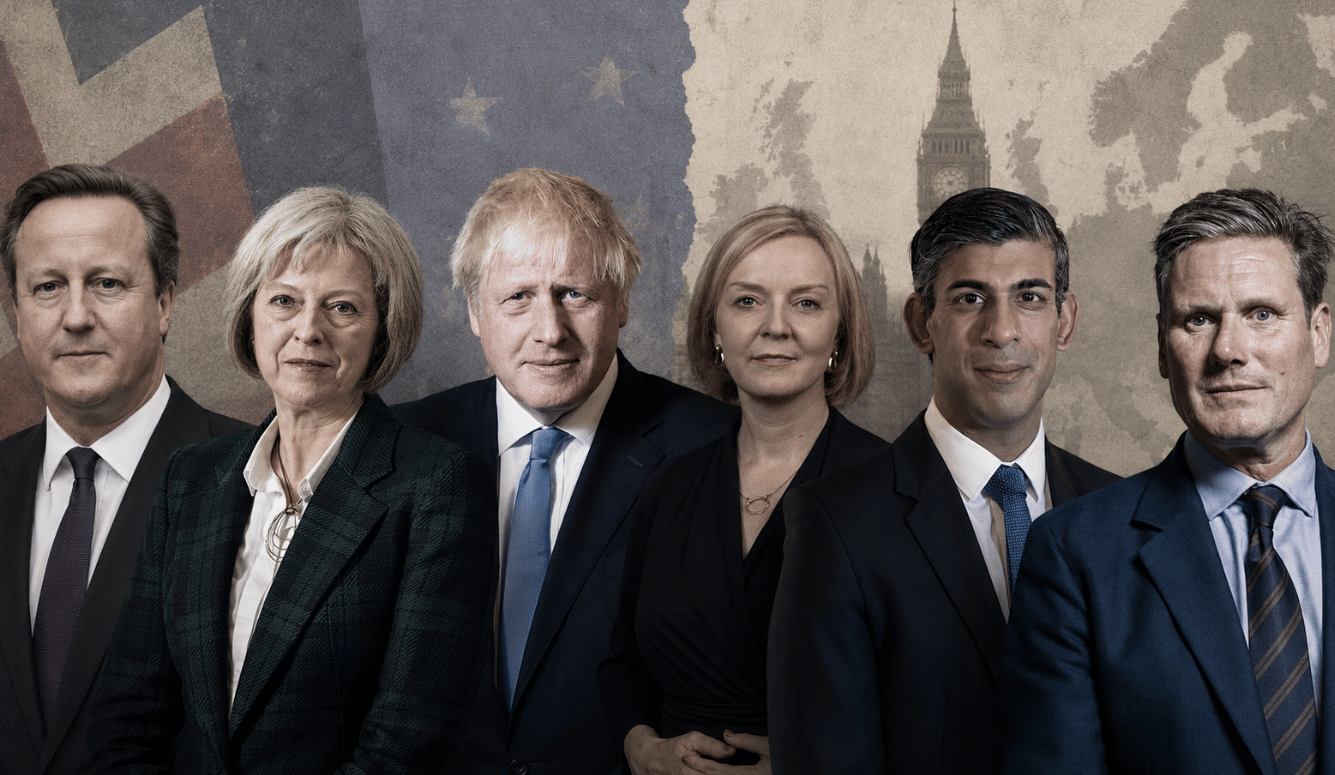

It’s fitting that the embattled Keir Starmer resigned as prime minister of the United Kingdom almost exactly a decade after the Brexit referendum. More than anything else, it was that vote, on June 23rd 2016, which created Britain’s current political reality—a reality of which Starmer is just the latest victim.
Perhaps the most ironic impact of Brexit is the fact that the United Kingdom has finally become a European country. By this I don’t mean that we’ve suddenly learned how to cook good food, or we’ve all become bilingual, or have embraced the siesta. We’re no more culturally European than we were back in 2016. But we have, to a remarkable extent, become politically European.
Most obviously, we now churn through prime ministers at a startling pace. Rapid turnover is the norm in a country like France, which has changed prime minister ten times in the past 15 years, or Italy, where the average length of governments since 1948 has been 16 months. But back in the 2000s, an influential strand of thought in political science was that the office of British prime minister was different—that it was uniquely “presidential.” From Margaret Thatcher onwards, prime ministers were seen as slowly overcoming the limits on their office imposed by the parliamentary system.
Thatcher and Blair, in particular, both had extremely long premierships by 20th century standards, and were both viewed as engaging in a style of court politics that centered charismatic authority (and certain powers over the public purse and foreign policy) on 10 Downing Street. This contrasted with the weak, short-lived, and unpopular prime ministers of the continent.
Nobody worries about “presidentialism” any more. The cycle broke in 2016 when David Cameron, a Remainer, resigned after the Brexit vote failed to go the way he wanted. Three years later, Theresa May stepped down when the House of Commons refused four times to back the deal she negotiated with the EU. Then Boris Johnson arrived promising to “Get Brexit done,” but was quickly undone by a number of scandals, including the failure of members of his own government to abide by Covid lockdown rules. He was followed in quick succession by Liz Truss’s short-and-regrettable premiership, and then by Rishi Sunak’s short-and-forgettable one.
 Robin Ashenden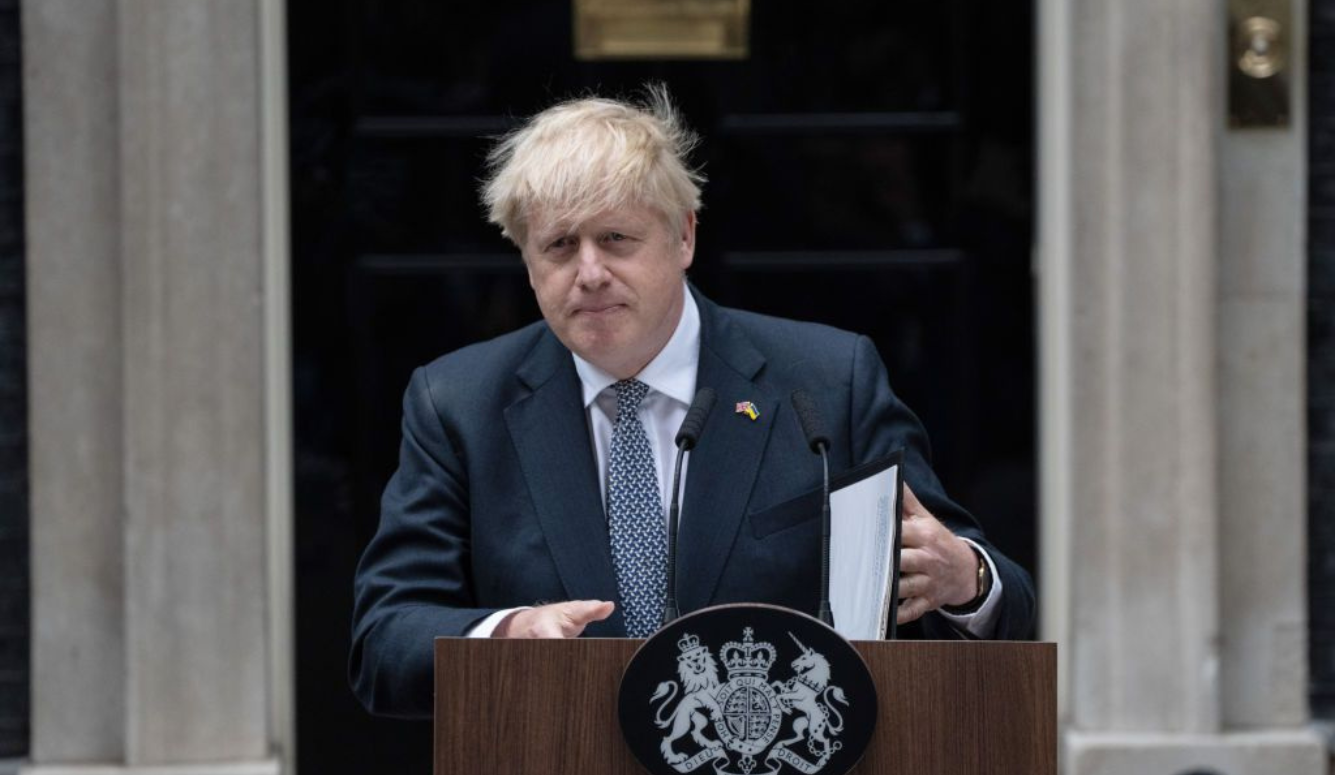
Now, two years after a landslide victory in 2024, Starmer has discovered that instability in the office is chronic. He suffered a catastrophic collapse in approval rating following several prominent policy U-turns. His early attempts to rule his party autocratically by exiling Labour’s left wing failed to secure his authority. In the wake of terrible local election results last month, he became so weak that the media and members of his own party actively speculated about who will replace him. In the wake of Starmer’s resignation, the popular regional mayor Andy Burnham, recently re-elected to Parliament, is expected to launch a bid.
Keep reading
Gemma Tognini on Australia’s Political Revolt
Rubio in Athens
How France Lost Control of Its Streets
How to Suppress Men’s Writing

Back to the Dark Ages