Deeply Problematic
The Last Canadian Politician I’d Trust to Police the Internet
Marc Miller spread misinformation about unmarked graves and supports the criminal prosecution of residential-school ‘denialists.’ Why would Mark Carney use him to front his new plan for regulating online content?
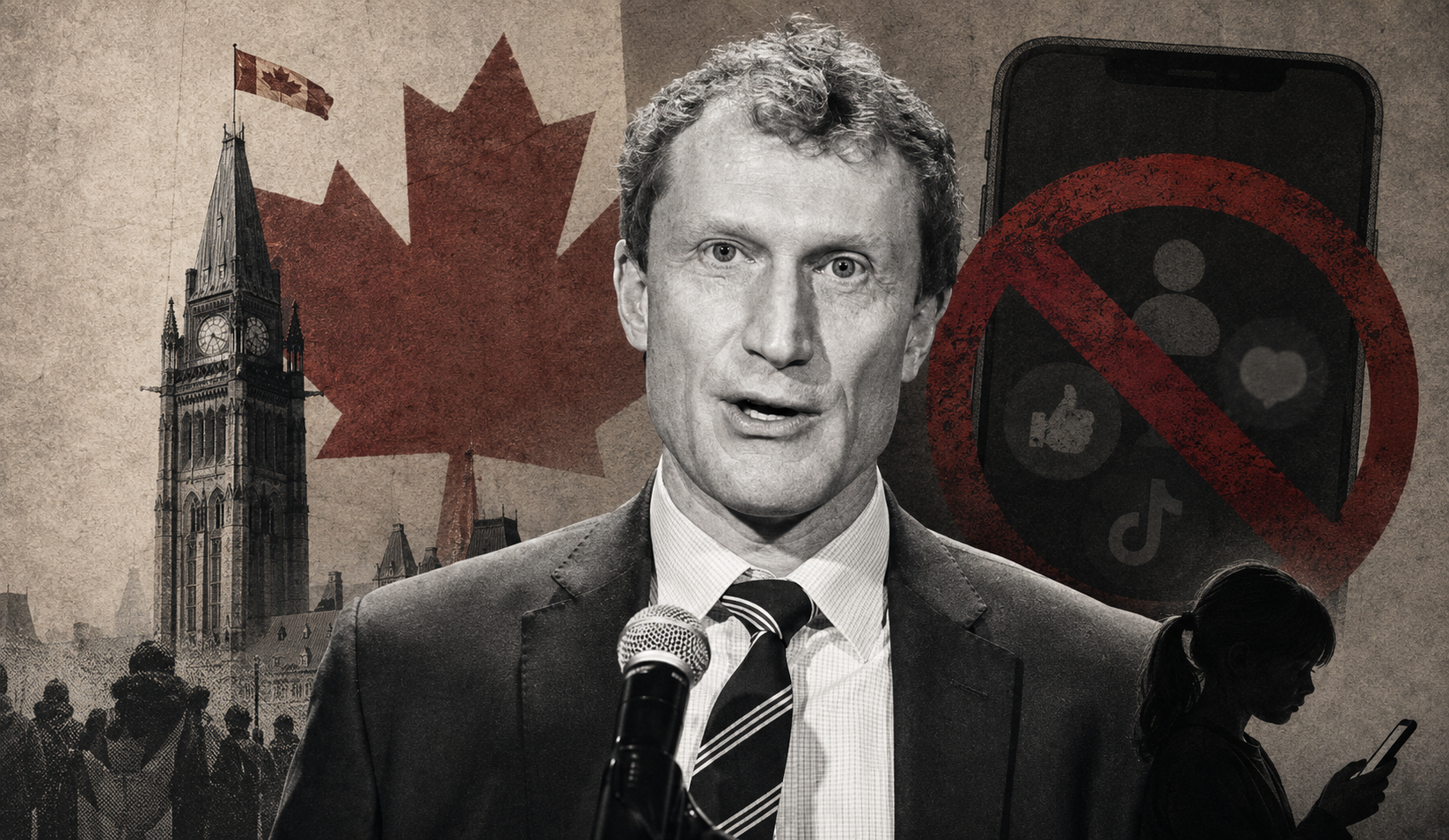

Justin Trudeau’s nine-year tenure as Canadian prime minister, which ended when his own Liberal caucus tossed him overboard in late 2024, can be divided thematically into two distinct periods.
During the mid-to-late 2010s, he presented himself as a sunny Canadian patriot. Then, following the COVID pandemic, the George Floyd protests, and the unmarked-graves social panic of 2021 (which Trudeau’s own government did much to spread), he sounded the opposite theme: Canada, he began telling Canadians, was in fact a deeply racist genocide state. He ordered his Liberal colleagues to implement a massive “Action Plan on Combatting Hate,” and introduced legislation that would give his government new powers to stamp out hate speech.
In 2021, Trudeau’s government floated Bill C-36, which would have brought back a defunct legal provision that had allowed Canadians to bring human-rights complaints against one another for alleged hate speech. To give readers an idea of how this kind of arrangement works: Under British Columbia’s provincial human-rights system, which has long permitted this kind of dubious complaint category, a former school trustee was just fined $750,000 for saying that he believes in the primacy of biological sex instead of the ideological construct known as gender identity.
Thanks in part to push-back from civil libertarians, Bill C-36 never went anywhere. But the controversy surrounding the legislation gave Canadians a window into the unsettling ambitions of Canada’s would-be censors—the academics and activists who had the ear of the government.
In 2022, members of a 12-member “Expert Advisory Group on Online Safety” appointed by the Liberals urged the government to expand the category of censorship-worthy “harmful content” to include “algorithms that contribute to unrealistic body image” and “misleading political communications”; with some adding that “a definition of harmful content must include an understanding of how…a racialized person with lived experience on the psychological toll of racism and its systemic impact would likely have a different perspective on what constitutes harmful content compared to a cis-white male.”
In an ironic twist, many of the experts voiced “concern” over the fact that “misinformation and disinformation” weren’t yet officially deemed to be “harmful content.” As it turns out, one of the better known members of the advisory panel was an activist named Bernie Farber, who’d himself just been outed publicly (and somewhat hilariously) for spreading fake news about the early-2022 convoy protest in Ottawa.
Wow Bernie, isn't it incredible that the picture your "friend in Ottawa at the Occupation" sent you is identical to the photo posted on Twitter two weeks ago by someone in Miami, right down to the ceramic design in the background? https://t.co/s4Xf3IbFrI pic.twitter.com/OJGEgrariZ
— Jonathan Kay (@jonkay) February 6, 2022
The Liberals took another kick at the can in 2024, with revised legal provisions bundled together into Bill C-63, the Online Harms Act. If anything, this iteration—which also, thankfully, never made it into law—was worse than the original. Not only would it have empowered Canada’s federal human-rights commission to get back into the speech-regulation business. As University of Ottawa scholar Michael Geist noted in a scathing response to the draft bill, it also would have given internet oversight officials the power to conduct secret hearings and ignore “any legal or technical rules of evidence.”
Keep reading

The Insight Trap
Cornell and Consent
Robert Lynch on Status, Humour and the Apes We Pretend Not to Be | Quillette Cetera Episode 74
The Radicalisation of Tucker Carlson