Australia
No Place for Children
The murder of five-year-old Kumanjayi Little Baby by repeat offender Jefferson Lewis has exposed the failures of Australia’s criminal justice system and Indigenous child protection policy. What will it take to make change?
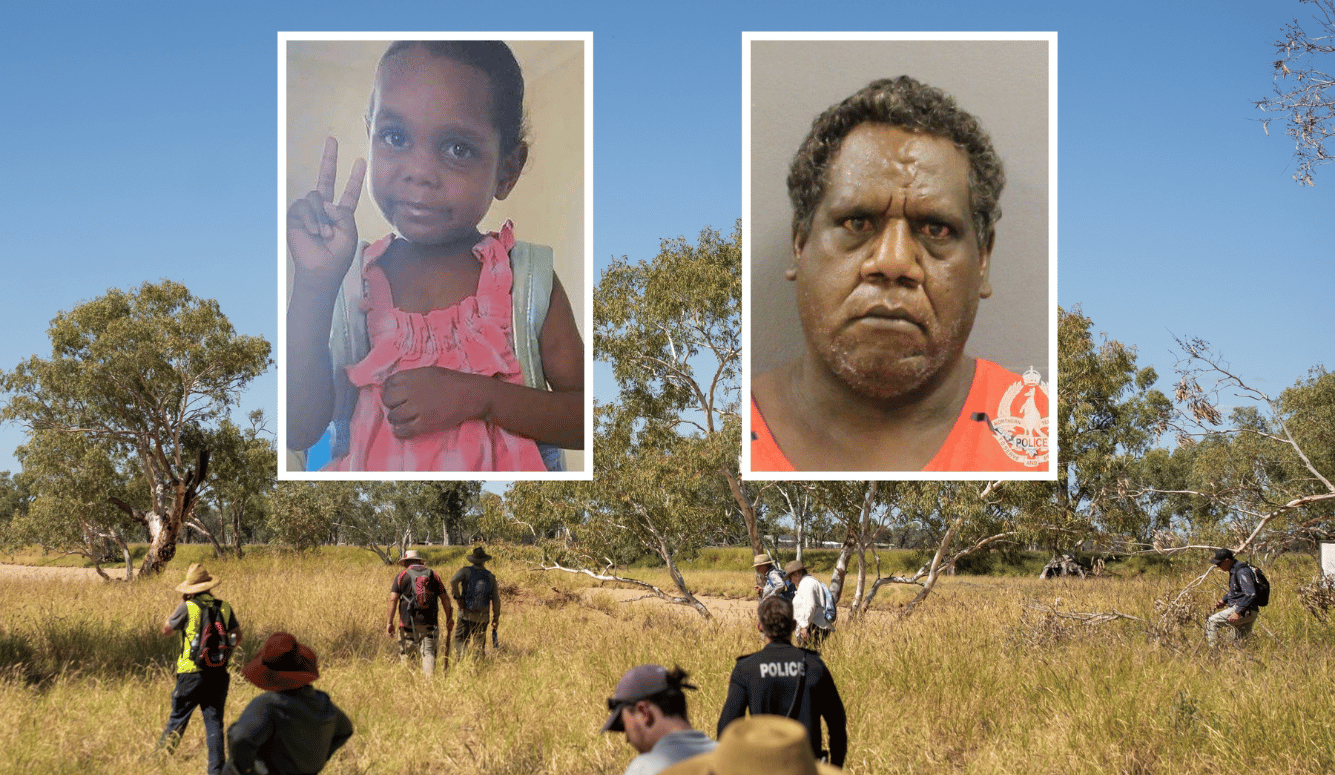

The Northern Territory holds a special place in the Australian imagination: an endless outback, home to iconic Australian places like Uluru and Kakadu and the distinctive dot painting art style. Last week, it was also the setting for a shocking murder that has reopened Australia’s fractious debate about entrenched hardship in Indigenous communities in the Territory and the country’s wider handling of Indigenous policy.
On the night of 25 April, five-year-old Indigenous girl Sharon Granites, now referred to as Kumanjayi Little Baby in keeping with local customs, was abducted from her home in the Old Timers Creek town camp on the outskirts of Alice Springs, a small city in the red centre of Australia. She was seen that night outside her home with Jefferson Lewis, a repeat offender released from prison just days before who had arrived at the camp needing somewhere to stay, and who had been drinking there that day, as confirmed by an encounter he had with police just 6 hours before he allegedly took Kumanjayi Little Baby. A frantic search for the missing girl, in which hundreds of community members were enlisted, first turned up Lewis’s shirt, a child’s underwear, and a doona cover in a dry river bed before ending in tragedy on 30 April with the discovery of her body in scrubland a few kilometres from her home.
The parallel manhunt for Lewis ended later that same day when he appeared in another town camp near Charles Creek. The locals there beat him unconscious. Rescued by the police, Lewis was taken to hospital, where an angry 400-person crowd formed outside the doors, demanding he be handed over to them for traditional “payback” and rioting when turned away forcibly by the police. Lewis was removed to Darwin. Seven days after allegedly taking Kumanjayi Little Baby from her home, Lewis was charged with her murder and two other offences that cannot be published under Northern Territory law.
While a place can never be truly known by outsiders, its broadest contours can be seen (and sometimes more clearly) from above, like a geographical survey by plane. As the case of Kumanjayi Little Baby focuses attention once more on the Territory’s problems, it is worthwhile to contemplate their scale and the wider dynamics that play into a crime like this. Justice for Kumanjayi Little Baby requires more than punishment of her alleged murderer—it demands scrutiny of the criminal justice system that failed to contain him, the wider social disorder in which her short life was lived, and the confused and unaccountable governance that oversaw it all.
Keep reading

The Insight Trap

Cornell and Consent
Robert Lynch on Status, Humour and the Apes We Pretend Not to Be | Quillette Cetera Episode 74

The Radicalisation of Tucker Carlson