Deeply Problematic
I Watched the Infamous Sarah Silverman Blackface Sitcom Episode. It Was Hilarious
What you realise by the times the credits roll is that it isn’t just Sarah’s clueless character who’s the butt of the joke, but self-satisfied white progressives more generally.

Four years ago, comedian Sarah Silverman told her podcast listeners about how disappointed she was in her friend Dave Chappelle—who’d just done a Saturday Night Live monologue in which he’d (kind of) defended antisemitic gestures from rapper Kanye West and basketball star Kyrie Irving. For about ten minutes, Silverman chirped away anxiously on the subject, feebly attempting to reconcile her personal affection for Chappelle with the creepy content of his SNL set. The whole thing felt tense and halfhearted. Silverman even admitted at one point that she hadn’t wanted to talk about the subject at all, but had been pressured to do so by many of her listeners.
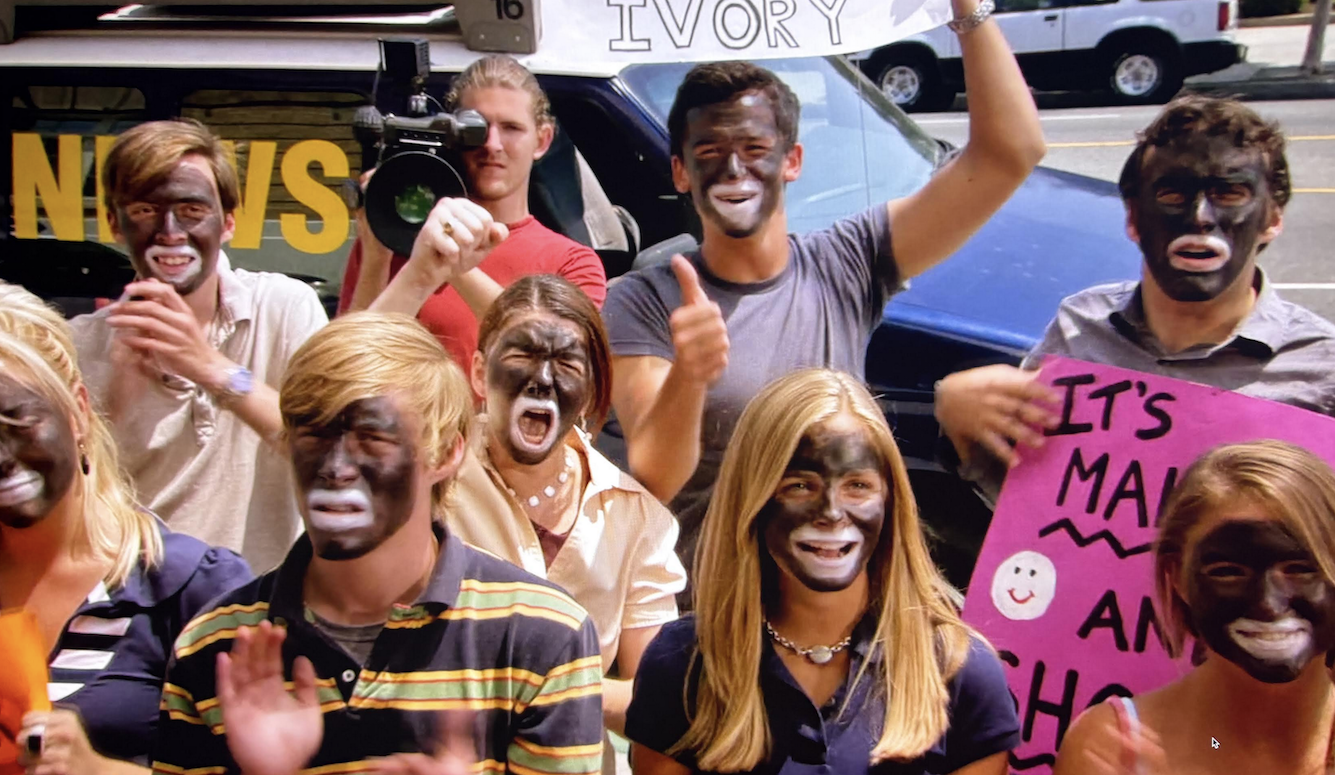
About midway through the podcast, we learn why Silverman is tense. Back in 2007, she reminded everyone, Comedy Central had run an episode of The Sarah Silverman Program in which she’d worn blackface. The comedienne ruefully added that since then, whenever she mentions the issue of race in any context, she’s barraged on social media by still-frame images from that show, alongside comments such as “this you?”
That 2022 podcast episode then devolved into an extended mea culpa. Silverman said her 2007 blackface performance had been “extremely racist,” and that “there is absolutely no context that makes blackface okay.” Channelling the confessional style of anti-racist sloganeering, she avowed that “All I can do is make it right every day whenever and wherever I can for the rest of my life—and I consider it a privilege to do that.”
She also added that the Sarah Silverman Program episode in question had been permanently deleted from “every streamer.” And so, “you will never get to see that episode… even if you were curious.”
I know all about Silverman’s blackface adventures from reading Jacques Berlinerblau’s new University of California Press book, Can We Laugh At That?: Comedy In A Conflicted Age—a portion of which I adapted for publication at Quillette. It’s a great read, notwithstanding the fact that it contains an important mistake that I stumbled upon during my fact-checking protocols.
 Jacques Berlinerblau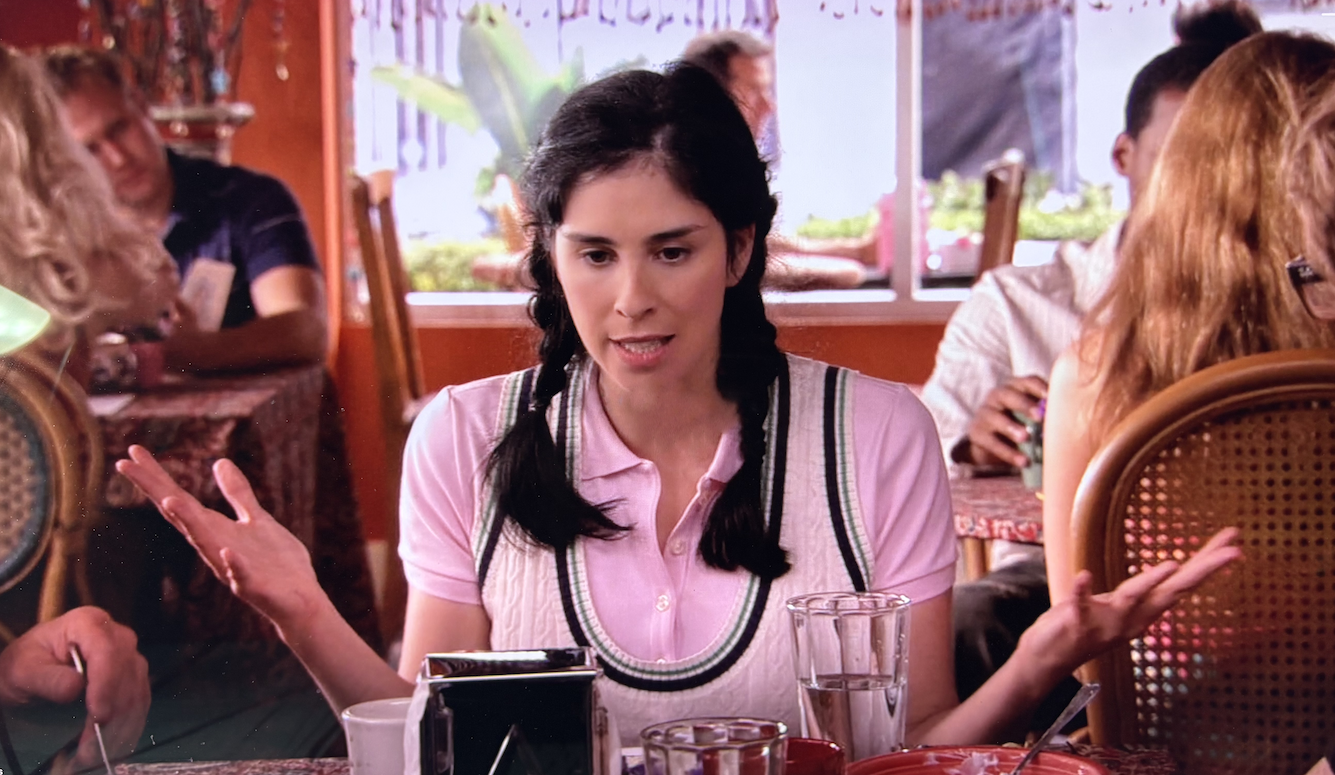
On page 38 of his book, Berlinerblau repeats Silverman’s claim that her infamous blackface episode—called Face Wars—had been “scrubbed from the internet,” and so cannot be downloaded from “any streaming service or website.” The idea of a comedian appearing in blackface is now so radioactive that I debated whether I even needed to check this fact. Surely it was long gone. But just to make sure, I did my due diligence.
And amazingly, I found the episode almost immediately. Even more amazingly, it wasn’t on some dark-web Nazi-adjacent edgelord site like 4chan, 8chan, or 16chan (or however many chans they’re up to), but rather on Apple TV.
If, like me, you live in Canada, you can find Face Wars at this link—though I’d be surprised if it isn’t removed within a day or two of this column appearing. For whatever reason, Apple apparently removed the episode from the US streaming service—which is what Berlinerblau would have checked when writing his book—but never got around to all of the smaller national markets. (I’ll be sending Apple a media inquiry about the issue shortly after this article goes live, and will add an update if I hear back.)
My little discovery turned out to be a real delight—not because I’m trying to get Silverman cancelled (again), but because it turns out Face Wars is absolutely hilarious. And I say this as an unrepentant intellectual snob who regularly regales Quillette readers with lengthy musings about ancient history and the oeuvre of André Gide. But not for the excuse that I was merely fulfilling my professional duty to (exhaustively) fact-check Berlinerblau’s work, I’d ordinarily have never deigned to watch something so culturally downmarket.
In structure, The Sarah Silverman Program (which I’d never heard of before reading Can We Laugh At That?) is a traditional sitcom, with the fictionalised version of Sarah Silverman (whom I’ll refer to by first name, for clarity) getting into various madcap scrapes and shenanigans with her pals in an idealised version of the Valley Village neighborhood of Los Angeles. Co-stars include Brian Posehn, Steve Agee, Jay Johnston, and Silverman’s real-life older sister Laura (whom some readers may remember for voicing the receptionist in the unjustly obscure 1990s-era animated show Dr. Katz, Professional Therapist). But based on my (admittedly limited) viewing, a lot of the plot is just an excuse for Silverman the Younger to do edgy shtick.
Face Wars starts off with Sarah approaching the reception desk at a fancy private tennis club, looking for a court. Sarah isn’t a member of the club, but figures she can play anyway. When the receptionist politely tells her that isn’t possible, Sarah storms off in a huff. Over breakfast at a local diner, she then tells her friends, “I’m a victim of a hate crime! The country club wouldn’t let me play tennis because I’m Jewish. [The receptionist] was like, What’s your name… Silverman? And then she’s like, Get out, Jew!”
To which her incredulous sister exclaims, “She said that?”
Sarah replies: “Yeah, basically… with her eyes. It’s like everywhere I go, I’m a second-class citizen. There is nothing harder than being Jewish in the entire world.”
Of course, the Jew who sees antisemitism everywhere is a well-worn comedic trope. Famous examples include Uncle Leo from Seinfeld, who suspects that a diner is antisemitic because his hamburger was overcooked; and Woody Allen’s character Alvy Singer from Annie Hall (“I was having lunch with some guys from NBC, and I said, Did you eat yet? and [they] said, No, Jew? Not Did you, but Jew eat? Jew?”). But in both of these cases, the persecution complex is presented as a manifestation of neurotic insecurity. Sarah’s character, on the other hand, is carefree and utterly self-absorbed. When a black waiter (“Eugene,” played by actor Alex Désert) overhears her comments and challenges her historical assessment, we get the following exchange:
Keep reading
Jerry Kaplan on AI Doomers

Payback Time for Steven Galloway
War Stories

Life in The Grim Old Days
In Defence of Academic Standards