Skip to content

Space

The Final Frontier

Like the old Wild West, the Moon offers the prospect of resources to exploit and land to settle. Artemis II's successful mission is just the beginning.

· 10 min read
A solar eclipse viewed from space, with the Moon in the foreground.
THE MOON, EARTH - 6 April 2026 – Captured by the Artemis II crew during their lunar flyby. Source: Alamy.

On 12 September 1962, John F. Kennedy famously proclaimed space to be the “new frontier.” JFK did not actually care that much about space—he launched the Moon race in May 1961 because he wanted to conduct a high-profile exercise that would enable him to beat the Soviet Union and distract public attention from the disastrous Bay of Pigs invasion that had taken place a few weeks earlier. The “new frontier” rhetoric only emerged later. Then JFK was assassinated, and his successors lost the plot. After a few “flags and footprints” Moon missions, we turned our back on the new frontier, retreating to low Earth orbit for over fifty years. Until last week.

Artemis I was a highly successful mission and, as far as I can judge so far, Artemis II seems to have done just as well. The most substantial engineering challenge on the nine-day trip around the Moon was a recalcitrant toilet—embarrassing, perhaps, but not a threat to mission success. On all the critical milestones—from launch to trans-lunar injection to the precisely calculated free-return trajectory and the excruciatingly accurate re-entry angle—Artemis II hit its marks.

Of course, it hit them a lot later than expected. The Artemis program was based on the Constellation program, initiated in 2005 with a goal of landing humans on the Moon by 2020. Decades of uncertainty, program changes, and political tinkering have reshaped the program into five missions of which this is only the second, years over schedule and billions of dollars over budget. In some ways, these heritage launch and capsule systems were already obsolete before the missions began, as Peter Hague has documented elsewhere in this magazine. A new phase will be necessary soon. So, how will Artemis II and its successors enable the return to the new frontier?

The New Moon Race: Artemis II and China’s Lunar Ambitions
The race is on to build a base for permanent human habitation on the Moon.

In Democracy in America (1835–40), Alexis de Tocqueville emphasises the role of the western frontier in shaping American society, character, and attitudes. The frontier represented Americans’ fixation on material progress and self-improvement. Immigrants and native-born alike went west, turning wild lands, swamps, and forests into productive fields and factories. (Of course, these “empty” lands were often already occupied by Native Americans, but they were ignored.)

The frontier rewarded ambitious risk-takers; the opportunities it provided encouraged decades of migration from the old countries: “The emigrant from Europe therefore always lands in a half-full country… his son goes to seek a fortune in an empty country, and he becomes a rich property owner,” writes de Tocqueville. Upward mobility became a hallmark of the American character.

Space shares many of the characteristics of the American West: it is physically dangerous and economically costly to get there. But, even before the railroads were built, the western frontier could be crossed by anyone with the grit and determination to do so—on a flatboat, on horseback, or even on foot. The difficulties of getting there acted as a filter for individuals with high agency, ambition, and tolerance for risk.

Space, on the other hand, has traditionally been inaccessible. From the days of the Mercury program (1958–63), it’s been too expensive and too difficult for average citizens to go to space, so it has usually remained the domain of astronauts working for a national space program. In recent years, we have seen the rise of civilian astronauts, paying their own way at a cost of tens of millions of dollars per seat to go to orbit. This is inspiring, but irrelevant to the lives of the vast majority of people. But planned developments by SpaceX and others will probably bring the cost of a ticket to orbit down from tens of millions to hundreds of thousands of dollars—comparable to the cost of a fully-outfitted tractor-trailer combo.  

Enter Artemis

The Artemis II mission that returned to Earth last week is part a series: 

  • Artemis I: Uncrewed demonstration of the Orion capsule and the Space Launch System (SLS) rocket. Successful in 2022.
  • Artemis II: Crewed mission using the SLS to launch Orion in a flyby around the Moon. Successful in 2026.
  • Artemis III: Crewed mission using the SLS to demonstrate docking Orion to new Moon landers in low Earth orbit. Planned for 2027.
  • Artemis IV: Crewed lunar landing mission. Planned for 2028.
  • Artemis V: Crewed lunar landing and the start of a permanent Moon base. Planned for late 2028.

Artemis II demonstrated that some engineering problems can be defeated by throwing sufficient money at them—but, sooner or later, you are bound to run out of money. So NASA is shifting gears to a new way of doing business.

The new leadership of NASA under Jared Isaacman has decreed that, after Artemis V, there will be a shift in focus and operational tempo. Instead of using the NASA-operated SLS, post-2029 missions will rely on commercial partners to transport astronauts to and from the Moon, and to build permanent bases there. Elon Musk’s SpaceX and Jeff Bezos’s Blue Origin are the current leading contenders, but there are likely to be others, including international partners. 

The “Artemis Economy” phase will rely on landers, rovers, habitats, power modules, and other products of the private sector to support astronauts for stays of multiple months on the lunar surface. Once overlapping crews have been established, we will be able to declare permanent habitation of the Moon—just as we’ve had permanent crews in orbit on the International Space Station since November 2000. Those astronauts will likely be a mix of NASA staff, civilian contractors, and partners from countries such as Japan and the UAE.

Why We Should Settle Mars
Space exploration will bring us inventions that benefit humanity. And it will help us avoid war.

What will all those people do there? That brings us to the third intertwined Artemis activity: the Artemis Accords. Drawn up in 2020 and initially signed by the US and seven partner countries, the Accords are a non-binding set of principles for the safe, peaceful, sustainable, and transparent civil exploration and use of outer space, consistent with the Outer Space Treaty of 1967. To date, there are 61 signatories, including all the major spacefaring nations except Russia and China.

The Outer Space Treaty of 1967, which has over 120 signatories, including Russia and China, was designed to prevent the spread of nuclear weapons to outer space. In that regard, the treaty has been remarkably successful. But it was written in an era when no one except science fiction authors contemplated mining the Moon or allowing private companies to take on substantial space missions independent of national space agencies.

NASA and the US State Department established the Artemis Accords to focus on areas where the OST was ambiguous or silent. These include a reiteration that all space activities must be conducted for peaceful purposes and in accordance with international law, consistent with the Outer Space Treaty. Furthermore, signatories commit to transparency, interoperability, emergency assistance, and other operational concerns to maximise safety and minimise the risk of accidents or misunderstandings. 

The Artemis Accords also encourage the extraction and use of space resources (e.g., water ice or other lunar materials) provided it is done in a transparent, sustainable manner that does not imply a claim of national sovereignty or interfere with other activities. To avoid harmful interference, signatories may establish temporary “safety zones” around their operations. Other parties should respect these zones, while maintaining free access to celestial bodies. These provisions are an important refinement of the OST, which forbids claims of national sovereignty, but is silent on the topic of resource extraction. That has led to decades of different interpretations. The US has generally claimed that what is not forbidden is permissible, while some other countries have claimed that what is not permitted is forbidden.

If the Accords become an international blueprint for activities on the Moon and beyond, they will establish a path to property rights in space. Astronauts will not be able to homestead a 160-acre section and claim title to the land, as pioneers could in the Oklahoma Land Rush of 1889. But, just as a deep-sea fisherman can catch and own a fish without establishing title to the surrounding ocean, future settlers will be able to own, sell, and borrow against the water ice and metals that they extract from the lunar surface, while establishing exclusive “safety zones” to discourage claim jumpers who might want to steal the resources they’ve extracted.

Other industries will emerge to support the Moon miners. Again, private industry will lead the way. When Americans were settling the West, the US government did not build the railroads; we did not have a “national railroad program.” But a combination of incentives, partnerships, land grants, and contracts (mail service, troop movements, etc.) reduced the risk for private investors, and railroad networks covered the continent in just a handful of years. 

In Space, Let Meritocracy Reign Supreme
Those who travel to Mars will not need to debate free markets, bureaucracy, or state control of the means of production. They will not care about the ethnicity or gender identity of their peers. They will be too busy figuring out how to survive.

The Moon’s surface is an “eighth continent” almost the size of Asia. We expect to find water ice in permanently shadowed regions near the poles. Water has many uses: for life support, as rocket fuel (using electrolysis to split hydrogen and oxygen), as radiation shielding, and for industrial processes. The presence of ice will allow human settlements to live off the land, enabling rapid growth without requiring thousands of tons of supplies to be hauled up from Earth. (Imagine if Lewis and Clark had needed to leave St. Louis carrying enough food and water for forty people for two years!)

The Apollo missions and robotic spacecraft have also established the presence of titanium, silicon, iron, platinum group metals, and rare earth elements on the Moon. Extracting these on an industrial basis will require enormous investment, but the result will be thousands of tons of materials available without having to haul them up from Earth. Semi-automated factories will be able to deliver building materials, solar cells, and space structures made from lunar resources, ready to be used on the Moon or tossed into Earth orbit to be employed in space stations and orbital data centres. 

And unlike the western frontier, there are no indigenous people to exploit, infect, or kill. There are no fragile ecosystems to disturb, no herds of buffalo or flocks of passenger pigeons to slaughter—just ten billion acres of resources to be exploited.

Artemis II marks the first time that ordinary people have thought about going to the Moon in decades. And people aren’t just posting about it online. They’re talking about it in coffee shops, at work, and even at baseball games. (The New York Mets paused their game briefly on Friday to play the Artemis II splashdown live on the jumbotron, and the crowd reacted with enthusiasm.)

In an era in which jaded ennui has become stylish, sending humans around the Moon recaptured the world’s imagination. The Artemis IV landing, which has been widely touted to place the first woman and the first person of colour on the Moon, will be the most-watched live event in human history. Future missions will see an inevitable falloff in interest. But the shift to an Artemis economy will allow first thousands, then millions, of people to work in space.

These efforts will take generations. Fortunes and lives will be made and lost. Just as on the American frontier, there can be no reward without risk. The individuals and countries that choose to take those risks will tap into sources of wealth many times those available on Earth. Elon Musk will soon be the world’s first trillionaire, thanks to his spacefaring business operations. He will not be the last.

The United States is doing much of the (literal) heavy lifting to establish a permanent human presence on the Moon, but every nation in the Artemis Accords is welcome to participate to the limits of their technical abilities and financial commitment. Smaller nations may choose to specialise in particular industries, or multiple smaller nations may band together to establish substantial lunar settlements and factories. It’s quite plausible that a Singapore or an El Salvador could choose to make a major commitment to the Artemis economy and become a key player in unlocking the riches of the Moon and the Solar System.

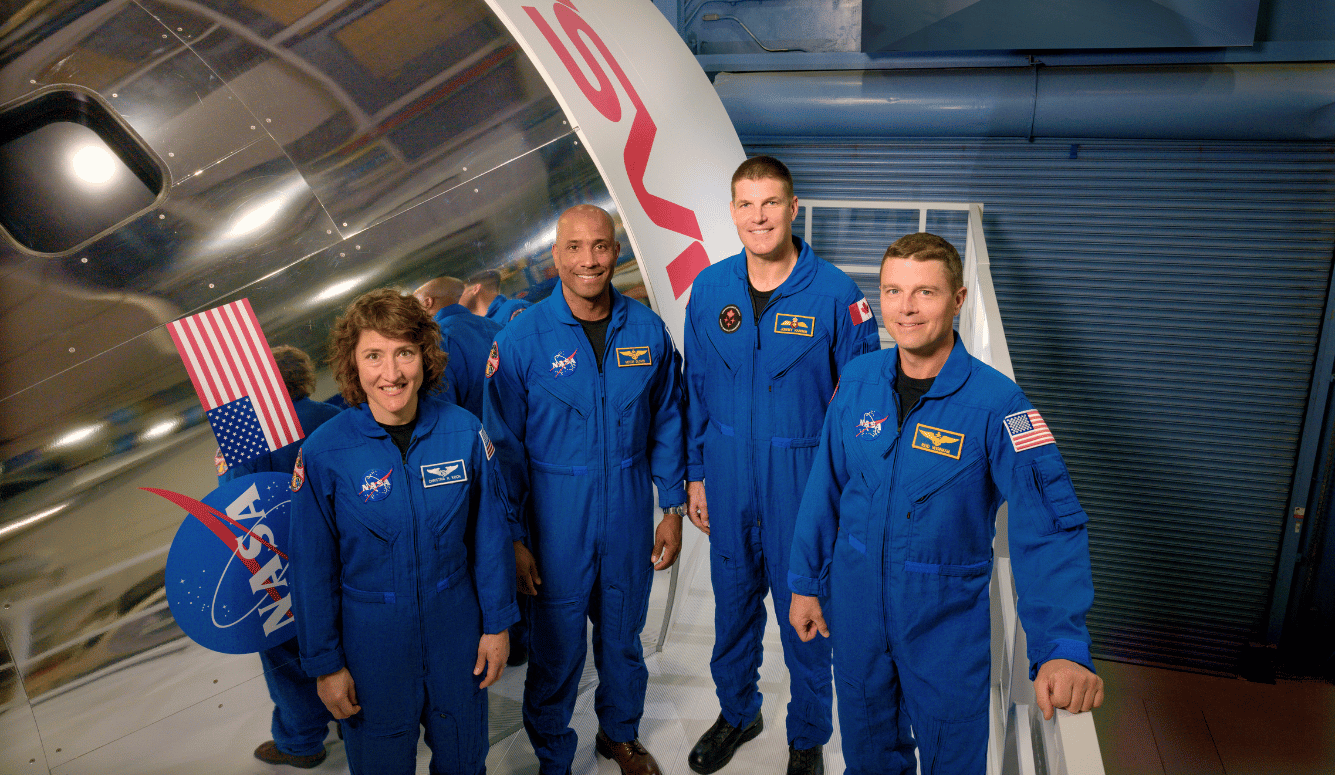
The Artemis II astronauts are amazing human beings: test pilots, military officers, combat veterans, with multiple technical degrees, and hobbies like scuba diving and Antarctic exploration. Their televised competence, confidence, and camaraderie captured the world’s admiration and respect. They are, quite literally, the best of us. But they represent a gruelling NASA selection process with an acceptance rate of only 0.2 percent. If we are going to build a spacefaring civilisation with millions of people living and working off-Earth, we cannot maintain these incredibly high barriers.

The archetype for a lunar worker will not be a PhD test-pilot triathlete. It will be an offshore oil-rig worker—highly competent, able to adapt to dangerous, fast-moving situations, and richly compensated for doing a risky job far away from home. Ambitious young men and women will find jobs on the Moon or work out financing arrangements to get themselves there in hopes of a job. Some will go broke and return home penniless. Some will die and be buried amid the harsh lunar landscape. But some will succeed, and thrive, and build first families and eventually cities and nations on the Moon, Mars, and beyond.

There are eight billion people on Earth today but the resources of the Solar System can support trillions—by the time we start feeling cramped, we’ll have solved the problem of interstellar flight. Whether we travel slowly at sublight speeds, as dictated by Einstein’s equations, or use faster-than-light warp drives enabled by physics we don’t yet understand, a spacefaring humanity will surely spread out among the stars. The risks are real, but the rewards will be immense: endless resources, endless wealth, and endless opportunities on the final frontier—space.


Quillette invites thoughtful responses to its essays.
Selected responses are published once per week as part of a curated Letters to the Editor feature. If selected, letters appear under the contributor’s real name and may be edited for clarity and length.

To submit a letter for consideration, please email [email protected].