Islam
Strange Bedfellows
The hard Left has once again allied itself with Islamists in the belief that they will help achieve its goals, hence repeating the mistake the communists made in 1979, in revolutionary Iran.
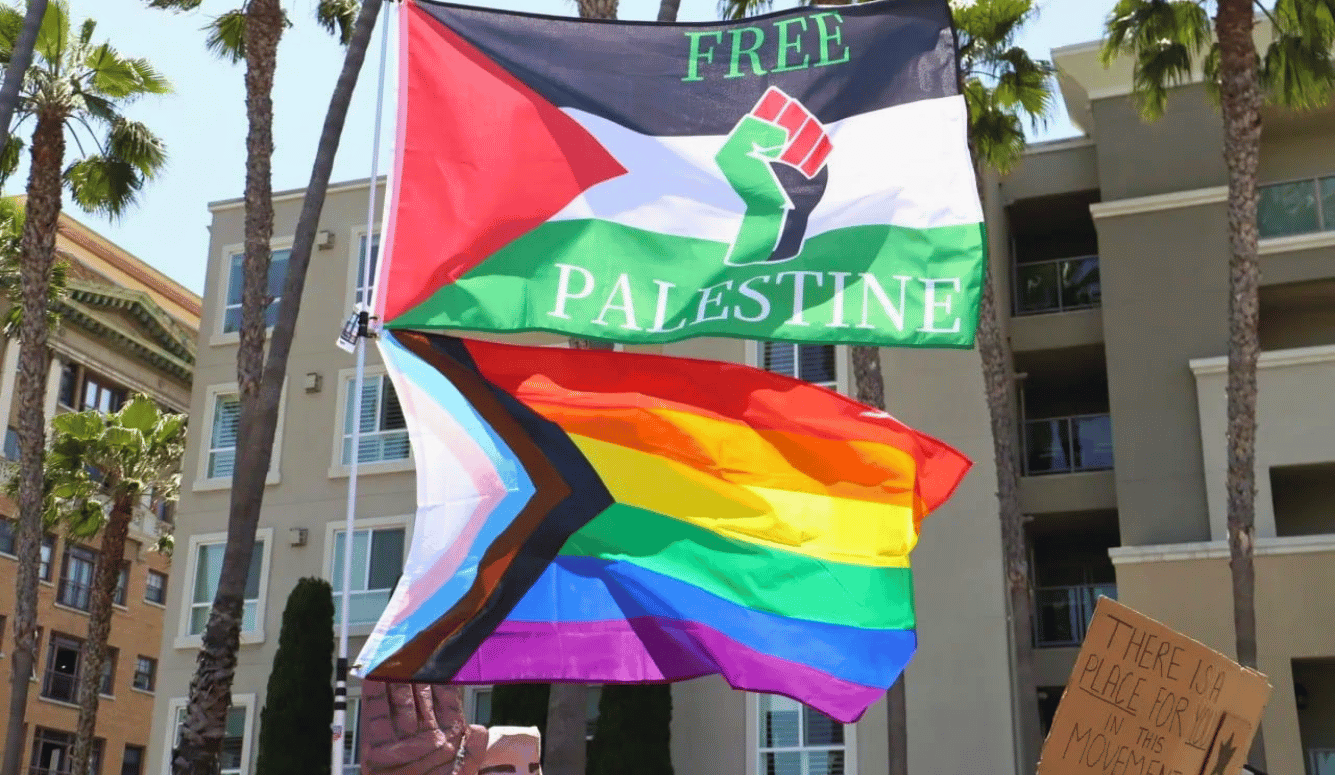

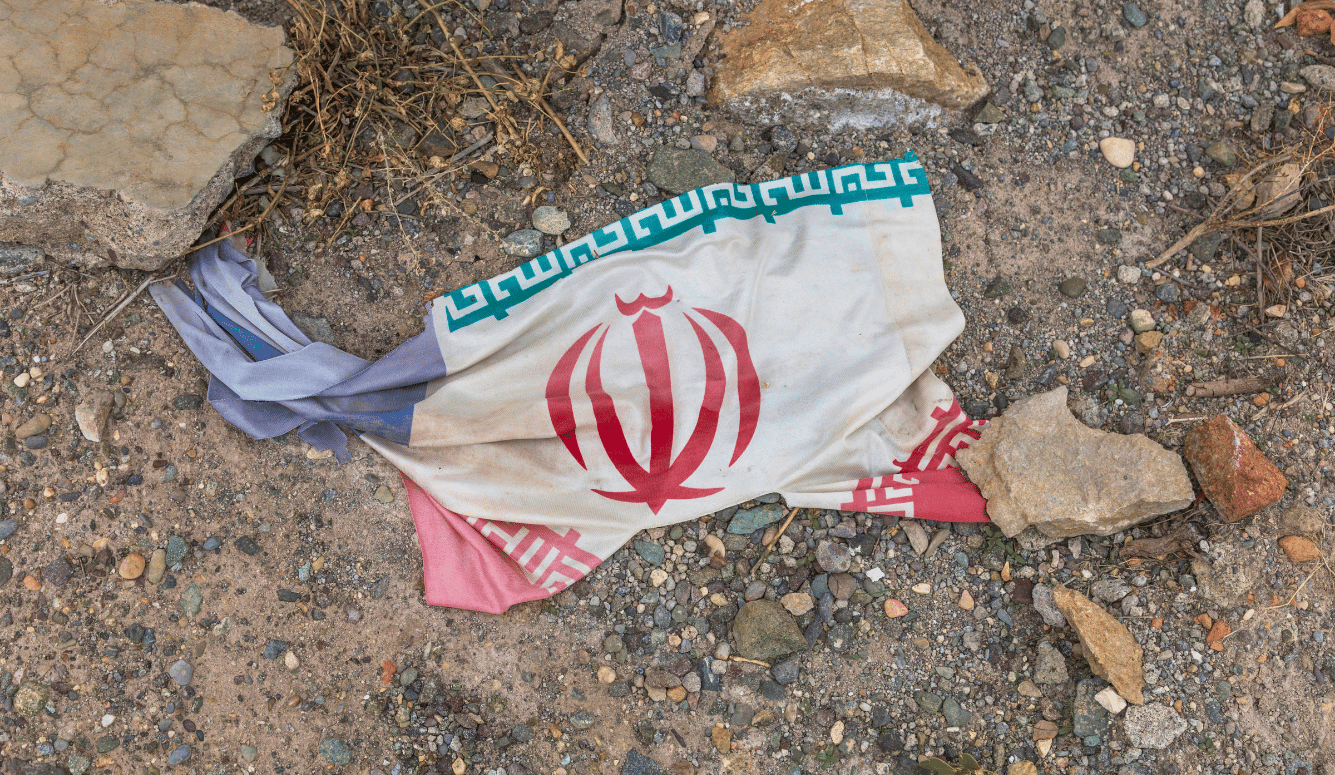
On 28 March, around 50,000 people, according to figures provided by the police, marched through central London against what they called “the rise of the Right.” The immediate target was Nigel Farage’s party Reform UK, which now leads in national parliamentary polling and has become the largest vehicle for right-wing populism in Britain. Alongside the anti-Reform placards were a sea of Iranian-regime flags, communist banners, transgender and other Pride flags, as well as the now-ubiquitous Palestinian flags.
The march ended in Whitehall in a carnivalesque mood, after passing through Trafalgar Square, where Zack Polanski and the newly elected Green MP Hannah Spencer danced onstage in front of the crowd, alongside an array of people in BDSM fetish gear, while mediocre house music played. The square had taken on the atmosphere of a rave—though not a real rave, but a stage-managed pseudo-transgressive fake rave, for political purposes. It was a simulation of hedonism designed for social media consumption, complete with some of the most embarrassing dad dancing I’ve ever seen.
I’m absolutely consistent. I’m against Muslims praying in Trafalgar Square, and I’m against whatever the f*** this is.pic.twitter.com/QtuJQiX18G
— Nick Dixon (@NickDixon) March 29, 2026
It was also a demonstration of the moral alignment of the contemporary Left. In that world, opposition to the right-wing policies of Farage sits astride a wider set of causes and loyalties organised around anti-Western sentiment and the politics of an amorphous so-called “resistance.”
Two weeks earlier, the Metropolitan Police had taken the unusual step of obtaining Home Secretary approval to ban the 2026 Al Quds march and any associated counter-marches. Assistant Commissioner Ade Adelekan said the march was “uniquely contentious,” noting that in London it was organised by the Islamic Human Rights Commission, “an organisation supportive of the Iranian regime.” He added that the force judged the risks this year to be exceptional, given the likelihood of large numbers of protesters and counter-protesters, “extreme tensions between different factions,” the volatile regional situation, and recent Iranian attacks on British allies and military bases overseas. The Met stressed that the threshold for banning a protest is high and that this was the first time it has used the power since 2012.
The symbols on display in central London last Saturday were the result of a real—albeit awkward—coalition between constituencies with some very divergent values. The language of LGBT inclusion was heard while people waved the flag of a regime that jails, flogs, and kills men for homosexual acts. Communist symbolism was displayed cheek-by-jowl with the insignia of an Islamist state that began its reign by slaughtering communists en masse and still crushes trade unions, suppresses dissent—including from the Left—and rules through paramilitary terror. Meanwhile, Palestinian flags, which for many marchers signify solidarity with civilian suffering, were reappropriated as a universalised emblem of grievance and rage.
What unites this coalition is a shared sense that the West—and particularly America and Israel—is to blame for both the war against Iran and against Hamas in Gaza, as well as for poverty, climate change, and unaffordable housing. The West is seen as the primary source of domination, subjugation, and violence in the modern world. Once you make that premise the centre of your moral universe, you’ll be ready to be drawn into the same camp as pretty much anyone, as long as they agree with your project to destroy the West. That is probably why the movement’s internal contradictions scarcely register with its adherents.
The Islamic Republic of Iran is not a progressive regime. It is a militarised theocratic apparatus of oppression: operating through censorship, political imprisonment, and state violence. And, of course, the Iranian regime has no interest in environmentalism or protecting local ecology. In fact, Iran has been grappling with one of the worst water crises in its recent history, thanks to years of government mismanagement: dam overbuilding, illegal wells, and wildly inefficient water use, especially in agriculture. According to a 2022 report from the World Bank, Iran's annual water consumption—estimated at 96 billion cubic metres—is about eight percent higher than the country’s total annual renewable water resources. The environmental consequences have been disastrous. By late 2025, ten percent of Iran’s major dams had effectively run dry. President Masoud Pezeshkian warned that the capital city of Tehran faced evacuation unless the situation improved.
The Green Party’s 2024 manifesto says it would “take the water companies back into public ownership” and “end the scandal of sewage pouring into our rivers and seas,” as well as making major investments in water and sewage infrastructure. Such concerns seem incongruous with support for Iran’s environmentally irresponsible regime.
Had Polanski and Spencer been dancing in the centre of Tehran next to a group in fetish gear, they would have most likely been shot at, or at least imprisoned. Let’s not forget that the Iranian regime killed tens of thousands of protestors earlier this year. Yet all the contradictory symbols now appear together in protests like this one, because people are no longer judging governments, groups, or movements on the basis of their substantive views, actions, or stances. For the Western protestors, they are all simply parts of a wider symbolic struggle.
That points to a deeper problem. Once politics is organised around a simple opposition between the West and its enemies, it becomes harder to recognise other forms of domination for what they are. Movements, states, and causes that define themselves as against the West are no longer assessed chiefly by their own ambitions, methods, and behaviour. Thus, a supposedly anti-imperial politics can lose sight of the realities of modern-day imperialism and conquest, when a non-Western actor is responsible.
The contemporary postcolonial Left is highly adept at identifying the crimes of Western empire and their sequelae. Colonialism, occupation, extraction, racial hierarchy, and cultural domination by Westerners or Western-aligned groups are denounced with fluency and force. But such leftists often become strangely evasive or even downright apologetic when the conquest, oppression, and domination appear under anti-Western colours. When the aggressor presents himself as anti-colonial, indigenous, or carrying historical trauma, domination is excused.
This is a serious blind spot. Empire is no longer treated as a recurring political temptation to every society with the means to instigate it, from the Akkadians to Vladimir Putin’s Russia. It is treated as a distillation of Westernness. The influential critical theorist Walter Mignolo, for example, argues that “coloniality is the very foundation of Western civilisation.” Aníbal Quijano’s influential theory of the “coloniality of power” treats European conquest as the foundation of the modern world order, while Enrique Dussel describes modernity itself as inseparable from Europe’s domination of the “other. ”
 Robert Huddleston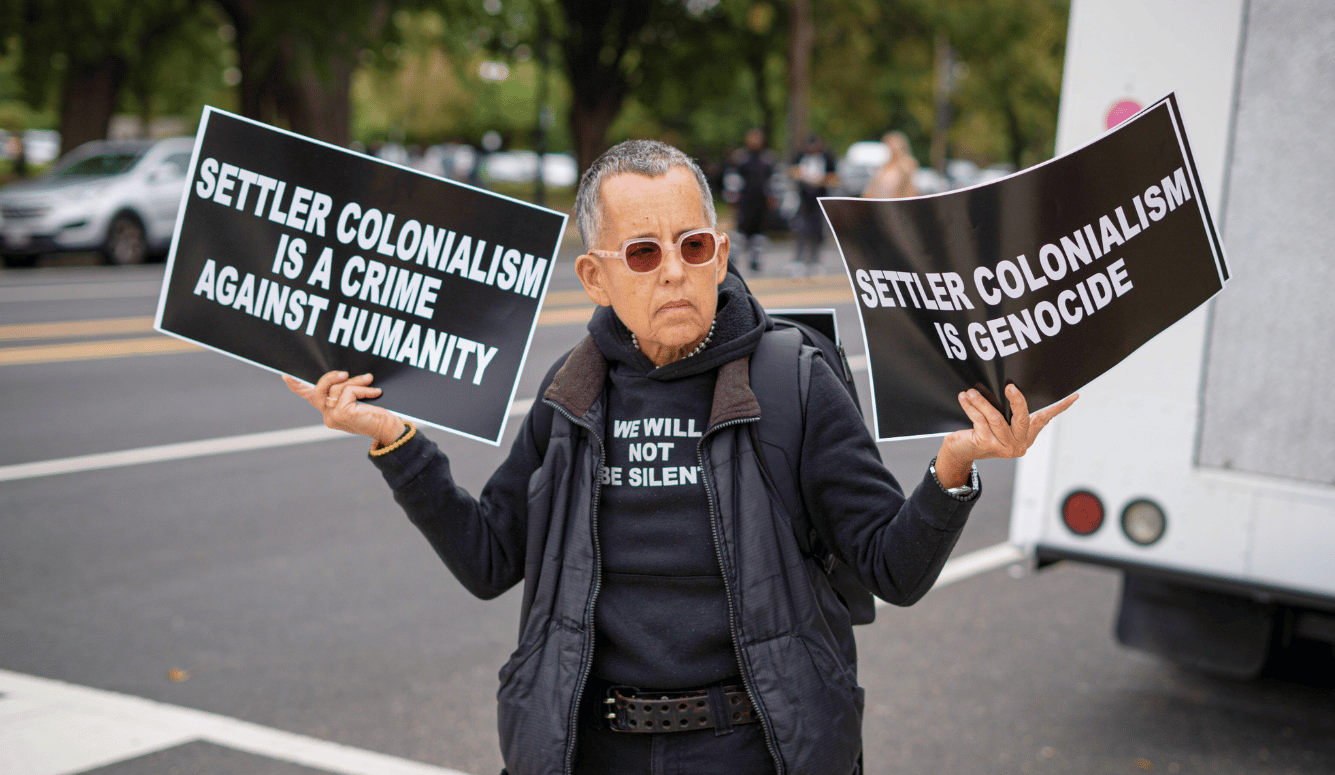
Once you buy into that ideology, non-Western projects of domination begin to look conceptually impossible, or at least morally excusable. The governing forces may be brutal, expansionist, openly theocratic, but if they stand against the right enemies, their crimes are either exonerated or quietly ignored.
But conquest is not a uniquely Western phenomenon, nor do Europeans have a monopoly on empire-building. It is not something that white people inherit with their DNA. Conquest is what happens when one people, state, or movement seeks to subdue another. Empire is what happens when such domination becomes organised, justified, and made durable. Colonialism, occupation, forced assimilation, theocratic subjugation—these things belong to no one civilisation. They are recurring possibilities of politics itself. A state does not cease to be an aggressor because its spokespeople speak in the language of historical grievance. A militia does not cease to be imperial because it calls itself “the resistance.” A regime does not cease to be oppressive because it opposes America. And a project of conquest does not become emancipatory because it is carried out by people who claim—sincerely or otherwise—to have once been wronged.
What makes the contemporary anti-Western posture even stranger is that much of what its adherents plainly value is itself a product of the civilisation they have been taught to despise: freedom of assembly, freedom of conscience, the equality of the sexes, the dignity of the individual, legal restraints on power, freedom to express open political dissent, scientific inquiry, and societal self-criticism—even the very idea that a civilisation should answer for its crimes.
These are not universal human defaults. The same civilisation that built empires also produced abolitionism, constitutionalism, feminism, religious toleration, democratic accountability, and the language of universal human rights. It is not for nothing that the loudest enemies of the West usually make their case using Western moral vocabulary, while enjoying Western freedoms, in Western cities, under Western legal protection. The people dancing under Iranian-regime flags and Palestinian banners were not doing so in Tehran, or in Hamas’s Gaza, or in any clerical state where female autonomy, open blasphemy, and public irreverence would be immediately crushed. They were doing so in London.
In Britain, winning these rights was an uphill battle over many centuries: the Magna Carta bound the Crown to obey the law; the Petition of Right and habeas corpus helped secure the subject against arbitrary imprisonment; and the Bill of Rights of 1689 entrenched regular parliaments, free elections, and parliamentary free speech while curbing monarchical power.
Aurele Tobelem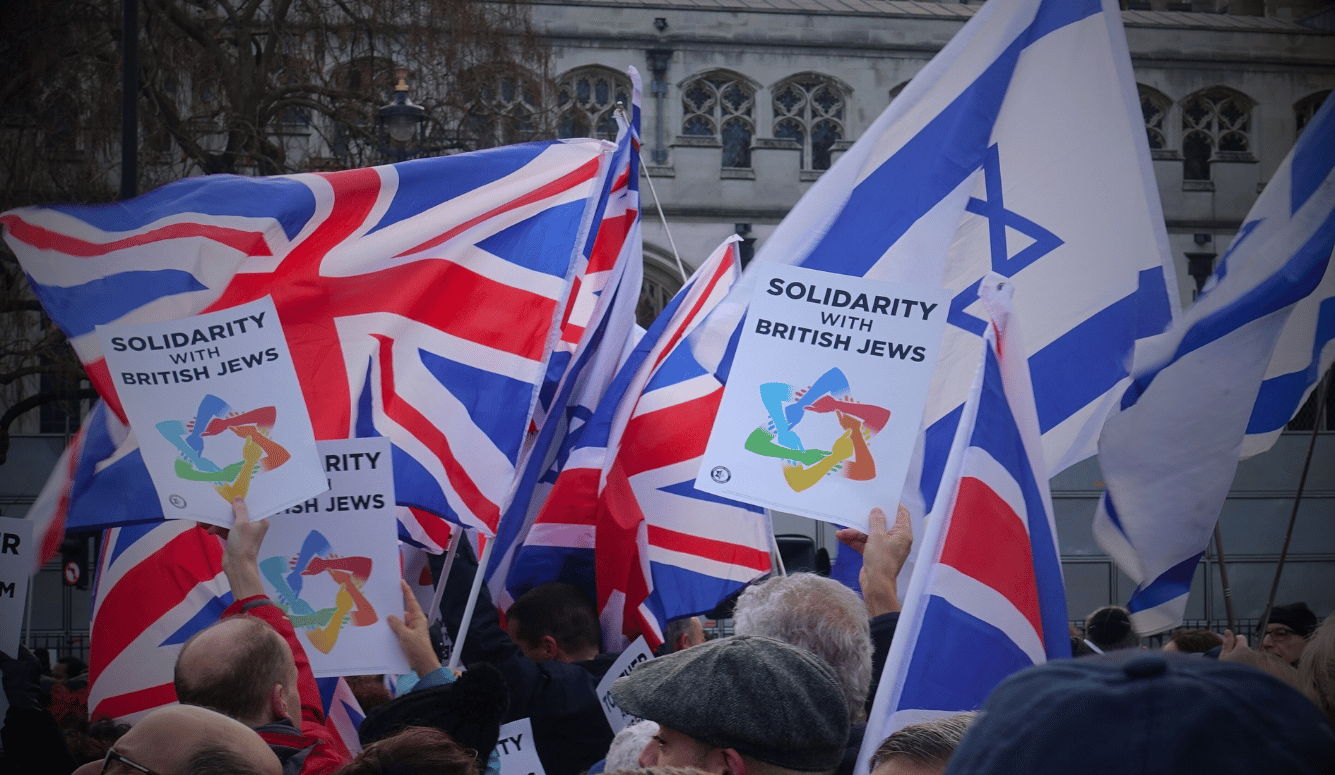
To treat the West as uniquely illegitimate and wicked is to warp one’s moral judgement. The freedom to criticise becomes detached from any gratitude for—or even awareness of—the institutions that make criticism possible. The language of rights becomes detached from the civilisational conditions that give rights their force. And the enemies of the West are allowed to inherit a prestige they have done nothing to earn. The postcolonial Left presents itself as the great opponent of domination. But in practice it often reserves its deepest suspicion for the one civilisation that has systematically learned how to limit power, criticise itself, and widen the space within which ordinary people are free to live as they choose.
There is, indeed, a historical precedent for the coalition we saw gathered last Saturday, and it should give today’s Western radicals pause. The Iranian Revolution was driven by a broad anti-Shah alliance that included the religious Right and the secular Left, from clerical loyalists to Marxists and other communists. For a while, that alliance seemed plausible. It was held together by a shared enemy and a shared anti-imperial language. But once Khomeini’s camp had consolidated power, the anti-Western posture that had helped unite the revolutionaries was used as a pretext for destroying the non-Islamist partners.
The pro-Soviet Tudeh Party in particular tried to accommodate itself to the new order. But the regime had no intention of sharing power with the secular Left for long. By early 1981 thousands of communist activists and sympathisers had already been imprisoned or executed. Then, in 1983, the regime moved decisively against the Tudeh Party, arresting its leaders, smashing its organisation, and extracting televised confessions. Many leading Tudeh figures were forced to recant under torture. Nor was Tudeh the only target: Marxist-Leninist organisations, Fedayeen factions, Maoists, and other secular revolutionary groups were all driven underground and their followers imprisoned, exiled, or killed.
That is worth remembering when one sees communist banners and Iranian-regime flags waving in the same London crowd. There is nothing new or sophisticated about such an alliance. It has happened before. Once again, people are naïve enough to believe that a shared hostility to the West can overcome profound differences in ultimate aims. They have once again forgotten that the Islamists mean what they say, and that once they gain power, they will not reward their secular fellow-travellers. Instead, they will mercilessly crush them.
Quillette invites thoughtful responses to its essays.
Selected responses are published once per week as part of a curated Letters to the Editor feature. If selected, letters appear under the contributor’s real name and may be edited for clarity and length.
To submit a letter for consideration, please email [email protected].
Keep reading
Searching for Structure
Strange Bedfellows
The Axis of Renewal
Doomscrolling into Adulthood