interview
Iran’s Revolutionary Regime and the Long War Against the West: Behnam Ben Taleblu
Behnam Ben Taleblu discusses the history of Iran’s Islamic Republic, the evolution of protest movements, and the geopolitical stakes of the current conflict.
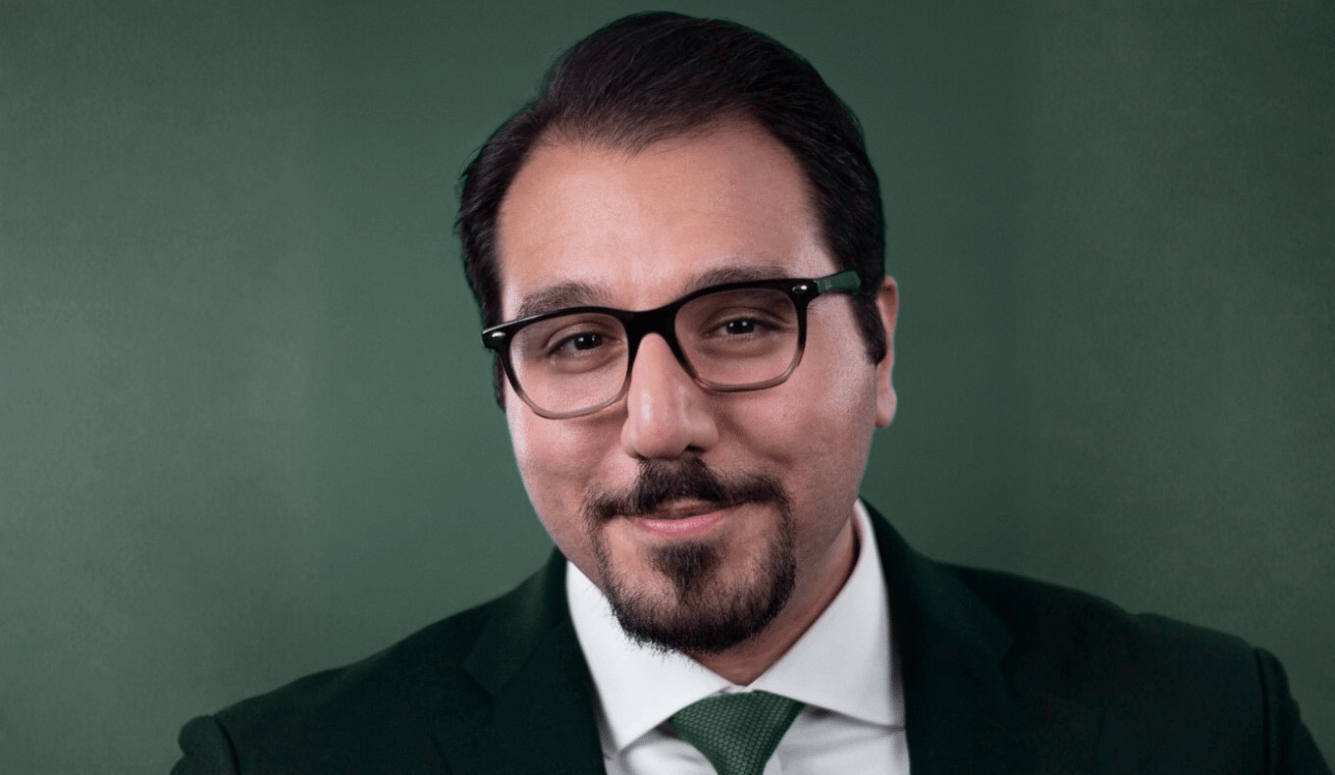

In this interview, Iranian-American analyst Behnam Ben Taleblu speaks with Pamela Paresky about the ideological origins of the Islamic Republic, the evolution of Iran’s protest movements, and the geopolitical stakes of the current conflict. From the revolution of 1979 to the regime’s modern network of proxy militias, Taleblu argues that Iran’s ruling system is both internally fragile and externally aggressive—and that its future may depend on the interplay between internal dissent and external pressure.
Transcript
Behnam Ben Taleblu: Thanks for having me on. My name is Behnam Ben Taleblu. I’m the Senior Director of the Iran Program at the Foundation for Defense of Democracies. That’s a think tank that focuses on national security and foreign policy in Washington, DC. I’ve been in DC about eighteen or nineteen years, and with FDD for about thirteen of them, basically covering the breadth and depth of the Iran challenge.
I’m a first-generation Iranian-American, a native Persian speaker, and you could say this job is both an affair of the head and of the heart.
Pamela Paresky: There’s a lot of talk about whether this war is necessary—whether it was something Trump did impulsively or for ulterior motives. Is this a war of choice?
BBT: I think it’s easy to impugn the president when it comes to impulses, but certainly this is a war of choice—but a war of the Islamic Republic of Iran’s choice.
You know, America in 1979, shortly after the revolution happened in Iran—ousting a pro-Western king—did not cut diplomatic relations, nor did it upend its embassy overnight and begin the massive sanctions campaign that exists in the Iranian narrative.
In fact, it stayed. Which is exactly why, if you fast-forward to 4 November 1979, American diplomats were held hostage for 444 days. That was the main crisis—an act of hostage diplomacy and international hostage-taking—and the Islamic Republic has only escalated over the past 46 or 47 years.
In those ensuing decades there have been terrorist attacks using proxy groups and cut-outs against Americans and American partners, killing US service personnel across the Middle East; taking diplomats hostage; taking foreign nationals hostage; commencing a drone programme, a ballistic missile programme, a nuclear programme; and building a transnational terrorist enterprise. Today Iranian proxies are on four continents. Iranian drones are on four continents. Much is changing due to the threat posed by the Islamic Republic.
If you fast-forward to how those threats impacted the US—and impacted Trump term two—Iran, by the time the second Trump administration came in, was already in a cycle of violence that it and its proxies had started. The proximate trigger for that was the post-7 October Middle East.
For the first time, Iran and its proxies really began to lose—and lose meaningfully—mostly to Israel, but also to the United States.
When you look at the way the regime, even as it was losing, was still intent on fighting; still intent on rebuilding—for example, after the twelve-day war, after President Trump took out the Islamic Republic’s uranium enrichment facilities and got what at least four different presidents had been trying to get in recent US history, namely, a cessation of the enrichment of uranium inside Iran, President Trump was the only one who achieved that in the past three or four presidencies—Iran’s response was to have its clerical establishment issue fatwas against his life, against his property, and even against the female members of his family.
So this is a regime that, even as it’s down, is continuing to fight.
Certainly it has spent these past four decades carrying out and putting money, blood, treasure, and reputation behind the slogans it has been chanting, like “Death to America,” “Death to Israel,” and very much like the revolutionary Islamist protégé Sinwar, Khamenei, Iran’s former supreme leader, went down fighting—refusing to budge or even make a compromise like his predecessor earlier in the Islamic Republic did.
So there is a litany of terrorist attacks, hostage-taking, illicit procurement, missile development, sanctions-busting, and threats to Americans, American citizens, American service personnel, and American interests that unfortunately brought us here.
And as Donald Trump has shown—contrary to previous US presidents—he will actually gamble. He will push the envelope.
He left the Iran nuclear deal. World War III didn’t start. He was willing to kill Qasem Soleimani, Iran’s chief terrorist, in 2020. World War III didn’t start. He was willing to move the embassy to Jerusalem. World War III didn’t start.
He was willing to take some political risks that previous administrations simply were not.
And he was willing to pull the trigger against Iran’s nuclear programme—willing to take out its sole state partner in South America.
I think that cascade of successes—yes, there were admittedly risks behind each one of them—has brought the president to this current juncture where he was willing to cross that line.
Make no mistake: the forces that brought America to that juncture were four and a half decades of hostility, enmity, and destabilisation brought to you by the ideologues who still rule Tehran.
PP: Can you say more about the history? Obviously people are more familiar now than they were ten years ago with the history, but what was the trajectory that brought the first ayatollah to power?
BBT: Sure. The first ayatollah was Ayatollah Ruhollah Khomeini. You could call him the founding father or the pioneer of the Islamic Republic. If you trace many of these so-called anti-colonial movements in the Third World during the Cold War, they cut their teeth on anti-imperialism, on anti-Zionism, and on the whole toxic hotbed of ideologies that existed in the developing world at the time. But he framed those ideologies through a very particular domestic discourse.
He was a cleric who studied in the holy city of Qom. Even in that city, he was quite the outcast: he was more interested in philosophy and mystical poetry than in jurisprudence. Interestingly, the system he later pioneered—the doctrine of velayat-e faqih, the guardianship of the jurist—is essentially a mix of Plato’s philosopher-king, the Qur’an, some Karl Marx, combined with a series of things meant to square-peg/round-hole them together, which leaves you with a highly authoritarian Islamist system grafted on to some republican institutions. That essentially describes the very Byzantine structure of power in the Islamic Republic.
He was initially a minority figure among clerics because of his very non-mainstream political and theological positions. He really only gained prominence in Iran in the 1960s, after the death of a very famous cleric who had served as the marja, the source of emulation for many Shiites in the region. Khomeini sensed the vacuum and filled it.
He moved quickly into politics, cutting his teeth by opposing many of the Shah’s social reforms: allowing women the right to vote, land nationalisation, and agricultural reforms supported by the United States and Iran in the 1960s, the growing presence of American businesspeople and, more importantly, American military personnel in Iran.
Sometimes his critique is portrayed as nationalist. I would say it was a more anti-imperial, anti-American, and anti-colonial critique. He fused that with the hotbed of growing Marxism, populism, and revolutionary ideology circulating at the time, such that when many disparate and dissonant Iranian forces came together to oppose the Shah—communists, nationalists, liberals, and Islamists—they didn’t have much in common, but they were willing to create a Venn diagram where the least common denominator was opposition to the Shah and opposition to America. Khomeini was able to ride that wave and capitalise on those forces.
He returned from political exile—first in Iraq and eventually France—arriving back in Iran on 1 February 1979.
Through a combination of political cunning and quite a bit of deceit, he managed to hold together that very vast coalition. And the decade during which he ruled—from 1979 to 1989—was almost co-terminous with the longest conventional war of the twentieth century: the Iran–Iraq War. He used the backdrop of that war to securitise the state and to purge the very broad coalition that had helped bring him to power.
By the end of the 1980s, when the Iran–Iraq War ended near the end of his life, the liberals, nationalists, Marxists, communists, and other leftists were nearly all either purged or forced to reinvent themselves as some variety of Islamist.
So he came out of that ideological milieu and put the country—through the regime he created, the Islamic Republic—on the anti-American and anti-Israeli trajectory that has led to decades of sacrificing the public good and the national interest, just so his ideology can be pursued.
PP: What did the leftists, the communists, the socialists, the young people who were not particularly Islamist or religious—what did they think was going to happen?
BBT: Unfortunately, the naivety wasn’t limited to those forces inside Iran who had not read his works—some of which were banned—it also extended to academics, analysts, Iran watchers, and policymakers abroad. I believe it was a Princeton professor—though I don’t want to single out an Ivy League institution yet again—who said that Khomeini would be a “Gandhi-like” figure.
Many reporters travelled to Paris, where Khomeini was living in exile in the late 1970s. They saw an elderly religious figure and assumed he would simply retreat to the seminary and hand over governance of the country to the so-called political class.
Even some people closer to his ideology, the hybrid nationalist-Islamists, didn’t believe that a man in his late seventies or early eighties would have the iron will to kill, and to do so consistently, to pit factions against each other, and to build a coalition and shepherd it in the way that he ultimately did.
But ultimately, that is exactly what he did.
Within Iran, the willingness of so many of those disparate social forces to downplay their differences and emphasise their similarities—being anti-monarchy and anti-American allowed them to magnify that overlap in the Venn diagram.
By the time they realised the importance of the differences, it was too little, too late.
PP: What did he do to the factions that helped bring him to power but were not aligned with his religious view?
BBT: And also his political view. Khomeini was fond of using crises—whether it was the hostage crisis to securitise the space or anything else. Even the interim prime minister, who had been in jail on and off during the monarchy, resigned after the hostage-taking. He used a phrase that actually sounds better in English than in Persian (and there’s a debate over when he first said it); he said, “I am a knife without a blade.”
He was an interim Prime Minister. He had a sort of symbolic authority, but there were other dark and nefarious forces in 1979. That was the kind of structure Khomeini was creating. At that time it was highly personalist—a system revolving around him and his ideology. Later his successor, Ali Khamenei, would institutionalise that structure to build up the national-security state.
But the people who had helped bring Khomeini to power soon felt the wrath. Many were imprisoned, placed under permanent house arrest, forced into exile, tortured, or killed.
When you mentioned the leftists earlier, the purging of Iran’s prisons—per a fatwa from Khomeini—is a product of how easily Khomeini, with such deeply held ideological convictions, was willing and able to give the order to shed blood.
PP: When you say “purging of the prisons,” what happened?
BBT: It’s famously known as the work of the “Death Commission.” Even Iran’s former president, Ebrahim Raisi, who died in a helicopter crash in 2024, served on the four-person death commission, in which, in almost Soviet-bureaucratic style, they implemented the fatwa: going through the rolls of the prisoners to determine whether they were religious or not. And because the vast majority were leftists, they wouldn’t pray or they were even atheists. By admitting that they didn’t pray or didn’t believe in God, or they simply didn’t accept Khomeini’s interpretation of Islam, they effectively sealed their fate.
A few years ago, leaked audio from some of the deliberations of that Death Commission surfaced. When you read the transcripts or listen to the recordings, you can hear that even some clerics tried to find some theological elasticity to justify the killings. But that younger cleric on the commission—Raisi, who was only twenty-nine at the time, and became president in 2021—spoke very much like a Soviet bureaucrat. His attitude was simply: They said they aren’t doing it, so they will be killed. That’s what people mean when they refer to the purging.
This constant hotbed of revolutionary activity—instigating conflict abroad and repressing the Iranian people at home—has kept the state in a permanent security mode. That posture has allowed the regime to maintain control, largely because it is willing to kill early and often.
PP: In the early days, when people began to realise what the revolution had wrought, were there attempts to overthrow the Islamic Republic and bring something more democratic into being?
Keep reading
Foreign Power, Local Politics
Podcast #333: The Search for Truth
A Costly Misconception
Addressing the Academic Skew
Letters to the Editor